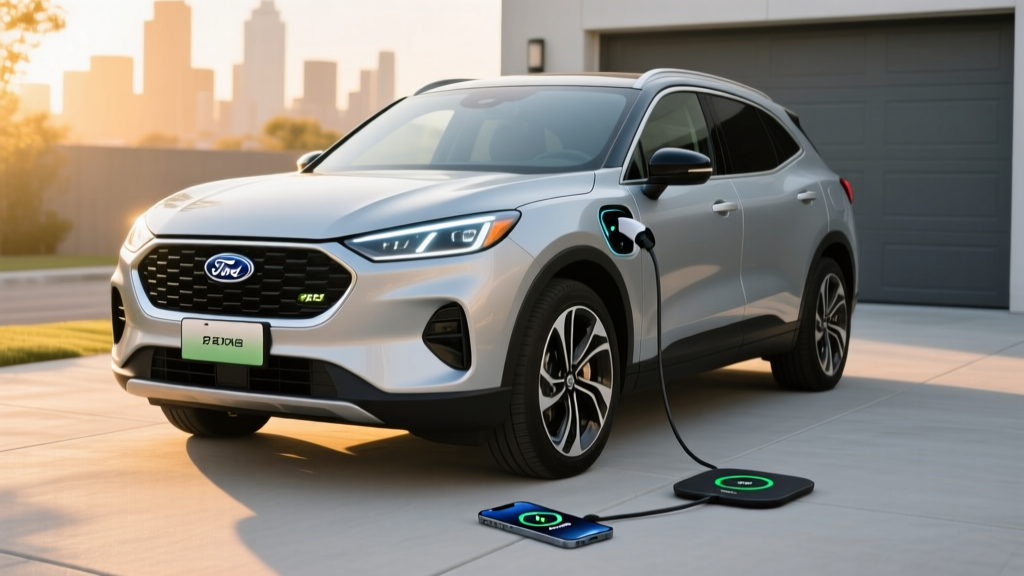
If you want to cut fuel costs without plugging in or committing to a full battery-electric vehicle, the 2026 Hybrid Ford Escape remains one of the most practical compact crossovers on the market. Ford offers the Escape in a conventional hybrid (HEV) configuration across multiple trims, delivering strong city fuel economy, a proven powertrain, and a starting price well below most plug-in competitors. This guide breaks down the exact MPG figures, powertrain specs, real-world efficiency, battery longevity, and ownership costs you need before signing a purchase agreement.
2026 Hybrid Ford Escape at a Glance: Key Specs
| Specification | Value |
|---|---|
| Powertrain | 2.5L Atkinson-cycle I-4 + electric motor (HEV) |
| Combined Horsepower | 192 hp (200 hp AWD) |
| Transmission | eCVT (planetary gearset, no fixed gears) |
| EPA MPG (City / Hwy / Combined) | 42 / 36 / 39 (FWD) |
| EPA MPG (AWD) | 40 / 34 / 37 |
| Fuel Tank Capacity | 13.7 gallons |
| Total Driving Range (FWD) | ~534 miles (EPA combined) |
| 0–60 mph | ~7.8 seconds (est.) |
| Cargo Volume (behind 2nd row) | 34.4 cu ft |
| Towing Capacity | 1,500 lbs (HEV) |
| Hybrid Battery Warranty | 8 years / 100,000 miles |
| Base MSRP (ST-Line Hybrid) | ~$34,500 |
The Escape Hybrid pairs a 2.5-liter four-cylinder engine running on the Atkinson cycle — which sacrifices some low-end torque for greater thermal efficiency — with an electric motor integrated into the eCVT transaxle. A small lithium-ion battery pack (approximately 1.1 kWh usable) stores energy recaptured from regenerative braking and engine excess. You never plug it in. The system manages all energy flow automatically.
How Many MPG Does the Hybrid Ford Escape Actually Get?
The EPA rates the 2026 Ford Escape Hybrid FWD at 42 city / 36 highway / 39 combined MPG. The AWD variant drops slightly to 40 / 34 / 37. These numbers come directly from fueleconomy.gov, the official DOE/EPA source.
| Model | City MPG | Highway MPG | Combined MPG |
|---|---|---|---|
| 2026 Ford Escape Hybrid (FWD) | 42 | 36 | 39 |
| 2026 Toyota RAV4 Hybrid (AWD) | 41 | 38 | 40 |
| 2026 Honda CR-V Hybrid (FWD) | 43 | 36 | 40 |
| 2026 Hyundai Tucson Hybrid (AWD) | 38 | 38 | 38 |
Real-World MPG vs. EPA Sticker
Hybrids typically outperform their EPA city estimates in stop-and-go driving because regenerative braking recaptures more energy at lower speeds. In mixed suburban driving, owners regularly report 40–44 MPG in warm weather. However, highway-only trips at 75+ mph tend to yield 33–36 MPG — the engine runs more often, and aerodynamic drag dominates. In winter conditions below 30°F, expect a 10–15% drop due to cold-start enrichment, cabin heating demands, and reduced battery efficiency. Real-world annual averages for mixed driving typically land between 36–41 MPG.
HEV vs. PHEV: Which Escape Hybrid Is Right for You?
Ford streamlined the Escape lineup in recent model years. For 2026, the Escape is offered as a conventional hybrid (HEV) across ST-Line, ST-Line Select, and Platinum trims. Ford previously offered the Escape PHEV (plug-in hybrid), but the PHEV variant was discontinued after the 2024 model year as Ford realigned its electrification strategy.
| Factor | HEV (Escape Hybrid) | PHEV (e.g., RAV4 Prime) | BEV (e.g., Tesla Model Y) |
|---|---|---|---|
| Plug in required? | No | Yes (for EV range) | Yes (always) |
| Electric-only range | 0 miles | 25–42 miles | 250–330 miles |
| Home charging needed? | No | Recommended (120V or 240V) | Essential (240V Level 2) |
| Fuel cost per mile | ~$0.09 (at $3.50/gal) | ~$0.04 (electric) / ~$0.09 (gas) | ~$0.03–$0.05 |
| Federal tax credit (§30D) | Not eligible | Up to $7,500 (if eligible) | Up to $7,500 (if eligible) |
| Best for | No home charging access; simple ownership | Short commutes + occasional road trips | Home charging + daily driving under 250 mi |
If you cannot install a home charger or lack reliable access to public charging, the HEV configuration is the correct choice. You get meaningful fuel savings — roughly 35–40% better than the gas-only Escape — without any change to your fueling routine.
Powertrain Deep Dive: Engine, Motor, and eCVT
The 2026 Escape Hybrid uses Ford's fourth-generation hybrid system, sharing architecture with the Ford Maverick Hybrid and Lincoln Corsair Hybrid. Here is how the components break down:
- Engine: 2.5L Atkinson-cycle inline-4, producing approximately 163 hp and 155 lb-ft of torque on its own
- Electric Motor: Permanent-magnet synchronous motor integrated into the eCVT, contributing roughly 131 hp
- Combined System Output: 192 hp (FWD) or 200 hp (AWD with rear electric motor)
- Battery: ~1.1 kWh lithium-ion pack (air-cooled), located beneath the rear cargo floor
- Regenerative Braking: Multiple levels selectable via the center display; no true one-pedal driving mode
The eCVT is not a traditional belt-and-cone CVT. It uses a planetary gearset that blends engine and motor power seamlessly. There are no fixed gear ratios and no rubber belt to wear out — a key reliability advantage. The AWD model adds a rear-mounted electric motor that provides torque to the rear wheels when traction demands it, without a mechanical driveshaft connecting front and rear axles.
Pricing, Trims, and Tax Credit Eligibility
The 2026 Ford Escape Hybrid starts at approximately $34,500 MSRP for the ST-Line Hybrid trim (including destination charge). Here is the approximate trim breakdown:
- ST-Line Hybrid (FWD): ~$34,500
- ST-Line Hybrid (AWD): ~$36,000
- ST-Line Select Hybrid: ~$38,500
- Platinum Hybrid (AWD): ~$42,000
Does the Hybrid Ford Escape Qualify for a Federal Tax Credit?
Some states offer separate incentives for hybrid vehicles, but these are uncommon and vary by jurisdiction. Check your state's department of revenue or energy office for any local hybrid rebates. The Escape Hybrid's value proposition rests on fuel savings over time, not upfront incentive discounts.
5-Year Fuel Cost Comparison
At 15,000 miles per year and $3.50 per gallon:
- Escape Hybrid (39 MPG combined): ~$1,346/year in fuel — $6,730 over 5 years
- Gas-only Escape (28 MPG combined): ~$1,875/year in fuel — $9,375 over 5 years
- 5-year fuel savings with hybrid: ~$2,645
That savings narrows the gap between the Hybrid's higher MSRP and the gas model's lower sticker price, typically reaching break-even within 3–4 years of average driving.
Battery Longevity, Warranty, and Replacement Cost
Is the Hybrid Ford Escape Reliable?
Ford's 2.5L hybrid powertrain has been in production since the 2020 model year (Escape and Maverick), and the architecture traces back to the Fusion Hybrid introduced in 2013. The eCVT planetary gearset is mechanically simple — no clutch packs, no torque converter, no belt — and has proven durable across hundreds of thousands of fleet and taxi miles in Ford's earlier hybrid models.
Common concerns reported by owners include:
- Minor 12V auxiliary battery drain if the vehicle sits unused for extended periods (common to all hybrids)
- Brake actuator module recalls on some earlier model years — check NHTSA recall database for your specific VIN
- Infotainment software glitches (SYNC 4), generally addressed via over-the-air updates
Hybrid Battery Replacement Cost
If the hybrid battery fails outside of warranty, replacement costs for the Escape Hybrid typically range from $2,500 to $4,500 for a new OEM pack, plus labor. Third-party refurbished packs are emerging in the $1,500–$2,500 range. However, hybrid battery failure rates remain low — most data suggests fewer than 5% of hybrid batteries require replacement within the first 10 years. The battery management system in the Escape Hybrid maintains a conservative state-of-charge window (roughly 40–80%), which significantly extends cell life by avoiding deep discharge and full-charge stress.
Who Should Buy the Hybrid Ford Escape?
Choose the Escape Hybrid If:
- You want lower fuel costs without changing your fueling habits
- You lack access to home or workplace charging (apartment, street parking)
- Your daily driving includes significant stop-and-go or suburban trips
- You want a compact crossover with strong cargo space (34.4 cu ft) and available AWD
- You plan to keep the vehicle 5+ years to realize fuel savings
Look at a PHEV or BEV Instead If:
- You can install a Level 2 charger at home and want electric-only commuting
- You want to qualify for the $7,500 federal tax credit (§30D)
- Your daily commute is under 35 miles round-trip (a PHEV covers this on electricity alone)
- You want to minimize tailpipe emissions in your neighborhood
Pros and Cons: 2026 Ford Escape Hybrid
Pros
- Strong city MPG (42 EPA) — real-world often higher in traffic
- No plug-in required — zero lifestyle change from gas
- Proven eCVT powertrain with low mechanical complexity
- Generous 8 yr / 100k mi hybrid battery warranty
- Spacious cargo area (34.4 cu ft) with no battery intrusion
- Available AWD for snow-belt climates
Cons
- No federal tax credit eligibility (HEV)
- Highway MPG (36) trails some competitors — engine works hard at speed
- Modest 192 hp — adequate but not quick for highway merging
- No PHEV option currently available in the Escape lineup
- Base price ~$34,500 is higher than gas-only Escape (~$30,000)
- Towing limited to 1,500 lbs
Frequently Asked Questions
How many MPG does the Hybrid Ford Escape get in real-world driving?
The EPA rates it at 42 city / 36 highway / 39 combined (FWD). In real-world mixed suburban driving, most owners report 37–43 MPG depending on conditions. City and stop-and-go driving yields the best results; sustained highway speeds above 70 mph and cold winter weather reduce efficiency by 10–15%.
Does the Hybrid Ford Escape need to be plugged in?
No. The 2026 Escape Hybrid is a conventional hybrid (HEV). It charges its battery through regenerative braking and the gasoline engine. You fuel it like any other car — at a gas station.
How long will the Escape Hybrid battery last?
Ford warranties the hybrid battery for 8 years / 100,000 miles (10 years / 150,000 miles in CARB states). Real-world data from Ford's hybrid fleet suggests most batteries last well beyond 150,000 miles with the conservative charge-window management the system employs. Full replacement, if needed, typically costs $2,500–$4,500.
Does the 2026 Ford Escape Hybrid qualify for any tax credit?
No. The federal §30D clean vehicle credit requires a plug-in vehicle with at least 7 kWh of battery capacity. The Escape Hybrid's ~1.1 kWh battery does not qualify. Check your state for any local hybrid incentives, though these are rare.
Is the Ford Escape Hybrid better than the Toyota RAV4 Hybrid?
They are closely matched. The RAV4 Hybrid edges ahead on combined MPG (40 vs. 39) and offers standard AWD. The Escape Hybrid counters with slightly better city MPG (42 vs. 41), more cargo volume (34.4 vs. 37.6 cu ft behind the second row varies by measurement), and a lower starting price in some trims. Both carry strong hybrid battery warranties. Your choice likely comes down to styling preference, dealer availability, and which platform's infotainment you prefer.
Can the Escape Hybrid run on electric power alone?
Only at very low speeds (typically under 25 mph) for short distances — such as creeping through a parking lot or in heavy traffic. The battery is too small (~1.1 kWh) to sustain electric-only driving at highway speeds or for meaningful distances. This is normal for all conventional hybrids.