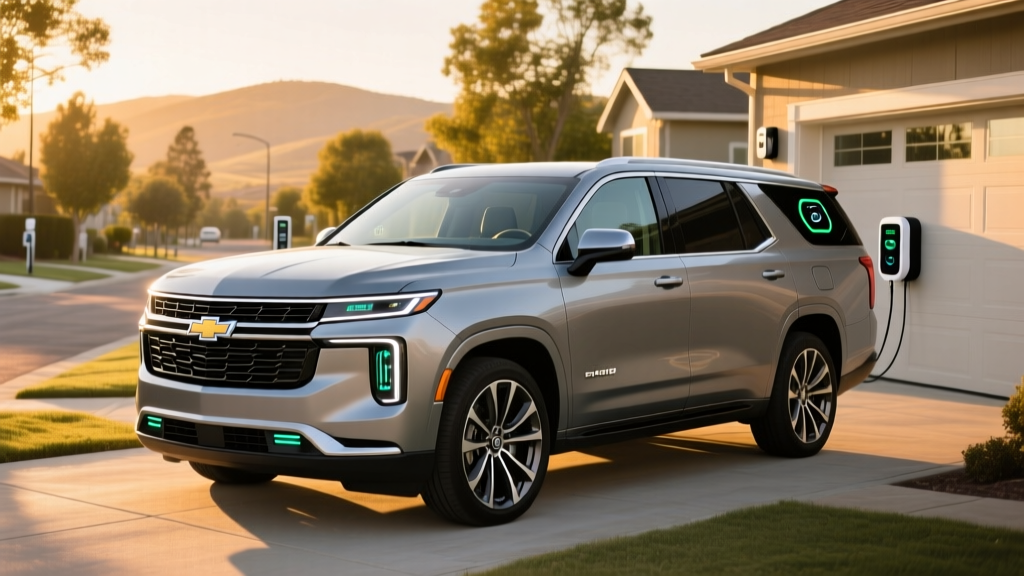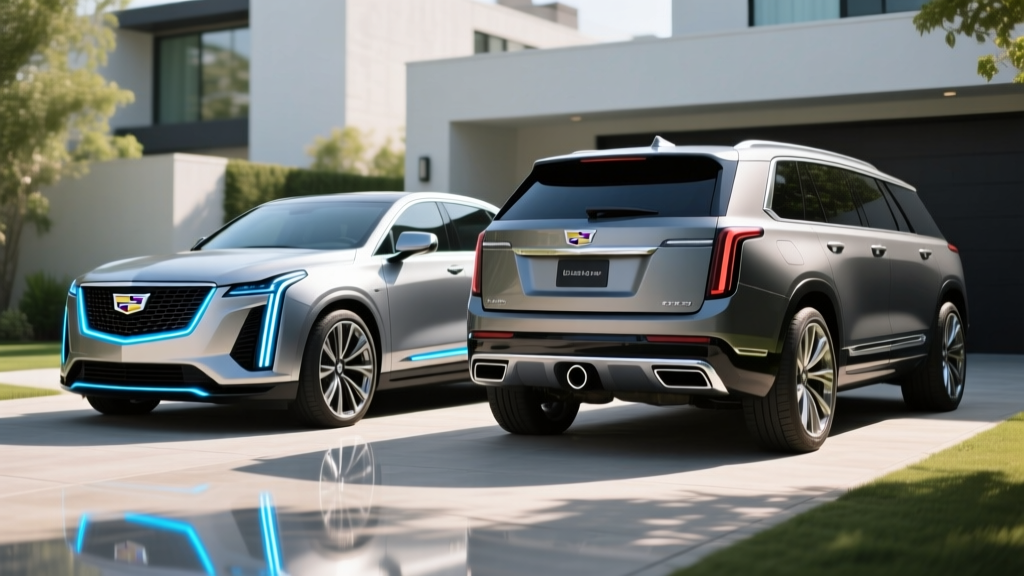
For over two decades, the Cadillac Escalade has been the benchmark full-size luxury SUV — and one of the most fuel-thirsty vehicles on the road. Buyers searching for a hybrid Escalade in 2026 are navigating a rapidly shifting landscape: General Motors has pivoted from the earlier Escalade Hybrid (discontinued after 2013) to the fully electric Escalade IQ, while the current internal-combustion Escalade soldiers on with a twin-turbo V8 and no hybrid variant. This guide breaks down exactly what's available, what the numbers look like, and which powertrain makes sense for your driveway.
The Hybrid Escalade Question: HEV, PHEV, or Full EV?
Before diving into specs, it's critical to understand the three electrified powertrain types — because Cadillac's 2026 lineup only covers one of them for the Escalade nameplate.
Powertrain Types at a Glance
| Type | How It Works | Plug In? | 2026 Escalade Available? |
|---|---|---|---|
| HEV (Hybrid) | Gas engine + small electric motor; battery recharges via regenerative braking and engine | No | No — discontinued after 2013 |
| PHEV (Plug-in Hybrid) | Larger battery + motor for 20–50 mi electric-only driving, then gas engine takes over | Yes | No — not offered |
| BEV (Battery Electric) | 100% electric; no gas engine at all | Yes (charging only) | Yes — Escalade IQ |
If you're specifically looking for a conventional hybrid (HEV) or plug-in hybrid (PHEV) Escalade, Cadillac does not currently offer either in the 2026 model year. The closest analog is the Escalade IQ, which is a fully electric vehicle built on GM's Ultium platform. The standard 2026 Escalade continues with a 3.0L Duramax turbo-diesel inline-six or the 6.2L V8 — neither of which includes hybrid assistance.
2026 Escalade IQ: The Electric Successor to the Hybrid Escalade
The Escalade IQ is Cadillac's answer to the large luxury SUV electrification question. Rather than offering a stopgap hybrid, GM went full battery-electric with a massive Ultium battery pack and dual-motor all-wheel drive.
| Specification | Escalade IQ Luxury | Escalade IQ Sport |
|---|---|---|
| Drivetrain | Dual-motor AWD (e4) | Dual-motor AWD (e4) |
| Battery (usable) | ~200 kWh (Ultium, NMC) | ~200 kWh (Ultium, NMC) |
| Combined Horsepower | ~680 hp (est.) | ~750 hp (est.) |
| 0–60 mph | ~4.5 sec (est.) | ~4.0 sec (est.) |
| EPA Range (est.) | ~400–450 mi | ~380–420 mi |
| Max DC Fast Charge | ~350 kW (800V architecture) | ~350 kW (800V architecture) |
| 10–80% DC Charge | ~20–25 min (est.) | ~20–25 min (est.) |
| Level 2 Charge Rate | ~19.2 kW (AC) | ~19.2 kW (AC) |
| Starting MSRP (est.) | ~$130,000 | ~$140,000 |
Note: The Escalade IQ was announced for the 2025 model year and continues into 2026. Final EPA certification figures may vary from GM's preliminary estimates. Always confirm with fueleconomy.gov for official ratings.
Real-World Range vs. EPA Estimates
What to Actually Expect on a Full Charge
EPA estimated range: ~400–450 miles (preliminary, Luxury trim)
Real-world highway (70–80 mph): Expect roughly 320–370 miles. Large, boxy SUVs suffer significant aerodynamic drag at highway speeds, which is the primary range killer for vehicles in this class.
Cold weather (below 32°F): Plan for 20–30% range reduction, bringing usable range to roughly 280–340 miles. The Ultium platform includes active thermal management and a heat pump to mitigate this, but physics wins in deep cold.
Towing: If you're towing near the Escalade IQ's estimated 7,500–8,000 lb capacity, cut range expectations roughly in half. This is consistent across all electric trucks and SUVs.
The 200 kWh battery pack is among the largest ever fitted to a production passenger vehicle. For context, that's roughly double the capacity of a Tesla Model Y Long Range. The trade-off is weight — the Escalade IQ is expected to exceed 9,000 lbs curb weight — but the payoff is range that eliminates single-charge anxiety for most road trips.
Charging the Escalade IQ: Speeds, Connectors, and Home Setup
With a battery this large, charging logistics matter enormously. The Escalade IQ uses GM's adoption of the NACS (North American Charging Standard) connector, meaning native access to Tesla Supercharger stations alongside GM's own Ultium Charge network and third-party providers.
| Charging Level | Power (kW) | Approx. Miles Added per Hour | Full Charge Time (0–100%) |
|---|---|---|---|
| Level 1 (120V household) | ~1.4 kW | ~3–4 mi/hr | ~60+ hours |
| Level 2 (240V home, 48A) | ~11.5 kW | ~28–32 mi/hr | ~18–20 hours |
| Level 2 (240V, 80A hardwired) | ~19.2 kW | ~47–52 mi/hr | ~10–12 hours |
| DC Fast Charge (peak) | ~350 kW | N/A | 10–80% in ~20–25 min |
Home charging reality: Level 1 is effectively useless for daily needs with a 200 kWh pack — you'd add roughly 35 miles overnight, which may not cover a day's driving. A Level 2 home charger is essential. At 19.2 kW (requiring a dedicated 100-amp circuit and hardwired installation), you can fully replenish overnight. Most homes will need a panel upgrade (200A service minimum, ideally 400A) to support this, adding $2,000–$5,000 to installation costs.
DC fast charging: The 800V architecture enables peak charging speeds up to 350 kW on compatible CCS-to-NACS adapters or native NACS stations. However, as with all EVs, charging follows a taper curve — you'll see peak speeds only between roughly 10–40% state of charge, with speeds declining progressively above 60%. The 10–80% time of ~20–25 minutes is competitive with the fastest-charging EVs on the market.
2026 Gas Escalade MPG: The Baseline Comparison
For buyers weighing the Escalade IQ against the traditional gas/diesel Escalade, here's what the current combustion lineup delivers per EPA data:
| Powertrain | City MPG | Highway MPG | Combined MPG |
|---|---|---|---|
| 6.2L V8 (420 hp), 4WD | 14 | 19 | 16 |
| 3.0L Duramax Diesel I6 (305 hp), 4WD | 20 | 26 | 22 |
The V8 Escalade's 16 MPG combined is among the lowest in the segment. At $3.50/gallon and 15,000 miles/year, that's roughly $3,281 annually in fuel. The diesel improves to ~$2,386/year at current diesel prices. By contrast, the Escalade IQ at an estimated 2.0 kWh/mile and $0.16/kWh national average electricity cost comes to roughly $480/year in home charging — a savings of over $2,800 annually versus the V8.
However, this comparison omits the Escalade IQ's significantly higher purchase price, which we address below.
Pricing, Tax Credits, and Total Cost of Ownership
The Escalade IQ is positioned at the ultra-premium end of the market:
- Escalade IQ Luxury: ~$130,000 MSRP (est.)
- Escalade IQ Sport: ~$140,000 MSRP (est.)
- Gas Escalade Luxury 4WD: ~$83,000 MSRP
- Gas Escalade Premium Luxury 4WD: ~$95,000 MSRP
Federal Tax Credit Eligibility (§30D)
The Escalade IQ's eligibility for the $7,500 federal EV tax credit under IRS §30D depends on several factors that change annually. As of 2026 rules:
- MSRP cap: SUVs must be under $80,000 — the Escalade IQ at ~$130,000+ exceeds this cap and does NOT qualify for the new-vehicle §30D credit.
- Buyer income cap: AGI must not exceed $300,000 (married filing jointly), $225,000 (head of household), $150,000 (individual).
- Battery sourcing: Critical minerals and battery components must meet escalating domestic-content thresholds.
- Point-of-sale transfer: Eligible credits can be transferred to the dealer at purchase for an immediate price reduction — but only if the vehicle itself qualifies.
Source: IRS Clean Vehicle Credit. Always confirm eligibility with a tax professional before purchasing.
The Escalade IQ's price places it well above the §30D MSRP cap, meaning buyers should not expect a federal tax credit. Some states offer separate EV rebates or HOV lane access that may apply — check your state's energy office for details.
Battery Warranty, Reliability, and Long-Term Ownership
Ultium Battery Warranty
GM's EV battery warranty: 8 years / 100,000 miles (whichever comes first), with a guaranteed minimum capacity retention of 70% during the warranty period.
What this means: If your Escalade IQ's battery degrades below 70% of its original capacity within 8 years or 100,000 miles, GM will repair or replace it at no cost. In practice, Ultium batteries with active liquid thermal management are expected to retain 85–90%+ capacity at the 100,000-mile mark based on GM's testing data.
Out-of-warranty replacement cost: For a ~200 kWh pack, expect $25,000–$40,000+ if replacement is ever needed beyond the warranty period. Battery prices continue to decline, and by the time most Escalade IQs reach this point, costs should be significantly lower.
Regarding reliability: the Escalade IQ is a first-generation product on a new platform, which historically carries higher risk of early-model-year issues. The gas Escalade, by contrast, has over two decades of iterative refinement. Early adopters should weigh this factor carefully and consider extended warranty options.
Who Should Choose the Escalade IQ vs. Gas Escalade vs. a Hybrid SUV?
The Decision Framework
Choose the Escalade IQ if:
- You have reliable home charging (Level 2, ideally 19.2 kW)
- You want 400+ mile range with zero tailpipe emissions
- You value instant torque and a near-silent cabin
- You drive primarily in urban/suburban areas where regenerative braking maximizes efficiency
- You're prepared for a $130,000+ purchase with no federal tax credit
Choose the gas Escalade (V8 or Diesel) if:
- You frequently tow heavy loads over long distances
- You live in an area with limited DC fast-charging infrastructure
- You need a proven, mature platform with widespread service network support
- Upfront cost matters — the gas Escalade starts ~$47,000 less than the IQ
Look at a different hybrid/PHEV SUV if:
- You want electrified efficiency without full EV commitment
- You need a more affordable entry point — consider the Toyota Grand Highlander Hybrid (36 MPG combined), Jeep Grand Cherokee 4xe PHEV (25 mi electric-only), or Volvo XC90 Recharge PHEV
- You want to qualify for the $7,500 federal tax credit (many PHEVs under $80,000 MSRP still qualify)
Escalade IQ Pros
- 400+ mile estimated range eliminates most road-trip charging stops
- ~680–750 hp with instant electric torque
- NACS connector = native Tesla Supercharger access
- 350 kW DC fast charging on 800V architecture
- Near-silent, vibration-free luxury driving experience
- ~$480/year in home charging vs. $3,281 for V8 gas
Escalade IQ Cons
- ~$130,000+ starting price; no federal tax credit (exceeds MSRP cap)
- 9,000+ lb curb weight impacts tire wear and handling dynamics
- First-generation platform — early reliability unknowns
- Home charging requires 100A+ dedicated circuit (panel upgrade likely)
- Real-world highway and cold-weather range significantly below EPA estimate
- Towing cuts range roughly in half
Frequently Asked Questions
Does Cadillac make a hybrid Escalade in 2026?
No. Cadillac does not offer a conventional hybrid (HEV) or plug-in hybrid (PHEV) Escalade for the 2026 model year. The original Escalade Hybrid was discontinued after the 2013 model year. The electrified Escalade option in 2026 is the fully electric Escalade IQ.
How many MPG does the Escalade IQ get?
As a battery-electric vehicle, the Escalade IQ doesn't use MPG. Its efficiency is measured in MPGe (miles per gallon equivalent) and kWh per 100 miles. Expect an estimated ~55–65 MPGe combined and roughly 2.0 kWh/mile, though final EPA figures should be confirmed at fueleconomy.gov.
How far can the Escalade IQ go on a single charge?
GM estimates approximately 400–450 miles of EPA range for the Escalade IQ. Real-world highway driving at 70–80 mph will likely yield 320–370 miles, and cold-weather driving may reduce that to 280–340 miles.
Is the Escalade IQ reliable, and what does battery replacement cost?
As a first-generation Ultium-platform vehicle, long-term reliability data is not yet available. GM backs the battery with an 8-year/100,000-mile warranty guaranteeing at least 70% capacity retention. Out-of-warranty replacement for a ~200 kWh pack could cost $25,000–$40,000+, though prices are expected to decline substantially over the next decade.
Does the Escalade IQ qualify for the $7,500 federal EV tax credit?
No. Under IRS §30D rules, SUVs must have an MSRP under $80,000 to qualify for the new clean vehicle credit. The Escalade IQ's estimated $130,000+ starting price exceeds this cap. Check with your state energy office for any state-level EV incentives that may apply.
Can I charge the Escalade IQ at Tesla Superchargers?
Yes. GM has adopted the NACS connector across its EV lineup, and the Escalade IQ has native NACS compatibility, providing access to Tesla's Supercharger network without an adapter.
How does the Escalade IQ compare to a hybrid luxury SUV like the BMW X7 xDrive50i mild hybrid?
The BMW X7 uses a 48V mild-hybrid system that provides marginal fuel-economy improvement (roughly 1–2 MPG) over a non-hybrid equivalent — it cannot drive on electric power alone. The Escalade IQ is a fundamentally different proposition: full electric propulsion with 400+ mile range. They serve different buyer priorities: the X7 for buyers wanting a proven gas platform with slight efficiency gains, the IQ for buyers ready to go fully electric.