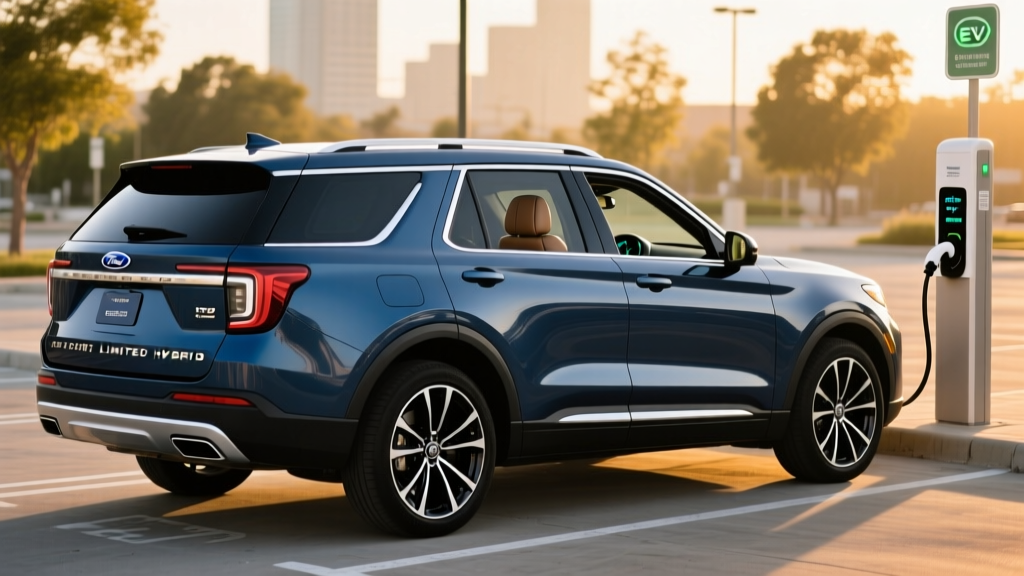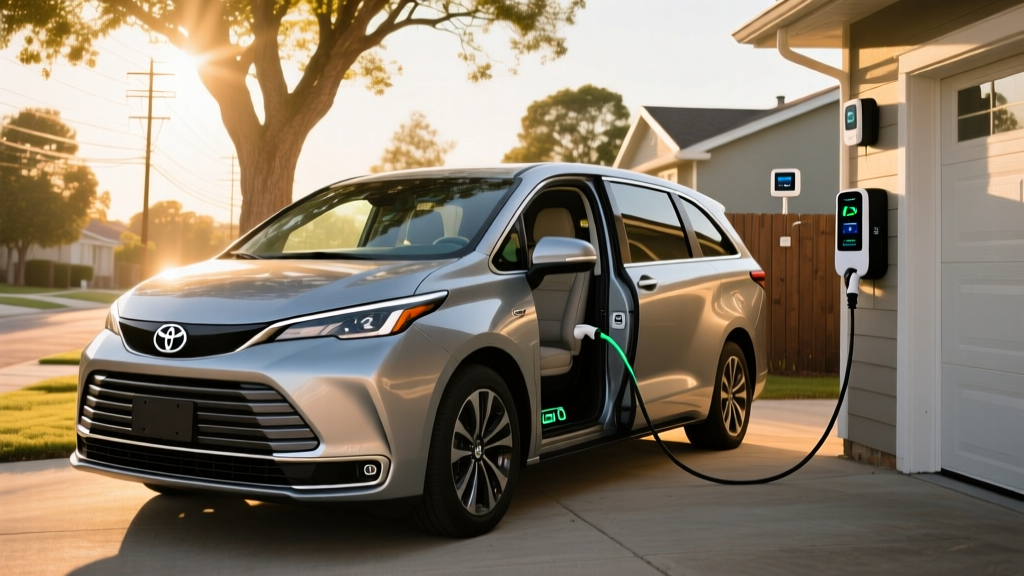
Not every driver is ready to commit to a fully electric vehicle — and in 2026, hybrid energy systems offer a compelling middle ground. Whether you're eyeing a conventional hybrid (HEV) that never needs plugging in, or a plug-in hybrid (PHEV) that delivers 30–50 miles of electric-only driving before its gas engine kicks in, understanding the engineering and economics behind these powertrains is essential before you sign a purchase agreement.
This guide breaks down how modern hybrid energy systems actually work, what the real-world fuel economy looks like versus EPA estimates, what battery longevity and replacement costs you should budget for, and whether a hybrid, PHEV, or full EV makes the most sense for your daily routine.
What Are Hybrid Energy Systems in Vehicles?
A hybrid energy system pairs an internal combustion engine (ICE) with one or more electric motors and a battery pack. The system's computer continuously manages power flow between the engine, motor, battery, and wheels to maximize efficiency. The key distinction for buyers is whether the battery can be charged from an external source (plug-in) or only regenerates energy internally.
HEV vs PHEV: The Fundamental Split
| Feature | Conventional Hybrid (HEV) | Plug-In Hybrid (PHEV) |
|---|---|---|
| Plugs in to charge? | No — charges via regenerative braking and engine | Yes — Level 1/Level 2 charging supported |
| Battery size | 0.5–2.0 kWh (small buffer) | 11–26 kWh (usable) |
| Electric-only driving | Very short bursts, low speed (under ~1 mi) | 25–50+ miles at highway speeds |
| Primary fuel | Gasoline (100%) | Electricity + gasoline |
| EPA MPG (combined) | 40–57 MPG typical | 30–46 MPG (gas mode) + 80–120 MPGe (electric) |
| Federal tax credit (§30D) | Not eligible | Up to $7,500 (subject to rules — see below) |
| Price premium over gas car | $1,000–$3,000 | $4,000–$10,000 |
The hybrid energy system in an HEV uses its small battery as a kinetic energy buffer — capturing energy during braking and coasting, then deploying it to assist the engine during acceleration. A PHEV's system does all of that plus accepts grid electricity, effectively giving you two cars in one: an EV for daily commuting and a hybrid for longer trips.
2026 Hybrid & PHEV Fuel Economy: EPA vs Real-World MPG
Hybrid energy systems are uniquely efficient in stop-and-go city driving, where regenerative braking recovers energy that a conventional car wastes as heat. This means many hybrids actually exceed their EPA city estimates in real-world urban use — the opposite of most gas-only vehicles.
| 2026 Model | Type | City MPG | Hwy MPG | Combined MPG | PHEV Elec. Range |
|---|---|---|---|---|---|
| Toyota Prius | HEV | 57 | 52 | 55 | N/A |
| Toyota Prius Prime | PHEV | 52 (gas) | 48 (gas) | 50 (gas) / 127 MPGe | 44 mi |
| Honda Accord Hybrid | HEV | 51 | 44 | 48 | N/A |
| Toyota RAV4 Prime | PHEV | 40 (gas) | 36 (gas) | 38 (gas) / 94 MPGe | 42 mi |
| Hyundai Tucson PHEV | PHEV | 37 (gas) | 35 (gas) | 36 (gas) / 84 MPGe | 33 mi |
| Ford Escape Hybrid | HEV | 42 | 36 | 39 | N/A |
| Toyota Camry Hybrid | HEV | 51 | 49 | 50 | N/A |
Source: fueleconomy.gov (EPA). Real-world highway MPG for hybrids is typically 5–10% below EPA highway figures; city MPG often meets or exceeds EPA estimates.
PHEV Battery, Charging, and Electric-Only Range
For PHEVs, the hybrid energy system's battery is the component that determines how much of your daily driving can be zero-emission. Here's what the numbers look like for popular 2026 models:
| PHEV Model | Battery (kWh usable) | Elec. Range (mi) | Total Range (mi) | L2 Charge Time | DC Fast Charge? |
|---|---|---|---|---|---|
| Toyota Prius Prime | 13.6 kWh | 44 | ~550 | ~4 hr (3.3 kW) | No |
| Toyota RAV4 Prime | 14.9 kWh | 42 | ~580 | ~2.5 hr (6.6 kW) | No |
| Hyundai Tucson PHEV | 13.8 kWh | 33 | ~440 | ~2 hr (7.2 kW) | No |
| Jeep Wrangler 4xe | 17.3 kWh | 22 | ~370 | ~2.5 hr (7.2 kW) | No |
| Chrysler Pacifica PHEV | 16.0 kWh | 32 | ~460 | ~2 hr (7.2 kW) | No |
Critical takeaway: Almost no current PHEVs support DC fast charging. The batteries are simply too small to justify the added cost, weight, and thermal management complexity of a DC fast-charge system. Level 2 charging (240V, 3.3–7.2 kW) is the practical standard, meaning a full charge takes 2–5 hours. For most owners, this means plugging in overnight at home or during the workday — which is entirely sufficient to replenish 30–50 miles of electric range.
In real-world conditions, PHEV electric range drops 15–25% in cold weather (below freezing) because the hybrid energy system diverts battery energy to cabin heating and battery thermal management. A RAV4 Prime rated at 42 miles may deliver 30–35 electric miles on a 20°F January morning.
Powertrain Specs: Combined Horsepower and System Architecture
Modern hybrid energy systems are not just about efficiency — many deliver genuinely strong acceleration. The combined output of the engine and electric motor(s) often exceeds what a comparable gas-only model produces:
- Toyota Prius Hybrid: 2.0L 4-cyl + electric motor = 196 HP combined. 0–60 mph in ~7.2 seconds.
- Toyota Prius Prime (PHEV): 2.0L 4-cyl + motor = 220 HP combined. 0–60 mph in ~6.6 seconds.
- Toyota RAV4 Prime (PHEV): 2.5L 4-cyl + dual motors = 302 HP combined. 0–60 mph in ~5.7 seconds. AWD standard.
- Honda Accord Hybrid: 2.0L 4-cyl + dual motors = 204 HP combined. 0–60 mph in ~7.0 seconds.
- Hyundai Tucson PHEV: 1.6L turbo 4-cyl + motor = 261 HP combined. 0–60 mph in ~6.3 seconds. AWD standard.
The electric motor's instant torque fill is particularly noticeable in city merging and passing situations, where conventional gas cars wait for a transmission downshift. Many PHEVs use the electric motor as the primary drive source at lower speeds, with the engine engaging seamlessly above ~40 mph or under heavy throttle — a series-parallel architecture that maximizes both efficiency and responsiveness.
Pricing and Federal Tax Credit Eligibility
Here's where the math gets interesting — and where many buyers get confused. The IRS §30D Clean Vehicle Credit applies only to PHEVs (and BEVs), not conventional HEVs. But qualifying is far from guaranteed.
2026 §30D Tax Credit Eligibility Checklist (PHEVs Only)
- MSRP cap: Vans/SUVs/pickups ≤ $80,000; sedans/other ≤ $55,000
- Buyer income cap: AGI ≤ $150K (single) / $225K (head of household) / $300K (joint)
- Battery sourcing: Increasing percentages of critical minerals and battery components must be sourced from the US or FTA partners (requirements tighten annually through 2029)
- Final assembly: Must occur in North America
- Credit amount: Up to $7,500 ($3,750 for battery components + $3,750 for critical minerals — each half is independently qualified)
- Point-of-sale transfer: Eligible buyers can transfer the credit to the dealer for an immediate price reduction at purchase
Consult a tax professional for your specific situation. Rules are subject to change. See IRS.gov §30D guidance.
| 2026 Model | Base MSRP | Type | Potential §30D Credit | Effective Price |
|---|---|---|---|---|
| Toyota Prius LE | ~$29,450 | HEV | $0 | ~$29,450 |
| Toyota Prius Prime SE | ~$33,975 | PHEV | Up to $3,750* | ~$30,225 |
| Toyota RAV4 Prime SE | ~$44,900 | PHEV | Up to $7,500* | ~$37,400 |
| Hyundai Tucson PHEV SEL | ~$39,750 | PHEV | Varies* | Check dealer |
| Honda Accord Sport Hybrid | ~$33,990 | HEV | $0 | ~$33,990 |
*Credit amounts depend on battery sourcing compliance and buyer income. Many PHEVs qualify for only $3,750 (one half of the credit) due to critical-mineral sourcing rules. Verify current eligibility at fueleconomy.gov.
Battery Reliability, Warranty, and Replacement Costs
This is the single most common concern among first-time hybrid buyers: What happens when the hybrid battery dies? The reassuring answer, backed by two decades of real-world data from Toyota, Honda, and Hyundai, is that hybrid batteries are engineered to last the life of the vehicle.
Hybrid Battery Warranty Standards (2026)
| Manufacturer | Warranty Period | Mileage Limit | Capacity Threshold |
|---|---|---|---|
| Toyota (HEV & PHEV) | 10 years | 150,000 mi | Below ~60% SoH |
| Honda (HEV) | 8 years | 100,000 mi | Below ~60% SoH |
| Hyundai/Kia (HEV & PHEV) | 10 years | 100,000 mi | Below ~70% SoH |
| Ford (HEV & PHEV) | 8 years | 100,000 mi | Below ~60% SoH |
Replacement cost if out of warranty: Hybrid battery packs range from roughly $2,000–$4,000 for HEV packs (smaller, 1–2 kWh) to $5,000–$9,000 for PHEV packs (larger, 13–18 kWh). However, independent hybrid battery refurbishers now offer reconditioned packs for $1,000–$2,500, and individual cell module replacement (for HEVs) can cost as little as $300–$800.
In practice, Toyota Prius taxis routinely exceed 300,000 miles on original hybrid batteries. The hybrid energy system's battery management computer keeps the pack in a narrow state-of-charge window (typically 40–80%), avoiding the deep cycles that accelerate degradation. PHEV batteries face slightly more stress due to deeper daily cycling, but their larger capacity provides more buffer.
Hybrid vs PHEV vs Full EV: Which Fits Your Life?
Choose Based on Your Actual Driving Pattern
Choose a conventional HEV if:
- You cannot install a home charger (apartment, street parking, no garage)
- You want maximum MPG with zero behavior change — just fill up with gas
- Your budget is tighter and you want a smaller upcharge over a gas car
- You drive 15,000+ miles/year and want proven, low-maintenance efficiency
Choose a PHEV if:
- You can charge at home (Level 1 or Level 2) and your daily commute is under 40 miles round-trip
- You want EV-like daily driving but need gas flexibility for road trips, towing, or rural travel
- You want to reduce gasoline consumption by 60–80% without range anxiety
- You may qualify for the §30D tax credit, narrowing the price gap with HEVs
Choose a full BEV if:
- You have reliable home charging and your daily driving is under 250 miles
- You want the lowest per-mile fuel cost ($0.03–$0.05/mi vs $0.08–$0.12/mi for gas)
- You want zero tailpipe emissions and minimal maintenance (no oil changes, fewer moving parts)
- You're ready to plan around DC fast-charging on road trips
The hybrid energy system that's right for you depends almost entirely on your charging access and daily mileage pattern. A PHEV you never plug in is just a heavier, more expensive HEV — you'll get worse gas mileage than a purpose-built hybrid. Conversely, a PHEV you charge every night effectively turns your 35-mile commute into zero-emission driving while preserving a 500+ mile total range for weekend trips.
Pros and Cons of Hybrid Energy Systems
Advantages
- 40–57 MPG combined — 30–50% less fuel than comparable gas cars
- No charging required (HEV) or optional flexibility (PHEV)
- Regenerative braking reduces brake pad wear (often 80,000+ mi on original pads)
- PHEVs can run zero-emission for daily commutes
- Proven reliability: 20+ years of hybrid production data
- Strong low-end torque from electric motor assist
- Lower total cost of ownership vs gas in most scenarios
Limitations
- Higher upfront cost than gas-only equivalents ($1,000–$10,000 premium)
- HEVs produce tailpipe emissions (reduced, not eliminated)
- PHEVs that aren't plugged in regularly waste their electric potential
- Most PHEVs lack DC fast charging
- Hybrid battery replacement is expensive if out of warranty ($2K–$9K)
- PHEVs are heavier (two full powertrains), reducing highway MPG vs lighter HEVs
- Federal tax credit eligibility is complex and may not apply
Frequently Asked Questions
How many MPG does a hybrid actually get in real driving?
Most 2026 hybrids deliver within 2–4 MPG of their EPA combined rating in mixed driving. City-dominant commuters often exceed EPA city figures because regenerative braking recovers more energy in stop-and-go traffic. Highway-dominant drivers may see 3–5 MPG below EPA highway estimates. The Toyota Prius, rated at 57 city / 52 highway, commonly achieves 50–58 MPG combined in owner-reported data on fueleconomy.gov.
How far can a PHEV go on electric only?
Current 2026 PHEVs offer 22–44 miles of EPA-rated electric-only range. The Toyota Prius Prime leads at 44 miles; the RAV4 Prime delivers 42 miles. In cold weather (below 30°F), expect a 15–25% reduction. At sustained highway speeds above 70 mph, the engine may engage earlier to meet power demands, slightly reducing effective electric range.
Is a hybrid reliable, and what does battery replacement cost?
Hybrid powertrains from Toyota, Honda, and Hyundai have demonstrated exceptional reliability over two decades. Hybrid batteries are warranted for 8–10 years / 100,000–150,000 miles. Out-of-warranty replacement costs $2,000–$4,000 for HEV packs and $5,000–$9,000 for PHEV packs, though refurbished options and cell-level repairs are available for significantly less. Most hybrid batteries outlast 200,000 miles with normal use.
Does a hybrid qualify for any tax credit?
Conventional hybrids (HEVs) do not qualify for the federal §30D Clean Vehicle Credit. Only plug-in hybrids (PHEVs) and full EVs are eligible. Even among PHEVs, eligibility depends on MSRP caps, buyer income limits, and battery sourcing requirements. Some PHEVs qualify for the full $7,500; others qualify for $3,750 or nothing. Check current eligibility at fueleconomy.gov and consult a tax professional. Some states offer additional credits for PHEVs — check your state's energy office.
Do I need to plug in a conventional hybrid?
No. Conventional HEVs (like the Toyota Prius, Honda Accord Hybrid, or Camry Hybrid) charge their batteries entirely through regenerative braking and the gasoline engine. You never plug them in. Only PHEVs benefit from plug-in charging, and even PHEVs will operate as regular hybrids if you don't charge them — just without the electric-range benefit.
Hybrid vs PHEV vs EV — which should I buy?
If you lack home charging access, an HEV is your best electrified option. If you can charge at home and commute under 40 miles daily, a PHEV gives you EV-like commuting with gas-engine road-trip flexibility. If you have reliable home charging and rarely drive more than 250 miles in a day, a full BEV offers the lowest operating cost and zero tailpipe emissions. Your charging situation matters more than any spec on the window sticker.