If you have searched for "hybrid electric plane" recently, you are not alone. The keyword has surged as aviation companies like Airbus, Heart Aerospace, and Ampaire prototype hybrid-electric aircraft that blend turbine engines with battery-electric motors. But what does aerospace hybrid technology actually share with the hybrid and plug-in hybrid vehicles in your driveway — and where do the parallels end?
This guide maps hybrid-electric propulsion concepts from aviation onto the automotive HEV and PHEV landscape in 2026, using concrete EPA data, battery specs, and real ownership numbers. If you are weighing a hybrid against a PHEV or a full BEV, this cross-industry lens clarifies which powertrain fits your driving life.
What Is a Hybrid Electric Plane — and Why Car Shoppers Are Searching It
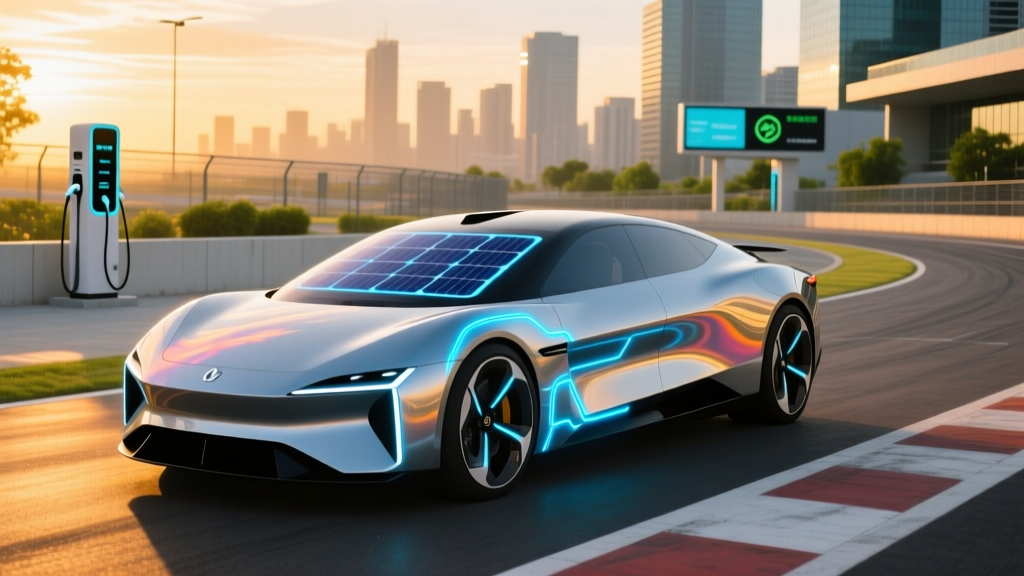
A hybrid electric plane pairs a conventional propulsion source (typically a turboshaft or turboprop engine) with one or more electric motors powered by a battery pack. The architecture mirrors a Toyota Prius or Chrysler Pacifica Hybrid in concept: an internal combustion unit handles sustained cruise load, while electric motors supply supplemental torque, enable limited zero-emission operation, and recapture energy during descent or taxi.
Aviation prototypes such as the Heart Aerospace ES-30 (a 30-seat regional hybrid-electric turboprop targeting 2028 entry) and Ampaire's Electric EEL demonstrator use lithium-based battery packs in the 100–500 kWh range paired with turbine generators. The engineering challenges — energy density, thermal management, weight penalties — directly echo the trade-offs automotive engineers navigate in every PHEV battery pack.
HEV vs PHEV vs Aviation Hybrid: Architecture at a Glance
| Feature | HEV (e.g., Prius) | PHEV (e.g., Pacifica Hybrid) | Hybrid Electric Plane |
|---|---|---|---|
| Plug-in required | No | Yes (Level 1/2) | Ground charging + turbine regen |
| Battery capacity | ~1–2 kWh | ~12–20 kWh | 100–500+ kWh (prototype) |
| Electric-only range | <1 mile at low speed | 25–45 miles (EPA) | Taxi + short hop (conceptual) |
| Primary energy source | Gasoline | Gasoline + grid electricity | Jet-A / SAF + grid electricity |
| Regen capture | Braking | Braking | Descent / taxi |
Real Automotive Hybrid MPG: What EPA Data Actually Shows
While aviation hybrids measure efficiency in specific fuel consumption (lb/hp·hr), car buyers need EPA MPG. Below are 2026 benchmark figures for top-selling electrified powertrains, sourced from fueleconomy.gov.
| Vehicle (2026 MY) | Type | City MPG | Hwy MPG | Combined | Electric-Only (mi) |
|---|---|---|---|---|---|
| Toyota Prius LE | HEV | 57 | 56 | 57 | N/A |
| Honda Accord Hybrid | HEV | 51 | 44 | 48 | N/A |
| Toyota RAV4 Prime | PHEV | 40 (gas) | 36 (gas) | 38 / 94 MPGe | 42 |
| Chrysler Pacifica Hybrid | PHEV | 29 (gas) | 30 (gas) | 30 / 82 MPGe | 32 |
| Ford Escape PHEV | PHEV | 42 (gas) | 36 (gas) | 39 / 105 MPGe | 37 |
Real-world note: HEVs routinely exceed their EPA city figures in stop-and-go traffic because regenerative braking dominates urban driving. Expect 60+ MPG from a Prius in dense city loops. Highway cruising at 75+ mph drops efficiency 10–15% due to aero drag — a penalty shared by aircraft in cruise.
PHEV Electric-Only Range, Battery Size, and Charging Times
For PHEVs, the battery pack is the differentiator. Unlike aviation prototypes where battery mass is a design crisis (current lithium-ion energy density of ~250 Wh/kg makes a 500 kWh pack weigh roughly 4,400 lb), automotive PHEVs use 12–20 kWh packs weighing 250–350 lb.
| 2026 PHEV Model | Battery (kWh usable) | EV Range (EPA mi) | Total Range (mi) | Level 2 Charge (0–100%) | DC Fast Charge |
|---|---|---|---|---|---|
| Toyota RAV4 Prime | 14.9 | 42 | ~600 | ~2.5 hr @ 6.6 kW | No |
| Jeep Wrangler 4xe | 17.3 | 22 | ~370 | ~2 hr @ 7.4 kW | No |
| BMW X5 xDrive50e | 25.7 | 38 | ~440 | ~3.25 hr @ 7.4 kW | No |
| Hyundai Tucson PHEV | 13.8 | 33 | ~420 | ~1.75 hr @ 7.2 kW | No |
DC fast charging gap: As of the 2026 model year, virtually no mainstream PHEVs offer DC fast charging (CCS or NACS). The battery packs are simply too small to justify the hardware cost and weight. This is a meaningful distinction from full BEVs, where 150–350 kW DC charging is standard. If you need rapid public charging, a PHEV is not the answer — but for overnight Level 2 replenishment at home, 2–3 hours is more than sufficient.
Powertrain Specs: Combined Horsepower and Motor Output
Hybrid powertrains pair engine and electric motor output in ways that rarely add linearly (peak engine HP and peak motor HP often occur at different RPMs). Here are combined system figures for popular 2026 models:
- Toyota Prius: 2.0L inline-4 + 2 motor-generators → 194 hp combined (AWD-e variant: 196 hp)
- Toyota RAV4 Prime: 2.5L inline-4 + front/rear electric motors → 302 hp combined, 0–60 mph in 5.7 seconds
- Jeep Wrangler 4xe: 2.0L turbo-4 + P2 motor → 375 hp / 470 lb-ft combined
- BMW X5 xDrive50e: 3.0L turbo inline-6 + P2 motor → 483 hp combined, 0–60 in 4.6 seconds
- Chrysler Pacifica Hybrid: 3.6L V6 + 2 motor-generators (eCVT) → 260 hp combined
Aviation hybrid prototypes target combined outputs in the 800–2,000+ shaft-horsepower range, blending turbine and electric motor contributions. The engineering principle — using electric torque to fill in combustion's power-band gaps — is identical to what Toyota's Hybrid Synergy Drive does at stoplights.
Pricing, Tax Credits, and Total Cost of Ownership
Hybrid and PHEV pricing spans a wide band in 2026. Here is what you can expect at the dealership, including federal incentive context:
| Model | Base MSRP | §30D Federal Credit | Effective Price* |
|---|---|---|---|
| Toyota Prius LE (HEV) | $29,445 | $0 (HEV ineligible) | $29,445 |
| Toyota RAV4 Prime SE (PHEV) | $44,515 | Up to $7,500† | ~$37,015 |
| Ford Escape PHEV | $40,400 | Up to $7,500† | ~$32,900 |
| BMW X5 xDrive50e (PHEV) | $74,900 | $0 (MSRP cap exceeded) | $74,900 |
*Effective price assumes full credit eligibility. †PHEV credit eligibility under IRS §30D depends on buyer income caps ($150K single / $300K joint AGI), MSRP caps ($55K SUVs / $55K sedans), critical-mineral sourcing, and North American final assembly. Point-of-sale transfer is available at participating dealers. Always verify current-year rules with a tax professional.
Conventional HEVs do not qualify for the §30D new clean vehicle credit (they lack the minimum 7 kWh battery and plug-in capability). Some states offer separate hybrid rebates — check your state energy office for current programs.
Hybrid Battery Warranty & Replacement Costs
Every major automaker covers hybrid and PHEV battery packs for a minimum of 8 years / 100,000 miles (federally mandated for emissions-related components in many states). California Air Resources Board (CARB) states extend this to 10 years / 150,000 miles.
- Toyota: 10 yr / 150,000 mi hybrid battery warranty (all 50 states since 2020)
- Hyundai/Kia: 10 yr / 100,000 mi (150K in CARB states)
- Ford: 8 yr / 100,000 mi
- BMW: 8 yr / 80,000 mi (capacity retention ≥70%)
Replacement cost if out of warranty: HEV battery packs typically run $2,000–$4,500 installed; PHEV packs range from $6,000–$12,000 depending on capacity. Real-world data from Consumer Reports shows most hybrid batteries last 150,000–200,000+ miles before significant degradation.
Hybrid vs PHEV vs Full EV: Which Powertrain Fits You?
Choose a Hybrid (HEV) If…
- You have no home charging access (apartment, street parking)
- You want maximum MPG with zero behavior change
- Your budget is under $35,000
- You drive mostly in the city (regen-heavy routes)
Choose a PHEV If…
- You can charge at home nightly (Level 1 or 2)
- Your daily commute is under 40 miles round-trip
- You take road trips and want gas-engine range backup
- You want to qualify for the §30D credit
Choose a Full EV (BEV) If…
- You have reliable home Level 2 charging
- You want the lowest cost per mile (~$0.04/mi vs $0.12/mi hybrid)
- You want zero tailpipe emissions and minimal maintenance
- Your daily driving is under 250 miles and you can plan road-trip charging
The Aviation Parallel: Why Hybrid Exists in Both Industries
Hybrid electric planes are being developed for the same reason PHEVs exist in automotive: battery energy density is not yet sufficient for the full mission profile. A regional aircraft needs 800+ miles of range — current batteries alone cannot deliver that without prohibitive weight. Similarly, a PHEV acknowledges that while 90% of your driving is electric-commutable, the 10% road-trip use case still benefits from a gas tank. As solid-state batteries approach 400–500 Wh/kg (projected late 2020s), both industries will shift toward pure-electric architectures.
Reliability: What 20 Years of Hybrid Data Tells Us
Toyota's Hybrid Synergy Drive has been in continuous production since 1997 (Prius). That is nearly three decades of field data. Key reliability insights:
- Hybrid batteries degrade, but slowly: Nickel-metal hydride (NiMH) packs in older Prius models and lithium-ion packs in newer models typically lose 10–20% capacity over 150,000 miles — well within the warranty buffer.
- The engine lasts longer: Because the electric motor handles low-speed load and the engine operates primarily in its efficient Atkinson cycle, hybrid engines often experience less wear than conventional counterparts.
- Brake pads last longer: Regenerative braking reduces friction brake usage by 40–60%. It is common for Prius owners to reach 80,000+ miles on original brake pads.
- eCVT transmissions are robust: Toyota's planetary-gear eCVT has no belts or clutches to fail — it is one of the most reliable transmission designs in production.
Aviation hybrids will need to accumulate similar field data before passengers and regulators build equivalent confidence. The FAA certification process for hybrid-electric propulsion (under 14 CFR Part 25 for transport category) is expected to take years of flight-test validation.
Frequently Asked Questions
How many MPG does a hybrid actually get in real driving?
The 2026 Toyota Prius is EPA-rated at 57 MPG combined. In real-world city driving with frequent stops, owners routinely report 60–65 MPG thanks to aggressive regenerative braking. Highway driving at 75 mph drops this to roughly 48–52 MPG. Ambient temperature matters: expect 5–10% MPG loss in winter below freezing due to engine warm-up cycles and cabin heating load.
How far can a PHEV go on electric-only power?
EPA-rated electric-only range for 2026 PHEVs spans 22–42 miles depending on battery size and vehicle weight. The RAV4 Prime leads at 42 miles from its 14.9 kWh pack. In cold weather (below 32°F), expect a 20–30% reduction in electric range due to cabin heating demands and reduced battery efficiency. If your round-trip commute is 30 miles or less and you charge nightly, a PHEV can operate as a de facto EV on weekdays while retaining 400+ miles of gas range for weekend trips.
Do conventional hybrids need to be plugged in?
No. Conventional HEVs (like the standard Prius, Honda Accord Hybrid, or Toyota Camry Hybrid) recharge their small battery packs exclusively through regenerative braking and engine-driven generation. There is no plug, no charging cable, and no home charging infrastructure required. Only plug-in hybrids (PHEVs) have a charge port and benefit from grid electricity.
Does a hybrid or PHEV qualify for the federal tax credit?
Conventional hybrids do not qualify for the §30D federal clean vehicle credit — the law requires a minimum 7 kWh battery and plug-in capability. Qualifying PHEVs can receive up to $7,500, but eligibility depends on: buyer AGI limits ($150K single / $300K joint), vehicle MSRP caps ($55K for SUVs, $55K for sedans), North American final assembly, and battery critical-mineral sourcing thresholds. The credit can be transferred to the dealer at point of sale as a purchase-price reduction. Check IRS.gov for current-year rules and the official eligibility tool.
What does a hybrid battery replacement cost?
Out-of-warranty hybrid battery replacement costs range from $2,000–$4,500 for HEVs and $6,000–$12,000 for PHEVs, including labor. However, most hybrid batteries last well beyond their warranty periods. Toyota reports that fewer than 1% of Prius battery packs have required replacement under warranty. Third-party refurbishment and individual cell-module replacement services are increasingly available for $800–$1,500, further reducing long-term risk.
Will hybrid electric plane technology improve car batteries?
Yes — indirectly. Aviation demands extreme energy density and safety margins, which accelerates R&D in solid-state batteries, silicon-anode chemistry, and advanced thermal management. Companies like QuantumScape and Samsung SDI are pursuing solid-state cells partly funded by aerospace contracts. When these cells reach automotive production volumes (expected 2028–2030), PHEVs could see 60–80 miles of electric range from packs the same physical size as today's 30–40 mile units.