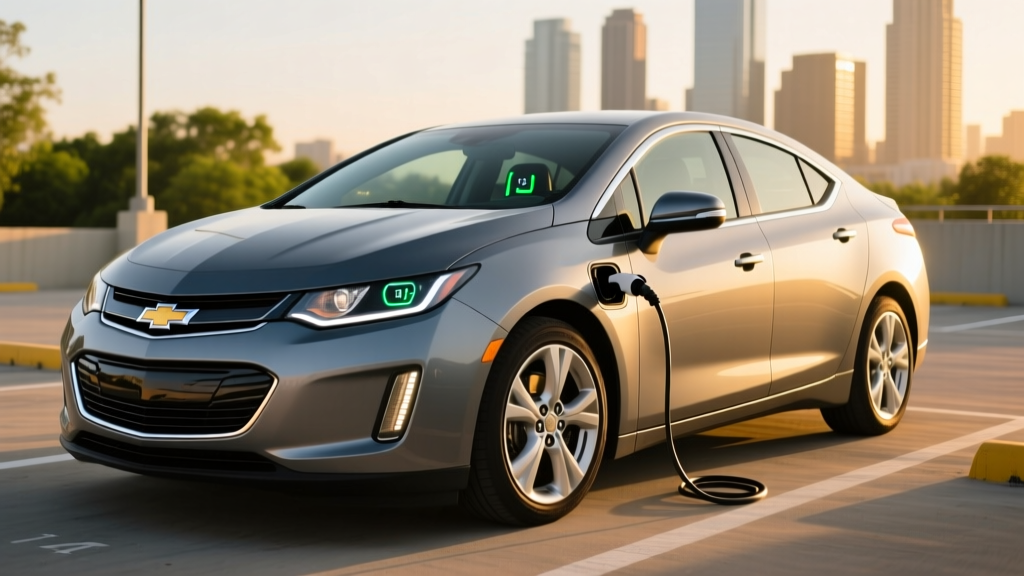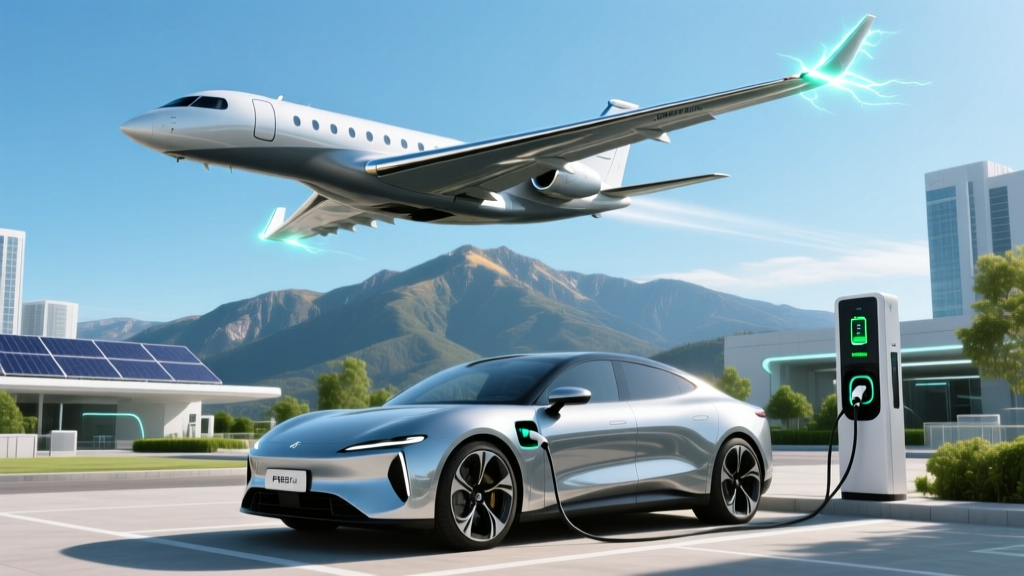
Search interest in the hybrid electric airplane has surged as aviation startups promise greener skies. But while companies like Heart Aerospace and Ampaire run flight tests on regional hybrid-electric prototypes, the average commuter cannot buy a ticket on one in 2026. What you can buy today is a plug-in hybrid electric vehicle (PHEV) that uses remarkably similar engineering principles — pairing a gasoline engine with an electric motor and a lithium-ion battery — and delivers transformative efficiency right now.
This guide uses the hybrid electric airplane as a lens to explain how hybrid and PHEV powertrains work, then grounds the discussion in the most popular PHEV on the U.S. market: the 2026 Toyota RAV4 Prime. We will cover exact EPA figures, real-world MPG, battery warranties, tax-credit eligibility, and who should choose a PHEV over a full BEV or conventional hybrid.
Hybrid Electric Airplane Tech: Where Aviation Stands in 2026
A hybrid electric airplane pairs a turbine or piston engine with one or more electric motors and a battery pack, much like a Toyota Prius pairs a gasoline engine with electric motors. The goal is identical: use the engine at its most efficient operating point while the electric system handles peak loads, regenerative braking (or in aviation, descent energy recovery), and low-speed taxi.
As of early 2026, the most advanced hybrid-electric aircraft programs include:
- Heart Aerospace ES-30 — a 30-seat regional airliner with a hybrid-electric turbogenerator backup; expected entry into service in 2028.
- Ampaire Electric EEL — a modified Cessna 337 with a piston engine and electric motor on separate nacelles; completed demonstration flights in Hawaii and France.
- BAE Systems / Collins Aerospace — developing megawatt-class hybrid-electric propulsion for military and cargo applications.
None of these aircraft are commercially available to consumers, and certification timelines remain years away. The FAA certification process for novel propulsion systems is far more rigorous than automotive homologation. For the foreseeable future, the most practical way to benefit from hybrid-electric technology is in a car, not a cockpit.
HEV vs PHEV: Understanding the Two Hybrid Types
Before we examine specific models, it is essential to distinguish the two types of hybrid vehicles available to consumers today.
| Feature | Conventional Hybrid (HEV) | Plug-In Hybrid (PHEV) |
|---|---|---|
| Battery size | 0.6–1.6 kWh (small) | 13–25 kWh (large) |
| Plugs in? | No — charges via regen and engine | Yes — Level 1 or Level 2 |
| Electric-only range | 0–1 mile at low speed | 20–50+ miles (EPA) |
| Fuel economy (gas mode) | 40–57 MPG combined | 35–44 MPG combined (after battery depletes) |
| MPGe (electric mode) | N/A | 84–94+ MPGe |
| Federal tax credit | No | Up to $7,500 (see eligibility below) |
| Example | Toyota RAV4 Hybrid | Toyota RAV4 Prime (PHEV) |
A conventional HEV like the RAV4 Hybrid never plugs in — its small battery captures energy from regenerative braking and the engine. A PHEV like the RAV4 Prime has a much larger battery that you charge from a wall outlet, giving you a genuine electric-only commute before the gasoline engine engages.
2026 Toyota RAV4 Prime: The PHEV Benchmark
The RAV4 Prime remains Toyota's most powerful and most efficient RAV4 variant. Here are the exact specifications for the 2026 model year:
| Specification | 2026 Toyota RAV4 Prime SE | 2026 RAV4 Prime XSE |
|---|---|---|
| Combined horsepower | 302 hp | 302 hp |
| Engine | 2.5L 4-cyl Atkinson + 2 electric motors (AWD) | 2.5L 4-cyl Atkinson + 2 electric motors (AWD) |
| Battery capacity | 18.1 kWh (lithium-ion) | 18.1 kWh (lithium-ion) |
| EPA electric-only range | 42 miles | 42 miles |
| EPA MPGe (combined) | 94 MPGe | 94 MPGe |
| EPA MPG (gas-only, combined) | 38 MPG | 38 MPG |
| 0–60 mph | 5.7 seconds | 5.7 seconds |
| Total range (EV + gas) | ~600 miles | ~600 miles |
| Level 2 charge time (0–100%) | ~2.5 hours (6.6 kW onboard charger) | ~2.5 hours (6.6 kW onboard charger) |
| DC fast charging | Not supported | Not supported |
| Drivetrain | Electronic AWD (eAWD) | Electronic AWD (eAWD) |
| Base MSRP | $46,000 (est.) | $49,500 (est.) |
Sources: fueleconomy.gov, Toyota Motor Corporation specifications.
Real-World MPG: How the RAV4 Prime Actually Performs
The EPA rates the RAV4 Prime at 94 MPGe in combined electric driving and 38 MPG combined once the battery is depleted. But real-world results depend heavily on your driving pattern.
Real-world MPG expectations for the RAV4 Prime:
- Short commutes under 40 miles (charged daily): You may use zero gasoline for weeks, achieving effective 100+ MPGe.
- Mixed driving with regular charging: Owners commonly report 60–80 MPG combined over a tank, since most miles are electric.
- Road trips (battery depleted, highway driving): Expect 33–36 MPG at 70 mph — slightly below the EPA 38 MPG combined, because the EPA cycle weights city driving heavily, where hybrids excel.
- Cold weather (below 32°F): Electric range drops to roughly 32–35 miles due to cabin heating demands and reduced battery efficiency. Gas MPG dips 2–4 MPG in sustained cold.
The key insight: if you can charge at home and your daily driving is under 40 miles, the RAV4 Prime operates as an electric car on weekdays and a hybrid on weekends. This is the PHEV value proposition that a hybrid electric airplane cannot yet offer to consumers.
Charging the RAV4 Prime: What You Need at Home
The RAV4 Prime does not support DC fast charging — a common limitation among PHEVs. Its 6.6 kW onboard charger handles Level 2 charging efficiently:
| Charging Level | Power | Time (0–100%) | Cost (Est.) |
|---|---|---|---|
| Level 1 (120V household) | ~1.4 kW | ~12 hours | ~$0.04/mile (varies by electricity rate) |
| Level 2 (240V, home wallbox) | 6.6 kW | ~2.5 hours | ~$0.03–0.05/mile |
Most PHEV owners find Level 1 charging sufficient if the car is parked overnight for 10+ hours. However, a Level 2 home charger ($500–$1,500 installed, depending on electrical panel capacity) is recommended for convenience and to ensure a full battery each morning.
Federal Tax Credit: Does the RAV4 Prime Qualify?
Under IRS §30D rules current for 2026, the RAV4 Prime is eligible for a federal tax credit of up to $7,500, subject to several requirements:
- MSRP cap: SUVs must have an MSRP at or below $80,000. The RAV4 Prime clears this easily.
- Buyer income cap: Modified adjusted gross income must not exceed $150,000 (single), $225,000 (head of household), or $300,000 (joint).
- Battery sourcing: A percentage of critical minerals and battery components must be sourced from the U.S. or free-trade-agreement countries. Toyota's supply chain qualifies the RAV4 Prime for the full $7,500 as of early 2026, but sourcing rules tighten annually.
- Point-of-sale transfer: Since 2024, buyers can transfer the credit to the dealer at purchase, reducing the out-of-pocket price immediately rather than waiting for a tax refund.
- Tax liability: The credit is non-refundable if not transferred at point of sale, meaning it can only reduce tax liability to zero, not create a refund.
Always verify current eligibility at irs.gov and consult a tax professional before purchasing. Rules change and vary by individual circumstances.
With the full $7,500 credit applied at point of sale, the effective starting price of the RAV4 Prime SE drops to approximately $38,500 — competitive with many gas-only compact SUVs once you factor in fuel savings.
Battery Warranty, Reliability, and Replacement Cost
Battery longevity is the top concern for hybrid and PHEV buyers. Toyota addresses this with strong warranty coverage:
2026 RAV4 Prime battery warranty:
- Hybrid battery: 10 years / 150,000 miles (whichever comes first), covering defects and capacity loss below a defined threshold.
- Hybrid system components: 8 years / 100,000 miles (inverter, motor, control module).
- Replacement cost (out of warranty): Approximately $4,000–$6,000 for the traction battery pack, based on current Toyota dealer pricing. Third-party refurbished options may be available for $2,500–$4,000.
Toyota's hybrid Synergy Drive system has an exceptional reliability record spanning two decades and millions of vehicles. Data from Consumer Reports and J.D. Power consistently ranks Toyota hybrids among the most reliable vehicles in their segments. The RAV4 Prime's battery is liquid-cooled and conservatively managed, which slows degradation compared to performance-tuned EV batteries.
For comparison, the conventional RAV4 Hybrid carries the same 10-year/150,000-mile hybrid battery warranty despite its smaller battery, reflecting Toyota's confidence in the chemistry and thermal management.
PHEV vs Full EV vs Conventional Hybrid: Which Fits You?
Choose the RAV4 Prime (PHEV) if:
- You have home charging access (even a 120V outlet works)
- Your daily commute is under 42 miles round-trip
- You take road trips of 300+ miles regularly and want zero range anxiety
- You want AWD and 302 hp without the price premium of a long-range EV SUV
- You live in a cold climate where EV range loss is a concern
Choose a full BEV (e.g., Tesla Model Y, Hyundai Ioniq 5) if:
- You want zero tailpipe emissions and zero gasoline purchases
- Your daily driving is under 250 miles and you have reliable home + public charging
- You want lower maintenance costs (no oil changes, no engine)
- You qualify for the full $7,500 credit on a BEV and want maximum fuel savings
Decision framework:
- No home charging access? Choose a conventional HEV (RAV4 Hybrid, 40 MPG) — PHEVs lose their advantage without regular charging.
- Home charging + short commute + frequent road trips? PHEV is the optimal middle ground.
- Home charging + predictable driving under 250 miles? Full BEV delivers the lowest operating cost and simplest drivetrain.
Why a Hybrid Electric Airplane Won't Replace Your Car (Yet)
The engineering challenges facing hybrid electric airplanes are immense. Aviation demands energy densities above 250 Wh/kg at the cell level, and current lithium-ion technology hovers around 250–300 Wh/kg — sufficient only for short regional flights with small payloads. By contrast, a PHEV like the RAV4 Prime operates in a regime where energy density is far less critical: a 18.1 kWh battery weighing roughly 250 pounds is easily accommodated in a vehicle chassis, and the gasoline engine provides effectively unlimited range.
Until solid-state batteries or hydrogen fuel cells achieve the energy density and certification standards aviation requires, the hybrid electric airplane will remain a promising technology for specialized regional routes — not a consumer product. The PHEV in your driveway, however, uses the same fundamental architecture and delivers measurable savings today.
Frequently Asked Questions
How many MPG does the RAV4 Prime get?
The EPA rates the 2026 RAV4 Prime at 94 MPGe in combined electric driving and 38 MPG combined in gasoline-only mode. Real-world results vary: owners who charge daily and commute under 42 miles often see effective fuel economy above 70 MPG, while highway road trips yield 33–36 MPG.
How far can the RAV4 Prime go on electric only?
The EPA rates it at 42 miles of electric-only range. In real-world conditions, expect 35–40 miles in mild weather at moderate speeds, and 30–35 miles in cold weather or at sustained highway speeds above 65 mph.
Is the RAV4 Prime reliable and what does battery replacement cost?
Toyota's hybrid system has a two-decade reliability track record. The hybrid battery is warrantied for 10 years / 150,000 miles. Out-of-warranty replacement costs approximately $4,000–$6,000 at a dealer, with refurbished options available for less.
Does the RAV4 Prime qualify for a federal tax credit?
Yes — up to $7,500 under IRS §30D, subject to buyer income limits ($150K single / $300K joint), MSRP caps ($80K for SUVs), and battery-sourcing requirements. The credit can be transferred at point of sale to reduce your purchase price immediately. Verify current eligibility at irs.gov.
Can I charge the RAV4 Prime at a DC fast charger?
No. Like most PHEVs, the RAV4 Prime does not support DC fast charging. It charges at up to 6.6 kW on Level 2 (240V), reaching a full charge in approximately 2.5 hours. This is standard for PHEVs, whose smaller batteries do not require DC fast charging infrastructure.
Will hybrid electric airplanes be available for commercial travel soon?
Not for consumers in 2026. The most advanced programs (Heart Aerospace ES-30, Ampaire) target regional routes with 9–30 seat aircraft and are not expected to enter commercial service before 2028–2030. FAA certification for novel hybrid-electric propulsion systems is a multi-year process.
Should I buy a PHEV or a full EV?
If you have home charging, a commute under 42 miles, and take regular road trips exceeding 300 miles, the PHEV offers the best of both worlds. If your driving is predictable, under 250 miles daily, and you want zero gasoline expenses, a full BEV like the Tesla Model Y or Hyundai Ioniq 5 may be a better fit.