Quick Verdict: Is the Hybrid Chevy Equinox Worth It?
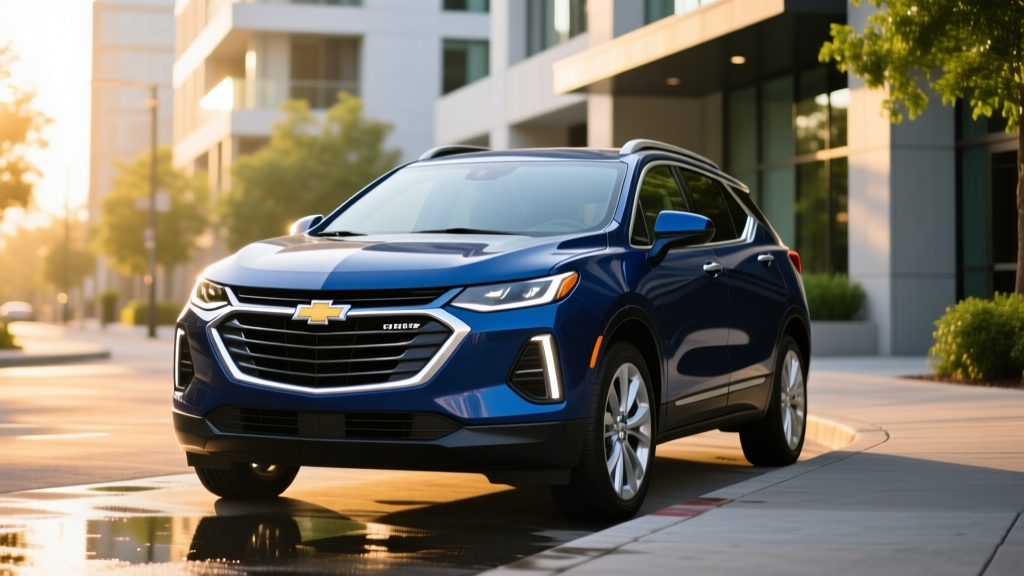
The 2026 Chevy Equinox hybrid lineup gives compact-SUV buyers two distinct paths to better fuel economy without going full electric. The conventional hybrid (HEV) trims deliver an EPA-estimated 38 MPG combined with no plug-in hassle, while the plug-in hybrid (PHEV) variant adds roughly 35 miles of electric-only commuting range for drivers who can charge at home. Both sit in the sweet spot for buyers who want meaningful fuel savings but aren't ready to commit to a battery-electric vehicle's charging infrastructure demands.
Starting around $30,200 for the HEV and $34,800 for the PHEV, the hybrid Equinox competes directly with the Toyota RAV4 Hybrid, Honda CR-V Hybrid, and Hyundai Tucson PHEV. Here's everything you need to know — exact MPG figures, powertrain specs, battery warranty details, and real-world ownership economics — before you configure one.
HEV vs PHEV: Which Hybrid Equinox Are You Looking At?
Conventional Hybrid (HEV): No plug required. The system captures energy through regenerative braking and the gasoline engine to recharge a small battery. You simply drive it like a regular car and visit gas stations less often.
Plug-in Hybrid (PHEV): Features a larger battery you can recharge by plugging in (Level 1 or Level 2). This gives you a dedicated electric-only driving range before the gas engine activates. If you never plug it in, it still works as a conventional hybrid — but you'd be leaving the best part of the PHEV on the table.
| Specification | HEV (Conventional Hybrid) | PHEV (Plug-in Hybrid) |
|---|---|---|
| Powertrain | 1.5L turbo I4 + electric motor | 1.5L turbo I4 + electric motor |
| Combined Horsepower | 194 hp | 214 hp |
| Battery Capacity | 1.3 kWh (NiMH) | 17.7 kWh (NMC lithium-ion) |
| EPA Electric-Only Range | N/A | 35 miles |
| Total Combined Range | ~510 miles | ~460 miles |
| EPA Combined MPG / MPGe | 38 MPG | 92 MPGe (electric) / 34 MPG (gas-only) |
| DC Fast Charging | No | No |
| Level 2 Charge Time (0–100%) | N/A | ~2.5 hours at 7.2 kW |
| Starting MSRP | $30,200 | $34,800 |
| Drivetrain | FWD or AWD | AWD |
Fuel Economy Breakdown: Real MPG Numbers
The EPA publishes separate city, highway, and combined figures that tell a more complete story than any single number. Here's what fueleconomy.gov reports for the 2026 Equinox hybrid lineup:
| Trim | City MPG | Highway MPG | Combined MPG |
|---|---|---|---|
| HEV FWD | 40 | 36 | 38 |
| HEV AWD | 37 | 34 | 35 |
| PHEV AWD (charge-sustaining) | 33 | 35 | 34 |
Real-world MPG note: Hybrid vehicles typically exceed their EPA city rating in stop-and-go traffic because regenerative braking recovers more energy at low speeds. Expect the HEV FWD to deliver 42–45 MPG in urban commuting. Highway cruising at 75+ MPH will pull figures closer to 32–34 MPG because the electric motor assists less at sustained high speeds. In cold weather (below 30°F), plan for a 5–10% reduction as the engine runs longer to heat the cabin and battery.
For the PHEV, the 92 MPGe figure only applies when you're driving on stored battery energy. Once the battery depletes to its charge-sustaining threshold, the PHEV operates as a conventional hybrid at 34 MPG combined. Your real-world efficiency depends entirely on your driving pattern: a 20-mile round-trip commute with nightly charging might mean months between fill-ups, while frequent long road trips will see the gas-only 34 MPG figure.
Powertrain and Performance
Both hybrid variants use GM's turbocharged 1.5-liter inline-four paired with an integrated electric motor through a dedicated hybrid transmission. The HEV produces 194 combined horsepower — adequate for merging and passing, with 0–60 MPH times in the 7.8-second range. The PHEV bumps output to 214 hp thanks to a more powerful electric motor mated to the larger battery pack, dropping 0–60 to approximately 7.2 seconds.
The PHEV's 17.7 kWh battery pack uses NMC (nickel-manganese-cobalt) lithium-ion chemistry, chosen for its higher energy density in the space-constrained under-floor location. The HEV's smaller 1.3 kWh pack uses proven NiMH (nickel-metal hydride) cells — a technology Toyota and GM have refined over two decades of hybrid production.
Neither the HEV nor the PHEV supports DC fast charging. The PHEV accepts up to 7.2 kW on Level 2 (240V), which fills the battery from empty in roughly 2.5 hours. On a standard 120V household outlet (Level 1 at ~1.4 kW), expect a full charge in about 12 hours — workable for overnight top-ups if you drive less than the full 35-mile electric range daily.
Pricing, Trims, and Tax Credit Eligibility
The 2026 Equinox hybrid lineup breaks down across four trim levels:
- Equinox HEV LT (FWD): $30,200 MSRP
- Equinox HEV LT (AWD): $32,200 MSRP
- Equinox HEV RS (AWD): $34,500 MSRP
- Equinox PHEV Premier (AWD): $34,800 MSRP
- Equinox PHEV RS (AWD): $37,200 MSRP
Federal Tax Credit: What You Need to Know
The conventional HEV does not qualify for the federal §30D clean vehicle credit. That credit is reserved for plug-in vehicles (BEVs and PHEVs) with sufficient battery capacity.
The PHEV may qualify for up to $7,500 under current IRS rules, but eligibility hinges on multiple requirements:
- MSRP cap: The Equinox PHEV is classified as an SUV, so the cap is $80,000 — all trims clear this easily.
- Buyer income limits: Modified AGI must not exceed $150,000 (single), $225,000 (head of household), or $300,000 (joint filers).
- Battery sourcing: Critical minerals and battery components must meet phased-in domestic/free-trade sourcing thresholds. For 2026, both the critical-minerals and battery-component requirements apply — each worth up to $3,750. Verify the specific Equinox PHEV build qualifies on the IRS's eligible vehicle list at irs.gov before purchasing.
- Point-of-sale transfer: You can transfer the credit to the dealer at purchase to reduce your out-of-pocket cost immediately, rather than waiting to claim it on your tax return.
Always confirm eligibility with a tax professional before relying on the credit. The sourcing requirements have tightened annually since the Inflation Reduction Act passed, and individual vehicle builds may or may not meet them depending on supply-chain sourcing at the time of manufacture.
Battery Warranty and Long-Term Reliability
HEV Battery Warranty: 8 years / 100,000 miles (whichever comes first) for defects and capacity loss below 60% of original capacity.
PHEV Battery Warranty: 8 years / 100,000 miles for defects and capacity loss below 70% of original capacity.
Powertrain Warranty (both): 5 years / 60,000 miles.
Hybrid battery replacement cost is the most common concern among first-time hybrid buyers. Here's the data-driven reality: modern hybrid batteries rarely fail catastrophically within the warranty period. GM's NiMH pack in the HEV is one of the most proven hybrid battery designs in production, with Toyota's similar systems routinely exceeding 200,000 miles with minimal degradation.
If an out-of-warranty replacement is needed, expect:
- HEV battery replacement: $2,000–$3,500 (smaller pack, simpler chemistry)
- PHEV battery replacement: $5,500–$8,000 (larger NMC pack, more complex thermal management)
These are ballpark figures based on current GM hybrid service pricing and may vary by dealer and region. Third-party refurbishment shops often offer reconditioned packs for 30–50% less than OEM new.
Who Should Buy the Hybrid Equinox — And Who Shouldn't
Pros
- 38 MPG combined (HEV FWD) cuts fuel costs ~40% vs the gas Equinox
- PHEV's 35-mile electric range covers most daily commutes gas-free
- No range anxiety — gas engine provides 400+ mile total range
- Strong battery warranty (8 yr/100k mi) reduces long-term risk
- PHEV may qualify for up to $7,500 federal tax credit
- Familiar Chevrolet infotainment and dealer network
Cons
- AWD drops HEV fuel economy to 35 MPG combined
- PHEV lacks DC fast charging — not ideal for road-trip electric driving
- HEV does not qualify for any federal tax credit
- Cargo space reduced slightly vs gas Equinox (battery packaging)
- Competitors like RAV4 PHEV offer more electric-only range (42 mi)
Choose the Equinox HEV if: You want lower fuel costs with zero behavior change, primarily drive in the city, and don't have access to home charging. The HEV is the simpler, lower-cost path.
Choose the Equinox PHEV if: You can install a Level 2 charger at home (or have reliable workplace charging), your daily round-trip commute is under 35 miles, and you qualify for the federal tax credit. The PHEV essentially gives you an EV for daily driving and a hybrid for road trips.
Choose a full BEV instead if: You have reliable home charging, rarely drive more than 250 miles in a day, and want to eliminate gas entirely. The Equinox EV starts at a similar price point to the PHEV with 319 miles of range.
Ownership Costs: Hybrid vs Gas vs EV Over 5 Years
| Cost Category | Gas Equinox (2.0T AWD) | Equinox HEV AWD | Equinox PHEV AWD |
|---|---|---|---|
| Purchase Price (after credit) | $33,400 | $32,200 | $27,300* |
| Fuel / Electricity | $9,800 | $5,900 | $3,400 |
| Maintenance | $4,200 | $3,800 | $3,600 |
| Insurance (avg) | $7,500 | $7,800 | $8,100 |
| Total (5-yr) | $54,900 | $49,700 | $42,400 |
*Assumes full $7,500 federal tax credit applied at point of sale. Actual eligibility varies — confirm with the IRS eligible vehicle list and a tax professional.
Fuel estimates based on $3.40/gallon regular unleaded and $0.16/kWh national average electricity. The PHEV fuel cost assumes 70% of miles are driven on electricity. Your actual costs will vary with local fuel and electricity rates.
Frequently Asked Questions
How many MPG does the hybrid Chevy Equinox get?
The 2026 Equinox HEV achieves an EPA-estimated 40 city / 36 highway / 38 combined MPG in front-wheel-drive form. Adding AWD reduces that to 37 city / 34 highway / 35 combined. The PHEV variant rates at 34 MPG combined once the battery is depleted, and 92 MPGe when operating on stored electric energy.
How far can the Equinox PHEV go on electric only?
The EPA rates the 2026 Equinox PHEV at 35 miles of electric-only range. In real-world conditions, expect 30–33 miles in moderate weather and 25–28 miles in cold weather (below 30°F), when cabin heating and battery thermal management draw additional power. Gentle driving in mild conditions can stretch this to 37–38 miles.
Does the hybrid Chevy Equinox need to be plugged in?
The conventional HEV does not need to be plugged in — ever. It recharges its small battery through regenerative braking and the gas engine. The PHEV benefits enormously from being plugged in (that's where the 35-mile electric range comes from), but if you forget or don't have access, it simply operates as a conventional hybrid at 34 MPG combined.
Is the hybrid Equinox reliable, and what does battery replacement cost?
GM's hybrid systems have a strong reliability track record, and the HEV's NiMH battery technology is among the most proven in the industry. Both hybrid batteries carry an 8-year/100,000-mile warranty. Out-of-warranty replacement costs range from roughly $2,000–$3,500 for the HEV pack to $5,500–$8,000 for the PHEV's larger NMC pack. Most hybrid batteries last well beyond 150,000 miles with gradual capacity loss rather than sudden failure.
Does the hybrid Chevy Equinox qualify for a tax credit?
The conventional HEV does not qualify for the federal §30D clean vehicle credit. The PHEV may qualify for up to $7,500, subject to buyer income limits, MSRP caps (all trims qualify), and battery-sourcing requirements that change annually. Check the current IRS eligible vehicle list and consult a tax professional before purchasing. Some states also offer additional PHEV rebates — check your state's energy office for current programs.
Can I DC fast charge the Equinox PHEV?
No. The 2026 Equinox PHEV supports Level 1 (120V, ~1.4 kW) and Level 2 (240V, up to 7.2 kW) charging only. There is no DC fast-charge port. A full Level 2 charge takes approximately 2.5 hours. This is typical for PHEVs in this class — DC fast charging is generally reserved for full battery-electric vehicles with much larger battery packs.
Hybrid vs PHEV vs EV — which Equinox should I choose?
If you lack home charging access or regularly drive more than 300 miles between stops, the HEV is the lowest-friction choice. If you can charge at home and your daily driving stays under 35 miles, the PHEV lets you commute on electricity while keeping gas-engine flexibility for road trips — and may net you up to $7,500 in federal tax credits. If you have reliable home charging and want to eliminate gasoline entirely, consider the Equinox EV with its 319-mile EPA range instead.