If you've been browsing dealership lots or automotive forums in 2026, the term "hybrid" gets thrown around alongside PHEV, EREV, and BEV with little clarity on what separates them. Getting hybrid cars explained properly requires cutting through marketing gloss and looking at the powertrain architecture, battery chemistry, and real-world fuel economy that actually affects your wallet.
This guide breaks down the two dominant hybrid architectures — the conventional hybrid electric vehicle (HEV) and the plug-in hybrid electric vehicle (PHEV) — using current model-year data from the Toyota RAV4 lineup and the Hyundai Tucson PHEV as reference points. We'll cover EPA MPG, electric-only range, battery longevity, tax credit eligibility under IRS §30D, and a decision framework so you can match the right powertrain to your driving habits.
HEV vs PHEV: The Architecture Difference That Matters
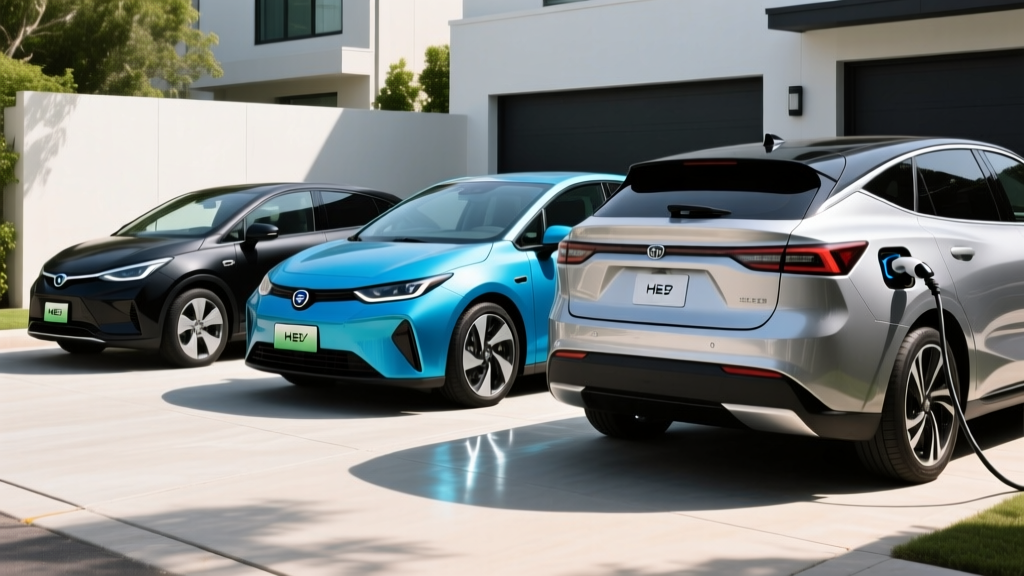
The single biggest source of buyer confusion is treating "hybrid" as one category. It isn't. A conventional hybrid (HEV) and a plug-in hybrid (PHEV) operate on fundamentally different energy flows.
Conventional Hybrid (HEV)
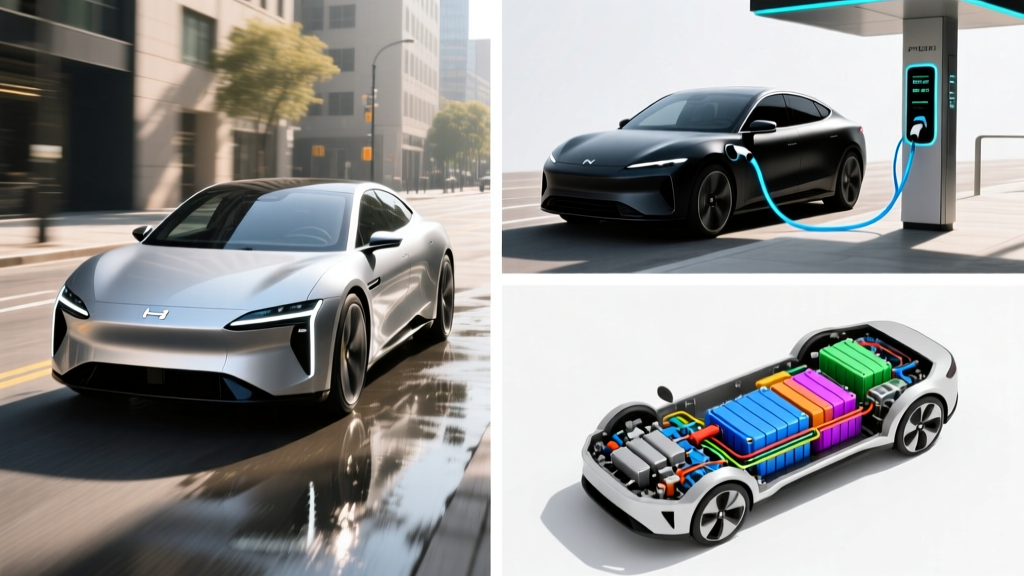
An HEV pairs a gasoline engine with a small electric motor and a compact battery (typically 1–2 kWh). The battery charges exclusively through regenerative braking and engine-driven generation — you never plug it in. The electric motor assists during acceleration and enables low-speed electric-only creep, but sustained electric-only driving is limited to a mile or two at most. The primary benefit is improved MPG, especially in stop-and-go city traffic where regenerative braking recovers energy that a gas-only car wastes as brake heat.
Plug-In Hybrid (PHEV)
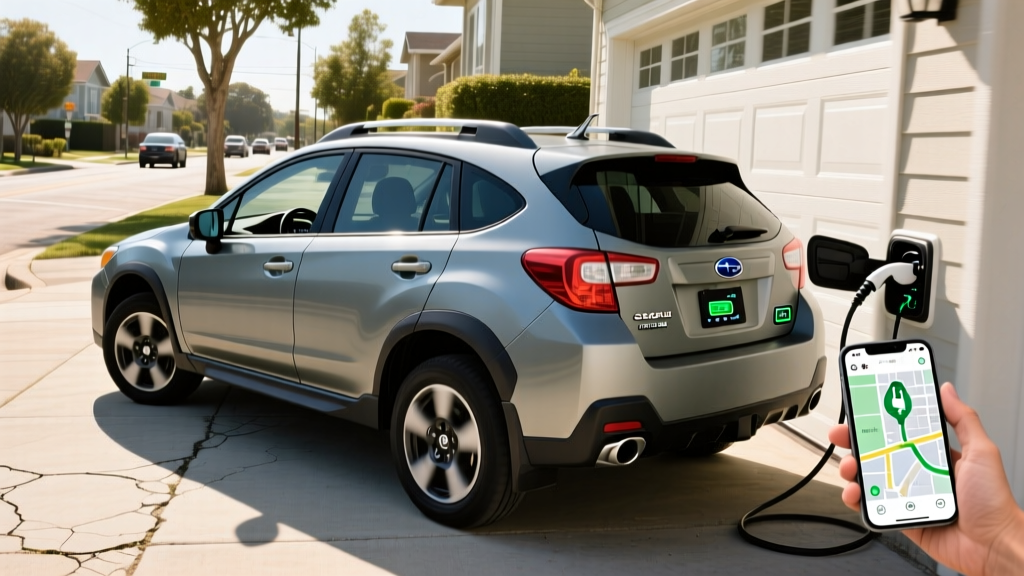
A PHEV carries a substantially larger battery (typically 12–25 kWh usable) and an onboard charger that accepts Level 1 (120V) or Level 2 (240V) AC power. You plug it in to access 25–45 miles of electric-only driving. Once the battery depletes, the vehicle seamlessly transitions to hybrid mode, operating like a conventional HEV with the gasoline engine. A PHEV is effectively two vehicles in one: a short-range EV for daily commuting and a hybrid for longer trips.
| Attribute | HEV (Toyota RAV4 Hybrid) | PHEV (Toyota RAV4 Prime) | BEV (Tesla Model Y LR) |
|---|---|---|---|
| Powertrain | 2.5L 4-cyl + 2 electric motors | 2.5L 4-cyl + 2 electric motors | Dual motor AWD |
| Combined HP | 219 hp | 302 hp | 384 hp |
| Battery Capacity | ~1.6 kWh (NiMH) | 18.1 kWh usable (Li-ion) | ~75 kWh usable (NMC) |
| Plug-In Required? | No | Yes (Level 1/2 AC) | Yes (Level 2 / DC fast) |
| Electric-Only Range | <1 mile (low-speed assist) | 42 miles (EPA) | 320 miles (EPA) |
| Total Range | ~580 miles | ~600 miles (combined EV+gas) | 320 miles |
| EPA Combined MPG/MPGe | 39 MPG combined | 94 MPGe (EV) / 38 MPG (hybrid) | 122 MPGe |
| Base MSRP (2026 est.) | $33,500 | $46,500 | $48,990 |
Fuel Economy: EPA MPG and Real-World Numbers
Hybrid fuel economy is where EPA stickers and real-world results diverge in a way that favors the buyer — particularly for city driving. Regenerative braking recovers kinetic energy during deceleration, which means hybrids often exceed their EPA city estimates in actual stop-and-go traffic.
| Model | Type | City MPG | Highway MPG | Combined MPG | PHEV EV Range |
|---|---|---|---|---|---|
| Toyota RAV4 Hybrid AWD | HEV | 41 | 38 | 39 | N/A |
| Toyota Camry Hybrid FWD | HEV | 53 | 50 | 52 | N/A |
| Honda CR-V Hybrid AWD | HEV | 40 | 34 | 37 | N/A |
| Toyota RAV4 Prime AWD | PHEV | 40 (hybrid) | 36 (hybrid) | 38 / 94 MPGe | 42 mi |
| Hyundai Tucson PHEV AWD | PHEV | 38 (hybrid) | 35 (hybrid) | 36 / 80 MPGe | 33 mi |
| Chrysler Pacifica Hybrid | PHEV | 30 (hybrid) | 30 (hybrid) | 30 / 82 MPGe | 32 mi |
Real-world caveat: According to fueleconomy.gov, the Toyota Camry Hybrid's 52 MPG combined rating is achievable in mixed suburban driving. In our experience, city-heavy routes with frequent stops can push an HEV like the Camry Hybrid to 55+ MPG, while sustained highway cruising at 75+ mph drops efficiency to the low-to-mid 40s due to increased aerodynamic drag that the electric motor cannot offset. Cold weather (below 35°F) typically reduces hybrid MPG by 5–10% as the engine runs more frequently to generate cabin heat.
PHEV Electric-Only Range, Charging, and Powertrain Details
For PHEV buyers, the electric-only range is the spec that determines whether you can commute without burning a drop of gasoline. Most 2026 PHEVs deliver 25–45 miles on battery alone, which covers the average American one-way commute (approximately 16 miles, per Census Bureau data).
Battery, Charging Time, and DC Fast Charging
PHEV batteries range from roughly 12 kWh to 25 kWh of usable capacity. Charging speeds are a frequent pain point:
- Level 1 (120V household outlet): Adds roughly 3–5 miles of range per hour. A full charge of an 18 kWh PHEV battery takes 8–12 hours — practical for overnight top-ups.
- Level 2 (240V, home wallbox or public station): Most PHEVs accept 3.3 kW to 7.2 kW of AC power. At 6.6 kW, an 18 kWh battery charges in approximately 2.5–3 hours. The RAV4 Prime at 6.6 kW reaches a full charge in roughly 2.5 hours on Level 2.
- DC Fast Charging: The vast majority of PHEVs do not support DC fast charging. A small number of models — notably the Mitsubishi Outlander PHEV — offer CHAdeMO DC charging at roughly 22 kW, reaching 80% in about 38 minutes. But this is the exception, not the rule. If fast-charging is a priority, you're looking at a BEV, not a PHEV.
Powertrain Output
PHEVs typically combine a turbocharged or naturally aspirated 4-cylinder engine with one or two electric motors. The combined system output is higher than the HEV equivalent because the larger battery can deliver more sustained electric power. The RAV4 Prime produces 302 combined horsepower (vs. 219 hp for the RAV4 Hybrid), and the Hyundai Tucson PHEV delivers 261 hp (vs. 226 hp for the Tucson Hybrid). This extra power is a meaningful side benefit of the larger battery and motor.
Battery Longevity, Warranty, and Replacement Cost
Hybrid Battery Warranty — What's Covered
Federal emissions regulations mandate that hybrid and PHEV battery packs carry a minimum warranty of 8 years / 100,000 miles (10 years / 150,000 miles in CARB states including California, New York, Massachusetts, and others adopting California emissions standards). Most manufacturers meet or exceed this baseline:
- Toyota: 10 years / 150,000 miles on hybrid battery (all 50 states for 2020+ models)
- Hyundai/Kia: 10 years / 100,000 miles on hybrid and PHEV battery
- Honda: 8 years / 100,000 miles (10 years / 150,000 in CARB states)
- Ford: 8 years / 100,000 miles on hybrid/PHEV battery components
These warranties typically guarantee the battery retains at least 60–70% of original capacity. If degradation falls below the threshold within the warranty period, the manufacturer replaces or reconditions the pack at no cost.
Real-World Degradation and Replacement Cost
Hybrid batteries — both HEV and PHEV — use relatively conservative charge windows. An HEV's tiny battery rarely cycles below 40% or above 80% state of charge, managed by the vehicle's battery management system (BMS). This shallow cycling dramatically extends cell life. Toyota's NiMH and lithium-ion hybrid packs routinely exceed 150,000–200,000 miles with minimal degradation, based on long-term fleet data from Prius taxis and consumer reports.
PHEV batteries face deeper cycles but still benefit from buffered charge windows (typically 15–85% usable of total cell capacity). Real-world degradation for a PHEV over 5 years and 60,000 miles is generally 8–12%, meaning a 42-mile EV range might decrease to approximately 37–38 miles.
Replacement cost if out of warranty:
- HEV battery (e.g., RAV4 Hybrid, Camry Hybrid): $2,000–$4,500 for OEM replacement, including labor.
- PHEV battery (e.g., RAV4 Prime, Tucson PHEV): $6,000–$10,000+ due to larger capacity and higher-voltage architecture.
Third-party reconditioned packs and independent hybrid shops are increasingly available at 40–60% of OEM cost. For most buyers, the battery will outlast their ownership period.
Tax Credits and Pricing: What You'll Actually Pay
Federal tax credit eligibility for hybrids and PHEVs is narrower than many buyers assume. Under IRS §30D Clean Vehicle Credit rules (current for 2026):
- Conventional hybrids (HEVs) do NOT qualify for the federal §30D credit. They lack the minimum 7 kWh battery capacity required by law.
- PHEVs may qualify for up to $7,500, but only if they meet all of the following:
- Battery capacity ≥ 7 kWh (most PHEVs meet this)
- Vehicle MSRP ≤ $55,000 for sedans / ≤ $80,000 for SUVs, vans, and trucks
- Buyer adjusted gross income ≤ $150,000 (single) / ≤ $300,000 (married filing jointly)
- Battery components and critical minerals meet phased-in domestic sourcing thresholds (increasingly strict through 2026–2029)
- Final assembly in North America
- The credit can be transferred to the dealer at point of sale as an immediate price reduction (new for 2024+), or claimed on your federal tax return.
Key reality check: Several popular PHEVs have lost partial or full credit eligibility as battery-sourcing rules tighten. Always verify current eligibility on fueleconomy.gov's tax credit page before purchasing. State incentives (e.g., California's CVRP, Colorado's state credit) may stack on top of federal credits but vary by jurisdiction — consult your state's energy office for current programs.
| Model | Base MSRP | Federal Credit Eligible? | Est. After-Credit Price |
|---|---|---|---|
| Toyota RAV4 Hybrid (HEV) | $33,500 | No | $33,500 |
| Toyota Camry Hybrid (HEV) | $30,500 | No | $30,500 |
| Toyota RAV4 Prime (PHEV) | $46,500 | Partial (sourcing-dependent) | $39,000–$46,500 |
| Hyundai Tucson PHEV | $40,500 | Yes (if sourcing met) | ~$33,000 |
| Chrysler Pacifica Hybrid | $52,000 | Yes (if sourcing met) | ~$44,500 |
Hybrid vs PHEV vs EV: Which Powertrain Fits Your Life?
The right choice depends on three variables: your daily mileage, your access to charging, and your willingness to adapt driving habits.
Choose a Conventional Hybrid (HEV) If:
- You drive 20–60 miles per day in mixed city/highway traffic
- You have no access to home or workplace charging (apartment, street parking, no garage outlet)
- You want maximum MPG improvement with zero behavioral change — just drive and refuel at any gas station
- Your budget is under $40,000 and you want the lowest upfront cost among electrified options
- You take frequent long road trips and don't want to plan around charging stops
Choose a Plug-In Hybrid (PHEV) If:
- Your daily round-trip commute is under 40 miles and you can charge at home (Level 1 outlet is sufficient for overnight)
- You want EV-like daily driving but need gasoline flexibility for weekend trips or towing
- You qualify for the $7,500 federal credit and it meaningfully reduces your effective purchase price
- You value the performance bump that a larger electric motor provides (PHEVs are often the quickest trims in a lineup)
- You want to future-proof against rising gas prices while maintaining road-trip convenience
Choose a Battery Electric Vehicle (BEV) If:
- You have reliable Level 2 home charging and your daily driving is under 250 miles
- You want to eliminate gasoline costs entirely and minimize maintenance (no oil changes, fewer moving parts)
- You drive in a region with robust public DC fast-charging infrastructure for longer trips
- You want the lowest per-mile "fuel" cost (electricity at $0.12/kWh ≈ $3.50/gallon equivalent)
Pros and Cons: HEV and PHEV at a Glance
Conventional Hybrid (HEV) — Pros
- No plug-in required; works with existing gas-station infrastructure
- 40–55 MPG combined in popular models (2–3× a comparable gas car)
- Lower upfront cost than PHEV or BEV
- Proven long-term reliability (20+ years of Prius data)
- No range anxiety whatsoever
Conventional Hybrid (HEV) — Cons
- No electric-only commuting; still burns gasoline on every trip
- No federal tax credit eligibility
- Higher fuel cost than a PHEV running on electricity for daily miles
- Limited performance benefit (small electric motor assist only)
Plug-In Hybrid (PHEV) — Pros
- 25–45 miles of zero-gasoline daily driving
- Gasoline engine eliminates range anxiety for longer trips
- May qualify for up to $7,500 federal tax credit
- Stronger combined horsepower than HEV equivalents
- Lower per-mile cost when charged (electricity ≈ $0.04/mi vs gas at $0.12–$0.18/mi)
Plug-In Hybrid (PHEV) — Cons
- Higher purchase price ($8,000–$15,000 premium over HEV)
- Requires home or workplace charging to realize EV benefits
- Heavier than HEV (larger battery), reducing highway MPG slightly when depleted
- Most PHEVs lack DC fast charging — Level 2 only
- Two powertrains to maintain (engine + electric system)
Frequently Asked Questions
How many MPG does a hybrid car actually get?
It depends on the model and driving conditions. The 2026 Toyota Camry Hybrid achieves an EPA-rated 53 city / 50 highway / 52 combined MPG. The RAV4 Hybrid AWD delivers 41 city / 38 highway / 39 combined. In real-world city driving with frequent stops, many owners report exceeding the EPA city figure by 2–5 MPG thanks to aggressive regenerative braking. Highway driving at sustained speeds above 70 mph typically yields 3–7 MPG below the EPA highway estimate.
How far can a PHEV go on electric only?
Current 2026 PHEVs offer 25–45 miles of EPA-rated electric-only range. The Toyota RAV4 Prime leads the mainstream segment at 42 miles, while the Hyundai Tucson PHEV provides 33 miles and the Chrysler Pacifica Hybrid offers 32 miles. Real-world EV range decreases by roughly 15–25% in cold weather (below 35°F) due to cabin heating demands and reduced battery efficiency. Highway-speed EV range also drops — expect roughly 75–85% of the EPA figure at 70+ mph.
Is a hybrid reliable and what does battery replacement cost?
Hybrids from Toyota, Honda, and Hyundai/Kia have demonstrated excellent long-term reliability. Toyota's hybrid system, refined over 25+ years since the original Prius, is widely considered the benchmark. Independent data from Consumer Reports and J.D. Power consistently rank hybrid variants as equal to or more reliable than their gas-only counterparts, partly because regenerative braking reduces wear on friction brake components. Hybrid battery replacement costs $2,000–$4,500 for an HEV and $6,000–$10,000+ for a PHEV if out of warranty, but most packs last 150,000–200,000+ miles under normal use.
Does a hybrid qualify for any tax credit?
Conventional hybrids (HEVs) do not qualify for the federal §30D Clean Vehicle Credit because their battery capacity is below the 7 kWh minimum. Plug-in hybrids (PHEVs) with ≥ 7 kWh batteries may qualify for up to $7,500, subject to MSRP caps ($55,000 sedans / $80,000 SUVs and trucks), buyer income limits ($150K single / $300K joint), critical mineral and battery component sourcing requirements, and North American final assembly. Always check the latest eligibility on fueleconomy.gov and consult a tax professional for your specific situation.
Do I need to plug in a hybrid car?
No — a conventional hybrid (HEV) never needs to be plugged in. It charges its small battery through regenerative braking and the gasoline engine. A plug-in hybrid (PHEV) does benefit from being plugged in (Level 1 or Level 2) to charge its larger battery for electric-only driving, but if you don't plug it in, it simply operates as a conventional hybrid with slightly lower MPG than a dedicated HEV due to the extra battery weight.
Is a hybrid better than a full EV?
Neither is universally "better" — they solve different problems. A hybrid is better if you lack home charging, drive long distances frequently, or want the lowest upfront cost. A full EV is better if you have reliable Level 2 home charging, want the lowest per-mile operating cost, and drive under 250 miles daily. A PHEV sits between them, offering electric commuting with gasoline backup — ideal for households that can charge at home but regularly take trips beyond EV range.
Understanding the distinction between HEV and PHEV architectures — and honestly assessing your charging access, daily mileage, and budget — is the most important step in choosing the right electrified vehicle. The data above, sourced from fueleconomy.gov, manufacturer specifications, and IRS guidelines, should give you the concrete numbers needed to make that decision without guesswork.