What Is a Hybrid Car and How Does It Actually Work?
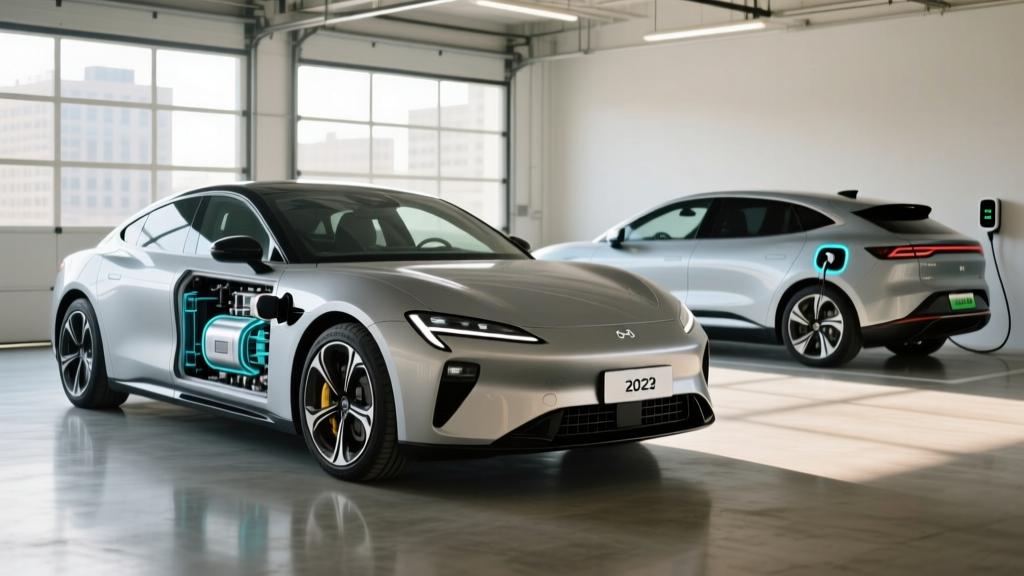
A hybrid car pairs a gasoline engine with one or more electric motors and a battery pack. The electric motor assists the engine during acceleration, captures energy during braking (regenerative braking), and in some cases can drive the wheels on its own for short distances. The result is measurably better fuel economy than a conventional gas car — particularly in stop-and-go city driving where the electric motor does the most work.
But not all hybrids are the same. The two types available to U.S. buyers in 2026 are conventional hybrids (HEVs) and plug-in hybrids (PHEVs). They share the same basic architecture — engine + motor + battery — but differ fundamentally in battery size, electric-only capability, and whether you ever need to plug them in.
HEV vs PHEV at a Glance
| Feature | Conventional Hybrid (HEV) | Plug-In Hybrid (PHEV) |
|---|---|---|
| Needs to be plugged in? | No — charges via engine and regen braking | Yes — plug in to unlock electric-only range |
| Battery size | 0.5–2.0 kWh (small) | 13–25 kWh (much larger) |
| Electric-only driving | Minimal (under 1 mile at low speed) | 20–45+ miles at full highway speed |
| Federal tax credit | No | Up to $7,500 (if eligible under §30D) |
| Best for | Drivers who can't charge at home | Drivers with home charging and short commutes |
How a Conventional Hybrid (HEV) Powertrain Works
In a conventional hybrid like the 2026 Toyota RAV4 Hybrid or 2026 Honda CR-V Hybrid, a small battery pack (typically 1.0–1.6 kWh) is charged entirely by the gasoline engine and by regenerative braking. You never plug it in. The electric motor provides torque fill during acceleration, allows the engine to shut off at stops, and enables low-speed electric-only creeping in parking lots or traffic.
The powertrain control module constantly decides the optimal blend of engine and motor power. Under light loads, the car may coast with the engine off. Under hard acceleration, both the engine and motor deliver combined power to the wheels. During deceleration, the motor acts as a generator, converting kinetic energy back into stored electricity — this is regenerative braking, and it's why hybrids eat through brake pads far more slowly than gas-only cars.
2026 Toyota RAV4 Hybrid — Real-World Reference
| Spec | Value |
|---|---|
| Powertrain | 2.5L 4-cyl + 2 electric motors (AWD) |
| Combined horsepower | 219 hp |
| Battery | ~1.6 kWh lithium-ion |
| EPA MPG (city / hwy / combined) | 41 / 38 / 40 MPG |
| 0–60 mph | 7.4 seconds |
| Starting MSRP | ~$34,500 |
| Federal tax credit | None (HEV) |
Source: fueleconomy.gov
Hybrid Battery Warranty: What to Expect
Toyota covers the RAV4 Hybrid battery for 10 years / 150,000 miles. Honda covers the CR-V Hybrid battery for 8 years / 100,000 miles (10 years / 150,000 miles in CARB states). Hyundai and Kia lead the pack at 10 years / 100,000 miles on hybrid components. These warranties cover capacity loss below a defined threshold — typically 60–70% of original capacity. Out-of-warranty hybrid battery replacement runs $2,000–$4,500 depending on the model, though refurbished packs are increasingly available for $1,000–$2,000.
How a Plug-In Hybrid (PHEV) Powertrain Works
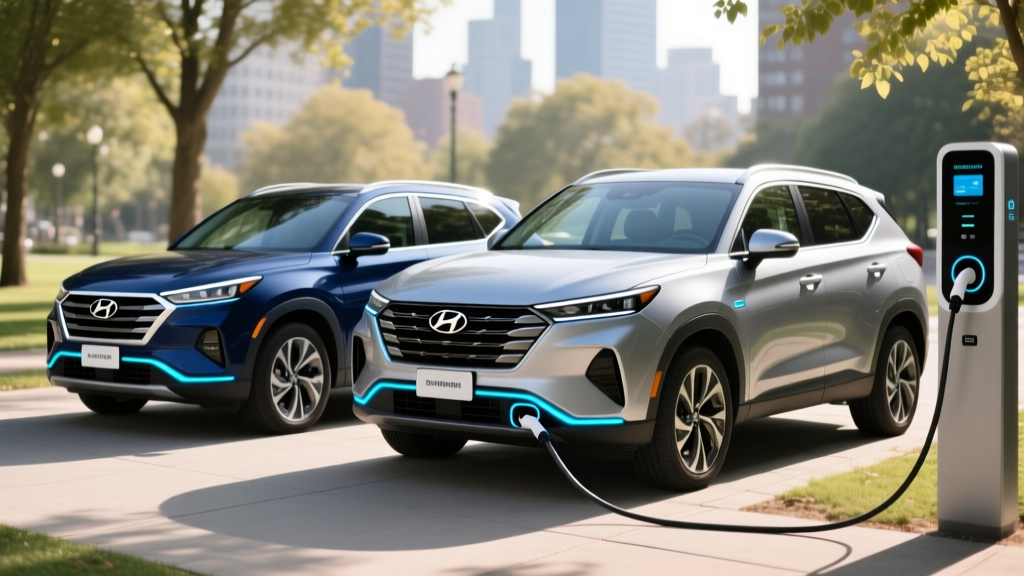
A plug-in hybrid takes the same engine-plus-motor concept and adds a much larger battery — typically 13 to 25 kWh — that you charge by plugging into a wall outlet or Level 2 charger. That larger battery enables genuine electric-only driving: most 2026 PHEVs deliver 25 to 45 miles on electricity alone before the gasoline engine turns on and the car operates as a conventional hybrid.
This means a PHEV owner with a short commute and home charging can drive months without visiting a gas station, while still having a gas engine for road trips. Once the battery is depleted, the PHEV doesn't strand you — it seamlessly transitions to hybrid mode with MPG comparable to (though sometimes slightly below) a dedicated HEV due to the extra weight of the larger battery.
2026 Toyota RAV4 Prime (PHEV) — Real-World Reference
| Spec | Value |
|---|---|
| Powertrain | 2.5L 4-cyl + 2 electric motors (AWD) |
| Combined horsepower | 302 hp |
| Battery | 18.1 kWh lithium-ion |
| Electric-only range (EPA) | 42 miles |
| Total range (electric + gas) | ~600 miles |
| EPA MPG (hybrid mode, combined) | 38 MPG combined (94 MPGe with charge) |
| Level 2 charge time (0–100%) | ~2.5 hours at 6.6 kW |
| DC fast charging | Not available |
| 0–60 mph | 5.7 seconds |
| Starting MSRP | ~$44,500 |
Source: fueleconomy.gov
Real-World MPG: Why Hybrids Often Beat Their EPA Sticker
Here's something that surprises first-time hybrid owners: real-world city MPG often exceeds the EPA estimate. That's the opposite of what happens with gas-only cars. The reason is physics — hybrids capture braking energy that gas cars waste as heat. In heavy stop-and-go traffic, regenerative braking feeds more energy back into the battery, letting the electric motor do even more of the work.
| 2026 Model | EPA City | EPA Hwy | EPA Combined | Real-World Expectation |
|---|---|---|---|---|
| Toyota RAV4 Hybrid | 41 | 38 | 40 | 38–44 MPG |
| Honda CR-V Hybrid | 43 | 36 | 40 | 37–43 MPG |
| Hyundai Tucson Hybrid | 38 | 38 | 38 | 35–40 MPG |
| Toyota Prius | 57 | 56 | 57 | 52–60 MPG |
On the highway, hybrids lose some of their advantage because there's less braking to recapture energy and the engine runs more continuously. Expect highway MPG to land at or slightly below the EPA sticker. In cold weather (below 30°F), MPG drops 5–15% because the engine runs more often to provide cabin heat and the battery is less efficient.
PHEV Charging: What You Need to Know
Unlike a full EV, most PHEVs do not support DC fast charging. You charge them via a standard 120V outlet (Level 1) or a 240V Level 2 home charger. Here's what that looks like in practice:
- Level 1 (120V household outlet): Adds roughly 4–5 miles of electric range per hour. A full charge for a 40-mile PHEV takes 8–10 hours — fine for overnight.
- Level 2 (240V, home or public): Adds 15–25 miles of range per hour. A full charge takes 2–3 hours at the typical PHEV onboard charger rate of 3.3–6.6 kW.
Because PHEV batteries are small relative to full EVs, a Level 2 home charger is a convenience, not a necessity. Many PHEV owners charge overnight on a standard 120V outlet and wake up to a full battery every morning. The key distinction: you do not need to install a 240V circuit to own a PHEV, though it speeds things up substantially.
Does a Hybrid or PHEV Qualify for a Tax Credit?
This is where HEVs and PHEVs diverge sharply.
Conventional hybrids (HEVs) do not qualify for the federal §30D tax credit. The credit is reserved for plug-in vehicles with battery packs above a minimum capacity. No plug, no credit.
Plug-in hybrids (PHEVs) may qualify for up to $7,500 under the federal §30D Clean Vehicle Credit — but eligibility is far from guaranteed. As of 2026, the IRS requires all of the following:
- Battery capacity: At least 7 kWh (most PHEVs meet this)
- MSRP cap: Vans/SUVs/pickups ≤ $80,000; sedans ≤ $55,000
- Buyer income cap: AGI ≤ $150,000 (single) / $225,000 (head of household) / $300,000 (joint)
- Battery component sourcing: Must meet phased-in North American assembly and critical-mineral thresholds (these tighten annually through 2029)
- Point-of-sale transfer: You can apply the credit as a dealer discount at purchase, reducing your out-of-pocket cost immediately
Because battery sourcing requirements tighten each year, a PHEV that qualifies in 2025 may not in 2026. Always verify current eligibility on the IRS Clean Vehicle Credits page and consult a tax professional for your specific situation.
Hybrid vs PHEV vs Full EV — Which Fits You?
The Decision Framework
Choose a conventional hybrid (HEV) if:
- You cannot charge at home (apartment, street parking, no garage)
- You want maximum simplicity — no plugs, no charging apps, no range planning
- You drive a mix of city and highway and want 35–57 MPG without behavior change
- You want a lower purchase price and don't need a tax credit
Choose a plug-in hybrid (PHEV) if:
- You can charge at home (even a standard 120V outlet works)
- Your daily commute is under 30–40 miles round-trip (covers most U.S. commutes)
- You want electric-only daily driving but need gas flexibility for road trips
- You may qualify for the $3,750–$7,500 federal tax credit
Choose a full EV (BEV) if:
- You have reliable home Level 2 charging
- Your daily driving is under 200 miles and you road-trip infrequently (or are willing to plan DC fast-charge stops)
- You want the lowest per-mile fuel cost and minimal maintenance
- You qualify for the full $7,500 federal credit on an eligible BEV
Hybrid Battery Reliability and Replacement Costs
Hybrid battery longevity is one of the most common buyer concerns, and the data is reassuring. Toyota's hybrid synergy drive system has been in production since 1997 (Prius), and real-world evidence shows hybrid batteries routinely lasting 150,000–200,000+ miles before significant degradation. The batteries in conventional hybrids are small and shallow-cycled — they never fully charge or fully discharge, which is gentler on the cells than the deep cycles in a full EV.
PHEV batteries are larger and see deeper cycles, but they still benefit from sophisticated thermal management and buffer zones (the car never uses the top or bottom ~15% of the pack to protect longevity).
If a hybrid battery does fail out of warranty, replacement costs break down roughly as follows:
- Conventional hybrid (HEV): $2,000–$4,500 for a new OEM pack; $1,000–$2,500 for refurbished
- Plug-in hybrid (PHEV): $4,000–$8,000 for a new OEM pack (larger battery = higher cost)
For context, a comparable gas-car expense might be a transmission replacement ($3,000–$7,000) — something hybrid owners avoid entirely since most hybrids use a planetary gearset (eCVT) with no traditional transmission to fail.
Hybrid Advantages
- 30–50% better fuel economy vs gas equivalent
- No charging infrastructure needed (HEV)
- Lower brake wear from regen braking
- Proven reliability with 25+ years of production
- No range anxiety — gas tank backup
- Strong resale value (RAV4 Hybrid, Prius)
Hybrid Limitations
- HEVs don't qualify for federal tax credit
- Higher upfront cost than gas-only equivalents ($1,500–$5,000 premium)
- PHEVs have less cargo space in some models (battery placement)
- Highway MPG advantage is smaller than city
- PHEV electric range drops in cold weather (15–30% loss below 30°F)
- Two systems to maintain (engine + electric)
Frequently Asked Questions
How many MPG does a hybrid car get?
It depends on the model and driving conditions. The 2026 Toyota Prius achieves an EPA-estimated 57 MPG combined, while SUV hybrids like the RAV4 Hybrid land around 39–40 MPG combined. City MPG is typically higher than highway because regenerative braking recovers more energy in stop-and-go driving. Real-world results often match or slightly exceed EPA city estimates in moderate weather.
How far can a PHEV go on electric only?
Most 2026 PHEVs deliver 25–45 miles of electric-only range. The RAV4 Prime offers 42 EPA-rated miles, the Jeep Wrangler 4xe provides 22 miles, and the Hyundai Tucson PHEV delivers around 33 miles. This covers the average American commute (roughly 16 miles each way, per the U.S. Census Bureau) entirely on electricity. Once depleted, the gas engine engages and the car operates as a standard hybrid.
Do I need to plug in a hybrid car?
No — a conventional hybrid (HEV) never needs to be plugged in. Its small battery charges through the engine and regenerative braking. A plug-in hybrid (PHEV) does need to be plugged in to access its electric-only range; otherwise, it operates as a conventional hybrid using only gasoline. If you never plug in a PHEV, you're carrying extra battery weight without using it, which slightly reduces fuel economy.
Are hybrid cars reliable long-term?
Yes. Toyota's hybrid system has over 25 years of real-world data supporting its durability. Hybrid batteries commonly exceed 150,000 miles, and the eCVT transmission design has fewer moving parts than a conventional automatic. Hybrid components are covered by 8–10 year / 100,000–150,000 mile warranties depending on the manufacturer. Independent reliability surveys from Consumer Reports and J.D. Power consistently rank hybrid models at or above their gas counterparts.
What does it cost to replace a hybrid battery?
Out-of-warranty replacement for a conventional hybrid battery runs $2,000–$4,500 (new OEM) or $1,000–$2,500 (refurbished). PHEV battery replacement is more expensive at $4,000–$8,000 due to the larger pack. However, most hybrid batteries outlast the typical ownership period, and mandatory 8–10 year warranties provide coverage through the highest-risk window.
Does a hybrid qualify for any tax credit?
Conventional hybrids (HEVs) do not qualify for the federal §30D Clean Vehicle Credit. Plug-in hybrids (PHEVs) may qualify for up to $7,500, subject to MSRP caps, buyer income limits, and battery sourcing requirements that tighten annually. Some states offer additional credits or rebates for PHEVs — check your state energy office or the AFDC state incentive database for local programs. Always verify current federal eligibility at irs.gov.