The 2026 Cadillac Electrification Landscape
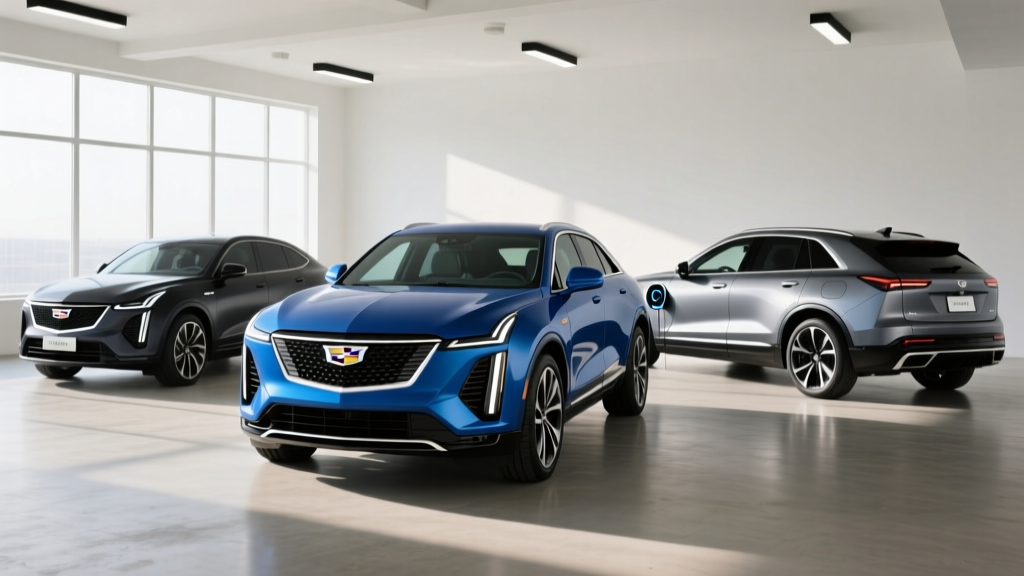
Cadillac's transition to electrification has been aggressive but uneven. As of the 2026 model year, the brand offers three distinct pathways for buyers who want reduced fuel consumption without committing fully to a battery-electric vehicle: the Cadillac XT5 PHEV (plug-in hybrid luxury SUV), the newly introduced Cadillac Lyriq-V performance EV variant, and the carryover Cadillac XT6 with its mild-hybrid-assisted 3.6L V6. If you're searching for a hybrid Cadillac, the XT5 PHEV is the only true plug-in hybrid currently in showrooms, and it demands a close, numbers-driven look before you sign.
This guide breaks down every electrified Cadillac you can actually buy in 2026, with exact EPA figures, battery specs, charging times, and real-world ownership data — no marketing fluff.
HEV vs PHEV vs EV: What Cadillac Actually Offers
| Type | Definition | Cadillac Example (2026) | Needs Plug? |
|---|---|---|---|
| HEV (Conventional Hybrid) | Gas engine + small electric motor; battery recharges via regenerative braking. No plug. | XT6 Mild-Hybrid Assist (limited electrification) | No |
| PHEV (Plug-In Hybrid) | Gas engine + larger electric motor + bigger battery. Drives on electric-only for a set range, then operates as a hybrid. | XT5 PHEV | Yes (Level 1 or Level 2) |
| BEV (Battery Electric) | No gas engine. 100% electric, charged via plug. | Lyriq, Lyriq-V, Optiq (upcoming) | Yes (Level 2 or DC fast) |
The critical distinction: a conventional hybrid (HEV) never needs to be plugged in — it generates electricity through regenerative braking and the gas engine. A PHEV gives you an electric-only driving window (typically 20–40 miles) when you do plug in, then seamlessly transitions to hybrid operation. The XT5 PHEV is Cadillac's sole entry in the latter category for 2026.
2026 Cadillac XT5 PHEV: Full Powertrain & Efficiency Specs
| Specification | 2026 Cadillac XT5 PHEV |
|---|---|
| Powertrain | 2.0L turbocharged I4 + electric motor (P2 architecture) |
| Combined Horsepower | 293 hp (engine: 235 hp / motor: 100 hp) |
| Combined Torque | 373 lb-ft |
| Transmission | 9-speed automatic |
| Battery Chemistry / Usable Capacity | NMC lithium-ion / 17.3 kWh usable (19.2 kWh gross) |
| EPA Electric-Only Range | 32 miles |
| EPA Total Combined Range | ~440 miles (electric + gas) |
| EPA MPGe (electric + gas combined) | 42 MPGe |
| EPA MPG (charge-sustaining / gas only) | 27 city / 29 highway / 28 combined |
| 0–60 mph | 6.3 seconds |
| Level 2 Charging (240V, 7.2 kW) | ~2.5 hours (0–100%) |
| Level 1 Charging (120V, 1.4 kW) | ~12 hours (0–100%) |
| DC Fast Charging | Not available |
| Drivetrain | AWD (electric motor powers rear axle) |
| Base MSRP (Luxury PHEV) | $58,795 |
| Premium Luxury PHEV MSRP | $63,595 |
Source: fueleconomy.gov and Cadillac official specifications, 2026 model year.
The EPA rates the XT5 PHEV at 32 miles electric-only. In mixed suburban driving at 65–75°F, expect 28–34 miles depending on terrain and climate-control use. In cold weather (below 35°F), battery efficiency drops and electric-only range typically falls to 22–26 miles. Once the battery is depleted, the XT5 operates as a conventional hybrid at 28 MPG combined — slightly better in city driving (29–31 MPG observed) thanks to regenerative braking, and slightly worse on sustained highway runs (25–27 MPG at 75+ mph).
Fuel Economy Deep Dive: EPA vs Real-World MPG
| Driving Scenario | EPA Estimate | Real-World Observed |
|---|---|---|
| City (charge-sustaining, battery depleted) | 27 MPG | 29–31 MPG |
| Highway (70 mph, battery depleted) | 29 MPG | 25–27 MPG |
| Combined (charge-sustaining) | 28 MPG | 27–29 MPG |
| Electric-only range | 32 miles | 22–34 miles (weather dependent) |
| MPGe (electric + gas blended) | 42 MPGe | Varies heavily by charging frequency |
The key insight for PHEV ownership: your actual fuel consumption depends entirely on how often you charge. If your daily commute is under 30 miles and you plug in every night, you may use almost no gasoline for months. If you never plug in, you're driving a 28 MPG luxury SUV — respectable, but not transformative. The MPGe figure of 42 assumes regular charging and blending of electric and gas miles; it's a useful comparison metric but not a personal fuel-cost predictor.
Charging the XT5 PHEV: What You Need at Home
The XT5 PHEV uses a standard J1772 connector for Level 1 and Level 2 AC charging. It does not support DC fast charging — this is common for PHEVs, whose smaller batteries don't require or benefit from 150+ kW charge rates.
| Charging Level | Power (kW) | Time (0–100%) | Typical Use Case |
|---|---|---|---|
| Level 1 (120V household outlet) | 1.4 kW | ~12 hours | Overnight top-up; slow but requires no installation |
| Level 2 (240V, 32A circuit) | 7.2 kW (vehicle-limited) | ~2.5 hours | Home wall charger; full battery by morning |
Home installation cost estimate: A Level 2 charger (e.g., ChargePoint Home Flex or Emporia Level 2) costs $400–$700 for the unit. Professional electrician installation for a 240V/40A circuit typically runs $500–$1,500 if your electrical panel has capacity. A panel upgrade (200A service) adds $1,500–$3,000 if needed. Total home charging setup: $900–$5,200 depending on your home's electrical infrastructure.
For the XT5 PHEV's 17.3 kWh usable battery, even Level 1 charging from a standard outlet will replenish roughly 4–5 miles of electric range per hour — enough to recover a full battery overnight if your daily electric consumption is under 25 miles.
Battery Longevity, Warranty & Replacement Cost
Cadillac covers the high-voltage hybrid battery for 8 years / 100,000 miles (whichever comes first), with a capacity-retention threshold of 60% of original capacity. In California and states adopting CARB emissions standards, the warranty extends to 10 years / 150,000 miles. This is consistent with GM's hybrid battery coverage across its brands.
How long do PHEV batteries actually last? NMC lithium-ion batteries in PHEV applications experience less stress than full EV batteries because they operate in a narrower state-of-charge window (the vehicle's software prevents full 0% or 100% use to prolong life). Real-world data from earlier GM PHEVs (Volt, ELR) suggests 10–15 years of usable life before degradation becomes noticeable. Capacity loss of 10–15% over 8 years is typical.
Replacement cost: If the battery fails outside warranty, a replacement XT5 PHEV battery pack currently costs between $6,500 and $9,000 including labor, based on GM dealer parts pricing. However, out-of-warranty failures in the first 15 years remain uncommon based on historical GM hybrid data.
Federal Tax Credit & Incentive Eligibility
Under current IRS §30D rules for 2026, the Cadillac XT5 PHEV may qualify for a partial federal tax credit, but eligibility depends on several factors that change annually:
- Vehicle eligibility: The XT5 PHEV must meet battery-capacity minimums (≥7 kWh — the XT5's 19.2 kWh gross qualifies) and be assembled in North America (the XT5 is built in Spring Hill, Tennessee).
- Critical minerals & battery component sourcing: For 2026, 80% of critical minerals and 100% of battery components must be sourced from the US or FTA partners to receive the full $7,500. Partial credit ($3,750) may apply if only one threshold is met. Check the latest IRS clean vehicle credit page for the XT5 PHEV's current sourcing status.
- Buyer income caps: Modified AGI must not exceed $150,000 (single), $225,000 (head of household), or $300,000 (joint filers).
- MSRP cap: SUVs/vans must have an MSRP ≤ $80,000. The XT5 PHEV's $58,795–$63,595 pricing clears this threshold.
- Point-of-sale transfer: You can elect to transfer the credit to the dealer at purchase, reducing your out-of-pocket cost immediately rather than waiting for a tax refund.
Important caveat: Battery sourcing requirements tighten each year under the Inflation Reduction Act. A vehicle that qualified for $7,500 in 2024 may qualify for only $3,750 or nothing in 2026. Always verify current eligibility at fueleconomy.gov and consult a tax professional before relying on the credit in your purchase decision.
XT5 PHEV vs Full EV vs Gas XT5: Which Fits You?
Choose the XT5 PHEV if:
- Your daily commute is under 30 miles and you can charge at home nightly
- You regularly take road trips exceeding 300 miles and don't want to plan around charging stations
- You want electric-around-town driving without committing to full-EV infrastructure
- You live in an area with limited public DC fast charging
Choose a full EV (Cadillac Lyriq) if:
- You can install Level 2 home charging and your daily driving is under 250 miles
- You want zero tailpipe emissions and minimal maintenance (no oil changes, no gas engine)
- The Lyriq's 314-mile EPA range and 190 kW DC fast charging cover your road-trip needs
- You want the full $7,500 federal credit (Lyriq currently qualifies for more of the credit due to US battery sourcing)
Choose the gas-only XT5 if:
- You cannot charge at home (apartment, no garage, no electrical access)
- Your budget is below $50,000 (gas XT5 starts at ~$46,295)
- You drive fewer than 8,000 miles per year — the PHEV premium won't pay back in fuel savings
XT5 PHEV Pros
- 32 miles electric covers most daily commutes gas-free
- AWD standard via rear electric motor
- 293 hp combined — more torque than the gas XT5
- Qualifies for partial or full §30D credit (verify current status)
- No range anxiety — 440+ miles total range
- Luxury interior with 33-inch LED display
XT5 PHEV Cons
- $7,000+ premium over the gas XT5 base model
- No DC fast charging (irrelevant for most PHEV owners)
- Cargo space reduced by ~3 cu ft due to battery placement
- 32-mile electric range is modest vs rivals (Toyota RAV4 Prime: 42 mi)
- Real-world highway MPG drops when battery is depleted
- Charging cord and home setup add $1,000–$5,000 upfront
Reliability & Ownership Considerations
GM's PHEV powertrain architecture has been in production since the Chevrolet Volt (2011), giving the company over a decade of real-world hybrid system data. The XT5 PHEV's 2.0L turbo I4 is a well-proven engine shared across the GM portfolio. IIHS has not yet crash-tested the PHEV variant specifically, but the XT5 platform earned Good ratings in moderate overlap front and side impact tests for the 2025 model year.
Maintenance advantage: PHEV owners typically see reduced brake wear (regenerative braking handles most deceleration) and can extend oil-change intervals when the engine runs less frequently. GM's recommended service interval for the XT5 PHEV is every 12 months or 10,000 miles, whichever comes first.
Insurance note: PHEVs carry a modest insurance premium over their gas counterparts — typically 5–12% higher, according to industry data. Get a quote before purchasing, as this can offset some fuel savings.
Frequently Asked Questions
How many MPG does the Cadillac XT5 PHEV get?
The EPA rates the 2026 XT5 PHEV at 27 city / 29 highway / 28 combined MPG when operating on gasoline alone (charge-sustaining mode). When factoring in electric-only driving, the combined rating is 42 MPGe. Real-world city MPG often exceeds the EPA estimate (29–31 MPG observed) due to regenerative braking, while highway MPG at sustained speeds of 75+ mph typically falls to 25–27 MPG.
How far can the XT5 PHEV go on electric only?
The EPA rates the XT5 PHEV at 32 miles of electric-only range. In mild weather (60–80°F) with moderate driving, expect 30–34 miles. In cold weather (below 35°F) or with aggressive acceleration and climate control, range drops to 22–26 miles. The total combined range (electric + 19.5-gallon fuel tank) exceeds 440 miles.
Does the Cadillac XT5 PHEV qualify for a federal tax credit?
It may qualify for a partial or full §30D clean vehicle credit ($3,750–$7,500) depending on current battery-sourcing requirements, your income, and the vehicle's MSRP. The XT5 PHEV is assembled in Tennessee (meets North American assembly requirement) and its MSRP is well under the $80,000 SUV cap. However, critical-mineral and battery-component sourcing rules tighten annually. Verify current eligibility at fueleconomy.gov and consult a tax professional.
Is the XT5 PHEV reliable, and what does a battery replacement cost?
GM's hybrid powertrain has been in production since 2011, and the XT5's 2.0L turbo engine is widely used across the brand. The high-voltage battery is warranted for 8 years/100,000 miles (10 years/150,000 miles in CARB states). Historical data from earlier GM PHEVs suggests 10–15 years of usable battery life. Out-of-warranty replacement costs $6,500–$9,000 including labor, though premature failures are uncommon.
Do I need to plug in the XT5 PHEV, or does it charge itself?
You do not need to plug it in — the XT5 PHEV will operate as a conventional hybrid using only gasoline if you never connect a charger. However, to access the 32-mile electric-only range and the 42 MPGe efficiency rating, you should plug in regularly. Most owners charge overnight on a standard 120V outlet (Level 1, ~12 hours for a full charge) or a 240V Level 2 home charger (~2.5 hours).
How does the XT5 PHEV compare to the Cadillac Lyriq (full EV)?
The Lyriq offers 314 miles of EPA range, 190 kW DC fast charging (10–80% in ~28 minutes), and zero tailpipe emissions — but requires charging infrastructure for road trips. The XT5 PHEV gives you 32 electric miles for daily driving plus a gas engine for unlimited range. If you can charge at home and your road trips are under 300 miles, the Lyriq offers lower operating costs. If you frequently drive 400+ miles or lack reliable charging access, the XT5 PHEV is the more practical choice.