The Toyota Prius invented the mainstream hybrid segment, and the current generation (redesigned for 2023 and refreshed through 2026) remains the benchmark for real-world efficiency. But with both a conventional hybrid (HEV) and a plug-in hybrid (PHEV, badged Prius Prime) in the lineup, the way each powertrain generates, stores, and deploys electricity is fundamentally different. If you've ever wondered how does a Prius hybrid car work beneath the hood — and whether the HEV or Prime PHEV fits your commute — this guide covers the engineering, the EPA numbers, and the ownership economics you need before buying.
HEV vs PHEV: The Two Prius Powertrains at a Glance
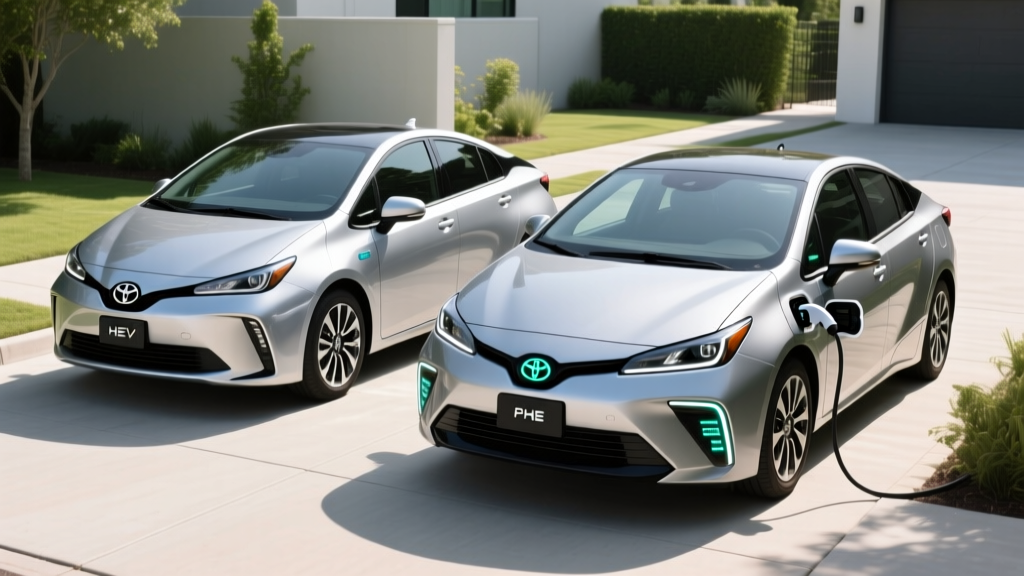
Conventional Hybrid (HEV): The standard Prius pairs a 2.0-liter four-cylinder gasoline engine with two motor-generators and a small lithium-ion battery (under 1 kWh usable). It never plugs in. The battery recharges through regenerative braking and engine power. You simply fuel it like a normal car.
Plug-in Hybrid (PHEV — Prius Prime): The Prius Prime uses a larger 13.6 kWh lithium-ion battery pack and a more powerful electric motor. You can plug it in to charge (Level 1 or Level 2), giving you a meaningful electric-only driving range before the gasoline engine ever starts. Once the battery depletes, it operates exactly like a conventional HEV.
| Specification | Prius HEV (FWD) | Prius HEV (AWD-e) | Prius Prime (PHEV) |
|---|---|---|---|
| Powertrain | 2.0L I4 + 2 motor-generators | 2.0L I4 + 3 motor-generators | 2.0L I4 + 2 motor-generators |
| Combined Horsepower | 194 hp | 196 hp | 220 hp |
| Battery (usable) | ~0.9 kWh Li-ion | ~0.9 kWh Li-ion | 13.6 kWh Li-ion |
| EPA Combined MPG | 57 MPG | 54 MPG | 52 MPG (hybrid mode) / 127 MPGe (EV+hybrid) |
| EPA City / Highway | 57 city / 56 hwy | 53 city / 54 hwy | 50 city / 47 hwy (hybrid mode) |
| Electric-Only Range | N/A | N/A | 44 miles (EPA) |
| Total Range (gas + electric) | ~590 miles | ~560 miles | ~480 miles |
| 0–60 mph | 7.2 sec | 7.0 sec | 6.6 sec |
| Plugs In? | No | No | Yes (J1772 / Level 2 AC) |
| DC Fast Charging | N/A | N/A | No (AC only) |
| Level 2 Charge Time (0–100%) | N/A | N/A | ~4 hours at 240V / 3.3 kW |
| Base MSRP | $28,350 (LE) | $29,750 (LE AWD) | $33,445 (SE) |
Source: fueleconomy.gov and Toyota Motor Corporation. Verify current model-year specs at toyota.com/prius.
How the Hybrid Synergy Drive Actually Works
Toyota's Hybrid Synergy Drive is a power-split system using a planetary gearset — not a traditional transmission. Here's what happens in real driving:
Starting from a Stop
The gasoline engine stays off. The traction motor (MG2) draws from the battery to launch the car silently on electric power alone, typically up to ~15 mph under light throttle. This is why hybrids excel in city traffic — the engine never idles.
Normal Acceleration and Cruising
The 2.0-liter Dynamic Force engine (running on the ultra-efficient Atkinson cycle) starts and contributes torque. The planetary gearset blends engine and electric motor power seamlessly. At steady highway speeds, the engine does most of the work; the motor assists on inclines or when you demand more throttle.
Deceleration and Braking — Regenerative Capture
When you lift off the accelerator or press the brake pedal, MG2 reverses its role and becomes a generator. Kinetic energy that a conventional car would waste as brake heat is converted to electricity and stored in the battery. This is why HEV and PHEV Prius models often beat their EPA city estimates in stop-and-go traffic.
Prime-Specific: EV Mode Driving
The Prius Prime adds a dedicated EV mode that locks out the gasoline engine entirely, using only the 13.6 kWh battery and the 161-hp front motor for up to 44 EPA-rated miles. This covers most daily commutes without burning a drop of fuel. Once the battery reaches its minimum state of charge, the system reverts to standard hybrid operation.
Fuel Economy: EPA Numbers vs Real-World MPG
Hybrid efficiency is notoriously sensitive to driving style, ambient temperature, and route profile. The EPA numbers for the 2026 Prius are already exceptional, but real-world results often diverge in predictable ways.
| Model | EPA Combined | Real-World City (warm) | Real-World Highway (70 mph) | Cold-Weather Penalty |
|---|---|---|---|---|
| Prius HEV FWD | 57 MPG | 58–62 MPG | 48–52 MPG | −5 to −10 MPG |
| Prius HEV AWD-e | 54 MPG | 55–58 MPG | 46–50 MPG | −5 to −10 MPG |
| Prius Prime (hybrid mode) | 52 MPG | 52–56 MPG | 44–48 MPG | −5 to −8 MPG |
Why city MPG exceeds highway in hybrids: Regenerative braking recaptures energy at every stoplight. On the highway, aerodynamic drag dominates and there's no braking to recover energy. Cold weather reduces battery efficiency and forces the engine to run longer for cabin heat, shaving 10–15% off combined economy in winter.
Prime owners with home charging: If your round-trip commute is under 44 miles and you charge nightly, you may use almost zero gasoline on weekdays. Toyota reports Prime owners average over 50% of their miles in EV mode when charging regularly.
Prius Prime PHEV: Charging, Electric Range, and Daily Use
The Prius Prime's 44-mile EPA electric range is its headline feature, but the charging logistics matter just as much as the range figure.
Charging Methods and Times
- Level 1 (120V household outlet): ~16.5 hours for a full charge using the included cordset. Realistic only for overnight top-ups if you drive under ~30 miles daily.
- Level 2 (240V, 3.3 kW onboard charger): ~4 hours from empty to full. A dedicated home Level 2 station is the practical choice for daily Prime ownership.
- DC Fast Charging: Not supported. The Prius Prime uses a J1772 AC inlet only. This is a deliberate trade-off — Toyota prioritized cabin space and cost over DC capability, and most Prime owners charge at home overnight where speed is irrelevant.
Maximizing Electric-Only Miles
The Prime's EV mode works best at speeds under 65 mph with moderate acceleration. Use the EV/HV/Auto EV modes strategically: EV mode for your city commute, HV mode to save battery for a later electric-only segment (like a quiet neighborhood or low-emission zone). Preconditioning the cabin while plugged in preserves battery energy for driving rather than heating or cooling.
Pricing, Tax Credits, and Total Cost of Ownership
The 2026 Prius lineup spans from under $29,000 to the low $40,000s for a fully loaded Prime XSE Premium. Tax-credit eligibility is a key differentiator between the HEV and PHEV.
Federal §30D Tax Credit — Who Qualifies?
- Prius HEV: Does NOT qualify for the federal §30D clean vehicle credit. Conventional hybrids are ineligible — the credit applies only to plug-in vehicles (BEVs and PHEVs).
- Prius Prime (PHEV): May qualify for up to $3,750 under §30D, contingent on critical-mineral and battery-component sourcing requirements that change annually. The Prime's battery is assembled with Japanese-sourced cells, and eligibility can shift with updated IRS guidance.
- Income caps: Modified AGI must not exceed $150,000 (single), $225,000 (head of household), or $300,000 (joint filers).
- MSRP cap: PHEVs must be under $55,000 MSRP (sedan cap). All current Prius Prime trims clear this threshold.
- Point-of-sale transfer: Eligible buyers can apply the credit as an instant rebate at the dealership rather than waiting to claim it on their tax return.
Always verify current-year eligibility on irs.gov or with a tax professional before purchasing. Rules update frequently.
Five-Year Ownership Cost Snapshot
At $3.50/gallon gasoline and 12,000 miles/year, the Prius HEV (57 MPG) costs roughly $875/year in fuel. A comparable gas-only compact sedan at 30 MPG would cost $1,680/year — a savings of over $4,000 across five years with the Prius. The Prius Prime, charged at home at $0.14/kWh, can drop fuel costs to under $400/year if most miles are driven electrically.
Battery Longevity, Warranty, and Replacement Cost
Toyota Hybrid Battery Warranty: 10 years or 150,000 miles (whichever comes first) across all 50 states, covering capacity loss below a defined threshold and defects. This applies to both the HEV traction battery and the Prime's larger PHEV pack.
Hybrid system warranty: 8 years / 100,000 miles for the inverter, motor-generators, and control electronics.
How Long Do Prius Batteries Actually Last?
Toyota's hybrid battery management system is conservative by design — it never allows the pack to reach true 0% or 100% state of charge, keeping the cells in a longevity-friendly middle window. Fleet data and owner surveys show the original NiMH and lithium-ion packs in Prius models routinely exceed 150,000 miles with under 10% capacity degradation. Many first-generation Prius taxis surpassed 300,000 miles on the original battery.
Replacement Cost if You're Out of Warranty
- Prius HEV lithium-ion pack: $2,500–$3,800 (OEM), with refurbished options available for $1,500–$2,200.
- Prius Prime 13.6 kWh pack: $4,500–$6,500 (OEM). The larger pack carries a proportionally higher replacement cost.
Independent hybrid specialists in most metro areas can perform replacements, often at lower labor rates than dealerships. Given the 10-year/150,000-mile warranty and the proven longevity of Toyota's system, battery replacement is a rare event — not the financial landmine some buyers fear.
Reliability and Safety Ratings
The Prius platform consistently ranks at or near the top of J.D. Power and Consumer Reports reliability surveys for the compact car segment. Toyota's hybrid components are among the most field-tested electrified systems in automotive history, with over 25 years of continuous refinement.
Safety is equally strong: the current-generation Prius earned a TOP SAFETY PICK designation from the IIHS and a 5-star overall rating from NHTSA. Standard Toyota Safety Sense 3.0 includes automatic emergency braking with pedestrian detection, lane-departure alert with steering assist, full-speed adaptive cruise control, and proactive driving assist — a Level 1 driver-assist suite (the driver remains fully responsible at all times).
Who Should Buy the Prius HEV vs the Prime PHEV vs a Full EV?
Choose the Prius HEV if:
- You don't have access to home or workplace charging
- You want maximum fuel savings with zero behavior change — no plugging in, no range planning
- Your budget is under $30,000 before options
- You drive a mix of city and highway and want 55+ MPG in all conditions
Choose the Prius Prime PHEV if:
- You have Level 2 home charging and a daily commute under ~40 miles round-trip
- You want electric-only weekday driving but the freedom to road-trip on gasoline without charging anxiety
- You value the extra 26 hp (220 total) for highway merging and passing
- You may qualify for the §30D federal tax credit, narrowing the price gap with the HEV
Choose a full BEV (like a Tesla Model 3 or Hyundai Ioniq 6) if:
- You have reliable home charging and your typical trips fall well within 250–300 miles
- You want to eliminate gasoline entirely and minimize moving parts
- You qualify for the full $7,500 federal tax credit on a qualifying BEV
- You don't need the unlimited range safety net of a gas engine for frequent long road trips
Frequently Asked Questions
How many MPG does the 2026 Prius get?
The front-wheel-drive Prius HEV is EPA-rated at 57 city / 56 highway / 57 combined MPG. The AWD-e version drops to 53/54/54 MPG. The Prius Prime achieves 52 MPG combined in hybrid mode (after the battery is depleted) and 127 MPGe when combining electric and hybrid operation. In real-world city driving with warm weather, HEV owners commonly report 58–62 MPG thanks to aggressive regenerative braking.
How far can the Prius Prime go on electric power alone?
The 2026 Prius Prime has an EPA-rated electric-only range of 44 miles on a full charge. Real-world range varies: expect 38–44 miles in mild weather at city and suburban speeds, and 30–35 miles in cold weather or at sustained highway speeds above 65 mph. Once the battery is depleted, the gasoline engine engages and the car operates as a standard hybrid with 52 MPG.
Does the Prius hybrid need to be plugged in?
No. The standard Prius HEV never plugs in. Its small battery recharges entirely through regenerative braking and the gasoline engine. Only the Prius Prime PHEV can be plugged in — and it benefits significantly from regular Level 2 charging to maximize electric-only miles.
Is the Prius hybrid reliable, and what does a battery replacement cost?
Toyota's hybrid system has over 25 years of proven reliability, with the Prius consistently earning top marks in long-term dependability surveys. The hybrid battery is warranted for 10 years / 150,000 miles. If replacement is needed out of warranty, expect $2,500–$3,800 for the HEV pack and $4,500–$6,500 for the Prime's larger pack. Most Prius batteries last well beyond the warranty period.
Does the Prius qualify for a federal tax credit?
The conventional Prius HEV does not qualify for any federal clean vehicle tax credit — §30D applies only to plug-in vehicles. The Prius Prime PHEV may qualify for up to $3,750, depending on current-year battery sourcing rules, your income, and the vehicle's MSRP. Check the latest eligibility details on irs.gov or consult a tax professional before purchase. Some states also offer additional rebates for PHEVs.
How does regenerative braking work in a Prius?
When you lift off the throttle or press the brake pedal, the electric motor (MG2) switches to generator mode. Instead of friction brakes slowing the car, the motor creates electromagnetic resistance that converts kinetic energy into electricity, which is stored in the hybrid battery. The physical brake pads only engage during hard stops or at very low speeds. This is why Prius brake pads often last 80,000–100,000 miles.
Can I tow with a Prius?
Toyota does not rate the current-generation Prius HEV or Prime for towing in the US market. If towing capacity is a priority, consider a hybrid SUV like the RAV4 Hybrid (1,750 lb capacity) or RAV4 Prime (1,500 lb).