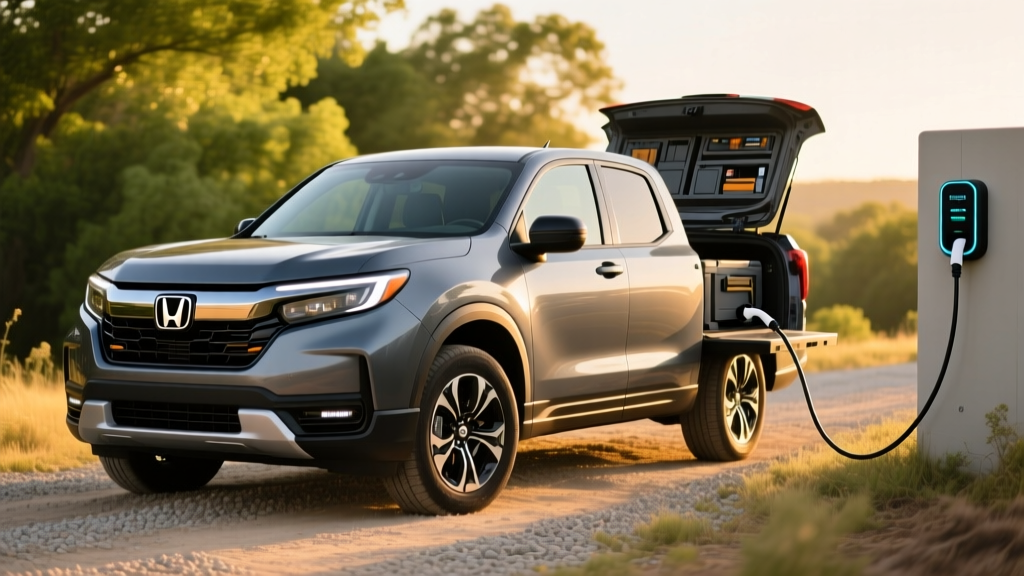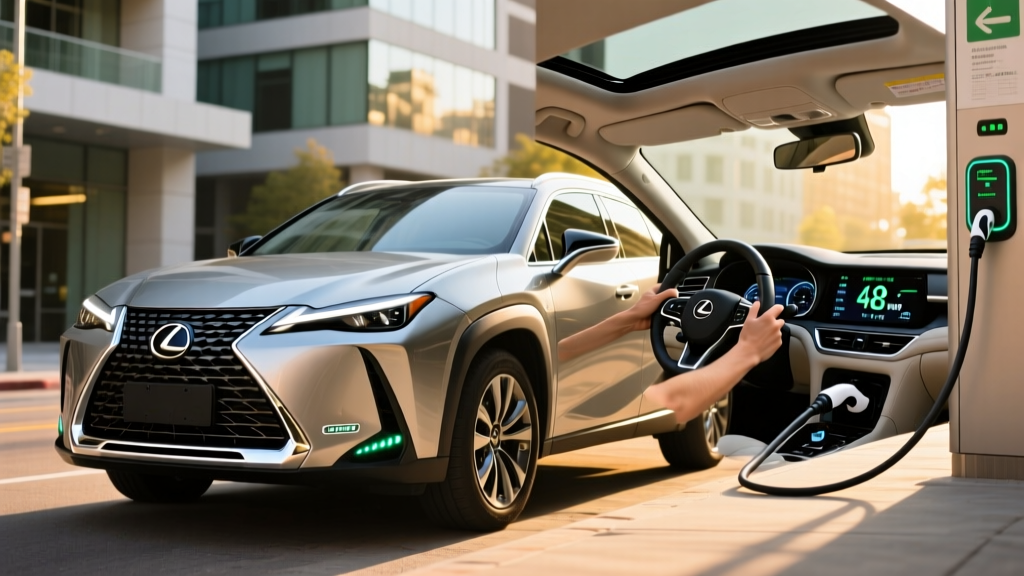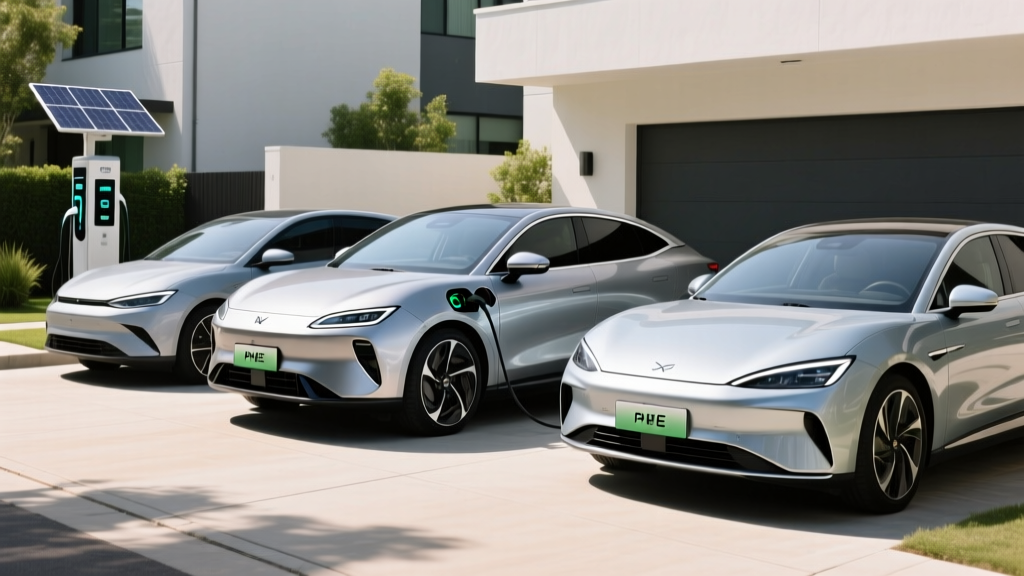
If you've been researching electrified vehicles, you've likely hit a wall of acronyms — HEV, PHEV, BEV — each promising a different blend of efficiency and convenience. Among them, the plug-in hybrid (PHEV) occupies a unique middle ground: it offers genuine electric-only driving for daily commutes while keeping a gas engine for longer trips. But understanding how a plug-in hybrid works — and whether it's the right choice over a conventional hybrid or a full battery-electric vehicle — requires digging into the powertrain architecture, battery behavior, and real-world economics.
This guide breaks down PHEV engineering, compares it head-to-head with conventional hybrids (HEVs) and full EVs (BEVs), and gives you the exact specs, MPG figures, and ownership data you need to decide.
How a Plug-In Hybrid Powertrain Actually Works
A plug-in hybrid electric vehicle (PHEV) combines two power sources: a gasoline internal combustion engine and an electric motor fed by a rechargeable battery pack. Unlike a conventional hybrid (HEV), which charges its small battery exclusively through regenerative braking and engine-driven generation, a PHEV has a larger battery (typically 13–25 kWh usable) that you charge by plugging into an external power source — a wall outlet or Level 2 charger.
Here's the operational sequence most PHEVs follow:
- Electric-first mode: When the battery has charge, the vehicle drives on electric power alone. The gas engine stays off unless you demand full acceleration or exceed the electric motor's top speed capability.
- Blended/charge-depleting mode: Under hard acceleration or at highway speeds, some PHEVs briefly engage both the engine and motor for combined power output.
- Charge-sustaining (hybrid) mode: Once the battery depletes to a programmed buffer (usually around 10–15% state of charge), the gas engine takes over as the primary power source. The vehicle then operates exactly like a conventional hybrid, using regenerative braking and engine generation to maintain the buffer.
This architecture means a PHEV gives you zero-emission electric commuting on short trips and unrestricted gas-engine range for road trips — no range anxiety, no charging-desert concerns.
HEV vs PHEV vs BEV: Which Powertrain Fits You?
Before we go deeper, let's clarify the three electrified vehicle categories. Confusion between a conventional hybrid (HEV) and a plug-in hybrid (PHEV) is the single most common mistake buyers make.
| Attribute | Conventional Hybrid (HEV) | Plug-In Hybrid (PHEV) | Battery Electric (BEV) |
|---|---|---|---|
| Plugs in to charge? | No | Yes | Yes |
| Battery size (usable) | 0.5–2 kWh | 13–25 kWh | 50–120 kWh |
| Electric-only range | 0.5–1 mile (low speed only) | 20–50 miles | 220–400+ miles |
| Gas engine? | Yes | Yes | No |
| Charging infrastructure needed? | None | Recommended (Level 1/2) | Essential (Level 2 home or public DC) |
| Federal tax credit (§30D)? | No | Up to $7,500 (if eligible) | Up to $7,500 (if eligible) |
| Typical combined MPG/MPGe | 45–57 MPG | 70–114 MPGe (electric) / 30–50 MPG (gas) | 100–130 MPGe |
| Best for | No home charging, simple ownership | Home charging + moderate commute | Home charging + no gas-engine need |
The short version: If you cannot charge at home, an HEV is your best electrified option. If you can charge at home and your daily round-trip commute falls within a PHEV's electric range (typically 25–45 miles), a PHEV lets you drive on electricity most days while keeping gas flexibility for longer trips. A BEV makes the most sense if you have reliable home charging, drive under ~250 miles daily, and want to eliminate gas entirely.
PHEV Electric-Only Range: How Far Can You Really Go?
Electric-only range is the headline spec for any PHEV, and it has improved dramatically. In 2026, leading PHEVs offer between 30 and 50 miles of zero-emission driving on a full charge. Here's how some popular 2026 models stack up:
| Model | Battery (kWh usable) | EPA Electric Range | Combined HP | 0–60 mph |
|---|---|---|---|---|
| Toyota RAV4 Prime | 18.1 kWh (NMC) | 42 miles | 302 hp | 5.7 sec |
| Toyota Prius Prime | 13.6 kWh (NMC) | 44 miles | 220 hp | 6.6 sec |
| Hyundai Tucson PHEV | 13.8 kWh (NMC) | 33 miles | 261 hp | 7.1 sec |
| Chrysler Pacifica PHEV | 16.0 kWh (NMC) | 32 miles | 260 hp | 7.4 sec |
| Jeep Wrangler 4xe | 17.3 kWh (NMC) | 22 miles | 375 hp | 6.0 sec |
| BMW X5 xDrive50e | 25.7 kWh (NMC) | 38 miles | 483 hp | 4.6 sec |
Real-world range caveat: EPA electric-range estimates assume moderate temperatures and mixed driving. Expect 15–25% less electric range in freezing weather (the battery must divert energy to cabin heating and battery thermal management). Highway-speed driving at 70+ mph also reduces electric range by roughly 10–15% compared to city use. A RAV4 Prime rated at 42 EPA electric miles might deliver 32–36 real-world electric miles on a cold winter highway commute.
PHEV Fuel Economy: MPG on Gas and MPGe on Electricity
PHEV fuel economy is expressed two ways: MPGe (miles per gallon equivalent) when operating on electricity, and standard MPG when the battery is depleted and the gas engine takes over. Both numbers matter — MPGe for your daily commute, MPG for road trips.
| Model | Combined MPGe (electric) | Combined MPG (gas-only) | City MPG (gas) | Highway MPG (gas) |
|---|---|---|---|---|
| Toyota Prius Prime SE | 114 MPGe | 48 MPG | 50 | 47 |
| Toyota RAV4 Prime | 94 MPGe | 38 MPG | 40 | 36 |
| Hyundai Tucson PHEV | 80 MPGe | 35 MPG | 36 | 33 |
| Chrysler Pacifica PHEV | 82 MPGe | 30 MPG | 29 | 30 |
| Jeep Wrangler 4xe | 49 MPGe | 20 MPG | 20 | 20 |
| BMW X5 xDrive50e | 56 MPGe | 22 MPG | 22 | 22 |
Real-world MPG vs EPA: PHEVs, like conventional hybrids, tend to exceed EPA city estimates in stop-and-go driving because regenerative braking recovers more energy at lower speeds. The Prius Prime, for example, frequently achieves 52–55 MPG in city driving vs. its 50 EPA city rating. Highway MPG often runs slightly below EPA estimates due to higher aerodynamic drag and reduced regen opportunities.
According to fueleconomy.gov, the 2026 Prius Prime SE delivers a combined 114 MPGe in electric mode — meaning it uses roughly 29 kWh of electricity per 100 miles of electric driving.
PHEV Charging: Speeds, Connectors, and What You Need at Home
One of the most practical questions PHEV buyers ask is how charging works. The answer is simpler than with a full EV, because PHEV batteries are small enough to charge quickly even on standard household power.
| Charging Level | Power (kW) | Typical Full Charge Time | Equipment Needed |
|---|---|---|---|
| Level 1 (120V household outlet) | 1.2–1.4 kW | 10–14 hours (full charge) | Standard 3-prong outlet; included charging cord |
| Level 2 (240V home/public) | 3.3–7.2 kW | 2–5 hours (full charge) | Level 2 EVSE (home wallbox or public station) |
| DC Fast Charging | N/A for most PHEVs | N/A | Most PHEVs do NOT support DC fast charging |
Critical note on DC fast charging: The vast majority of PHEVs — including the RAV4 Prime, Prius Prime, Tucson PHEV, and Pacifica PHEV — do not have DC fast-charging capability. Their batteries are small enough that Level 2 charging fully replenishes them in 2–5 hours, which covers overnight home charging. A small number of PHEVs (notably some European models) offer limited DC charging, but it is not the norm.
Home charging setup: Most PHEV owners find that a standard 120V outlet (Level 1) is sufficient for overnight charging — plugging in at 8 PM yields a full battery by 7 AM for a Prius Prime's 13.6 kWh pack. If your commute is at the upper end of the vehicle's electric range, or if you want faster turnaround between trips, a 240V Level 2 home charger ($300–$600 for the unit, plus $400–$1,500 for electrician installation) cuts charging time to roughly 2–3 hours.
Cost to charge: At the US average residential electricity rate of approximately $0.17/kWh (per EIA data), fully charging a RAV4 Prime's 18.1 kWh battery costs about $3.08 — versus roughly $5.50–$7.00 to drive 42 miles on gasoline at $3.30/gallon and 38 MPG.
PHEV Pricing, Tax Credits, and Total Cost of Ownership
PHEVs carry a price premium over their conventional hybrid siblings — typically $3,000 to $7,000 more — due to the larger battery pack and onboard charger. However, federal tax incentives can significantly narrow that gap.
| Model | Base MSRP | Federal §30D Credit (est.) | Effective Price (after credit) |
|---|---|---|---|
| Toyota Prius Prime SE | $33,445 | $3,750* | ~$29,695 |
| Toyota RAV4 Prime SE | $44,515 | $3,750* | ~$40,765 |
| Hyundai Tucson PHEV SEL | $40,245 | $3,750* | ~$36,495 |
| Chrysler Pacifica PHEV | $51,095 | $7,500* | ~$43,595 |
| Jeep Wrangler 4xe Willys | $50,990 | $3,750* | ~$47,240 |
| BMW X5 xDrive50e | $73,775 | $0† | $73,775 |
*Credit amounts are estimates based on 2026 IRS §30D rules. Actual credit depends on battery component and critical-mineral sourcing requirements. The credit phases based on the percentage of battery components manufactured in North America and the percentage of critical minerals sourced from the US or FTA partners. Consult a tax professional and check the latest IRS guidance on clean vehicle credits before purchasing.
†The BMW X5 xDrive50e exceeds the §30D MSRP cap of $80,000 for SUVs, but its assembled-in-USA and battery-sourcing status may still limit or eliminate credit eligibility depending on the trim and option package. Verify on the fueleconomy.gov tax credit lookup.
§30D Federal Tax Credit Requirements (2026):
- Vehicle must be new and primarily for personal use in the US
- Buyer adjusted gross income must not exceed $150,000 (single) / $300,000 (joint)
- SUV MSRP must not exceed $80,000; sedans not to exceed $55,000
- Battery must meet critical-mineral and component sourcing thresholds (phased annually)
- Credit can be transferred to the dealer as a point-of-sale discount
- PHEV must have a battery capacity of at least 7 kWh
PHEV Battery Longevity, Warranty, and Replacement Costs
Battery degradation is the number-one concern for any electrified-vehicle buyer. Here's the reassuring data: PHEV battery packs are engineered for longevity, and their smaller size means individual cells experience less stress per cycle than those in a full BEV.
Federal mandate: The EPA requires that hybrid and PHEV battery packs carry a minimum warranty of 8 years / 100,000 miles (10 years / 150,000 miles in California and states that follow CARB emissions standards). This warranty covers battery capacity falling below a specified threshold — typically 60–70% of original capacity — and defects.
Most major manufacturers meet or exceed this floor:
| Manufacturer | Hybrid Battery Warranty | Powertrain Warranty | Replacement Cost (est.) |
|---|---|---|---|
| Toyota | 10 yr / 150,000 mi | 5 yr / 60,000 mi | $3,500–$5,500 |
| Hyundai / Kia | 10 yr / 100,000 mi | 10 yr / 100,000 mi | $4,000–$6,500 |
| Stellantis (Chrysler/Jeep) | 8 yr / 100,000 mi | 5 yr / 60,000 mi | $5,500–$8,000 |
| BMW | 8 yr / 80,000 mi | 4 yr / 50,000 mi | $8,000–$14,000 |
Real-world reliability data: Toyota's hybrid and PHEV powertrains have demonstrated exceptional longevity. According to long-term fleet data and owner surveys, Toyota hybrid battery packs commonly exceed 200,000 miles with less than 15% capacity degradation. The Prius and RAV4 hybrid platforms consistently earn top reliability scores from Consumer Reports and J.D. Power.
Out-of-warranty battery replacement costs for PHEVs range from approximately $3,500 for a Prius Prime to $14,000 for a luxury model like the BMW X5. However, given that PHEV batteries are smaller and less stressed than BEV batteries, most owners will sell or trade the vehicle before a replacement is ever needed.
Decision Framework: Should You Buy a PHEV, HEV, or BEV?
Choose a PHEV if:
- You have access to home or workplace Level 1/2 charging
- Your daily round-trip commute is under 40–50 miles (fits within electric range)
- You take regular road trips exceeding 250+ miles and don't want to plan around DC fast chargers
- You want EV-like commuting without full EV commitment
- You want to qualify for a partial federal tax credit
Choose a conventional HEV if:
- You have no access to home or workplace charging
- You want the simplest ownership experience — no plugs, no cords, no charging apps
- Your budget is tighter (HEVs are typically $3,000–$7,000 cheaper than PHEV equivalents)
- You primarily drive in city traffic where hybrid regen is most effective
Choose a full BEV if:
- You have reliable Level 2 home charging and your daily driving is under ~250 miles
- You want zero tailpipe emissions and the lowest per-mile "fuel" cost
- You want to eliminate oil changes, spark plugs, and engine maintenance entirely
- You qualify for the full $7,500 federal tax credit on a qualifying model
- You rarely take trips beyond 200–250 miles, or you're willing to use DC fast-charging networks
PHEV Advantages
- Electric commuting with gas backup — no range anxiety
- Lower per-mile cost on electricity for daily driving
- Partial federal tax credit ($3,750–$7,500 depending on model)
- Smaller battery means less resource extraction per vehicle
- No dependency on public charging infrastructure
PHEV Limitations
- Higher purchase price than equivalent HEV
- Two powertrains to maintain (engine + electric system)
- Most do not support DC fast charging
- Electric range drops significantly in cold weather
- Less cargo/passenger space in some models vs HEV sibling (battery packaging)
Frequently Asked Questions
Do I have to plug in a plug-in hybrid?
No — a PHEV will still drive as a conventional hybrid if you never plug it in. However, you'll miss the entire benefit of electric-only range and will operate exclusively on gasoline (at the vehicle's charge-sustaining MPG rating). Not plugging in a PHEV is like buying a laptop and never charging it — it works, but you're paying for capability you're not using. If you cannot plug in, a conventional HEV is a more cost-effective choice.
How long does a PHEV battery last before it needs replacement?
Most PHEV battery packs are designed to last the life of the vehicle. Toyota's hybrid batteries have demonstrated 200,000+ miles with under 15% degradation in real-world use. Federal warranty requirements mandate a minimum of 8 years/100,000 miles (10/150,000 in CARB states). Out-of-warranty replacement typically costs $3,500–$8,000 depending on the model, but most owners sell the vehicle before this becomes necessary.
Can a PHEV charge while driving?
Yes — through regenerative braking and engine-driven generation. When you brake or coast, the electric motor acts as a generator, recovering kinetic energy back into the battery. Some PHEVs also offer a "charge mode" that uses the gas engine to actively charge the battery while driving, though this reduces fuel economy. However, these methods only partially replenish the battery — a full charge requires plugging in.
Does a PHEV qualify for the $7,500 federal tax credit?
It depends on the specific model and your tax situation. Under current IRS §30D rules, a PHEV must have a battery of at least 7 kWh, meet MSRP caps ($80,000 for SUVs, $55,000 for sedans), and satisfy battery-component and critical-mineral sourcing requirements that tighten annually. Many PHEVs qualify for a partial credit ($3,750) rather than the full $7,500. Check the fueleconomy.gov credit lookup and consult a tax professional for your specific eligibility.
Is a PHEV more reliable than a gas car?
Data suggests PHEVs from established manufacturers (particularly Toyota and Hyundai/Kia) are at least as reliable as their gas-only counterparts. The hybrid system actually reduces wear on the gas engine (it runs less), the brakes (regen braking handles much of the deceleration), and the transmission (the electric motor smooths power delivery). The main additional maintenance consideration is the electric motor and power electronics, which have proven highly durable with few failure points.
What happens if the PHEV battery dies completely?
A PHEV battery never truly "dies" in the way a phone battery does — the vehicle's software maintains a buffer (typically 10–15% state of charge) that prevents full depletion. Even at this minimum buffer, the vehicle operates as a conventional hybrid using the gas engine. If the battery pack develops a fault or degrades beyond the warranty threshold, the vehicle will flag a warning and may limit electric-only operation, but the gas engine will continue to power the vehicle.