The Short Answer: Two Powertrains, One Vehicle
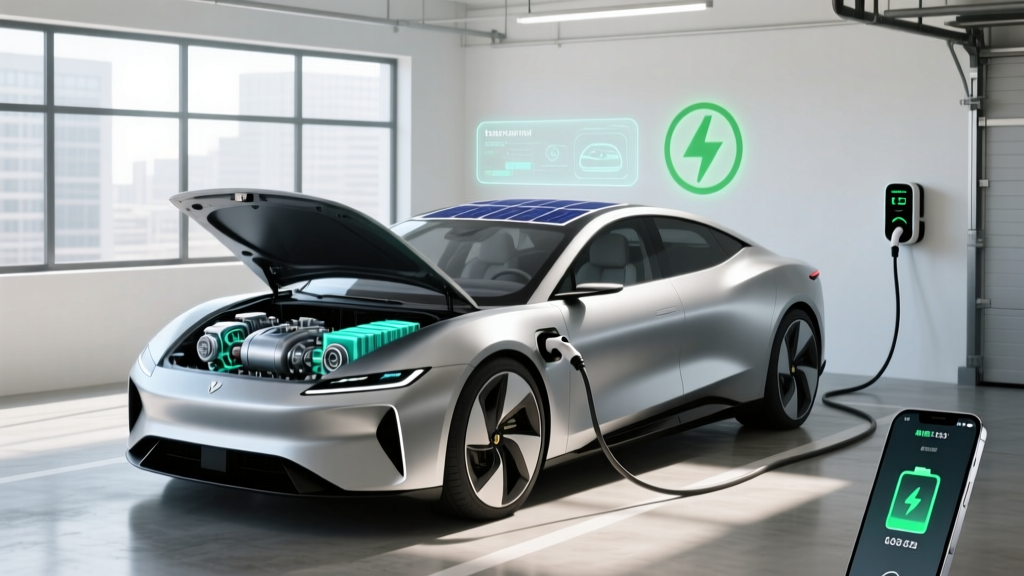
A plug-in hybrid electric vehicle (PHEV) pairs a gasoline engine with a larger battery and electric motor than a conventional hybrid, giving it the ability to drive 25–50 miles on electricity alone before seamlessly switching to hybrid mode. Unlike a standard hybrid (HEV), a PHEV can be plugged into a wall outlet or charger to refill its battery — hence the name. The result is a vehicle that behaves like a short-range EV for daily commuting and like a fuel-efficient hybrid on longer road trips, eliminating range anxiety entirely.
If you've been searching for how plug-in hybrid cars work, the core concept is simple: battery-first, gas-second. The vehicle's control software prioritizes electric propulsion until the battery depletes to a minimum threshold, at which point the gasoline engine takes over — either driving the wheels directly, generating electricity for the motor, or both. This dual nature makes PHEVs the most versatile electrified option for drivers who lack reliable home charging or frequently take long trips.
HEV vs PHEV: The Critical Distinction
Before breaking down the engineering, it's essential to separate the two hybrid categories. Many shoppers confuse them, and the ownership experience is fundamentally different.
| Feature | Conventional Hybrid (HEV) | Plug-In Hybrid (PHEV) |
|---|---|---|
| Battery Size | 1–2 kWh (self-charging) | 12–25+ kWh (plug-in capable) |
| Electric-Only Range | 0.5–2 miles at low speed | 25–50+ miles at highway speed |
| External Charging | Not required or possible | Plug into Level 1, Level 2, or DC fast charger |
| Federal Tax Credit | None (as of 2026) | Up to $7,500 under IRS §30D (eligibility varies) |
| Typical Price Premium | +$1,000–$3,000 vs gas model | +$4,000–$8,000 vs gas model |
| Best For | Drivers who can't plug in | Drivers with home/work charging access |
Toyota's RAV4 lineup illustrates this split clearly. The RAV4 Hybrid (HEV) delivers 39 MPG combined without ever plugging in, while the RAV4 Prime (PHEV) offers 42 miles of electric range and 38 MPG combined once the battery is depleted — but costs roughly $5,000 more and requires a plug to unlock its full value.
Under the Hood: PHEV Powertrain Architecture
Most 2026 PHEVs use one of three powertrain layouts, and understanding which your vehicle uses affects both performance and efficiency.
Series-Parallel (Power-Split) — The Mainstream Standard
Used by Toyota, Hyundai, and Kia, this design uses a planetary gearset or clutch system to blend power from the engine and electric motor(s). At low speeds and light loads, the vehicle runs on electricity alone. Under hard acceleration, both sources combine. At highway cruising, the engine can drive the wheels directly while simultaneously charging the battery. The Toyota RAV4 Prime produces a combined 302 horsepower from its 2.5-liter four-cylinder engine and dual electric motors — enough for a 0–60 mph time of 5.7 seconds.
Series (Range-Extender / EREV)
In a series hybrid, the gasoline engine never drives the wheels. It functions solely as a generator to recharge the battery when it runs low. The BMW i3 REx (now discontinued) pioneered this approach, and the 2026 Mazda MX-30 R-EV uses a similar concept with a rotary engine generator. The advantage is smooth, EV-like driving at all times; the trade-off is reduced efficiency at sustained highway speeds where a direct mechanical connection would be more efficient.
Parallel (P2/P3 Hybrid)
European automakers like BMW, Volvo, and Stellantis (Jeep, Chrysler) often use a dedicated electric motor sandwiched between the engine and transmission (P2) or on a separate axle (P3). The Jeep Wrangler 4xe, for example, places its electric motor between a 2.0-liter turbo engine and an 8-speed automatic, delivering 375 combined horsepower and 49 MPGe. This layout preserves the familiar driving feel of a conventional automatic while adding electric torque.
Electric Range, Battery Size, and Charging Times
The defining feature of a PHEV is its ability to drive meaningful distances on electricity alone. Here's what the 2026 market looks like across popular models:
| Model | Battery (kWh) | EPA EV Range | Level 2 Charge Time (0–100%) | DC Fast Charge |
|---|---|---|---|---|
| Toyota RAV4 Prime | 18.1 | 42 mi | ~2.5 hours (6.6 kW) | No |
| Toyota Prius Prime | 13.6 | 44 mi | ~4 hours (3.3 kW) | No |
| Hyundai Tucson PHEV | 13.8 | 33 mi | ~2 hours (7.2 kW) | No |
| Jeep Wrangler 4xe | 17.3 | 22 mi | ~2 hours (7.2 kW) | No |
| Chrysler Pacifica PHEV | 16.0 | 32 mi | ~2 hours (7.2 kW) | No |
| BMW X5 xDrive50e | 25.7 | 38 mi | ~3 hours (7.4 kW) | No |
| Volvo XC60 Recharge | 18.8 | 35 mi | ~3 hours (6.6 kW) | No |
A few observations that matter for real buyers:
- Most PHEVs do not support DC fast charging. The battery is small enough that Level 2 (240V) charging fully replenishes it in 2–4 hours, making DC infrastructure unnecessary for daily use. The Mitsubishi Outlander PHEV is a rare exception, offering DC fast charging capability.
- Level 1 (120V) charging works but is slow — expect 8–14 hours for a full charge depending on battery size. For overnight charging, this is adequate if your daily commute falls within the electric range.
- Real-world electric range varies. EPA figures assume moderate temperatures and mixed driving. In winter conditions (below 32°F), expect 15–25% less electric range due to cabin heating demands and battery chemistry limitations. Highway-only driving at 75+ mph can also reduce range by 10–20% compared to the EPA combined figure.
Fuel Economy: EPA Numbers and Real-World Results
Once the battery is depleted, a PHEV operates as a conventional hybrid. This is where the MPG figures matter most, because many owners will drive beyond the electric range regularly. Here's how popular 2026 PHEVs perform in hybrid mode:
| Model | MPGe (EV Mode) | City MPG | Highway MPG | Combined MPG | Total Range |
|---|---|---|---|---|---|
| Toyota Prius Prime | 127 MPGe | 50 | 47 | 48 | ~620 mi |
| Toyota RAV4 Prime | 94 MPGe | 40 | 36 | 38 | ~600 mi |
| Hyundai Tucson PHEV | 80 MPGe | 38 | 35 | 36 | ~440 mi |
| Jeep Wrangler 4xe | 49 MPGe | 20 | 20 | 20 | ~370 mi |
| Chrysler Pacifica PHEV | 82 MPGe | 30 | 31 | 30 | ~520 mi |
| BMW X5 xDrive50e | 56 MPGe | 22 | 24 | 23 | ~460 mi |
Real-world MPG note: Hybrids and PHEVs in hybrid mode often exceed their EPA city ratings in stop-and-go traffic, because regenerative braking recaptures energy that a gas car wastes as heat. Conversely, highway-only driving tends to produce MPG slightly below the EPA highway figure. Toyota Prius Prime owners frequently report 52–55 MPG in city-heavy driving, beating the 50 MPG EPA city estimate.
The total combined range — electric miles plus gas-powered miles on a full tank — typically falls between 400 and 650 miles, meaning most PHEV owners refuel far less often than gas-car drivers.
Battery Longevity, Warranty, and Replacement Cost
PHEV Battery Warranty Standards (2026)
Federal law mandates that all PHEV batteries carry a minimum warranty of 8 years or 100,000 miles (whichever comes first). In California Air Resources Board (CARB) states — including CA, CO, CT, ME, MD, MA, NJ, NY, OR, RI, VT, and WA — the warranty extends to 10 years or 150,000 miles.
The warranty covers battery capacity loss below a defined threshold, typically 60–70% of original capacity. If your PHEV's battery degrades beyond this point within the warranty period, the manufacturer must repair or replace it at no cost.
Battery degradation in PHEVs tends to be slower than in full EVs for one key reason: the software buffer is more aggressive. A PHEV with an 18 kWh battery might only allow access to 14–15 kWh, keeping the cells from reaching the extreme high and low states of charge that accelerate degradation. This means most PHEV batteries outlast their warranty periods with minimal noticeable range loss.
Out-of-warranty replacement cost: If a PHEV battery requires replacement after the warranty expires, expect to pay between $4,000 and $8,000 depending on the model, including parts and labor. Toyota Prius Prime replacements run approximately $4,500–$5,500, while larger-battery PHEVs like the BMW X5 xDrive50e can reach $7,000+. However, documented failures within the first 10–12 years remain rare for mainstream brands.
Pricing, Trims, and Federal Tax Credit Eligibility
PHEVs carry a price premium over their gas-only and conventional hybrid siblings, but the gap has narrowed significantly. Here's the 2026 pricing landscape:
- Toyota Prius Prime: Starting at ~$33,450 (SE trim)
- Toyota RAV4 Prime: Starting at ~$44,500 (SE trim)
- Hyundai Tucson PHEV: Starting at ~$39,500 (SEL trim)
- Jeep Wrangler 4xe: Starting at ~$51,000 (Willys trim)
- Chrysler Pacifica PHEV: Starting at ~$51,000 (Select trim)
Federal Tax Credit Under IRS §30D
As of 2026, qualifying PHEVs are eligible for the federal clean vehicle credit under IRS §30D, which provides up to $7,500 — but eligibility is far from automatic. The rules are strict:
- Battery capacity: Must be at least 7 kWh (most PHEVs qualify)
- MSRP caps: Vans/SUVs/pickups ≤ $80,000; sedans ≤ $55,000
- Buyer income caps: Modified AGI ≤ $150,000 (single), $225,000 (head of household), $300,000 (joint)
- Final assembly: Must occur in North America
- Battery sourcing: Critical minerals and battery components must meet escalating domestic-content thresholds — this requirement eliminates several otherwise-eligible models
- Point-of-sale transfer: As of 2024, buyers can transfer the credit to the dealer as an immediate price reduction rather than waiting to claim it on their tax return
Because battery-sourcing rules tighten annually, a PHEV that qualified for the full $7,500 in 2024 may qualify for only $3,750 or nothing in 2026. Always verify current eligibility on fueleconomy.gov before purchasing, and consult a tax professional for your specific situation.
PHEV Advantages
- 25–50 miles of zero-gas commuting
- No range anxiety — gas engine provides 400–650 mi total range
- Lower fuel costs when regularly charged
- Eligible for federal tax credit (if sourcing rules met)
- Regenerative braking extends brake life
- Stronger resale value than gas-only equivalents
PHEV Trade-Offs
- Higher purchase price vs gas or HEV versions
- Requires plug-in access to realize full value
- Heavier than gas cars (battery + engine + motor)
- Most lack DC fast charging
- Two systems to maintain (engine + electric drivetrain)
- Tax credit eligibility uncertain due to sourcing rules
Who Should Choose a PHEV vs a Full EV or Gas Car?
Choose a PHEV If:
- Your daily commute is under 40 miles round-trip and you can charge at home or work
- You take road trips of 300+ miles several times a year and charging infrastructure along your routes is sparse
- You live in an apartment or condo where installing a dedicated EV charger is difficult but you have access to a standard 120V outlet
- You want to reduce fuel consumption by 60–80% without committing to a full EV
Choose a Full EV (BEV) If:
- You have reliable Level 2 home charging and your daily driving is under 250 miles
- You want zero gasoline expenses and minimal maintenance (no oil changes, no engine)
- Your region has robust public DC fast-charging networks for road trips
- You want the maximum federal tax credit and lowest per-mile operating cost
Choose a Conventional Hybrid (HEV) If:
- You cannot plug in at all — no garage, no workplace charger, no outlet access
- Your budget is tight and the PHEV premium doesn't pencil out against your fuel savings
- You want better MPG than a gas car with zero change to your fueling habits
The math often favors a PHEV for households with a predictable routine. If you drive 30 miles per day and charge nightly, a RAV4 Prime uses zero gasoline for weekday driving. A 12-gallon tank then covers weekend trips at 38 MPG — yielding an effective real-world fuel economy that can exceed 80 MPGe on an annualized basis for this driving pattern.
Frequently Asked Questions
How many MPG does a plug-in hybrid get?
It depends on whether the battery is charged. In electric mode, PHEVs achieve 80–127 MPGe (miles per gallon equivalent). Once the battery depletes, hybrid-mode MPG ranges from 20 MPG (Jeep Wrangler 4xe) to 48 MPG combined (Toyota Prius Prime). For most daily commutes under 40 miles with nightly charging, you'll burn little to no gasoline.
How far can a PHEV go on electric only?
Current 2026 PHEVs deliver between 22 and 44 miles of EPA-rated electric-only range. The Prius Prime leads at 44 miles; the RAV4 Prime achieves 42 miles. Real-world range drops 15–25% in cold weather and 10–20% during sustained highway driving above 70 mph. Total combined range (electric + full gas tank) typically reaches 400–650 miles.
Do I have to plug in a plug-in hybrid?
No — a PHEV will operate as a conventional hybrid if you never plug it in. However, you'll miss the entire value proposition: the electric-only range, the fuel savings, and the reduced engine wear. If you never plan to plug in, a conventional hybrid (HEV) is cheaper and simpler. The gasoline engine and regenerative braking will keep the battery charged for hybrid operation regardless.
Is a PHEV reliable, and what does battery replacement cost?
PHEVs from Toyota, Hyundai, and other mainstream brands are highly reliable — Toyota's hybrid synergy drive system has over two decades of proven durability. PHEV batteries are warranted for 8 years/100,000 miles federally (10 years/150,000 miles in CARB states). Out-of-warranty replacement costs $4,000–$8,000 depending on the model, but documented premature failures are uncommon. The dual powertrain does mean more components than a pure EV or gas car, but both systems are mature technology.
Does a plug-in hybrid qualify for a tax credit?
Some do, under IRS §30D. The credit can be up to $7,500, but eligibility depends on battery sourcing requirements, MSRP caps ($55,000 for cars, $80,000 for SUVs/trucks/vans), buyer income limits, and North American final assembly. As of 2026, the battery component and critical minerals sourcing rules have tightened significantly, disqualifying several models that previously qualified. Check fueleconomy.gov for the current eligible vehicle list before purchasing.
How long does it take to charge a PHEV at home?
On a standard 120V outlet (Level 1), expect 8–14 hours for a full charge — adequate for overnight replenishment. On a 240V Level 2 charger (like a home wallbox), most PHEVs charge fully in 2–4 hours. Since PHEV batteries are small (12–26 kWh), you don't need an expensive high-power Level 2 unit; even a basic 16-amp (3.8 kW) charger will fully replenish most PHEV batteries overnight.
Can a PHEV use DC fast chargers?
Most cannot. The small battery size makes DC fast charging unnecessary for practical daily use — Level 2 fills the battery quickly enough. The Mitsubishi Outlander PHEV is one of the few PHEVs offering DC fast-charge capability. If you rely on public DC chargers (Electrify America, EVgo, Tesla Superchargers), a PHEV is not the right choice — that infrastructure is designed for full EVs with 60–100+ kWh batteries.