If you've ever wondered how a hybrid engine works, the short answer is that it pairs a gasoline engine with one or more electric motors and a battery pack to optimize efficiency. But the engineering underneath that simple description is remarkably sophisticated — and the differences between a conventional hybrid (HEV) and a plug-in hybrid (PHEV) matter enormously for your wallet, your commute, and your charging habits.
This guide breaks down the mechanical and electrical architecture of modern hybrid powertrains, explains real-world fuel economy versus EPA stickers, and helps you decide whether an HEV, a PHEV, or a full battery-electric vehicle (BEV) is the right move for your situation.
The Core Architecture: How a Hybrid Engine Combines Gas and Electric
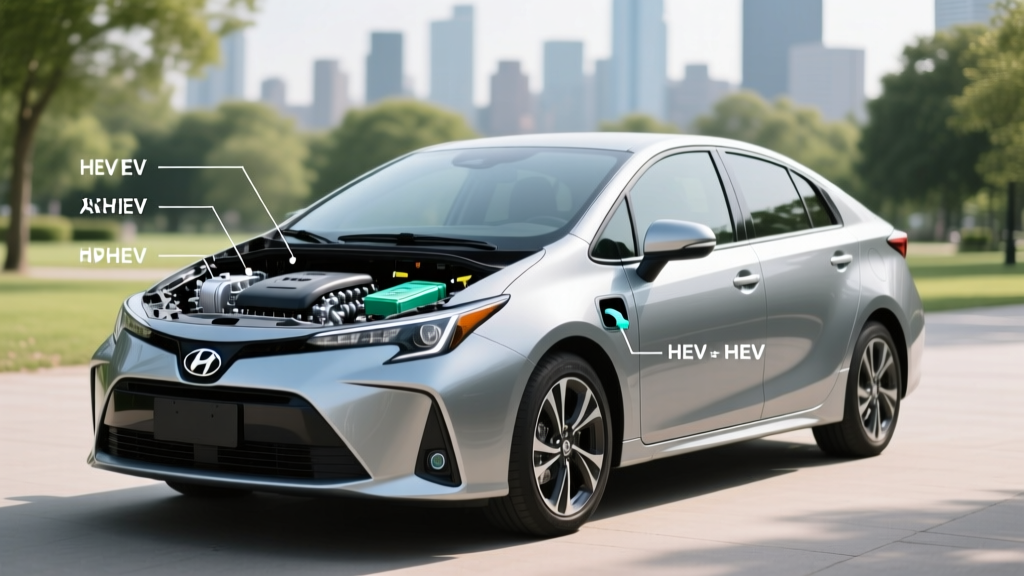
Every hybrid vehicle uses three key components working in concert:
- Internal combustion engine (ICE): Typically a 4-cylinder Atkinson-cycle gasoline engine optimized for efficiency over peak power.
- Electric motor(s): One or more motor-generators that can drive the wheels, regenerate braking energy, or start the engine.
- Battery pack: A lithium-ion or nickel-metal hydride (NiMH) pack that stores energy for the electric motor.
The magic lies in how these components are managed. A power control unit (PCU) continuously decides whether to use the engine, the motor, or both — often switching dozens of times per minute without the driver noticing. During braking, the electric motor reverses direction and acts as a generator, converting kinetic energy into electricity that recharges the battery. This is called regenerative braking, and it's the reason hybrids dramatically outperform gas-only cars in stop-and-go city driving.
There are two primary hybrid architectures:
- Series-parallel (power-split): Used by Toyota, Ford, and Hyundai. The engine can drive the wheels directly, drive a generator to charge the battery, or both simultaneously through a planetary gearset. This is the most common and efficient design.
- Parallel: The engine and motor both connect to the drivetrain but the motor typically assists rather than independently drives. Found in some Honda and Hyundai designs.
HEV vs PHEV: The Critical Distinction
Before comparing specific models, you need to understand the fundamental split in the hybrid market. A conventional hybrid (HEV) and a plug-in hybrid (PHEV) share DNA but serve different use cases.
| Feature | Conventional Hybrid (HEV) | Plug-In Hybrid (PHEV) |
|---|---|---|
| Plugs in to charge? | No — charges via regen & engine | Yes — Level 1/Level 2 charging |
| Battery size | 0.6–1.6 kWh | 13–25+ kWh |
| Electric-only driving | Very short (under 1 mi, low speed) | 20–50+ miles at highway speed |
| Federal tax credit (§30D) | Not eligible | Up to $7,500 (if requirements met) |
| Home charging required? | No | Recommended for full benefit |
| Best for | No home charging, high-mileage drivers | Short commutes with home charging |
| Typical price premium over gas car | $1,000–$3,000 | $4,000–$9,000 |
The takeaway: if you can charge at home and your daily round-trip commute falls within a PHEV's electric-only range, you'll drive on electricity most days and only burn gas on road trips. If you can't charge at home or you drive 60+ miles daily with mostly highway miles, a conventional HEV may be the smarter, simpler choice.
Real-World MPG: What EPA Numbers Actually Mean for Hybrids
Hybrid fuel economy ratings are where real-world driving often diverges from the sticker — and usually in your favor for city driving. The EPA test cycle includes a significant city portion with frequent stops, which is exactly where regenerative braking and electric-motor assist shine. However, highway driving at sustained 70–80 mph speeds relies more on the gasoline engine, so some hybrids see their real-world highway MPG fall slightly below the EPA estimate.
Let's look at three representative 2026 models that illustrate how hybrid engine configurations affect efficiency:
| Model (2026) | Type | EPA City | EPA Highway | EPA Combined | Real-World Expectation |
|---|---|---|---|---|---|
| Toyota Prius LE | HEV | 57 MPG | 56 MPG | 57 MPG | 52–60 MPG (city often exceeds EPA) |
| Toyota RAV4 Prime | PHEV | 94 MPGe (EV) | 84 MPGe (EV) | 38 MPG (gas) / 94 MPGe (EV) | 35–40 MPG gas; 40–42 mi EV range |
| Honda Accord Hybrid | HEV | 51 MPG | 44 MPG | 48 MPG | 46–53 MPG (strong city advantage) |
Key insight: Hybrids using Toyota's series-parallel power-split system tend to deliver real-world city MPG that matches or slightly exceeds the EPA rating. The Accord Hybrid's two-motor system also excels in urban driving. For PHEVs, your effective "MPG" depends entirely on how often you charge — if you plug in nightly and drive 30 miles per day, you may use almost no gasoline for months.
PHEV Electric-Only Range, Charging, and Battery Specs
For plug-in hybrids, the electric-only range is the single most important specification. It determines whether your daily commute is an EV commute or a hybrid commute. Here's what the current PHEV landscape looks like in 2026:
| 2026 PHEV Model | Battery (kWh) | EPA EV Range | Total Range (EV + Gas) | Level 2 Charge Time | DC Fast Charge? |
|---|---|---|---|---|---|
| Toyota RAV4 Prime | 18.1 kWh | 42 miles | ~600 miles | ~2.5 hours (240V/16A) | No |
| Chrysler Pacifica PHEV | 16.0 kWh | 32 miles | ~520 miles | ~2 hours (240V/32A) | No |
| Hyundai Tucson PHEV | 13.8 kWh | 33 miles | ~440 miles | ~2 hours (240V/32A) | No |
| Jeep Wrangler 4xe | 17.3 kWh | 22 miles | ~370 miles | ~2 hours (240V/32A) | No |
A few things to note about PHEV charging:
- No mainstream PHEV offers DC fast charging. The battery packs are too small to benefit from high-power DC charging, and the added cost/weight of DC hardware isn't justified. Level 2 (240V) charging at home is all you need.
- A standard 120V outlet (Level 1) will fully recharge most PHEVs overnight — typically in 5–8 hours — since the battery is small. This is a genuine advantage over full BEVs, which can take 40+ hours on Level 1.
- Cold weather reduces electric-only range by 15–30%, just as it does in a full EV. Expect a 42-mile RAV4 Prime to deliver roughly 30–35 miles of EV range in freezing temperatures.
Powertrain Output: Combined Horsepower and Performance
Modern hybrids aren't slow. The current generation of Toyota, Honda, and Hyundai hybrid systems delivers combined outputs that rival or exceed their gas-only counterparts, because the electric motor provides instant torque from zero RPM while the engine builds power higher in the rev range.
Here's how the powertrains stack up:
- 2026 Toyota Prius: 2.0L 4-cyl + 2 motor-generators → 196 combined HP, 0–60 mph in ~7.1 seconds (FWD). A massive improvement over the 121 HP of the previous generation.
- 2026 Toyota RAV4 Prime: 2.5L 4-cyl + 2 motor-generators, AWD → 302 combined HP, 0–60 mph in ~5.7 seconds. This is the quickest RAV4 you can buy.
- 2026 Honda Accord Hybrid: 2.0L 4-cyl + 2-motor system → 204 combined HP, 0–60 mph in ~7.5 seconds. Honda's two-motor system operates primarily in series mode at low speeds (motor drives, engine generates), switching to direct engine drive at highway speeds.
- 2026 Hyundai Tucson PHEV: 1.6L turbo 4-cyl + electric motor → 261 combined HP, 0–60 mph in ~7.0 seconds. The turbo engine gives strong highway passing power.
The combined horsepower figure can be confusing because the engine and motor don't always peak at the same RPM. The manufacturer's published "combined" or "net system" horsepower accounts for this, so trust that number over simply adding the two peak outputs together.
Pricing, Tax Credits, and Total Cost of Ownership
Hybrid pricing varies significantly between HEV and PHEV, and the federal tax credit landscape adds another layer of complexity.
Conventional hybrids (HEVs) do not qualify for the federal §30D Clean Vehicle Credit. That credit applies only to plug-in vehicles (PHEVs and BEVs) that meet battery sourcing, critical minerals, MSRP caps, and buyer income requirements under current IRS rules. However, some states offer their own incentives for HEVs — check your state's energy office or AFDC incentive database for specifics.
Plug-in hybrids (PHEVs) may qualify for up to $7,500 under §30D, but eligibility is far from guaranteed. Here's the 2026 checklist:
- MSRP cap: Vans/SUVs/pickups ≤ $80,000; sedans ≤ $55,000
- Buyer income cap: AGI ≤ $150K (single), $225K (head of household), $300K (joint)
- Battery sourcing: Required percentages of critical minerals and battery components must be sourced from the US or FTA partners — this disqualifies some models
- Minimum battery capacity: ≥ 7 kWh for PHEVs
- Point-of-sale transfer: You can transfer the credit to the dealer at purchase for an immediate price reduction, rather than waiting to claim it on your tax return
- Final assembly: Must occur in North America
For the latest eligibility details and the official list of qualifying vehicles, consult the fueleconomy.gov tax credit page and IRS §30D guidance. Rules change frequently, and a model that qualifies in January may not qualify by June if sourcing requirements shift.
Representative 2026 MSRP pricing:
- Toyota Prius LE (HEV): ~$29,500 — no federal credit
- Toyota RAV4 Prime SE (PHEV): ~$44,500 — may qualify for up to $7,500 credit (check current eligibility)
- Honda Accord Hybrid Sport (HEV): ~$34,500 — no federal credit
- Hyundai Tucson PHEV SEL (PHEV): ~$38,500 — may qualify for partial or full credit depending on sourcing
Battery Reliability, Warranty, and Replacement Costs
Battery longevity is the number-one concern for hybrid shoppers, and it's the area where the data is most reassuring. Modern hybrid batteries are engineered for the life of the vehicle, and failure rates are extremely low.
| Manufacturer | Hybrid Battery Warranty | Capacity Retention Threshold |
|---|---|---|
| Toyota | 10 years / 150,000 miles | Covered if capacity drops below ~60-70% |
| Honda | 8 years / 100,000 miles (10 yr/150K in CARB states) | Defect or significant capacity loss |
| Hyundai / Kia | 10 years / 100,000 miles | Defect or significant capacity loss |
| Ford | 8 years / 100,000 miles | Defect or significant capacity loss |
Real-world longevity data: Toyota Prius taxis routinely exceed 300,000 miles on the original hybrid battery. The smaller battery packs in HEVs (typically 0.6–1.6 kWh) undergo shallow charge/discharge cycles — the system keeps the battery between roughly 40% and 80% state of charge, which dramatically extends cycle life. PHEV batteries are larger and see deeper cycles, but they're still engineered for 150,000+ miles with acceptable degradation.
Replacement costs if out of warranty:
- HEV battery (Toyota Prius): $2,000–$4,000 for a new OEM pack; refurbished packs available for $1,000–$2,000
- PHEV battery (RAV4 Prime): $6,000–$9,000 for a new OEM pack
- HEV battery (Honda Accord Hybrid): $2,500–$4,500
For context, a conventional car's transmission replacement can cost $3,000–$7,000 and is arguably more likely to occur than a hybrid battery failure within the first 150,000 miles. Hybrid systems also eliminate the alternator, starter motor, and traditional accessory belt — components that routinely fail on gas-only cars.
Hybrid vs PHEV vs EV: Which Powertrain Fits You?
The right choice depends on three variables: your daily mileage, your charging access, and your budget.
Choose a Conventional Hybrid (HEV) If:
- You cannot charge at home or work
- You want maximum simplicity — no plugs, no charging apps, no range planning
- You drive 40+ miles daily with mixed city/highway
- You want the lowest upfront price premium over a gas car
- You live in an apartment or street-park your vehicle
Choose a Plug-In Hybrid (PHEV) If:
- You can install a Level 2 charger at home (or have reliable workplace charging)
- Your daily round-trip commute is under 40 miles
- You want EV-like daily driving with gas-engine freedom for road trips
- You qualify for the §30D tax credit (check current eligibility)
- You frequently take long road trips where charging infrastructure is sparse
Choose a Full EV (BEV) If:
- You can charge at home and your daily driving is under 250 miles
- You want zero tailpipe emissions and the lowest per-mile fuel cost
- You're ready to plan longer road trips around DC fast-charging stops
- You want the lowest maintenance costs (no engine oil, spark plugs, or exhaust system)
Frequently Asked Questions
How many MPG does a hybrid get in real-world driving?
Most modern HEVs deliver 45–57 MPG combined in real-world conditions. City MPG often meets or exceeds the EPA estimate thanks to regenerative braking, while highway MPG may fall 2–5 MPG below the sticker at sustained 75+ mph speeds. The 2026 Toyota Prius LE is rated at 57 MPG combined, and real-world reports from owners commonly show 52–60 MPG depending on driving style and climate.
How far can a PHEV go on electric only?
Current PHEVs offer 22–42 miles of EPA-rated electric-only range. The Toyota RAV4 Prime leads at 42 miles; the Jeep Wrangler 4xe delivers 22 miles. In cold weather (below freezing), expect a 15–30% reduction. Once the battery depletes, the vehicle operates as a conventional hybrid using the gasoline engine.
Does a conventional hybrid need to be plugged in?
No. A conventional hybrid (HEV) charges its battery entirely through regenerative braking and the gasoline engine. You never plug it in. Only plug-in hybrids (PHEVs) require or benefit from external charging.
Is a hybrid reliable, and what does battery replacement cost?
Hybrid powertrains are among the most reliable in the automotive industry. Toyota's hybrid system has over 25 years of proven durability, with many vehicles exceeding 200,000+ miles on the original battery. Hybrid battery warranties cover 8–10 years / 100,000–150,000 miles depending on the manufacturer. Out-of-pocket replacement costs range from $2,000–$4,000 for an HEV battery to $6,000–$9,000 for a PHEV battery.
Does a hybrid or PHEV qualify for a federal tax credit?
Conventional hybrids (HEVs) do not qualify for the federal §30D Clean Vehicle Credit. Plug-in hybrids (PHEVs) may qualify for up to $7,500, but eligibility depends on MSRP caps, buyer income limits, battery component and critical mineral sourcing requirements, and North American final assembly. Check fueleconomy.gov and IRS guidance for current qualifying vehicles before purchasing.
How does regenerative braking work in a hybrid?
When you lift off the accelerator or press the brake pedal, the electric motor reverses its function and becomes a generator. It converts the vehicle's kinetic energy into electricity, which is stored in the battery. This slows the vehicle (providing braking force) while simultaneously recharging the battery — energy that would otherwise be wasted as heat in conventional friction brakes.
Can I tow with a hybrid or PHEV?
Yes, but capacity varies significantly. The Toyota RAV4 Prime (PHEV) can tow up to 1,500 lbs. The Ford Maverick Hybrid (HEV) is rated for 2,000 lbs. Towing substantially reduces fuel economy in any powertrain, and PHEVs will deplete their electric range much faster under load. Always check the manufacturer's tow rating for your specific trim.