The Short Answer: How a Hybrid Car Actually Works
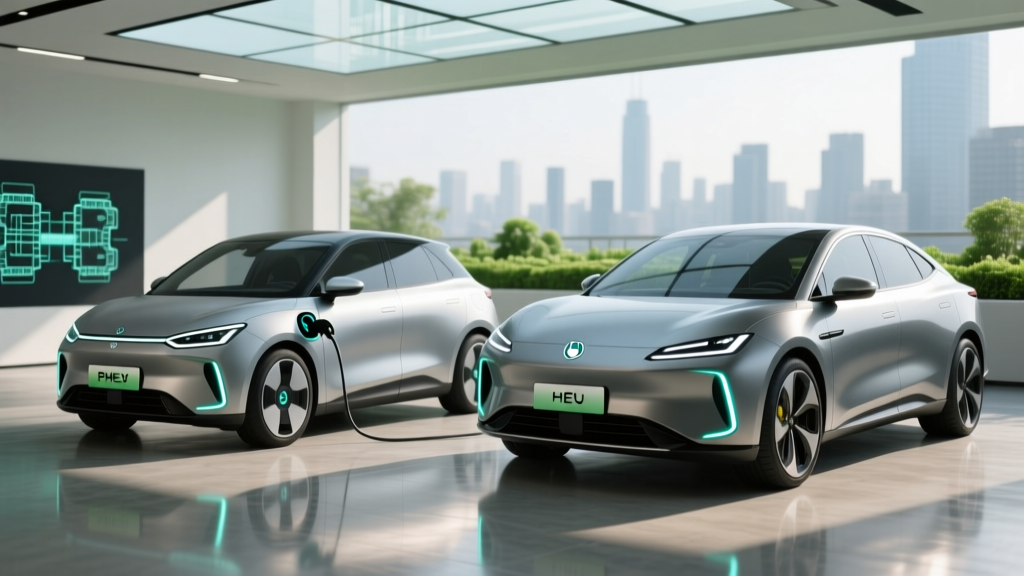
A hybrid car pairs a gasoline engine with one or more electric motors and a battery pack. The system automatically switches between — or blends — gas and electric power to maximize fuel efficiency. Unlike a pure electric vehicle (BEV), a conventional hybrid (HEV) never needs to be plugged in; it recovers energy through regenerative braking and the engine itself. A plug-in hybrid (PHEV) adds a larger battery you can charge from a wall outlet or public charger, giving you a stretch of pure electric driving before the gas engine takes over.
If you've been searching for a clear explanation of how does a hybrid car work and whether an HEV or PHEV fits your life, this guide breaks down the engineering, the real-world numbers, and the ownership economics using 2026 model-year data.
HEV vs PHEV: Two Very Different Powertrains
The distinction between a conventional hybrid and a plug-in hybrid is the single most important thing to understand before shopping. Confusing the two leads to mismatched expectations about fuel savings, charging requirements, and purchase price.
| Attribute | Conventional Hybrid (HEV) | Plug-In Hybrid (PHEV) |
|---|---|---|
| Plugs in? | No — self-charging via engine + regen | Yes — Level 1 or Level 2 charging |
| Battery size | 0.5–2.0 kWh (small buffer) | 10–30 kWh (usable) |
| Electric-only driving | Very low speeds, short bursts only | 20–50+ miles at highway speeds |
| Typical EPA combined MPG (gas mode) | 40–58 MPG | 25–40 MPG (after battery depletes) |
| Federal tax credit (§30D) | Not eligible | Up to $7,500 (if battery sourcing + income rules met) |
| Base price premium vs gas car | $1,000–$3,000 | $4,000–$10,000+ |
Think of an HEV as a gas car that's been made dramatically more efficient. Think of a PHEV as a short-range EV that carries a gas engine as a range extender. Both reduce fuel consumption, but the mechanisms and daily experiences are fundamentally different.
Inside the Powertrain: How the System Manages Energy
Whether HEV or PHEV, the core components are the same — just scaled differently:
- Internal combustion engine (ICE): Typically a 4-cylinder Atkinson-cycle engine optimized for efficiency over peak power. In the 2026 Toyota RAV4 Hybrid, for example, the 2.5L engine produces 176 hp on its own.
- Electric motor(s): One or more motor-generators mounted in the transaxle (or on the rear axle for AWD). The RAV4 Hybrid's front motor adds 134 hp, and a rear motor adds 54 hp for AWD models.
- Battery pack: Nickel-metal hydride (NiMH) or lithium-ion (NMC chemistry). HEVs use tiny packs (~1–2 kWh) that buffer energy; PHEVs use much larger packs (~10–30 kWh) that enable sustained electric driving.
- Power control unit (PCU): The brain that decides, millisecond by millisecond, whether to draw from the battery, the engine, or both — and when to send energy back to the battery via regeneration.
The Three Operating Modes
In practice, a hybrid cycles through three modes constantly:
- EV mode (electric only): At low speeds and light loads, the engine shuts off entirely. The car runs on battery and motor. In an HEV, this lasts maybe a mile or two; in a PHEV, it can last 30–50 miles.
- Hybrid mode (engine + motor blended): Under moderate acceleration or cruising, both power sources contribute. The PCU blends them for optimal efficiency — the engine handles steady-state loads while the motor fills in torque gaps.
- Regenerative braking: When you lift off the accelerator or press the brake pedal, the motor reverses direction and acts as a generator, converting kinetic energy back into stored battery energy. This is why hybrids excel in stop-and-go city traffic.
PHEVs add a fourth consideration: charge-depleting vs. charge-sustaining. When the battery has energy, the PHEV runs primarily on electricity (charge-depleting). Once the battery drops to a minimum state of charge (~15–20%), the gas engine kicks in and the car operates like a conventional hybrid (charge-sustaining).
Real-World Fuel Economy: EPA Numbers vs. What You'll Actually See
Hybrids — especially HEVs — often exceed their EPA combined estimates in city driving because regenerative braking recaptures energy that a gas car wastes as heat. Highway driving tells a different story: at sustained high speeds, the electric motor contributes less and aerodynamic drag dominates.
| 2026 Model | Type | EPA City | EPA Hwy | EPA Combined | Real-World Expectation |
|---|---|---|---|---|---|
| Toyota Prius | HEV | 57 | 52 | 55 | 50–58 (city-skewed drivers often beat EPA) |
| Honda Accord Hybrid | HEV | 51 | 44 | 48 | 44–50 (highway-heavy commutes trend lower) |
| Toyota RAV4 Hybrid AWD | HEV | 41 | 38 | 39 | 36–42 (AWD and weight reduce city advantage) |
| Toyota RAV4 Prime (PHEV) | PHEV | 40 (gas) | 36 (gas) | 38 (gas) / 94 MPGe | 42 mi electric + 38 MPG after depletion |
| Chrysler Pacifica Hybrid | PHEV | 30 (gas) | 30 (gas) | 30 (gas) / 82 MPGe | 32 mi electric + 30 MPG after depletion |
Source: fueleconomy.gov (EPA estimates). Real-world figures vary with climate, terrain, driving style, and tire condition. Cold weather typically reduces HEV fuel economy by 5–15% and PHEV electric range by 15–30% due to cabin heating demands and reduced battery efficiency.
PHEV Electric-Only Range: What to Expect
The 2026 RAV4 Prime delivers an EPA-rated 42 miles on electricity alone — enough for most daily commutes without burning a drop of gas. The Pacifica Hybrid offers 32 miles. Total combined range (electric + gas) typically exceeds 500 miles for PHEVs, eliminating range anxiety entirely. If your daily round-trip commute is under 40 miles and you charge nightly, a PHEV can operate as a de facto EV for months between fill-ups.
PHEV Charging: Battery Size, Times, and What You Need at Home
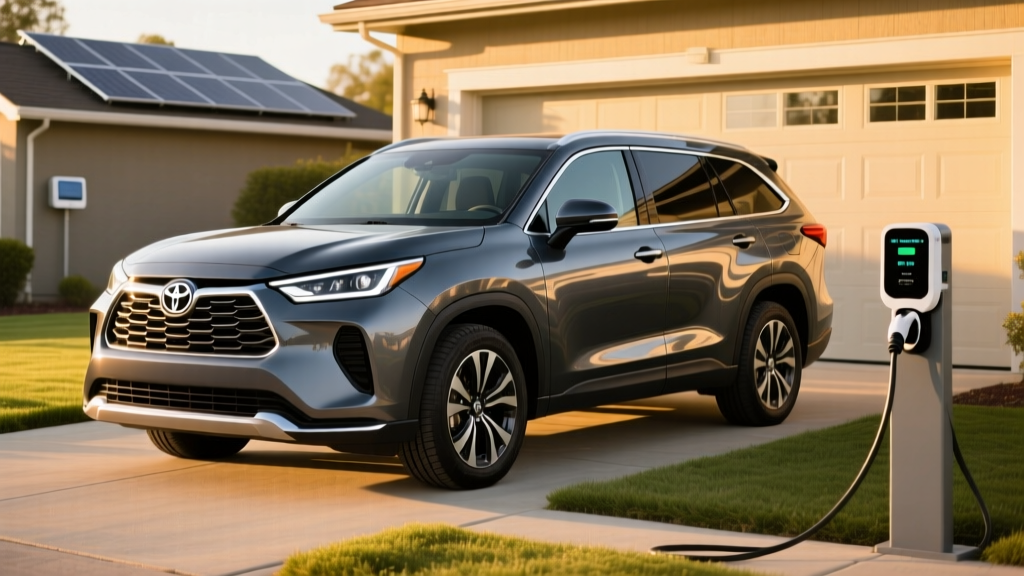
PHEV batteries are substantially smaller than full EV batteries, which means charging is faster and the infrastructure requirements are lighter. Most PHEVs charge on Level 1 (120V household outlet) or Level 2 (240V) — and DC fast charging is uncommon in this segment.
| PHEV Model | Battery (kWh usable) | Level 1 (120V) Time | Level 2 (240V) Time | DC Fast Charge? |
|---|---|---|---|---|
| Toyota RAV4 Prime | ~14.9 kWh | ~12 hours | ~2.5 hours (3.3 kW onboard) | No |
| Chrysler Pacifica Hybrid | ~13.0 kWh | ~14 hours | ~2 hours (6.6 kW onboard) | No |
| Jeep Wrangler 4xe | ~15.0 kWh | ~12 hours | ~2 hours (7.2 kW onboard) | No |
| Hyundai Tucson PHEV | ~11.3 kWh | ~10 hours | ~1.75 hours (7.2 kW onboard) | No |
Because PHEV batteries are small, most owners find that a standard 120V outlet (Level 1) is sufficient for overnight replenishment — especially if daily electric-only needs are under 30 miles. A Level 2 home charger is convenient but rarely requires a panel upgrade. Installation for a basic 240V outlet and circuit typically runs $300–$800 depending on distance from the panel. Most PHEVs use the J1772 connector standard; none currently on the US market support DC fast charging, which is a meaningful limitation for apartment dwellers who lack home charging access.
Powertrain Specs: Horsepower, Acceleration, and Performance
Modern hybrids are not slow. The latest generation of Toyota, Honda, and Hyundai hybrid systems deliver combined output that rivals or exceeds their gas-only counterparts — often with quicker off-the-line acceleration thanks to instant electric motor torque.
| 2026 Model | Combined HP | Engine | Motor(s) | 0–60 mph | Drivetrain |
|---|---|---|---|---|---|
| Toyota Prius | 196 hp | 2.0L I4 | Front motor | 7.2 sec | FWD |
| Toyota RAV4 Hybrid | 219 hp | 2.5L I4 | Front + rear motors | 7.4 sec | AWD |
| Toyota RAV4 Prime (PHEV) | 302 hp | 2.5L I4 | Front + rear motors | 5.7 sec | AWD |
| Honda Accord Hybrid | 204 hp | 2.0L I4 | Two-motor system | 7.1 sec | FWD |
| Hyundai Tucson Hybrid | 226 hp | 1.6L turbo I4 | Front motor | 7.0 sec | AWD |
The RAV4 Prime's 302 hp makes it one of the quickest vehicles in the Toyota lineup — a direct result of its larger PHEV battery delivering more sustained power to the electric motors. This performance edge is a frequently overlooked PHEV advantage.
Pricing, Tax Credits, and Total Cost of Ownership
Hybrids carry a modest price premium over gas-only equivalents. PHEVs carry a larger one, but may qualify for federal incentives that close the gap significantly.
| Model | Base MSRP (2026) | Federal §30D Credit | Effective Price After Credit |
|---|---|---|---|
| Toyota Prius (HEV) | ~$28,350 | $0 (HEVs not eligible) | $28,350 |
| Toyota RAV4 Hybrid (HEV) | ~$33,500 | $0 | $33,500 |
| Toyota RAV4 Prime (PHEV) | ~$44,500 | Up to $7,500* | ~$37,000* |
| Jeep Wrangler 4xe (PHEV) | ~$50,500 | Up to $7,500* | ~$43,000* |
| Hyundai Tucson PHEV | ~$39,500 | Up to $7,500* | ~$32,000* |
*Federal §30D credit eligibility is not automatic. Per current IRS rules, the vehicle must meet battery component and critical mineral sourcing requirements, the buyer must fall under income caps ($150K single / $300K joint modified AGI), and the vehicle MSRP must not exceed $80,000 for SUVs/pickups/vans or $55,000 for sedans. Credits can now be transferred to the dealer as a point-of-sale discount. Always verify eligibility at the time of purchase — sourcing requirements tighten annually.
Conventional hybrids (HEVs) do not qualify for the §30D federal tax credit because they lack plug-in capability and sufficiently large battery packs. However, their lower purchase price and strong fuel savings often deliver competitive total cost of ownership without any incentive.
Battery Reliability, Warranty, and Replacement Costs
Hybrid battery longevity is one of the most persistent buyer concerns — and one where two decades of real-world data should provide confidence. Toyota alone has sold over 25 million hybrid vehicles globally, and failure rates on hybrid battery packs have proven remarkably low.
Hybrid Battery Warranty Standards (2026)
- Federal minimum: 8 years / 100,000 miles for hybrid battery and related components (mandated for emissions-related coverage in many states; manufacturers typically match or exceed).
- California Air Resources Board (CARB) states: 10 years / 150,000 miles for PZEV/AT-PZEV hybrid components.
- Toyota: 10 years / 150,000 miles on hybrid battery (all 50 states, from 2020 model year onward).
- Hyundai/Kia: 10 years / 100,000 miles on hybrid/PHEV battery.
- Honda: 8 years / 100,000 miles (10/150K in CARB states).
If a hybrid battery does need replacement outside of warranty, costs vary by model:
- Toyota Prius HEV: $2,000–$4,000 (remanufactured pack); $3,500–$5,500 (new OEM)
- Toyota RAV4 Hybrid: $3,000–$5,000
- RAV4 Prime PHEV: $6,000–$9,000 (larger lithium-ion pack)
- Chrysler Pacifica Hybrid: $7,000–$10,000
For context, most hybrid batteries last well beyond 150,000 miles with minimal capacity degradation (typically 10–15% loss over 10 years for HEVs). PHEV batteries experience slightly more degradation due to deeper daily cycling, but the warranty coverage is robust. The risk of a catastrophic out-of-warranty failure is statistically low based on two decades of fleet data. Source: Consumer Reports hybrid battery analysis.
Hybrid vs PHEV vs Full EV: Which Fits Your Life?
Choose a Conventional Hybrid (HEV) If:
- You cannot charge at home (apartment, street parking, no garage)
- You want maximum simplicity — no plugs, no charging apps, no new habits
- Your budget is tight and you want a $1,000–$3,000 premium over a gas car
- You drive a mix of city and highway and want 40–55 MPG combined
- You plan to own the car 10+ years and value proven long-term reliability
Choose a Plug-In Hybrid (PHEV) If:
- You can charge at home (even a 120V outlet works for PHEVs)
- Your daily commute is under 40 miles round-trip (you'll rarely use gas)
- You want EV-like daily driving but need gas flexibility for road trips
- You qualify for the §30D tax credit, significantly reducing the price premium
- You want the performance boost that a larger electric motor provides
And Choose a Full EV (BEV) If:
- You have reliable Level 2 home charging and your daily driving is under 250 miles
- You want zero tailpipe emissions and the lowest per-mile energy cost
- You want to eliminate oil changes, spark plugs, and transmission maintenance entirely
- You're ready to plan around public DC fast charging for longer road trips
The honest framework: if you can charge at home and your daily driving is predictable, a PHEV is the lowest-risk bridge to electrification. If you can't charge at home, an HEV delivers most of the fuel savings with none of the infrastructure requirements. If you've already decided you want full electrification and your lifestyle supports it, a BEV offers the lowest operating cost.
Frequently Asked Questions
How many MPG does a hybrid car get?
It depends on the model and your driving mix. The 2026 Toyota Prius achieves an EPA-estimated 55 MPG combined (57 city / 52 highway). The RAV4 Hybrid manages 39 MPG combined. In real-world city driving with frequent stops, hybrids often match or slightly exceed EPA estimates thanks to regenerative braking. Highway-heavy driving tends to produce 3–8 MPG below the city figure.
How far can a PHEV go on electric only?
Current PHEVs offer between 20 and 50 miles of electric-only range. The 2026 RAV4 Prime delivers 42 EPA-rated electric miles; the Chrysler Pacifica Hybrid offers 32 miles; the Hyundai Tucson PHEV provides 33 miles. Cold weather can reduce these figures by 15–30%, primarily due to cabin heating energy demands.
Do conventional hybrids need to be plugged in?
No. A conventional hybrid (HEV) charges its battery entirely through regenerative braking and the gasoline engine. There is no plug, no charging cable, and no change to your fueling routine — you simply fill up at a gas station as usual, less frequently.
Is a hybrid reliable and what does battery replacement cost?
Modern hybrids are among the most reliable vehicles on the road. Toyota's hybrid system has been in continuous production since 1997 with excellent longevity data. Hybrid batteries are warranted for 8–10 years / 100,000–150,000 miles depending on manufacturer and state. Out-of-warranty replacement costs range from $2,000 for a Prius HEV to $9,000+ for a large PHEV pack, but most packs last well beyond warranty limits.
Does a hybrid qualify for a tax credit?
Conventional hybrids (HEVs) do not qualify for the federal §30D clean vehicle credit. Plug-in hybrids (PHEVs) may qualify for up to $7,500, but eligibility depends on battery component and critical mineral sourcing, buyer income limits, and MSRP caps. The credit can be applied as a point-of-sale discount at the dealer. Check fueleconomy.gov's tax credit tool for model-specific eligibility before purchasing.
How does regenerative braking work in a hybrid?
When you lift off the accelerator or press the brake pedal, the electric motor reverses its function and becomes a generator. It converts the car's kinetic energy into electricity, which is stored in the hybrid battery. This slows the car (providing braking force) while recapturing energy that a conventional car would waste as heat through friction brakes. This is why hybrids are most efficient in stop-and-go city traffic.
What's the difference between a hybrid and a mild hybrid?
A mild hybrid (MHEV) uses a small 48V system that can assist the engine during acceleration and power accessories when the engine is off at stops, but it cannot drive the car on electric power alone. Mild hybrids improve fuel economy by roughly 1–3 MPG. Full hybrids (HEVs) and PHEVs deliver far larger gains (15–30+ MPG improvement) because their electric motors can propel the vehicle independently.