The Short Answer: How a Plug-In Hybrid Actually Works
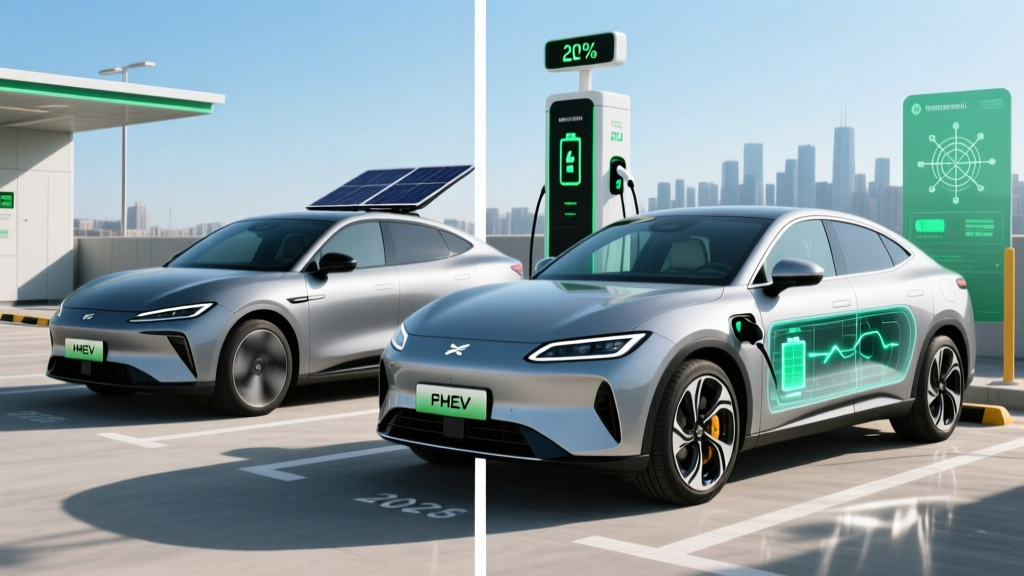
A plug-in hybrid electric vehicle (PHEV) pairs a gasoline engine with a larger battery and electric motor than a conventional hybrid. That bigger battery—typically 12 to 25 kWh—can be recharged from a wall outlet or charging station, giving you 25 to 50 miles of electric-only driving before the gas engine takes over. Once the battery depletes, the car seamlessly operates as a standard hybrid, blending engine and regenerative braking to maintain efficiency.
The result: short commutes on electricity alone, long road trips without range anxiety, and a single vehicle that covers both use cases. For 2026, PHEVs from Toyota, Hyundai, Jeep, and others have matured into a compelling middle ground between full battery-electric vehicles (BEVs) and conventional hybrids (HEVs).
HEV vs PHEV vs EV: The Fundamental Differences
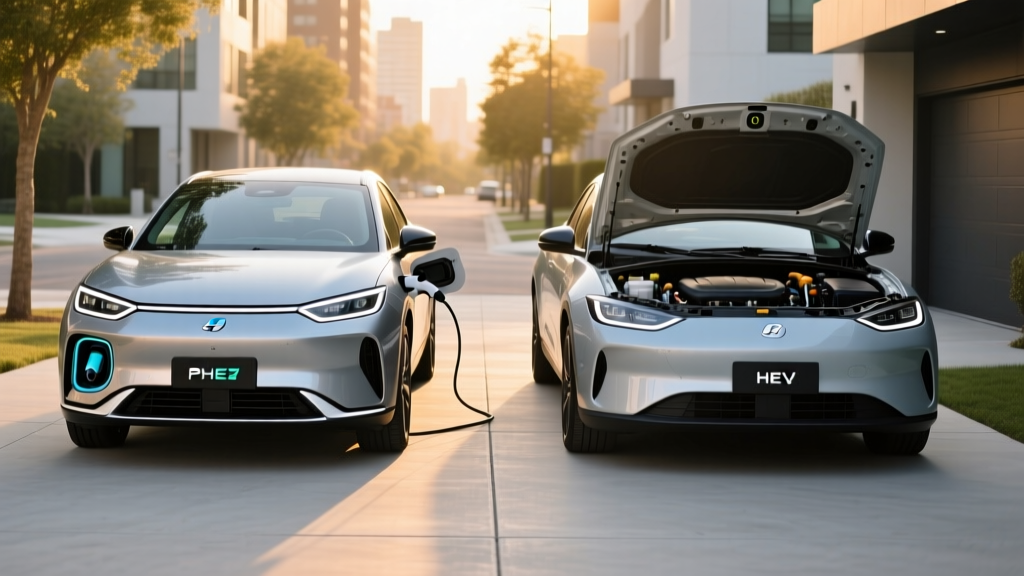
Before diving into PHEV mechanics, it's worth clarifying the three electrified powertrain types, because confusion here leads to bad purchase decisions.
| Attribute | Conventional Hybrid (HEV) | Plug-In Hybrid (PHEV) | Battery Electric (BEV) |
|---|---|---|---|
| Battery Size | 1–2 kWh | 12–25 kWh | 50–120+ kWh |
| Plug In to Charge? | No | Yes | Yes |
| Electric-Only Range | ~1 mile at low speed | 25–50 miles | 200–400+ miles |
| Gas Engine? | Yes | Yes | No |
| Fueling | Gas station only | Gas station + plug | Plug only |
| Federal Tax Credit (§30D) | No | Up to $7,500 (if eligible) | Up to $7,500 (if eligible) |
A conventional hybrid like the Toyota Camry Hybrid never plugs in. Its small battery recharges through regenerative braking and the engine. A PHEV like the Toyota RAV4 Prime also has a gas engine but carries a much larger battery you charge externally. A BEV like the Tesla Model Y has no engine at all.
PHEV Powertrain Architecture: Engine, Motor, and Battery Working Together
Most 2026 PHEVs use one of two architectures:
- Series-parallel (power-split): A planetary gearset blends engine and motor output. Toyota's Hybrid Synergy Drive is the benchmark—the RAV4 Prime produces a combined 302 hp from a 2.5L inline-4 and two electric motors. The engine can drive the wheels directly at highway speed or act as a generator to charge the battery.
- Parallel with electric-priority mode: The motor drives the wheels in EV mode; the engine engages under heavier acceleration or once the battery depletes. Hyundai's Tucson PHEV uses a 1.6L turbo paired with a 6-speed automatic and a 98-hp electric motor for 261 combined hp.
In both cases, the transition between electric and gas power is managed by software and is typically imperceptible to the driver. Regenerative braking recovers kinetic energy during deceleration, topping off the battery incrementally.
2026 Representative PHEV Specs
| Model | Battery (kWh) | EV Range (mi) | Combined HP | 0-60 (sec) | Base MSRP |
|---|---|---|---|---|---|
| Toyota RAV4 Prime | 18.1 (NMC) | 42 | 302 | 5.7 | $44,900 |
| Hyundai Tucson PHEV | 13.8 (NMC) | 33 | 261 | 7.1 | $39,500 |
| Jeep Wrangler 4xe | 17.3 (NMC) | 22 | 375 | 6.0 | $51,795 |
| Toyota Prius Prime | 13.6 (NMC) | 44 | 220 | 6.6 | $33,450 |
| Chrysler Pacifica PHEV | 16.0 (NMC) | 32 | 260 | 7.0 | $50,095 |
Electric-Only Range, MPG, and Real-World Efficiency
The headline PHEV number is electric-only range—how far you can drive on a full charge before the engine fires up. According to fueleconomy.gov, the EPA measures this in both miles and MPGe (miles-per-gallon-equivalent, which equates the energy in electricity to the energy in a gallon of gasoline).
EPA Efficiency: PHEVs in Electric and Hybrid Mode
| Model | EV Range (mi) | MPGe (EV Mode) | MPG Combined (Gas) | MPG City/Hwy (Gas) | Total Range (mi) |
|---|---|---|---|---|---|
| Toyota RAV4 Prime | 42 | 94 MPGe | 38 | 40 / 36 | ~600 |
| Toyota Prius Prime | 44 | 127 MPGe | 52 | 54 / 50 | ~620 |
| Hyundai Tucson PHEV | 33 | 80 MPGe | 35 | 36 / 35 | ~430 |
| Jeep Wrangler 4xe | 22 | 49 MPGe | 20 | 20 / 20 | ~370 |
| Chrysler Pacifica PHEV | 32 | 82 MPGe | 30 | 29 / 30 | ~460 |
Real-world caveat: PHEVs routinely exceed their EPA city MPG in hybrid mode because stop-and-go traffic maximizes regenerative braking. Highway MPG often falls 2–4 mpg below the sticker, especially at 75+ mph or in cold weather. Electric-only range drops 15–30% in sub-freezing temperatures due to cabin heating demand and reduced battery efficiency.
If your daily commute is under 30 miles round-trip and you charge at home, you might go months between fill-ups. If you rarely charge, a PHEV operates as a heavier, slightly less efficient hybrid—so plugging in is where the value proposition lives.
Charging a PHEV: What You Need to Know
PHEV batteries are small enough that charging is straightforward and fast compared to a full BEV.
| Charging Level | Power (kW) | Typical Time (0–100%) | Equipment Needed |
|---|---|---|---|
| Level 1 (120V outlet) | 1.2–1.4 kW | 8–14 hours | Included cordset, standard outlet |
| Level 2 (240V) | 3.3–7.2 kW | 2–4 hours | Home wallbox or public Level 2 station |
| DC Fast Charge | N/A for most PHEVs | N/A | Very few PHEVs support DCFC |
Most 2026 PHEVs max out at 6.6–7.2 kW on Level 2, meaning a full charge in about 2–2.5 hours from a home wall connector. The included Level 1 cord will fully recharge overnight for most models. Critical note: Unlike BEVs, nearly all PHEVs do not support DC fast charging. The Mitsubishi Outlander PHEV is a rare exception, accepting up to 22 kW DC via CHAdeMO. If you see a PHEV at a public charging station, it's almost certainly on a Level 2 connector (J1772 or NACS).
Does a PHEV Qualify for a Federal Tax Credit?
Yes—some do, but eligibility under IRS §30D is far from guaranteed. The credit can reach up to $7,500, but every requirement must be met simultaneously:
- Battery capacity: At least 7 kWh (most PHEVs qualify)
- MSRP cap: Vans/SUVs/pickups ≤ $80,000; sedans ≤ $55,000
- Buyer income cap: AGI ≤ $150,000 single / $225,000 head of household / $300,000 joint
- Final assembly: Must occur in North America
- Battery sourcing: Critical minerals and battery components must meet escalating domestic/free-trade-partner thresholds (these tighten annually through 2029)
- Point-of-sale transfer: You can apply the credit as a dealer discount at purchase, reducing out-of-pocket cost immediately
As of 2026, the Toyota RAV4 Prime, Prius Prime, and Jeep Wrangler 4xe have historically qualified for partial or full credits depending on the battery-sourcing phase-in. Hyundai Tucson PHEV eligibility depends on the specific model year's supply chain compliance. Always verify current eligibility on the IRS Clean Vehicle Credit page before purchasing—rules shift with supply-chain changes and regulatory updates.
Many states also offer additional rebates. California's CVRP, Colorado's state credit, and New York's Drive Clean Rebate can stack on top of federal incentives. Check your state energy office for current programs.
Battery Longevity, Warranty, and Replacement Cost
PHEV battery anxiety is common but largely overblown. The batteries are smaller and less stressed than BEV packs, and manufacturers provide substantial warranty coverage.
Typical PHEV Battery Warranty
- Federal mandate: Minimum 8 years / 100,000 miles for hybrid battery components
- CARB states (CA, NY, MA, and others): Often extended to 10 years / 150,000 miles
- Capacity threshold: Warranty covers the battery if it falls below ~60–70% of original capacity
- Toyota: 10 years / 150,000 miles on hybrid battery (all 50 states)
- Hyundai/Kia: 10 years / 100,000 miles
- Stellantis (Jeep/Chrysler): 8 years / 100,000 miles
Real-world degradation data: Toyota's hybrid batteries have proven exceptionally durable, with many Prius owners reporting less than 10% degradation after 150,000 miles. PHEV batteries experience similar longevity because the software maintains a buffer—typically 15–20% at the top and bottom of the state-of-charge window—to prevent deep cycling damage.
Replacement cost if out of warranty: Expect $4,000 to $8,000 for a PHEV battery replacement, depending on the model. The RAV4 Prime pack runs approximately $6,000–$7,500 including labor at a dealership. Independent hybrid specialists often offer refurbished packs for 30–40% less. Compare this to BEV battery replacements at $10,000–$20,000+.
Reliability: How Do PHEVs Hold Up?
PHEVs inherit the strong reliability record of conventional hybrids. Toyota's hybrid powertrains consistently rank at the top of long-term dependability studies. The e-CVT transmissions used in Toyota and Hyundai PHEVs have no traditional friction clutches or bands to wear out, reducing failure points.
The main reliability consideration is complexity: a PHEV has both a full internal-combustion powertrain and a full electric powertrain. That's two systems to maintain. However, the electric side is nearly maintenance-free, and the engine runs fewer total hours because EV mode covers short trips. Oil changes can stretch longer if most driving is electric. Brake pads often last 80,000+ miles thanks to regenerative braking doing the bulk of deceleration work.
Who Should Buy a PHEV vs an HEV or Full EV?
Choose a PHEV If:
- Your daily commute is 20–45 miles round-trip and you can charge at home
- You take regular road trips (200+ miles) and don't want to plan around charging stations
- You live in an apartment but have access to workplace or public Level 2 charging
- You want EV-like daily driving with a gas safety net for towing or remote travel
Choose a Conventional Hybrid (HEV) If:
- You cannot charge at home or work (no access to any plug)
- Your budget is tighter and you want maximum MPG without the PHEV price premium
- You drive mostly highway miles where the PHEV's electric range provides little benefit
Choose a Full EV (BEV) If:
- You have reliable home Level 2 charging
- Your daily driving is under 200 miles and road trips are infrequent or along well-served charging corridors
- You want the lowest operating cost and minimal maintenance
- You want to eliminate gasoline entirely
PHEV Pros
- 25–50 miles of zero-gas commuting
- No range anxiety on long trips
- Up to $7,500 federal tax credit (if eligible)
- Lower fuel cost when regularly charged
- Strong resale value (RAV4 Prime commands premiums)
PHEV Cons
- $4,000–$8,000 price premium over equivalent HEV
- Two powertrains to maintain
- Electric range drops 15–30% in cold weather
- Heavy: less efficient than HEV when battery is depleted
- Most cannot DC fast charge
- Worthless if you never plug in—just a heavier hybrid
Frequently Asked Questions
How many MPG does a plug-in hybrid get?
It depends on whether the battery is charged. In hybrid mode (battery depleted), PHEVs typically achieve 30–52 MPG combined per the EPA. The Prius Prime leads at 52 MPG combined, while the Wrangler 4xe sits at 20 MPG combined due to its weight and aerodynamics. In EV mode, efficiency is measured in MPGe—ranging from 49 MPGe (Wrangler 4xe) to 127 MPGe (Prius Prime).
How far can a PHEV go on electric only?
Current 2026 PHEVs offer 22 to 50 miles of electric-only range. The Prius Prime achieves 44 miles, the RAV4 Prime 42 miles, and the Tucson PHEV 33 miles. Real-world range drops 15–30% in freezing weather or sustained highway driving above 70 mph.
What happens when a PHEV battery runs out?
The gas engine starts automatically and the car operates as a conventional hybrid. You won't be stranded—just less efficient. The vehicle blends engine power with regenerative braking to continue driving normally until you refuel or recharge.
Do I have to plug in a plug-in hybrid?
You don't have to, but you should. Without regular charging, a PHEV is simply a heavier, more expensive hybrid. The fuel savings and emissions benefits come from driving on grid electricity. If you can't plug in at all, a conventional HEV is a better financial choice.
Is a PHEV battery expensive to replace?
Out-of-warranty PHEV battery replacement costs $4,000–$8,000 depending on the model. However, most PHEV batteries carry 8–10 year / 100,000–150,000 mile warranties, and real-world data shows many lasting well beyond warranty coverage with minimal degradation.
Can a PHEV charge at a Tesla Supercharger?
Generally no. Tesla Superchargers deliver DC fast charge power, and most PHEVs only accept AC Level 1 or Level 2 charging. Even if you have a NACS adapter, the PHEV's onboard charger limits you to Level 2 speeds. Use public Level 2 stations (ChargePoint, EVgo Level 2, or destination chargers) instead.
Does a PHEV qualify for the $7,500 tax credit?
Some do, subject to IRS §30D requirements including MSRP caps ($55,000 for cars, $80,000 for SUVs/trucks/vans), buyer income limits, North American assembly, and battery sourcing rules. The credit amount varies—some PHEVs qualify for the full $7,500, others for a partial credit, and some for none at all. Verify on irs.gov before purchasing.