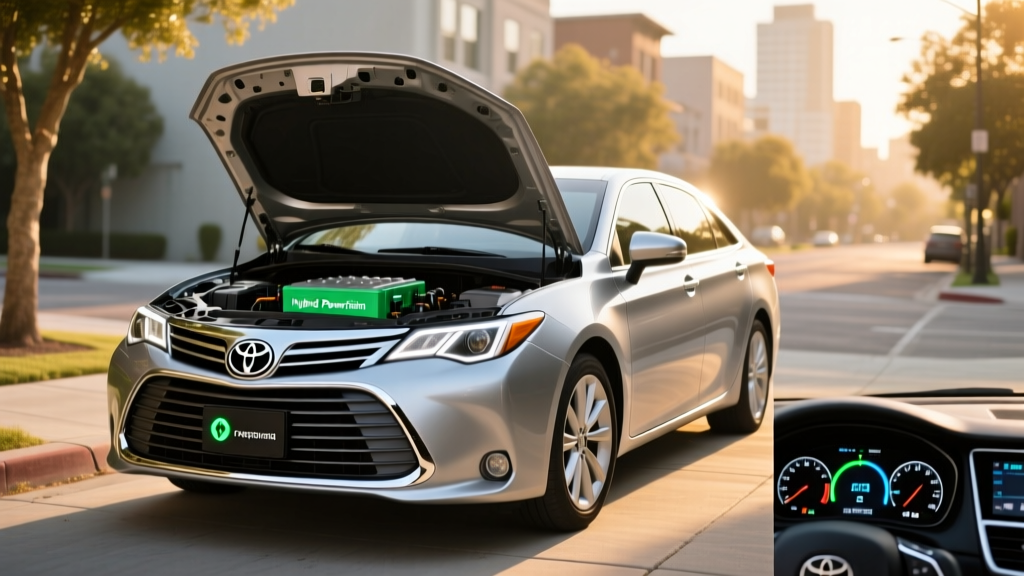
If you've ever watched a hybrid's fuel-economy readout climb above 50 MPG in stop-and-go traffic and wondered where that energy comes from, you're asking the right question. A hybrid vehicle works by pairing a gasoline engine with one or more electric motors and a battery pack, then intelligently shuttling energy between them so the engine operates closer to its most efficient zone far more often than it could alone.
But "hybrid" now covers two very different architectures: the conventional hybrid (HEV) you never plug in, and the plug-in hybrid (PHEV) that gives you 25–50 miles of electric-only driving before the engine fires up. Understanding how each works — and which one actually matches your commute, parking situation, and budget — is the single most important step before you buy.
The Core Principle: Two Powertrains, One Drivetrain
Every hybrid, whether HEV or PHEV, combines three key components:
- Internal combustion engine (ICE): Typically a 1.5L–2.5L four-cylinder running an Atkinson or Miller cycle for thermal efficiency over peak power.
- Electric motor-generator(s): One or two motor-generators that can drive the wheels, start the engine, and recover kinetic energy during braking.
- Traction battery: A lithium-ion (or, increasingly, bipolar nickel-metal-hydride) pack sized from ~1 kWh on HEVs to ~15–25 kWh on PHEVs.
A power-control unit (inverter and DC-DC converter) manages the flow of electricity between battery, motor, and engine. The software decides in milliseconds whether to run the motor alone, the engine alone, or both together — blending torque for acceleration or shutting the engine off entirely at a stoplight.
How a Conventional Hybrid (HEV) Captures Energy You'd Otherwise Waste
A conventional hybrid like the 2026 Toyota Prius or Honda CR-V Hybrid never plugs in. Instead, it generates all its electricity on-board through two mechanisms:
- Regenerative braking: When you lift off the accelerator or press the brake pedal, the motor-generator reverses direction, converting kinetic energy into electricity that recharges the battery rather than wasting it as heat in the brake pads.
- Engine-driven generation: The gasoline engine spins a second motor-generator to top up the battery when needed, often while cruising at steady state where the engine is already efficient.
The battery in a typical HEV is small — around 0.9 to 1.8 kWh usable — because its job isn't to drive the car for miles on electricity alone. It's a buffer: absorbing regen pulses, supplying boost during acceleration, and enabling engine-off coasting and idle stop-start. That small buffer is why the Prius achieves an EPA-estimated 57 MPG combined (57 city / 56 highway) in the LE trim, yet weighs only about 3,097 lbs.
| Model | City MPG | Highway MPG | Combined MPG | Combined System HP |
|---|---|---|---|---|
| Toyota Prius LE | 57 | 56 | 57 | 194 hp |
| Honda CR-V Hybrid Sport-L | 43 | 36 | 40 | 204 hp |
| Toyota RAV4 Hybrid XLE | 41 | 38 | 39 | 219 hp |
| Hyundai Tucson Hybrid SEL | 38 | 38 | 38 | 226 hp |
| Ford Maverick Hybrid XL | 40 | 33 | 37 | 191 hp |
Real-world note: HEVs routinely beat their EPA city numbers in real-world stop-and-go driving because regenerative braking recovers more energy at lower speeds. Expect 45–55 MPG in town from a Prius LE on a warm day. Highway fuel economy, however, often falls slightly below the EPA sticker at sustained 75+ mph speeds, where aerodynamic drag dominates and regen opportunities vanish.
How a Plug-In Hybrid (PHEV) Adds a Genuine Electric Commute
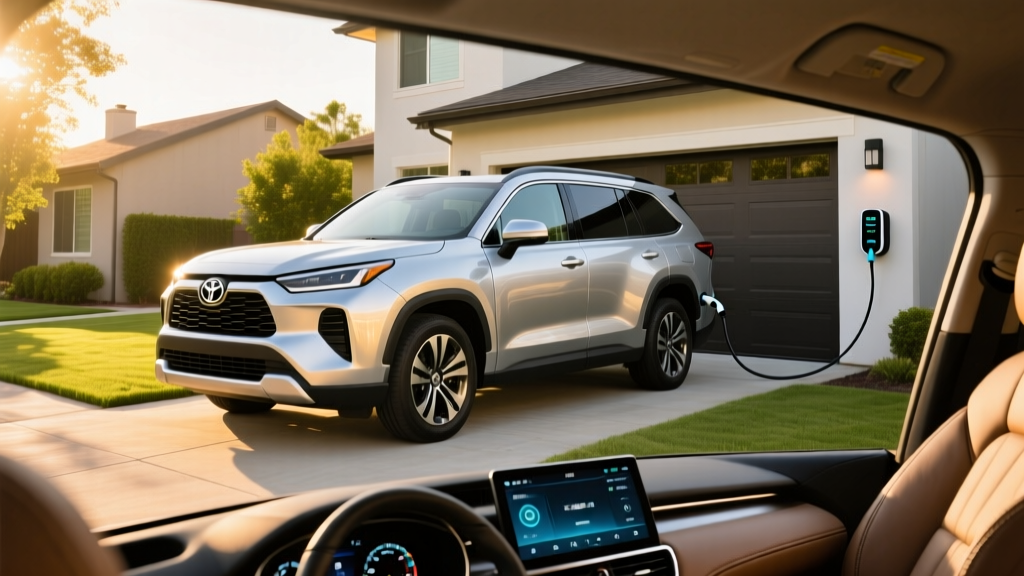
A plug-in hybrid works on the same blended principle, but with a battery 10 to 20 times larger — typically 14–22 kWh usable — that you charge from a wall outlet or Level 2 charger. The result: 25 to 50 miles of pure electric driving before the gasoline engine ever starts.
Take the 2026 Toyota RAV4 Prime. Its 18.1 kWh lithium-ion battery delivers an EPA-estimated 42 miles of electric-only range, enough for most daily commutes. When the battery depletes, the powertrain seamlessly transitions to conventional hybrid mode, returning an EPA-estimated 38 MPG combined for the remaining 460+ miles of total range. Combined system output is a robust 302 hp, making it one of the quickest RAV4 variants at 5.7 seconds 0–60 mph.
| Feature | Conventional Hybrid (HEV) | Plug-In Hybrid (PHEV) |
|---|---|---|
| Battery size | 0.9–1.8 kWh | 14–22 kWh usable |
| Plug-in charging | No — self-charging only | Yes — Level 1 (120V) or Level 2 (240V) |
| Electric-only range | ~1 mile at low speed | 25–50 miles (EPA) |
| DC fast charging | N/A | Rare; most PHEVs max at 7.2 kW AC |
| Level 2 charge time (0–100%) | N/A | ~2–4 hours at 7.2 kW |
| Federal tax credit (§30D) | Not eligible | Up to $7,500 if eligible* |
| Typical price premium over gas model | $1,500–$3,000 | $5,000–$10,000 |
*§30D eligibility depends on MSRP caps, buyer income limits, and battery critical-mineral sourcing. See IRS.gov for current rules.
PHEV Charging: What You Need to Know Before You Buy
Most PHEVs charge at Level 1 (120V) using the included cord in 8–14 hours, or at Level 2 (240V) in roughly 2–4 hours via a home wallbox or public station. DC fast charging is uncommon on PHEVs: the Mitsubishi Outlander PHEV is a rare exception, supporting CHAdeMO DC charging to ~80% in about 38 minutes. Most others — RAV4 Prime, Jeep Wrangler 4xe, Chrysler Pacifica Hybrid — are AC-only.
Here's why that matters: a PHEV's battery is small enough that overnight Level 1 charging from a standard 120V household outlet often suffices. At 1.4 kW (12 amps continuous), you'll add roughly 5–7 miles of range per hour of charging — plenty to refill 30–40 miles overnight. A Level 2 installation ($500–$1,500 depending on panel proximity) cuts that to 2–3 hours but isn't strictly necessary for most PHEV owners.
Efficiency tip: PHEVs display fuel economy in two modes. While running on battery, you'll see MPGe (miles-per-gallon-equivalent, comparing electricity to gasoline energy content). Once the engine kicks in, you see standard MPG. The 2026 RAV4 Prime, for example, achieves 94 MPGe combined in electric mode and 38 MPG combined in hybrid mode.
Powertrain Architecture: Series, Parallel, and Series-Parallel
Not all hybrids route power the same way. The three architectures determine how the engine and motor cooperate:
Parallel Hybrid
Both the engine and electric motor can mechanically drive the wheels through a shared transmission. Honda's two-motor system in the CR-V Hybrid operates primarily in series mode at low speed (engine generates electricity, motor drives wheels) but clutches the engine directly to the wheels at highway cruising — a highly efficient arrangement where the engine's fixed gear ratio matches its optimal RPM band.
Series-Parallel (Power-Split)
Toyota's Hybrid Synergy Drive uses a planetary gearset that continuously blends engine and motor torque without a traditional multi-speed transmission. The engine can drive the wheels directly, generate electricity for the motor, or both simultaneously. This architecture dominates the market for good reason: it's smooth, reliable, and efficient across a wide speed range.
Series Hybrid (Range-Extended EV)
The engine never drives the wheels — it acts solely as a generator to charge the battery or power the electric motor. The BMW i3 REx (discontinued) used this approach; today it's rare in the U.S. market but common in some global EREVs (extended-range electric vehicles).
Hybrid Battery Life, Warranty, and Replacement Cost
Hybrid Battery Warranty (Federal Minimum): 8 years / 100,000 miles (10 years / 150,000 miles in CARB states including CA, NY, MA, WA, OR, CO, and others). This covers capacity loss below a manufacturer-defined threshold, typically 60–70% of original capacity.
Modern hybrid batteries are engineered for longevity. Toyota's nickel-metal-hydride and lithium-ion hybrid packs routinely last 150,000–200,000+ miles with minimal degradation, because the battery management system (BMS) keeps the state of charge in a narrow middle window — rarely allowing full 100% or 0% — which dramatically reduces cell stress.
Real-world degradation data from fleet studies and owner reports suggests:
- HEV batteries (1–2 kWh): Typically lose 5–10% capacity over 10 years. Replacement cost: $2,000–$4,000 for OEM, with refurbished units available for $1,000–$2,000.
- PHEV batteries (15–22 kWh): Typically lose 8–15% capacity over 8–10 years. Replacement cost: $6,000–$12,000 for OEM. The larger pack means higher replacement cost, but you also get proportionally more buffer from the BMS.
According to NHTSA and long-term reliability surveys from Consumer Reports and J.D. Power, hybrid powertrains as a category now rank among the most reliable in the industry — often more reliable than their gas-only counterparts, because the electric motor assists reduce engine load, the e-CVT eliminates traditional transmission wear components, and regenerative braking extends brake pad life to 80,000–100,000+ miles.
Hybrid vs PHEV vs Full EV: Which Fits Your Life?
Choose a Conventional Hybrid (HEV) If:
- You can't charge at home (apartment, street parking, no garage)
- Your budget is tighter — HEVs add only $1,500–$3,000 over gas models
- You want maximum simplicity: no plugs, no charging apps, no range planning
- You drive mostly in city traffic where regen braking maximizes MPG gains
- You want proven long-term reliability with minimal new-technology risk
Choose a Plug-In Hybrid (PHEV) If:
- You can charge at home (garage or driveway with 120V/240V access)
- Your daily commute is under 40 miles round-trip (covers most U.S. commutes)
- You want EV-like daily driving but need gas flexibility for road trips
- You qualify for the §30D federal tax credit, reducing the price premium
- You want to future-proof against rising gas prices while keeping one vehicle
Choose a Full BEV Instead If: You have reliable home Level 2 charging, your daily driving is under 250 miles, you want zero tailpipe emissions and minimal maintenance (no oil changes, no spark plugs), and you're ready to plan road trips around DC fast-charging stops. A BEV's total cost of ownership often undercuts both HEV and PHEV over 5–7 years when the §30D credit applies and home electricity costs are below $0.18/kWh.
Pricing, Tax Credits, and Total Cost of Ownership
Conventional hybrids receive no federal tax credit under the current §30D rules. The credit applies only to plug-in vehicles (PHEVs and BEVs) with battery capacities of at least 7 kWh, subject to:
- MSRP cap: $80,000 for SUVs/pickups/vans; $55,000 for sedans
- Buyer income cap: $150,000 single / $225,000 head of household / $300,000 joint (modified AGI)
- Battery sourcing: Critical minerals and battery components must meet escalating domestic/free-trade-agreement percentages each year
- Point-of-sale transfer: Eligible buyers can transfer the credit to the dealer at purchase, reducing the out-of-pocket price immediately
For 2026, qualifying PHEVs like the Jeep Wrangler 4xe, Chrysler Pacifica Hybrid, and select configurations of other models may offer up to $7,500 — but the critical-mineral and battery-component sourcing requirements have tightened significantly since 2024, disqualifying some previously eligible models. Always verify current eligibility on fueleconomy.gov before purchasing.
| Model | EV Range (mi) | Total Range (mi) | Combined HP | Base MSRP | Est. §30D Credit |
|---|---|---|---|---|---|
| Toyota RAV4 Prime SE | 42 | 500+ | 302 | $44,905 | Up to $7,500* |
| Jeep Wrangler 4xe Sport S | 22 | 370+ | 375 | $51,790 | Up to $7,500* |
| Chrysler Pacifica Hybrid | 32 | 430+ | 260 | $51,095 | Up to $7,500* |
| Mitsubishi Outlander PHEV | 38 | 420+ | 248 | $41,640 | Up to $7,500* |
| Hyundai Tucson PHEV SEL | 33 | 400+ | 261 | $39,440 | Up to $3,750* |
*Credit amount depends on critical-mineral and battery-component sourcing compliance. Verify at purchase.
Real-World Ownership: What Hybrid Buyers Actually Experience
After years of testing and living with hybrid vehicles, here's what the spec sheets don't tell you:
City driving is where hybrids shine brightest. A Prius LE that's rated at 57 MPG combined will often return 60+ MPG in dense urban traffic below 45 mph, where regenerative braking recovers the most energy and the engine shuts off frequently. Highway driving at 75 mph may yield 48–52 MPG — still excellent, but below the sticker.
PHEVs reward daily charging discipline. If you plug in every night and your commute is under the EV range, you may go months between fill-ups. But if you don't charge regularly, a PHEV reverts to a heavier, slightly less efficient hybrid — the RAV4 Prime at 4,200 lbs gets 38 MPG in hybrid mode versus the RAV4 Hybrid at 3,800 lbs getting 39 MPG. You're carrying 400 lbs of battery you're not using.
Cold weather affects both types. At 20°F, expect HEV fuel economy to drop 10–15% (the engine runs more often to maintain cabin heat) and PHEV electric range to drop 20–30% (lithium-ion chemistry is less efficient in cold, and cabin heating draws from the battery). A heat pump — standard on some PHEVs, not all — mitigates this significantly.
Maintenance costs are genuinely lower. No timing-belt service on most Toyota hybrids (chain-driven), brake pads lasting 80K–120K miles thanks to regen, and no traditional transmission fluid changes on e-CVT designs. Oil changes still apply, but intervals often extend to 10,000 miles with synthetic.
Frequently Asked Questions
How many MPG does a hybrid vehicle get?
It varies by model and driving conditions. The 2026 Toyota Prius LE leads compact hybrids at 57 MPG combined (EPA), while hybrid SUVs like the RAV4 Hybrid achieve 39 MPG combined and the Honda CR-V Hybrid reaches 40 MPG. In real-world city driving, many owners exceed EPA city estimates by 5–10% due to aggressive regenerative braking. Highway MPG tends to run slightly below EPA at speeds above 70 mph.
How far can a PHEV go on electric only?
Current PHEVs offer 22–50 miles of EPA-rated electric-only range. The RAV4 Prime leads its class at 42 miles; the Mitsubishi Outlander PHEV delivers 38 miles; the Chrysler Pacifica Hybrid manages 32 miles. Real-world EV range depends on temperature (expect 20–30% loss in freezing weather), driving style, and whether you use cabin heating. Preconditioning the cabin while plugged in preserves battery for driving.
Do conventional hybrids need to be plugged in?
No. Conventional hybrids (HEVs) are entirely self-charging through regenerative braking and engine-driven generation. You fuel them like any gasoline car and never interact with a charging cable. Only plug-in hybrids (PHEVs) require or benefit from external charging.
Is a hybrid vehicle reliable long-term?
Yes — hybrid powertrains are among the most reliable in the auto industry. Toyota's hybrid system has over 25 years of real-world data showing battery packs lasting 150,000–200,000+ miles. Federal law mandates a minimum 8-year/100,000-mile hybrid battery warranty (10 years/150,000 miles in CARB states). The e-CVT design eliminates traditional transmission failure points, and regenerative braking dramatically extends brake life.
What does hybrid battery replacement cost?
HEV battery replacement runs $2,000–$4,000 for OEM new units, with refurbished options available for $1,000–$2,000. PHEV battery replacement is higher at $6,000–$12,000 due to the larger pack. However, the vast majority of hybrid owners never replace the battery — it outlasts the vehicle's economic life. Third-party rebuild services and improved aftermarket availability have also driven costs down significantly since the early 2010s.
Does a hybrid qualify for a tax credit?
Conventional hybrids (HEVs) do not qualify for the federal §30D clean vehicle credit. Plug-in hybrids (PHEVs) with at least 7 kWh of battery capacity may qualify for up to $7,500, but eligibility depends on MSRP caps ($80K SUVs / $55K sedans), buyer income limits, and battery critical-mineral sourcing requirements that tighten annually. Some states offer additional rebates for PHEVs — check your state energy office or IRS.gov for current details. Consult a tax professional for personal eligibility.
Hybrid vs PHEV vs EV — which should I choose?
If you can't charge at home, choose an HEV for maximum efficiency without infrastructure dependency. If you can charge at home and your commute is under 40 miles, a PHEV gives you daily electric driving with road-trip flexibility. If you have home Level 2 charging, drive under 250 miles daily, and want the lowest operating cost and zero tailpipe emissions, a full BEV is the most cost-effective long-term choice. PHEVs are the ideal bridge for one-car households that need flexibility but want to electrify most daily miles.