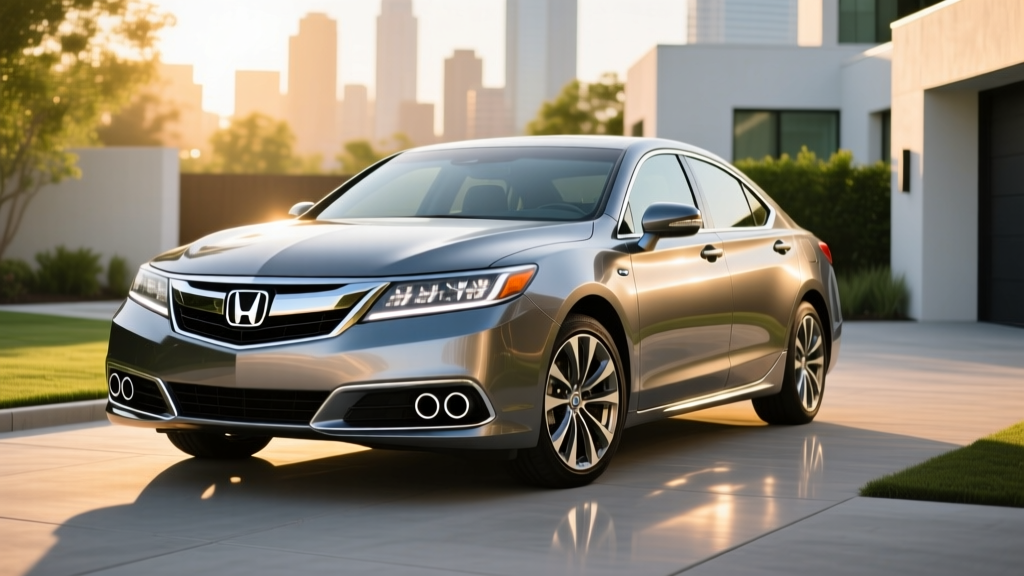
The Honda RLX Sport Hybrid SH-AWD occupies a curious space in the used luxury market: a full-size, 377-horsepower V6 sedan with all-wheel drive that returns 28 MPG combined. Discontinued after the 2020 model year, the RLX Hybrid is now exclusively a used-car proposition — but for buyers who want premium comfort without the fuel thirst of a conventional V6 flagship, it remains one of the most capable hybrid sedans ever built.
This guide covers everything a prospective buyer needs: real-world fuel economy, the unique three-motor SH-AWD powertrain, hybrid battery longevity and replacement costs, and how the RLX stacks up against full EVs and modern plug-in hybrids in 2026.
| Spec | Value |
|---|---|
| Powertrain | 3.5L V6 + 3 electric motors (Sport Hybrid SH-AWD) |
| Combined Horsepower | 377 hp |
| Transmission | 7-speed dual-clutch automatic |
| EPA MPG (City / Hwy / Combined) | 29 / 28 / 28 MPG |
| Drivetrain | SH-AWD (torque-vectoring rear motors) |
| Hybrid Battery | 1.41 kWh lithium-ion (self-charging HEV) |
| 0–60 mph | ~5.0 seconds (est.) |
| Original MSRP (2020) | $62,925 (Tech) / $69,945 (Advance) |
| Used Price Range (2026) | $22,000–$34,000 depending on mileage/condition |
| Hybrid Battery Warranty (Original) | 8 years / 100,000 miles (10 yr / 150,000 mi in CARB states) |
Fuel Economy: EPA Ratings vs. Real-World MPG
The EPA rates the RLX Sport Hybrid at 29 MPG city, 28 MPG highway, and 28 MPG combined. For context, the non-hybrid RLX with front-wheel drive and a 10-speed automatic was rated at 20/29/23 MPG — meaning the hybrid delivers a meaningful 5-MPG combined improvement while adding 67 horsepower and all-wheel drive.
| Model | City | Highway | Combined |
|---|---|---|---|
| RLX Sport Hybrid SH-AWD | 29 MPG | 28 MPG | 28 MPG |
| RLX V6 FWD (10-speed) | 20 MPG | 29 MPG | 23 MPG |
Real-world expectations: Conventional hybrids like the RLX typically match or exceed their EPA city rating because regenerative braking recovers energy in stop-and-go traffic. Owners commonly report 28–31 MPG in mixed suburban driving. Highway-only trips at 75+ mph tend to settle around 26–27 MPG — the aerodynamic drag of a large sedan limits electric-motor assist at sustained speed. In cold weather (below 30°F), expect a 1–2 MPG reduction as the engine runs more frequently to heat the cabin and maintain battery temperature.
Source: EPA Fuel Economy — 2020 Honda RLX Hybrid
The Sport Hybrid SH-AWD Powertrain Explained
The RLX Hybrid's powertrain is one of Honda's most sophisticated setups and shares architecture with the second-generation Acura NSX supercar. Here's how it works:
- Front axle: A 3.5-liter SOHC i-VTEC V6 producing 310 hp, paired with a 47-hp electric motor integrated into the 7-speed dual-clutch transmission. The front motor handles engine-start duties, regenerative braking, and supplemental torque.
- Rear axle: Two independent 36-hp electric motors — one per rear wheel — that provide torque vectoring. These motors can push torque to the outside rear wheel in corners, actively rotating the car. They also enable regenerative braking at the rear.
- Combined output: 377 horsepower, routed through a sophisticated all-wheel-drive system that requires no mechanical driveshaft to the rear wheels.
The result is a sedan that accelerates to 60 mph in roughly 5.0 seconds — competitive with sport sedans costing far more — while maintaining the fuel economy of a midsize four-cylinder. The 1.41 kWh lithium-ion battery pack is small by PHEV or BEV standards because this is a conventional hybrid (HEV): it charges itself through regenerative braking and engine power. You never plug it in.
HEV vs. PHEV: Where the RLX Fits
| Feature | Honda RLX (HEV) | Typical PHEV (e.g., Toyota Prius Prime) |
|---|---|---|
| Plug-in charging required? | No — self-charging | Yes — plug in for EV range |
| Electric-only range | ~1 mile at low speed | 25–44 miles (model dependent) |
| Battery size | 1.41 kWh | 13–18 kWh |
| Federal tax credit | Not eligible | Up to $7,500 (if eligible under §30D) |
| Best for | Drivers without home charging access | Drivers with home/work charging who want EV daily driving |
Hybrid Battery Life, Warranty & Replacement Cost
The top concern for any used hybrid buyer is the traction battery. The RLX uses a compact 1.41 kWh lithium-ion pack — and because it's a conventional hybrid that never deeply cycles (Honda's system keeps the battery between roughly 20% and 80% state of charge), degradation is minimal compared to full EVs or PHEVs.
Battery Warranty Coverage
Original warranty: 8 years / 100,000 miles nationwide; extended to 10 years / 150,000 miles in CARB-emission states (CA, CT, ME, MD, MA, NJ, NY, OR, RI, VT, WA, and others that adopted California's standards).
For a 2020 model in 2026: The 8-year/100,000-mile federal warranty is still active through the 2028 model year or until the odometer hits 100,000 miles — whichever comes first. CARB-state vehicles retain coverage through 2030 or 150,000 miles.
Real-world longevity data: Honda's hybrid systems have an excellent reliability track record. The IMA and Sport Hybrid systems used across the Accord Hybrid, CR-V Hybrid, and RLX Hybrid have demonstrated battery lifespans of 150,000–200,000+ miles in widespread owner reporting. The small battery size means less thermal stress and fewer charge cycles compared to a full EV pack.
Replacement cost: If the hybrid battery does require replacement out of warranty, expect to pay $2,000–$4,000 for a refurbished or aftermarket pack, or $4,500–$6,000 for a new OEM unit including labor. Independent hybrid specialists often offer refurbished packs with 1–3 year warranties at the lower end of that range. Given the RLX's small battery and Honda's track record, this is a low-probability expense for most buyers.
Driving Impressions & Practicality
The RLX Hybrid's 377 hp and torque-vectoring AWD give it genuine sport-sedan reflexes unusual for a car in its price bracket. The dual-clutch transmission shifts crisply, and the electric motors fill in torque instantly before the V6 reaches its powerband. Around corners, the rear-axle motors actively push the car into turns — a technology Honda calls "Super Handling All-Wheel Drive" that genuinely works.
Cabin & cargo: The RLX offers generous rear legroom (42.1 inches) and a 14.7-cubic-foot trunk — though the hybrid battery does reduce cargo space slightly compared to the non-hybrid model. Interior materials are competitive with the Audi A6 and Lexus ES of the same era, with standard leather, a 14-speaker Krell audio system (Advance trim), and Honda's dual-screen infotainment setup.
The infotainment caveat: Honda's dual-screen system from this generation is widely regarded as one of the weaker interfaces in the luxury segment. Response times are slow, and the upper screen is not a touchscreen. Apple CarPlay and Android Auto are standard, which mitigates the issue for most daily use.
Pricing, Tax Credits & Used Market Value
The RLX Hybrid was discontinued after the 2020 model year, so all examples on the market are used. Here's the current pricing landscape as of early 2026:
| Trim | Original MSRP | Used Range (2026) |
|---|---|---|
| Sport Hybrid Tech | $62,925 | $22,000–$28,000 |
| Sport Hybrid Advance | $69,945 | $26,000–$34,000 |
Tax credit eligibility: The RLX Hybrid does not qualify for the federal §30D clean vehicle credit. That credit applies only to plug-in electric vehicles (BEVs and PHEVs) with battery packs of at least 7 kWh and specific critical-mineral and battery-component sourcing requirements. The RLX's 1.41 kWh battery is far below the threshold, and as a conventional HEV, it was never eligible even when new. Some states offer modest used-hybrid rebates or HOV lane access, but these vary by jurisdiction — check your state's DMV or energy office for current programs.
Value proposition: At $22,000–$34,000, the RLX Hybrid delivers 377 hp, AWD, 28 MPG, and a premium interior at a fraction of its original MSRP. Depreciation has been steep — which is bad news for original owners but excellent news for used buyers. A well-maintained example under 60,000 miles represents one of the best performance-per-dollar values in the used luxury hybrid market.
Reliability & What to Watch For
Honda's hybrid systems rank among the most reliable in the industry. The RLX specifically has no widespread pattern failures associated with the hybrid powertrain. However, used buyers should inspect the following:
- Dual-clutch transmission: The 7-speed DCT is smooth when functioning properly but can exhibit hesitation at low speeds if the transmission fluid hasn't been changed per Honda's maintenance schedule. Request service records.
- SH-AWD rear motors: These are sealed units with no routine maintenance, but listen for unusual whining or clicking from the rear axle during a test drive.
- 12V auxiliary battery: Like all hybrids, the RLX has a standard 12V battery that powers accessories and computers. If the car has sat unused for extended periods, this battery may need replacement ($150–$250).
- Brake wear: Regenerative braking significantly reduces pad wear — many RLX Hybrids reach 60,000–80,000 miles on original brake pads. If a high-mileage example still has original brakes, inspect rotor condition for warping.
Source: NHTSA — 2020 Honda RLX Safety & Recalls
RLX Hybrid vs. Full EV vs. Modern PHEV: Which Fits You?
Decision Framework
Choose the used RLX Hybrid if: You want a spacious, fast luxury sedan with AWD and strong fuel economy, you don't have reliable access to home or workplace charging, and you want minimal ownership complexity — no plug, no range planning, no charging-app hassles.
Choose a PHEV (e.g., Toyota Prius Prime, Hyundai Tucson PHEV) if: You have Level 2 charging at home or work and want 25–44 miles of daily electric-only driving for commutes, with a gas engine for longer trips. A PHEV can eliminate most gasoline use if your daily driving falls within its EV range.
Choose a full EV (e.g., Tesla Model 3, Hyundai Ioniq 6, BMW i4) if: You have reliable home charging, your daily driving is under 250 miles, and you want the lowest per-mile energy cost (typically $0.04–$0.06/mile on home electricity vs. $0.12–$0.18/mile for a 28-MPG hybrid at $3.50/gallon). EVs also eliminate oil changes and reduce brake wear further through one-pedal regenerative driving.
Pros
- 377 hp with 28 MPG combined — rare performance/efficiency combo
- SH-AWD torque vectoring provides genuine handling advantage
- No plug-in required — ideal for apartment dwellers or those without home charging
- Steep depreciation = strong used value (50%+ off original MSRP)
- Proven Honda hybrid reliability with small, low-stress battery
- Generous rear legroom and premium interior materials
Cons
- Discontinued — no new examples available; limited dealer support for niche model
- Dual-screen infotainment is dated and slow
- No federal tax credit eligibility (HEV, not PHEV/BEV)
- Higher fuel cost per mile than a full EV on home charging
- Trunk space slightly reduced by hybrid battery placement
- Low production volume may affect parts availability long-term
Frequently Asked Questions
How many MPG does the Honda RLX Hybrid get?
The EPA rates it at 29 MPG city, 28 MPG highway, and 28 MPG combined. Real-world mixed driving typically yields 27–31 MPG depending on driving style, terrain, and temperature. City driving often matches or slightly exceeds the EPA figure thanks to regenerative braking.
Does the Honda RLX Hybrid need to be plugged in?
No. The RLX Hybrid is a conventional hybrid (HEV), not a plug-in hybrid (PHEV). Its 1.41 kWh battery charges through regenerative braking and the gasoline engine. You simply fill it with gasoline like any other car — the hybrid system operates automatically in the background.
How far can the RLX Hybrid drive on electric power alone?
Effectively about 1 mile at very low speeds (under 20 mph in EV mode). The battery is too small for meaningful electric-only range. Unlike a PHEV, the RLX Hybrid is designed to blend electric and gas power continuously rather than drive on electricity alone for extended distances.
Is the Honda RLX Hybrid reliable, and what does battery replacement cost?
Honda's Sport Hybrid system has an excellent reliability record. The small battery pack experiences minimal stress because Honda's software keeps it in a narrow state-of-charge window. Hybrid battery replacement, if needed out of warranty, typically costs $2,000–$4,000 for a refurbished unit or $4,500–$6,000 for new OEM. Many examples surpass 150,000 miles without battery issues.
Does the Honda RLX Hybrid qualify for any tax credit?
No. The federal §30D clean vehicle credit applies only to plug-in vehicles (BEVs and PHEVs) meeting battery-capacity, sourcing, MSRP, and income requirements. The RLX Hybrid's 1.41 kWh battery and conventional hybrid architecture make it ineligible. The IRS §30D guidelines confirm the minimum 7 kWh battery threshold. Some states may offer minor used-vehicle hybrid incentives — check your state energy office.
How does the RLX Hybrid compare to the Acura RLX?
The Honda RLX and Acura RLX are the same vehicle sold under different brands in different markets. The Acura RLX Sport Hybrid was sold in the U.S. (not the Honda-badged version), while the Honda RLX badge was used in select international markets. The Acura RLX Sport Hybrid SH-AWD shares identical powertrain specs, EPA ratings, and battery specifications.
Should I buy a used RLX Hybrid or a newer hybrid sedan?
If your priority is value — getting a 377-hp, AWD luxury sedan with 28 MPG for under $30,000 — the used RLX is hard to beat. However, newer options like the Toyota Crown Hybrid (41 MPG combined, ~$41,000 new) or the Hyundai Sonata Hybrid (47 MPG combined, ~$31,000 new) offer better fuel economy, current infotainment, and full new-car warranties. The RLX wins on performance and luxury-per-dollar; newer hybrids win on efficiency and modern tech.
Final Assessment
The Honda RLX Sport Hybrid SH-AWD is a used-market sleeper: a technologically advanced, all-wheel-drive luxury sedan that delivers V8-rivaling performance with four-cylinder fuel consumption. Its discontinuation means steep depreciation, which works in the buyer's favor. The hybrid system is proven reliable, the battery replacement risk is low and affordable, and the ownership experience is as simple as any gas car — no plug, no apps, no range calculations.
For buyers who lack home charging infrastructure but still want hybrid efficiency in a premium package, the RLX remains a compelling choice in 2026. For those with charging access and shorter commutes, a modern PHEV or full EV will deliver lower operating costs and more current technology. Either way, the RLX Hybrid's engineering — particularly the NSX-derived SH-AWD system — deserves recognition as one of Honda's most ambitious hybrid achievements.