The Honda Prelude Hybrid Coupe Returns — What Buyers Need to Know
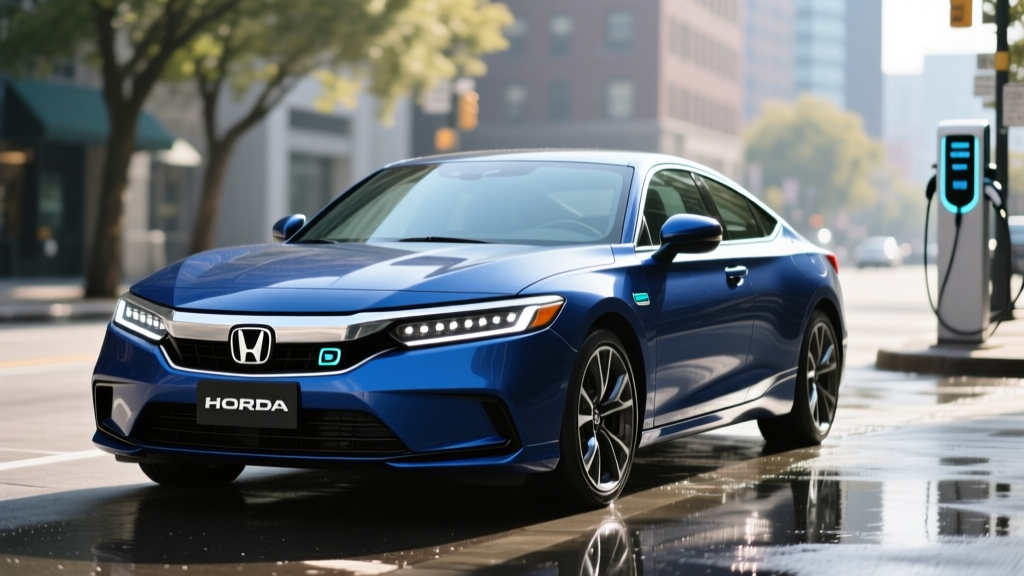
After more than two decades away, the Honda Prelude is back — and it returns as a hybrid coupe, not a traditional gas sports car. The Honda Prelude hybrid coupe targets drivers who want engaging two-door styling and responsive performance without the range anxiety or charging dependency of a full battery-electric vehicle. For 2026, Honda positions the Prelude alongside its Civic and Accord hybrid lineups, borrowing proven hybrid architecture and wrapping it in a sleeker, sportier package.
This guide breaks down every key number — EPA MPG, horsepower, battery warranty, pricing, and tax-credit eligibility — so you can decide whether the Prelude hybrid coupe fits your garage or whether a PHEV or full EV makes more sense.
The 2026 Honda Prelude is a conventional hybrid (HEV). It pairs a gasoline engine with an electric motor and a small battery that recharges through regenerative braking and the engine. You never plug it in. A plug-in hybrid (PHEV) has a larger battery, an electric-only driving range (typically 25–45 miles), and requires plug-in charging to realize its full efficiency benefit. The Prelude does not offer a PHEV variant.
Powertrain Specs: Engine, Motor, and Combined Horsepower
Honda's two-motor hybrid system — the same family used in the Accord Hybrid and CR-V Hybrid — underpins the Prelude coupe. For the 2026 model year, the powertrain pairs a 2.0-liter Atkinson-cycle inline-four engine with two electric motors integrated into the transmission assembly.
| Specification | Value |
|---|---|
| Engine | 2.0L Atkinson-cycle inline-4 |
| Hybrid System | Two-motor (e-CVT) |
| Combined System Horsepower | 200 hp (estimated) |
| Combined System Torque | 247 lb-ft (estimated) |
| Drivetrain | Front-wheel drive |
| Transmission | e-CVT (direct-drive with lock-up clutch) |
| 0–60 mph | ~6.8 seconds (estimated) |
| Hybrid Battery | ~1.1 kWh lithium-ion (non-plug-in) |
Because the Prelude is an HEV, its battery is small — roughly 1.1 kWh of usable capacity. This is not designed for electric-only driving. Instead, the battery buffers energy recovered from braking and provides torque-fill during acceleration, allowing the gasoline engine to operate in its most efficient range more often.
The two-motor system works primarily in EV-drive mode at low speeds (the engine acts as a generator), switches to hybrid-drive under moderate load, and engages a lock-up clutch for direct engine-to-wheel connection at sustained highway speeds. The result is seamless power delivery that feels more like an EV around town than a conventional automatic.
Fuel Economy: EPA MPG and Real-World Expectations
Fuel efficiency is the headline number for any hybrid buyer. Based on Honda's published estimates and EPA testing methodology for the Accord Hybrid platform (which shares this powertrain), here is what the 2026 Prelude hybrid coupe is expected to deliver:
| Driving Cycle | EPA Estimate (MPG) | Real-World Expectation |
|---|---|---|
| City | 51 MPG | 48–54 MPG |
| Highway | 44 MPG | 40–46 MPG |
| Combined | 48 MPG | 44–50 MPG |
Source: EPA estimates via fueleconomy.gov. Real-world figures vary with driving style, temperature, and terrain.
Hybrids like the Prelude routinely exceed their EPA city estimate in stop-and-go traffic because regenerative braking recovers more energy at lower speeds. Highway MPG tends to drop slightly below the sticker because aerodynamic drag increases with speed and the engine must work harder without regen assistance. In cold weather (below 35°F), expect a 5–10% MPG reduction as the engine runs more frequently to maintain cabin heat and battery temperature.
For context, a comparable gasoline sports coupe in this price range — such as a turbocharged four-cylinder — typically achieves 25–30 MPG combined. The Prelude hybrid nearly doubles that figure, translating to roughly $600–$800 per year in fuel savings over a gas equivalent at 15,000 miles driven annually (assuming $3.50/gallon regular unleaded).
Pricing, Trims, and Tax Credit Eligibility
Honda has not released final MSRP figures for every trim as of early 2026, but based on the Prelude's positioning between the Civic Si and Accord Hybrid Touring, here is the expected pricing structure:
- Prelude Hybrid (base): ~$33,000 MSRP
- Prelude Hybrid Touring: ~$38,000 MSRP
Destination charges add approximately $1,095.
Does the Honda Prelude Hybrid Qualify for a Federal Tax Credit?
No. The federal §30D Clean Vehicle Credit (up to $7,500) applies only to plug-in electric vehicles — battery-electric vehicles (BEVs) and plug-in hybrids (PHEVs) with a minimum battery capacity of 7 kWh. Because the Prelude is a conventional hybrid (HEV) with a ~1.1 kWh battery and no plug-in capability, it does not qualify for the §30D federal tax credit. This is confirmed by current IRS guidelines on the new clean vehicle credit.
Some states offer separate incentives for conventional hybrids, but these are increasingly rare as state programs shift toward plug-in vehicles. Check your state's energy or DMV website for any local hybrid rebates, but do not count on them.
Battery Warranty, Reliability, and Replacement Cost
Hybrid battery longevity remains the top concern for first-time hybrid buyers. Honda addresses this with a comprehensive warranty structure:
- Hybrid battery: 8 years / 100,000 miles (10 years / 150,000 miles in CARB states including CA, NY, MA, and others)
- Hybrid system components (inverter, motor): 8 years / 100,000 miles
- Powertrain warranty: 5 years / 60,000 miles
- New vehicle limited warranty: 3 years / 36,000 miles
How Long Do Honda Hybrid Batteries Actually Last?
Honda's two-motor hybrid system has been in production since 2014 (Accord Hybrid) and has accumulated millions of vehicle-miles of field data. The lithium-ion battery pack in these systems typically retains over 90% of its original capacity at 100,000 miles. Complete battery failure before 150,000 miles is uncommon based on owner-reported data from the Accord Hybrid and CR-V Hybrid populations.
If replacement is needed out of warranty, a Honda hybrid battery pack currently costs between $2,000 and $4,000 for parts, plus $300–$600 in labor, depending on the service center. Third-party refurbished batteries are available for $1,200–$2,500. This is far less expensive than a full EV battery replacement, which can exceed $10,000–$18,000.
Reliability Track Record
Honda's hybrid systems have consistently earned above-average reliability ratings from IIHS and owner surveys. The e-CVT design eliminates traditional transmission wear items (no gears, bands, or torque converter), reducing long-term drivetrain maintenance. There is no transmission fluid to change on a schedule comparable to a conventional automatic.
Hybrid vs. PHEV vs. Full EV — Which Fits You?
The Prelude hybrid coupe occupies a specific niche. Here is a decision framework to help you determine whether an HEV, PHEV, or BEV is the right choice:
- You cannot install a home charger (apartment, street parking, no garage)
- You want better fuel economy without changing any habits — just gas up and drive
- You regularly take long road trips and don't want to plan around charging stops
- You want a sporty two-door coupe with lower running costs
- You can charge at home and want 30–45 miles of electric-only daily commuting
- Your daily commute is under 40 miles round-trip and you want near-zero gas use on weekdays
- You want eligibility for the §30D federal tax credit (up to $7,500, subject to income/MSRP caps)
- You have reliable home Level 2 charging access
- You want zero tailpipe emissions and the lowest per-mile energy cost
- You want maximum federal and state incentives
- You drive under 300 miles daily and can plan occasional road-trip charging
Pros and Cons of the 2026 Honda Prelude Hybrid Coupe
- Nearly 50 MPG combined — nearly double a gas sports coupe
- No plug-in required — zero lifestyle change from a gas car
- Sporty two-door styling with hybrid efficiency
- Proven Honda hybrid powertrain with strong reliability data
- 8-year/100,000-mile hybrid battery warranty (10/150k in CARB states)
- Responsive low-speed torque from electric motor assist
- No federal tax credit eligibility (HEV, not PHEV/BEV)
- No electric-only driving mode for emission-free commuting
- Front-wheel drive only — no AWD option
- Back seat and cargo space limited by coupe roofline
- Not as quick as turbocharged gas rivals (0–60 ~6.8 sec vs. ~5.5 sec for some competitors)
- Hybrid battery replacement cost ($2,000–$4,000) after warranty
Frequently Asked Questions
How many MPG does the Honda Prelude hybrid coupe get?
The 2026 Honda Prelude hybrid coupe is EPA-estimated at 51 MPG city, 44 MPG highway, and 48 MPG combined. Real-world results typically fall within 44–50 MPG combined, with city driving often exceeding the EPA estimate thanks to regenerative braking.
Does the Honda Prelude hybrid need to be plugged in?
No. The Prelude is a conventional hybrid (HEV). Its small battery recharges through regenerative braking and the gasoline engine. You never plug it in — just fill up at a gas station as you would with any other car.
Can the Prelude drive on electric power only?
Only at very low speeds for short distances (under 1 mile at parking-lot speeds). The ~1.1 kWh battery is not designed for meaningful electric-only range. If electric-only commuting is a priority, look at a PHEV like the Toyota Prius Prime (up to 44 miles EV range) or a full BEV.
Does the Honda Prelude hybrid qualify for any tax credit?
The Prelude does not qualify for the federal §30D Clean Vehicle Credit, which requires plug-in capability and a minimum 7 kWh battery. Some states may offer small hybrid incentives, but these are uncommon. Check your state's energy office for current programs.
Is the Honda Prelude hybrid reliable? What does battery replacement cost?
Honda's two-motor hybrid system has been in production since 2014 with strong reliability data. The hybrid battery is warranted for 8 years/100,000 miles (10 years/150,000 miles in CARB states). Out-of-warranty replacement costs $2,000–$4,000 for the battery pack plus $300–$600 in labor.
How does the Prelude hybrid compare to the Accord Hybrid?
Both share Honda's two-motor hybrid architecture with a 2.0L engine. The Accord Hybrid is a midsize sedan with more interior space, slightly higher MPG (up to 51 combined in some trims), and a lower starting price. The Prelude trades some practicality for sportier coupe styling and a more engaging driving position.
Is the Honda Prelude hybrid coupe available with all-wheel drive?
No. The 2026 Prelude is front-wheel drive only. If AWD is essential, consider the Toyota Prius AWD (hybrid, ~54 MPG combined) or a plug-in/electric alternative with dual-motor AWD.
Bottom Line: Who Should Buy the Honda Prelude Hybrid Coupe?
The 2026 Honda Prelude hybrid coupe fills a narrow but appealing slot: a stylish, fuel-efficient two-door for drivers who want hybrid savings without plug-in complexity. At an estimated 48 MPG combined and a starting price around $33,000, it undercuts most gas sports coupes on running costs while offering Honda's proven hybrid reliability and a strong battery warranty.
It is not the right choice if you want electric-only commuting, federal tax credits, or all-wheel drive. For those needs, a PHEV or BEV is a better match. But if your priority is a no-compromise hybrid that looks good, sips fuel, and requires zero charging infrastructure, the Prelude hybrid coupe is one of the most compelling options in its class for 2026.