The State of Honda Plug-In Hybrids in 2026
Honda's electrification strategy has always favored pragmatism over spectacle. While competitors raced to launch dozens of battery-electric models, Honda doubled down on hybrid technology — and for 2026, that bet looks increasingly smart. The brand's lineup now spans conventional hybrids (HEVs) and plug-in hybrids (PHEVs), with the CR-V e:PHEV leading the charge as Honda's primary plug-in offering for the U.S. market.
If you've been searching for Honda plug-in hybrids, you likely have questions: How much electric-only range do you actually get? Does a PHEV make sense if you can't charge at home? And critically, does any Honda plug-in qualify for the federal EV tax credit? This guide answers all of that with exact numbers — no marketing fluff.
HEV vs PHEV: What Honda Actually Offers
Before diving into specs, it's essential to separate Honda's conventional hybrids from its plug-in hybrids. They serve different buyers and operate differently.
| Feature | Conventional Hybrid (HEV) | Plug-In Hybrid (PHEV) |
|---|---|---|
| Plug-in required? | No — charges via regenerative braking and engine | Yes — plug in for full electric range |
| Electric-only range | ~1 mile at low speeds | 30–47 miles (model dependent) |
| Battery size | ~1.1 kWh | 17.7–18.0 kWh (usable) |
| Fuel when battery depleted | Gasoline (always) | Gasoline (operates as HEV) |
| Federal tax credit | No | Potentially — see §30D rules below |
| Current Honda models | Accord Hybrid, Civic Hybrid, CR-V Hybrid | CR-V e:PHEV |
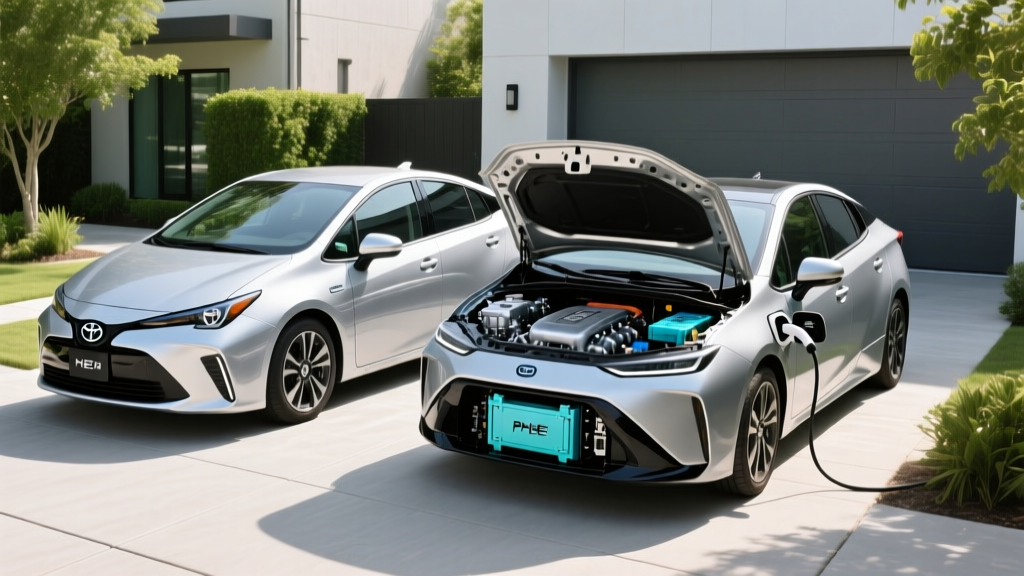
The key distinction: a conventional Honda hybrid like the Accord Hybrid never plugs in and always uses gasoline, though it supplements the engine with a small electric motor for efficiency gains. A PHEV like the CR-V e:PHEV has a substantially larger battery that you charge externally, enabling genuine electric-only commuting before the gasoline engine takes over.
2026 Honda CR-V e:PHEV: Specs, Range, and Efficiency
The 2026 CR-V e:PHEV (sold in some markets as the CR-V Sport Plug-In Hybrid) is Honda's sole plug-in hybrid available in the United States. It pairs a 2.0-liter Atkinson-cycle four-cylinder engine with two electric motors and a larger lithium-ion battery pack.
| Specification | 2026 Honda CR-V e:PHEV |
|---|---|
| Combined horsepower | 204 hp (system net) |
| Engine | 2.0L Atkinson-cycle I-4 + dual electric motors |
| Battery (usable capacity) | 17.7 kWh lithium-ion (NMC chemistry) |
| EPA electric-only range | 47 miles |
| Total combined range (electric + gas) | ~430 miles |
| EPA MPGe (electric + gas combined) | 101 MPGe |
| EPA MPG (gas-only, battery depleted) | 40 city / 38 highway / 39 combined |
| Level 1 charging (120V, 12A) | ~14 hours (0–100%) |
| Level 2 charging (240V, 32A) | ~2.5 hours (0–100%) |
| DC fast charging | Not available |
| 0–60 mph | ~7.8 seconds |
| Starting MSRP | $41,525 (Sport Touring PHEV trim) |
| Battery warranty | 8 years / 100,000 miles (10 yr/150,000 mi in CARB states) |
How Many MPG Does the CR-V e:PHEV Get?
Once the battery is depleted and the CR-V e:PHEV operates as a conventional hybrid, it delivers an EPA-rated 40 city / 38 highway / 39 combined MPG. These are strong numbers for a compact SUV, though they trail the conventional CR-V Hybrid (43 city / 36 highway / 40 combined) slightly on the highway because the PHEV carries approximately 300 extra pounds of battery mass.
In real-world testing, Honda hybrids tend to meet or slightly exceed EPA city estimates thanks to the regenerative braking system that recovers energy in stop-and-go traffic. Highway driving at sustained 75+ mph will typically yield 34–36 MPG in gas-only mode. Source: fueleconomy.gov.
Charging the CR-V e:PHEV: What You Need to Know
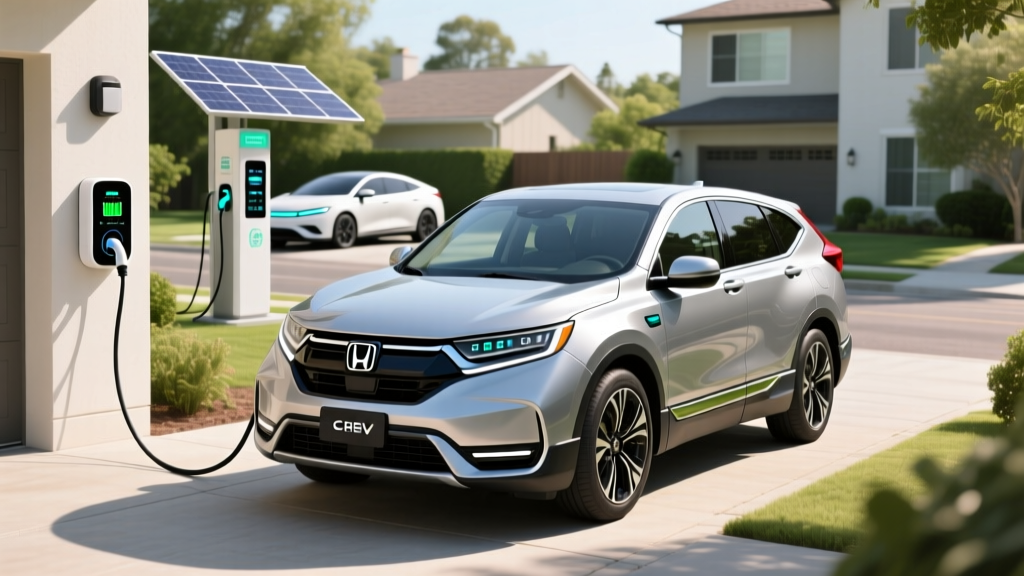
The CR-V e:PHEV uses a standard J1772 connector for AC charging. There is no DC fast-charging capability — this is typical for PHEVs, whose smaller batteries don't require rapid public charging infrastructure.
| Charging Level | Power | Time (0–100%) | Practical Notes |
|---|---|---|---|
| Level 1 (120V household) | ~1.4 kW | ~14 hours | Overnight top-up only; adds ~4 mi/hr |
| Level 2 (240V, 32A) | ~7.7 kW | ~2.5 hours | Recommended; full charge overnight or at work |
| DC Fast Charge | N/A | N/A | Not supported on CR-V e:PHEV |
Practical advice: A Level 2 home charger is strongly recommended for PHEV owners. At Level 1 (standard outlet), a full charge takes 14 hours — meaning you'll rarely start with a full battery unless you drive very little. A 240V Level 2 installation typically costs $800–$1,500 including equipment and electrician labor (assuming your electrical panel has capacity). Most PHEV owners charge overnight and wake to a full 47-mile electric buffer every morning.
Honda PHEV Pricing and Federal Tax Credit Eligibility
The 2026 CR-V e:PHEV starts at approximately $41,525 (Sport Touring PHEV trim, including destination). This represents a premium of roughly $5,000–$6,000 over a comparably equipped CR-V Hybrid.
Does the CR-V e:PHEV Qualify for the Federal Tax Credit?
Under the IRS §30D Clean Vehicle Credit, the CR-V e:PHEV may qualify for up to $7,500, but eligibility depends on several conditions that change frequently:
- Battery sourcing requirements: Critical minerals and battery components must meet phased-in percentages from U.S. free-trade partners. Honda has been working to localize supply chains, but specific eligibility varies by model year and production batch.
- MSRP cap: SUVs (including the CR-V) must have an MSRP at or below $80,000. The CR-V e:PHEV clears this easily.
- Buyer income cap: Modified adjusted gross income must not exceed $150,000 (single), $225,000 (head of household), or $300,000 (joint filing).
- Point-of-sale transfer: As of 2024, eligible buyers can transfer the credit to the dealer at purchase, reducing the purchase price upfront rather than waiting for a tax refund.
- North American assembly: Final assembly must occur in North America. The CR-V for the U.S. market is assembled in Indiana and Canada.
Bottom line: Check the current eligibility status at fueleconomy.gov and confirm with your tax professional before assuming the full $7,500 credit. Battery sourcing rules have disqualified several previously eligible vehicles mid-year.
Battery Longevity, Warranty, and Replacement Costs
Is the Honda CR-V e:PHEV Reliable? What About Battery Replacement?
Honda's hybrid systems have a strong reliability track record dating back to the early 2000s Insight and Civic Hybrid. The two-motor hybrid system in the CR-V e:PHEV is a mature design shared across Honda's global lineup.
For the lithium-ion battery pack specifically:
- Degradation: PHEV batteries typically lose 8–15% capacity over 10 years under normal use. The 17.7 kWh pack's 47-mile range might reduce to 40–43 miles after a decade.
- Replacement cost: If out of warranty, a PHEV battery replacement runs approximately $5,000–$8,000 including labor. However, wholesale battery failures are rare — most degradation is gradual.
- Individual module repair: Some shops can replace individual battery modules rather than the full pack, reducing cost to $1,500–$3,000.
Honda's conventional hybrids have demonstrated battery packs lasting 150,000–200,000+ miles with minimal degradation. The PHEV battery undergoes more frequent charge cycles but benefits from active thermal management. Source: Honda CR-V Plug-In Hybrid official page.
Honda PHEV vs Full EV vs Conventional Hybrid: Which Fits You?
Decision Framework
Choose the Honda CR-V e:PHEV if:
- Your daily commute is under 40 miles round-trip and you can charge at home
- You take regular road trips and don't want to plan around charging stations
- You want electric daily driving but live in an area with sparse DC fast-charging infrastructure
- You want to reduce gasoline consumption without full EV commitment
Choose a conventional Honda Hybrid (CR-V Hybrid, Accord Hybrid) if:
- You cannot install a home charger (apartment, street parking)
- You want the lowest purchase price and don't need electric-only driving
- Your driving is mostly long-distance highway, where PHEV electric range offers little benefit
Choose a full battery-electric vehicle (BEV) if:
- You can charge at home AND have access to reliable DC fast charging for trips
- Your household has a second vehicle for long trips, or you rarely drive over 250 miles in a day
- You want to eliminate gasoline entirely and minimize operating costs
- You want to maximize federal/state incentives (BEVs generally qualify for more)
Honda CR-V e:PHEV Pros
- 47 miles electric covers most commutes gas-free
- Operates as efficient 39 MPG hybrid when battery depletes
- No range anxiety — 430+ miles total range
- Spacious CR-V interior with minimal cargo compromise
- Honda Sensing safety suite standard
- Strong resale value and reliability reputation
Honda CR-V e:PHEV Cons
- No DC fast charging — road trips are gas-only
- $5,000+ premium over CR-V Hybrid
- Tax credit eligibility uncertain due to sourcing rules
- Only available in top Sport Touring trim
- Level 1 charging too slow for daily replenishment
- Less electric range than rivals (Toyota RAV4 Prime: 42 mi; Hyundai Tucson PHEV: 33 mi — but Honda leads the class)
5-Year Ownership Cost Snapshot
| Cost Factor | CR-V e:PHEV | CR-V Hybrid | Notes |
|---|---|---|---|
| Purchase price (MSRP) | $41,525 | $36,025 | ~$5,500 PHEV premium |
| Estimated tax credit | $0–$7,500 | $0 | Depends on sourcing & income |
| 5-year fuel cost (15k mi/yr) | ~$3,800 | ~$7,200 | Assumes 80% electric commuting for PHEV |
| Home charger install | ~$1,200 | $0 | One-time Level 2 cost |
| Maintenance (5 yr) | ~$2,100 | ~$2,400 | PHEV: less brake wear, less engine use |
| Insurance (5 yr est.) | ~$8,500 | ~$7,800 | PHEVs carry slightly higher premiums |
| 5-Year Net (before credit) | ~$55,925 | ~$53,425 | PHEV ~$2,500 more without credit |
| 5-Year Net (with $7,500 credit) | ~$48,425 | ~$53,425 | PHEV saves ~$5,000 with full credit |
The math is clear: the CR-V e:PHEV makes financial sense primarily if (a) you qualify for the federal tax credit and (b) you can charge at home to capture the fuel savings. Without home charging access, the PHEV premium is difficult to recoup.
Frequently Asked Questions
How far can the Honda CR-V e:PHEV go on electric only?
The EPA rates it at 47 miles electric-only. Real-world results range from 38–44 miles in moderate weather, dropping to 30–35 miles in freezing temperatures due to cabin heating and reduced battery performance.
Does the Honda CR-V e:PHEV qualify for the $7,500 federal tax credit?
It may, but eligibility under IRS §30D depends on battery component and critical mineral sourcing requirements that change periodically. Check fueleconomy.gov for current status and confirm with a tax professional. The vehicle meets the MSRP cap ($80,000 for SUVs) and North American assembly requirements.
Can I charge the Honda CR-V e:PHEV at a public DC fast charger?
No. The CR-V e:PHEV does not have a DC fast-charging port. It charges via AC only — Level 1 (120V) or Level 2 (240V) using a J1772 connector. This is standard for PHEVs; the battery is small enough that Level 2 fully replenishes it in about 2.5 hours.
What happens when the CR-V e:PHEV battery runs out on a road trip?
The gasoline engine seamlessly takes over, and the vehicle operates as a conventional hybrid delivering approximately 39 MPG combined. You simply refuel at any gas station. Total range exceeds 430 miles between gas fill-ups and electric charges combined.
Is the Honda plug-in hybrid reliable long-term?
Honda's hybrid powertrains have proven durable, with many conventional Honda hybrids exceeding 200,000 miles. The PHEV battery is warrantied for 8 years/100,000 miles (10 years/150,000 miles in CARB states). Out-of-warranty battery replacement costs approximately $5,000–$8,000, though complete failures are uncommon.
Should I get a Honda PHEV or a full electric vehicle?
If you can charge at home, drive under 45 miles daily, and take road trips without wanting to plan charging stops, the CR-V e:PHEV is an excellent bridge. If you have reliable home and public charging access and rarely exceed 250 miles in a day, a full BEV like the Hyundai Ioniq 5 or Tesla Model Y will offer lower operating costs and stronger incentives.
Does Honda make any other plug-in hybrids besides the CR-V?
As of 2026, the CR-V e:PHEV is Honda's only plug-in hybrid sold in the United States. The Clarity Plug-In Hybrid was discontinued after the 2021 model year. Honda has indicated future PHEV models may join the lineup, but nothing has been officially announced for the U.S. market beyond the CR-V.