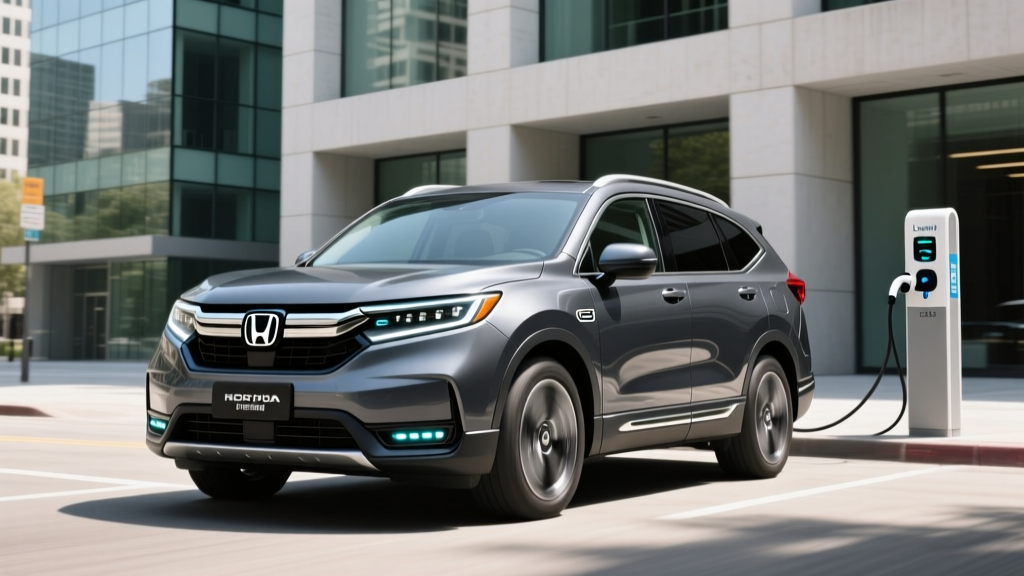
If you've been searching for a more fuel-efficient version of Honda's three-row family hauler, you've likely typed some version of "is there a Honda Pilot hybrid" into your search bar. The short answer for the 2026 model year: No, Honda does not currently offer the Pilot as a conventional hybrid (HEV) or a plug-in hybrid (PHEV). The Pilot remains powered exclusively by a 3.5-liter V6 gasoline engine paired with a 10-speed automatic transmission.
But that answer deserves more context. Honda has been expanding hybrid powertrains across its lineup — the CR-V Hybrid, Accord Hybrid, and Civic Hybrid are all strong sellers — and the Pilot's platform-mate, the Acura MDX, shares much of its architecture. Meanwhile, competitors like the Toyota Highlander Hybrid and Kia Sorento PHEV are pulling eco-conscious three-row buyers away. Let's examine exactly what Honda offers, what it doesn't, and which alternatives make sense if hybrid efficiency is a priority.
2026 Honda Pilot: Current Powertrain and Fuel Economy
The 2026 Honda Pilot carries over the powertrain that's been in place since the current generation's redesign. Every trim uses a naturally aspirated 3.5-liter V6 producing 285 horsepower and 262 lb-ft of torque, mated to a 10-speed automatic transmission. Front-wheel drive is standard on lower trims; Honda's i-VTM4 all-wheel-drive system is available or standard depending on trim.
| Drivetrain | City MPG | Highway MPG | Combined MPG |
|---|---|---|---|
| FWD | 19 | 27 | 22 |
| AWD | 18 | 25 | 21 |
Source: EPA Fuel Economy
These figures are typical for a body-on-frame-adjacent, three-row V6 SUV, but they lag meaningfully behind hybrid competitors. In real-world driving, owners frequently report combined averages between 20 and 23 MPG for AWD models, with highway-heavy commutes occasionally nudging 26 MPG. City-only driving in stop-and-go traffic can drop AWD models to 16–17 MPG, since the V6 lacks any electric motor assist to recapture braking energy or supplement low-speed acceleration.
Why Doesn't Honda Offer a Pilot Hybrid?
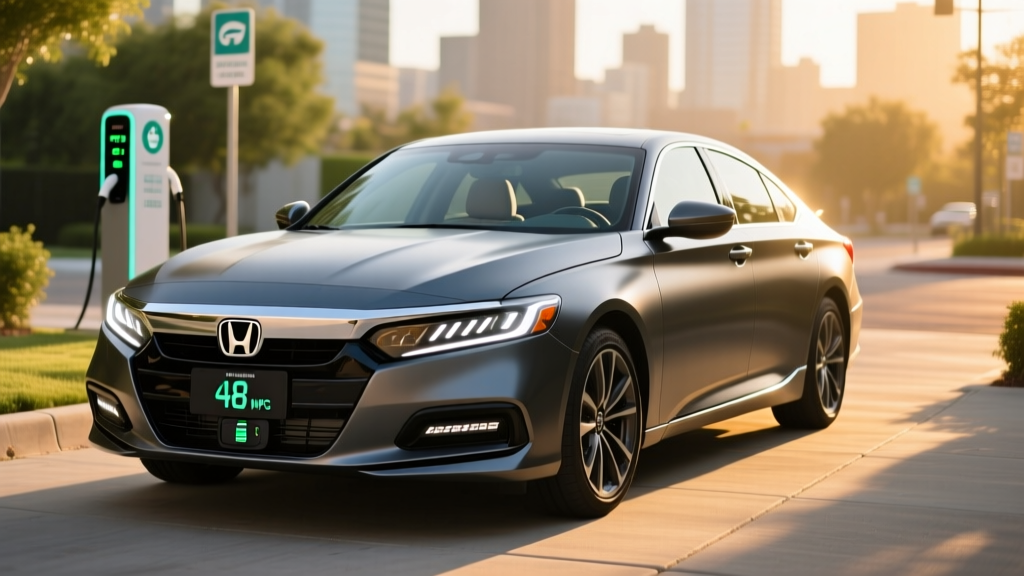
Honda has been deliberate about where it deploys hybrid powertrains. The automaker's fourth-generation two-motor hybrid system powers the CR-V Hybrid (33 MPG combined), Accord Hybrid (48 MPG combined), and Civic Hybrid (49 MPG combined). These are high-volume models where the fuel-economy payoff is dramatic because the base engines are smaller.
The Pilot presents a different engineering challenge. At roughly 4,500–4,700 pounds, it requires substantial low-end torque for towing (rated at 3,500–5,000 lbs depending on trim) and acceleration. Honda's current hybrid system pairs a 2.0-liter four-cylinder with electric motors — a setup that works brilliantly in lighter vehicles but would need significant reengineering to handle the Pilot's mass and towing demands without sacrificing performance or refinement.
Industry analysts have speculated that a future Pilot Hybrid could adopt a turbocharged V6 hybrid setup similar to what Honda has deployed in the Acura MDX Type S hybrid concepts, but as of early 2026, Honda has made no official announcement of a hybrid or plug-in hybrid Pilot.
Understanding Hybrid Types: What Could Honda Offer?
| Feature | Conventional Hybrid (HEV) | Plug-In Hybrid (PHEV) | Battery Electric (BEV) |
|---|---|---|---|
| Needs to plug in? | No — charges via regenerative braking and engine | Yes — plug in for electric-only range | Yes — sole energy source |
| Electric-only driving | Minimal (low-speed assist only) | 20–45 miles typical | 200–400+ miles |
| Gas engine | Yes — primary power source | Yes — extends range after battery depletes | No |
| Example | Toyota Highlander Hybrid | Kia Sorento PHEV | Kia EV9 |
Best Hybrid and PHEV Alternatives to the Honda Pilot
If three-row seating and hybrid efficiency are both non-negotiable, several competitors fill the gap Honda leaves open. Here's how the leading options stack up:
| Model | Type | Combined MPG / MPGe | Electric Range (PHEV) | Seating | Starting MSRP |
|---|---|---|---|---|---|
| Toyota Highlander Hybrid | HEV | 35 MPG combined | N/A | 7–8 | ~$42,000 |
| Toyota Grand Highlander Hybrid | HEV | 34–36 MPG | N/A | 7–8 | ~$45,000 |
| Kia Sorento PHEV | PHEV | 79 MPGe / 34 MPG gas-only | 32 miles | 6–7 | ~$51,000 |
| Hyundai Santa Fe PHEV | PHEV | 77 MPGe / 33 MPG gas-only | 30 miles | 6–7 | ~$49,000 |
| Mazda CX-90 PHEV | PHEV | 56 MPGe / 25 MPG gas-only | 26 miles | 6–7 | ~$53,000 |
| Honda Pilot (AWD) | Gas Only | 21 MPG combined | N/A | 7–8 | ~$40,000 |
Toyota Highlander Hybrid: The Closest Pilot Equivalent
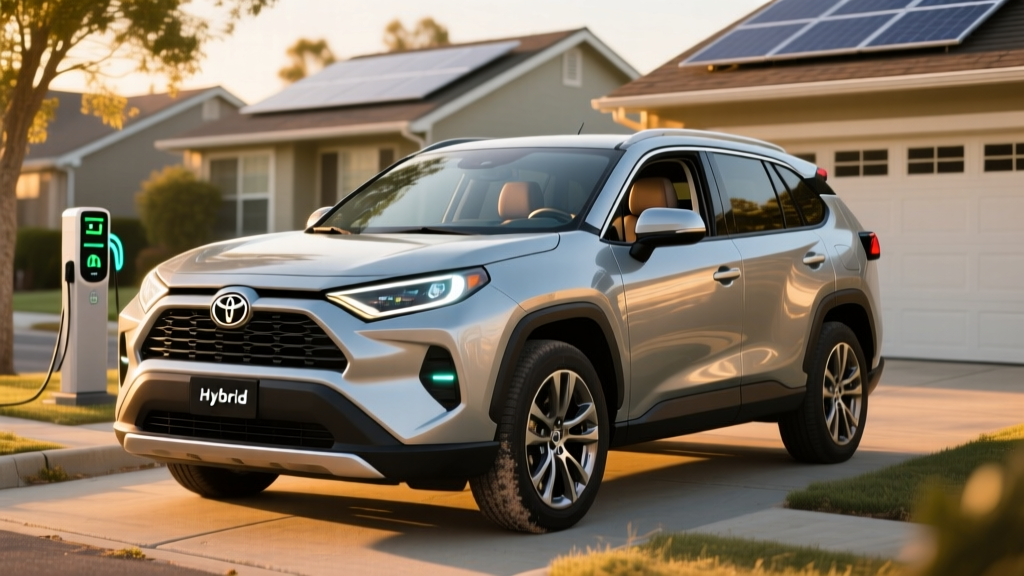
The Highlander Hybrid pairs a 2.5-liter four-cylinder with two electric motors (three on AWD models) for a combined 243 horsepower. It achieves an EPA-estimated 35 MPG combined — a 67% improvement over the Pilot AWD's 21 MPG. Real-world owners often report 33–37 MPG in mixed driving, with city MPG sometimes exceeding highway thanks to the hybrid system's regenerative braking and electric assist at low speeds. The trade-off: the Highlander Hybrid has slightly less cargo space and a more subdued driving feel compared to the Pilot's V6 punch.
Kia Sorento PHEV: Plug-In Flexibility
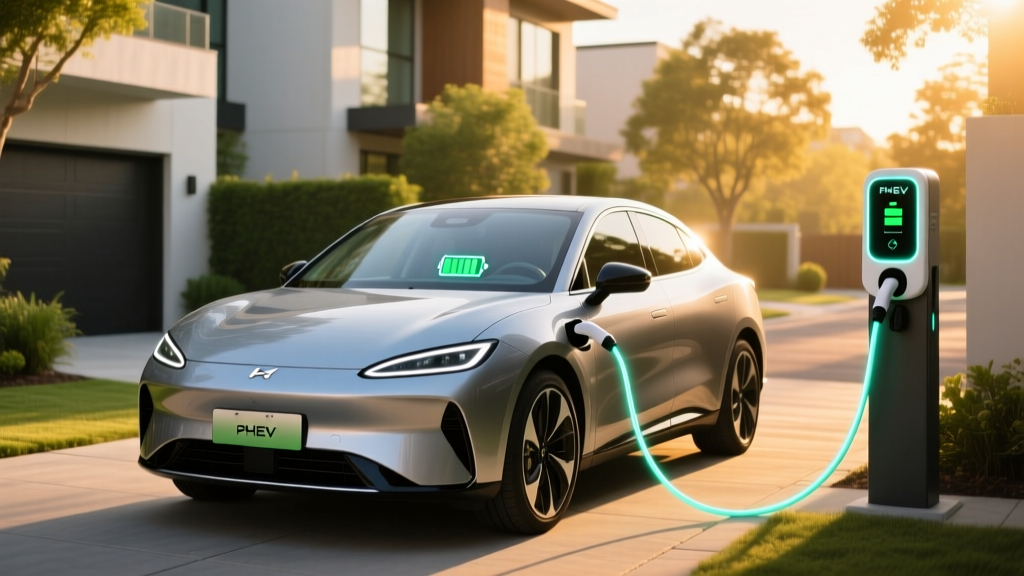
The Sorento PHEV offers 32 miles of electric-only range from its 13.8 kWh battery pack, enough for most school runs and grocery trips without burning a drop of gas. Once the battery depletes, it operates as a conventional hybrid at roughly 34 MPG combined. Total system output is 261 horsepower from a 1.6-liter turbocharged engine paired with an electric motor. Level 2 charging (240V) fills the battery in about 3.5 hours; there is no DC fast-charging capability — a common limitation for PHEVs in this class.
Hybrid vs. PHEV vs. Full EV: Which Is Right for Your Family?
Choosing between a conventional hybrid, a plug-in hybrid, and a fully electric three-row SUV depends on your charging access, driving patterns, and budget. Here's a practical decision framework:
Choose a Conventional Hybrid (HEV) If:
- You cannot install a home charger (apartment, street parking, HOA restrictions)
- You want maximum fuel savings with zero behavioral change — just fill up less often
- You regularly take long road trips and don't want to plan around charging stops
- Best pick: Toyota Highlander Hybrid (35 MPG, no plug needed)
Choose a Plug-In Hybrid (PHEV) If:
- You have reliable home charging (a standard 120V outlet works overnight for most PHEV batteries)
- Your daily driving is under 30 miles round-trip, so you can run mostly on electricity
- You want electric commuting but gas flexibility for weekend trips
- Best pick: Kia Sorento PHEV (32 miles electric, 34 MPG after)
Choose a Full Electric Vehicle (BEV) If:
- You have Level 2 home charging and access to DC fast chargers for road trips
- You want the lowest per-mile fuel cost and minimal maintenance
- You're ready to plan longer trips around 20–30 minute charging stops
- Best pick: Kia EV9 (300-mile range, 3 rows, DC fast charging to 210 kW)
Pricing and Tax Credit Considerations
The 2026 Honda Pilot starts around $39,000 for the LX FWD trim and climbs to roughly $54,000 for the fully loaded Elite AWD. Because it is a gasoline-only vehicle, the Pilot does not qualify for the federal §30D new clean vehicle tax credit, which applies exclusively to battery electric vehicles and plug-in hybrids meeting battery sourcing and critical mineral requirements.
Among the hybrid alternatives, only plug-in hybrid models are potentially eligible for federal tax credits — and even then, eligibility is narrow. Under current IRS rules, a PHEV must have a battery capacity of at least 7 kWh, meet North American final assembly requirements, satisfy critical mineral and battery component sourcing thresholds, and fall under MSRP caps ($80,000 for SUVs). Buyer income limits also apply. The IRS §30D credit page provides the definitive, up-to-date eligibility criteria — always verify before purchasing, as rules shift annually.
§30D Federal Tax Credit Checklist (PHEV SUVs, 2026)
- ✅ Vehicle must be a plug-in hybrid or fully electric (conventional HEVs do NOT qualify)
- ✅ Battery capacity ≥ 7 kWh
- ✅ Final assembly in North America
- ✅ Critical minerals and battery component sourcing thresholds met (percentages increase annually)
- ✅ MSRP ≤ $80,000 for SUVs / $55,000 for sedans
- ✅ Buyer modified AGI ≤ $300,000 (joint) / $225,000 (head of household) / $150,000 (single)
- ✅ Credit may be transferred to dealer at point of sale for an upfront price reduction
Consult a tax professional to confirm your personal eligibility. State incentives vary widely — check your state energy office or the Alternative Fuels Data Center for local rebates.
Reliability, Battery Warranty, and Long-Term Costs
One of the most common concerns among first-time hybrid buyers is battery longevity. Here's what the data shows:
Hybrid Battery Warranty Standards
Federal emissions regulations require that hybrid battery packs be warranted for a minimum of 8 years / 100,000 miles (10 years / 150,000 miles in CARB states including California, New York, Massachusetts, and others). Most manufacturers match or exceed these minimums:
- Toyota: 10 years / 150,000 miles on hybrid battery
- Hyundai/Kia: 10 years / 100,000 miles on hybrid battery
- Honda (on existing hybrids): 8 years / 100,000 miles (10 years in CARB states)
In practice, modern nickel-metal hydride (NiMH) and lithium-ion hybrid battery packs regularly last well beyond their warranty periods. Toyota's hybrid batteries in the Highlander and Camry have demonstrated strong longevity, with many owners reporting 200,000+ miles on the original pack. When replacement is eventually needed, hybrid battery replacement costs typically range from $2,000 to $4,000 for a conventional HEV — far less than the $10,000–$20,000+ cost of replacing a large BEV traction battery.
The Honda Pilot's conventional V6 and 10-speed automatic have proven generally reliable, though some owners of earlier model years reported transmission hesitation. NHTSA and IIHS publish current safety and reliability data worth reviewing before any purchase.
The Bottom Line: Should You Wait for a Pilot Hybrid?
If you're set on the Honda Pilot specifically for its driving dynamics, interior quality, and Honda Sensing safety suite, the gasoline V6 remains a competent, well-rounded family SUV — it just won't win any efficiency awards. A hybrid Pilot would likely slot in around 28–32 MPG combined based on competitor benchmarks, which would save the average driver roughly $600–$900 per year in fuel costs versus the current 21 MPG AWD model.
However, Honda has given no timeline for such a powertrain. If fuel economy is a priority now, the Toyota Highlander Hybrid delivers a 67% MPG improvement with similar three-row utility, and the Kia Sorento PHEV offers the added benefit of electric-only commuting. Waiting for Honda to hybridize the Pilot means continuing to pay a fuel penalty in the meantime.
Honda Pilot (Gas V6) — Pros
- Strong V6 acceleration and confident highway passing
- Up to 5,000-lb towing capacity (AWD with cooler)
- Spacious third row fits adults on short trips
- Excellent Honda Sensing ADAS suite
- Strong resale value
Honda Pilot (Gas V6) — Cons
- 21 MPG combined (AWD) — worst in class vs. hybrid rivals
- No hybrid or PHEV option available
- No federal tax credit eligibility
- Higher annual fuel cost (~$2,400/yr at 15,000 mi, $3.50/gal)
- Turbo V6 competitors offer more low-end torque
Frequently Asked Questions
Is there a Honda Pilot Hybrid for 2026?
No. The 2026 Honda Pilot is available only with a 3.5-liter V6 gasoline engine. Honda has not announced a hybrid or plug-in hybrid Pilot variant. The closest Honda hybrid SUV is the CR-V Hybrid (33 MPG combined), which seats five.
How many MPG does the Honda Pilot get?
The 2026 Honda Pilot achieves an EPA-estimated 19 city / 27 highway / 22 combined MPG with front-wheel drive, and 18 city / 25 highway / 21 combined MPG with all-wheel drive. Real-world AWD owners typically report 20–23 MPG combined.
Will Honda make a Pilot Hybrid in the future?
Honda has not confirmed a hybrid Pilot. The company is expanding its hybrid lineup — the Civic, Accord, and CR-V all offer hybrid variants — and industry observers expect a hybrid three-row SUV eventually, but no timeline has been provided. Any future hybrid Pilot specs would be preliminary until officially announced.
What is the best hybrid alternative to the Honda Pilot?
The Toyota Highlander Hybrid (35 MPG combined, 7–8 seats, ~$42,000) is the most direct alternative. For plug-in hybrid capability, the Kia Sorento PHEV offers 32 miles of electric-only range plus 34 MPG after the battery depletes, though third-row space is tighter.
Does the Honda Pilot qualify for any tax credit?
No. The federal §30D clean vehicle tax credit applies only to plug-in hybrids and fully electric vehicles. The gasoline-only Honda Pilot does not qualify. Some PHEV alternatives may be eligible depending on battery sourcing, MSRP, and buyer income — verify current rules at IRS.gov.
How reliable are hybrid SUV batteries, and what does replacement cost?
Modern hybrid batteries are warranted for 8–10 years / 100,000–150,000 miles and commonly last 150,000–200,000+ miles. Replacement costs for a conventional hybrid battery typically range from $2,000 to $4,000, significantly less than a full EV battery replacement.
Hybrid vs. PHEV vs. EV — which should I choose for a family SUV?
Choose a conventional hybrid if you lack home charging and want effortless fuel savings. Choose a PHEV if you can charge at home and your daily driving is under 30 miles. Choose a full EV if you have reliable home and public charging access and want the lowest operating cost. For three-row families, the Toyota Highlander Hybrid, Kia Sorento PHEV, and Kia EV9 are current class leaders in each category.