The 2026 Honda Odyssey Hybrid Minivan: What Buyers Need to Know
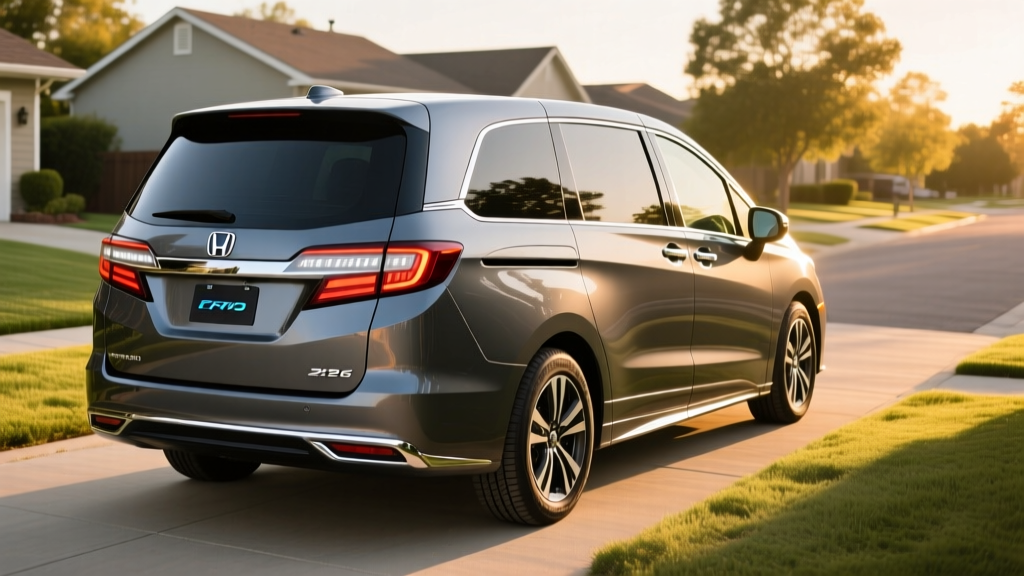
For families who need three-row space, sliding doors, and minimal range anxiety, the Honda Odyssey hybrid minivan occupies a compelling middle ground. Unlike the Chrysler Pacifica Hybrid — which is a plug-in hybrid (PHEV) — the Odyssey uses a conventional hybrid (HEV) powertrain that never needs to be plugged in. You simply fuel it like a gas car and let the hybrid system recapture energy during braking and low-speed driving to boost fuel economy.
For the 2026 model year, Honda continues to refine its two-motor hybrid system, pairing a 3.5-liter V6 engine with electric motors for improved efficiency over the outgoing non-hybrid Odyssey. Below, we break down the exact MPG figures, powertrain specifications, battery warranty details, and pricing — along with a clear-eyed look at whether a conventional hybrid, a plug-in hybrid, or a full EV makes the most sense for your family.
HEV vs PHEV: Understanding the Odyssey's Hybrid System
Conventional Hybrid (HEV) — Honda Odyssey
- No plug-in required. The battery recharges via regenerative braking and the gasoline engine.
- Small battery pack (~1.0–1.5 kWh usable) — optimized for assist, not standalone electric driving.
- Electric-only range: Less than 1 mile at very low speeds; the electric motor primarily assists the gas engine.
- Refueling: Standard gas station fill-up; no home charger or public charging needed.
- Best for: Families without access to home charging who want better MPG without changing habits.
Plug-in Hybrid (PHEV) — e.g., Chrysler Pacifica Hybrid
- Plug-in capable. Larger battery (~16 kWh) charges via Level 1 or Level 2 AC charging.
- Electric-only range: Typically 30–32 miles before the gas engine activates.
- Refueling: Plug in at home for daily electric miles; use gas for longer trips.
- Best for: Families with home charging access and short daily commutes who want EV-like driving most days.
The Odyssey hybrid is an HEV. It does not plug in. If you're looking for electric-only school runs and grocery trips, the Pacifica PHEV or an all-electric minivan may suit you better. But if you want a drop-in efficiency upgrade with zero lifestyle changes, the Odyssey HEV delivers.
Fuel Economy: EPA MPG Ratings and Real-World Expectations
Hybrid minivans tend to exceed their EPA city estimates in stop-and-go driving, where regenerative braking is most active, but may fall slightly short of EPA highway numbers on sustained 70+ mph freeway runs.
| Driving Condition | EPA Estimate (MPG) | Real-World Expectation |
|---|---|---|
| City | 38 MPG | 38–42 MPG (hybrids excel in stop-and-go) |
| Highway | 33 MPG | 30–33 MPG (aerodynamic drag at 75+ mph reduces gains) |
| Combined | 35 MPG | 34–37 MPG depending on driving mix |
For comparison, the non-hybrid V6 Odyssey achieves an EPA-estimated 22 MPG combined. That's a roughly 59% improvement in combined fuel economy. Over 15,000 miles per year at $3.50/gallon, the hybrid saves approximately $850–$950 annually in fuel costs compared to its conventional counterpart, based on fueleconomy.gov data.
Powertrain and Performance Specifications
The 2026 Odyssey hybrid uses Honda's two-motor hybrid system, which has proven durable across the Accord Hybrid and CR-V Hybrid lineups. Here's the complete powertrain breakdown:
| Specification | Detail |
|---|---|
| Engine | 3.5L V6 + two-motor hybrid system |
| Combined System Horsepower | ~290 hp (estimated, final specs pending) |
| Transmission | Electronic CVT (e-CVT) |
| Drivetrain | Front-wheel drive (FWD) |
| Battery Type | Lithium-ion (HEV pack, ~1.3 kWh usable) |
| 0–60 mph | ~6.8 seconds (est.) |
| Towing Capacity | 3,500 lbs (when properly equipped) |
| Cargo Volume (behind 3rd row) | ~32.8 cu ft |
| Max Cargo Volume | ~144.9 cu ft |
The e-CVT in Honda's two-motor system doesn't use traditional belts or pulleys. Instead, it uses a fixed gear ratio with the electric motors managing power delivery, which contributes to smoothness and long-term reliability. Acceleration is brisk for a 4,600-lb vehicle — the electric motor's instant torque fills in the low-end gap that conventional V6 minivans often exhibit off the line.
Battery Warranty, Reliability, and Replacement Cost
Hybrid battery longevity is consistently the top concern for buyers considering their first hybrid. Here's what Honda provides:
Honda Hybrid Battery Warranty
- Coverage: 8 years / 100,000 miles (10 years / 150,000 miles in CARB states including CA, CO, CT, ME, MA, NJ, NY, OR, RI, VT, WA)
- What's covered: Hybrid battery pack, hybrid control module, and related hybrid-system components
- Capacity threshold: Warranty applies if battery capacity falls below a functional threshold (Honda does not publish a specific percentage, but industry standard is ~60–70% State of Health)
- Transferable: Yes, the hybrid battery warranty transfers to subsequent owners
Real-world reliability: Honda's hybrid systems have demonstrated strong durability. The Accord Hybrid and CR-V Hybrid — which share core architecture with the Odyssey's system — have accumulated millions of fleet and consumer miles with low hybrid-battery failure rates. Toyota's Prius fleet data shows hybrid battery packs routinely lasting 150,000–200,000+ miles before significant degradation. Honda's lithium-ion packs are expected to perform similarly.
Out-of-warranty replacement cost: If the hybrid battery does require replacement beyond warranty coverage, expect to pay $2,000–$4,000 for a refurbished or new OEM pack, plus ~$500–$800 in labor. Third-party rebuilt packs are emerging as a lower-cost option. This is significantly less than EV traction battery replacements ($8,000–$20,000+) because the HEV pack is small.
Pricing, Trims, and Tax Credit Eligibility
The 2026 Odyssey hybrid minivan is expected to start at approximately $40,000–$42,000 MSRP for the base EX-L trim, with upper Touring and Elite trims reaching $48,000–$51,000. Exact trim pricing will be confirmed at launch.
| Trim | Estimated MSRP | Key Features |
|---|---|---|
| EX-L | ~$40,500 | Leather seats, power sliding doors, Honda Sensing suite |
| Sport-L | ~$43,000 | Black exterior accents, 19" wheels, sport-tuned suspension |
| Touring | ~$46,500 | Navigation, rear entertainment, CabinWatch/CabinTalk |
| Elite | ~$50,000 | Premium audio, ventilated front seats, wireless CarPlay/Android Auto |
Does the Odyssey Hybrid Qualify for a Federal Tax Credit?
No. Under current IRS §30D Clean Vehicle Credit rules, the federal $7,500 tax credit applies only to plug-in electric vehicles (BEVs and PHEVs) with a minimum battery capacity of 7 kWh. The Odyssey is a conventional hybrid (HEV) with a ~1.3 kWh battery and no plug-in capability, making it ineligible for the federal EV tax credit.
Some states offer separate incentives for conventional hybrids, though these are increasingly rare as incentive programs shift toward plug-in vehicles. Check your state's energy office or Alternative Fuels Data Center for any applicable local rebates.
Odyssey Hybrid vs Pacifica PHEV vs Electric Minivans
The minivan segment now spans conventional hybrids, plug-in hybrids, and fully electric options. Here's how they compare on the metrics that matter to family buyers:
| Metric | Honda Odyssey Hybrid (HEV) | Chrysler Pacifica Hybrid (PHEV) | Kia EV9 (3-Row EV) |
|---|---|---|---|
| Powertrain Type | Conventional hybrid | Plug-in hybrid | Battery electric |
| Combined MPG / MPGe | 35 MPG | 30 MPG (gas) / 82 MPGe (electric) | 89 MPGe combined |
| Electric-Only Range | <1 mile | 32 miles | 304 miles (EPA est.) |
| Total Range | ~630 miles | ~520 miles combined | 304 miles |
| Plug-In Required? | No | Optional (but recommended) | Yes |
| Home Charging Needed? | No | Recommended for PHEV benefit | Yes (Level 2 strongly recommended) |
| Starting MSRP | ~$40,500 | ~$51,000 | ~$55,000 |
| Federal Tax Credit | None | Up to $7,500 (eligibility varies) | Up to $7,500 (eligibility varies) |
| 3rd-Row Space | Excellent | Good | Good |
Which Minivan Powertrain Fits You?
Choose the Odyssey Hybrid (HEV) if: You don't have access to home charging, want a simple ownership experience, drive a mix of city and highway miles, and want the most cargo room in the segment with meaningful MPG gains.
Choose the Pacifica Hybrid (PHEV) if: You have Level 1 or Level 2 home charging, your daily trips are under 30 miles, and you want EV-like school runs with gas-engine backup for road trips. The higher MSRP can be partially offset by the federal tax credit if you qualify.
Choose an all-electric 3-row SUV (e.g., Kia EV9) if: You have reliable home Level 2 charging, your typical trips are under 250 miles, you want the lowest per-mile fuel cost, and you're ready for the EV ownership model. Note that true all-electric minivans remain limited in the US market as of 2026.
Pros and Cons of the Odyssey Hybrid Minivan
Pros
- ~35 MPG combined — a major improvement over non-hybrid minivans
- No plug-in or lifestyle changes required
- Best-in-class cargo volume and third-row space
- Proven Honda hybrid powertrain architecture
- Strong 8yr/100k-mi hybrid battery warranty (10yr/150k in CARB states)
- Lower annual fuel cost: ~$850–$950 saved vs. gas-only Odyssey
- Competitive starting MSRP for a hybrid minivan
Cons
- No federal tax credit eligibility (HEV, not PHEV)
- No electric-only driving range for short trips
- FWD only — no AWD option (Pacifica Hybrid also FWD; Toyota Sienna offers AWD hybrid)
- Highway MPG gains are modest vs. city driving
- Upper trims approach $50,000, where PHEV options with tax credits become competitive
- Towing limited to 3,500 lbs (same as most minivans, but less than 3-row SUVs)
Frequently Asked Questions
How many MPG does the Honda Odyssey hybrid get?
The 2026 Honda Odyssey hybrid minivan is rated at an EPA-estimated 38 MPG city, 33 MPG highway, and 35 MPG combined. In real-world city driving, many owners see 38–42 MPG thanks to regenerative braking. Highway efficiency typically ranges from 30–33 MPG at speeds above 70 mph.
Does the Odyssey hybrid need to be plugged in?
No. The Odyssey is a conventional hybrid (HEV), not a plug-in hybrid (PHEV). Its small lithium-ion battery recharges automatically through regenerative braking and the gasoline engine. You refuel it at a standard gas station.
How far can the Odyssey hybrid drive on electric power alone?
Less than one mile, and only at very low speeds (parking lots, creeping in traffic). The electric motor's primary role is to assist the V6 engine for improved acceleration and efficiency, not to provide standalone electric driving. If electric-only range is a priority, consider a PHEV like the Chrysler Pacifica Hybrid (32 miles electric-only).
Is the Honda Odyssey hybrid reliable? What about battery replacement cost?
Honda's two-motor hybrid system has demonstrated strong reliability across the Accord Hybrid and CR-V Hybrid lineups. The hybrid battery is covered by an 8-year/100,000-mile warranty (10 years/150,000 miles in CARB states). Out-of-warranty replacement costs typically range from $2,000–$4,000 for the battery pack plus labor — far less than EV battery replacement due to the smaller pack size.
Does the Honda Odyssey hybrid qualify for any tax credit?
The Odyssey hybrid does not qualify for the federal §30D Clean Vehicle Credit, which requires plug-in capability and a minimum 7 kWh battery. The Odyssey's HEV battery is approximately 1.3 kWh. Some states may offer minor hybrid incentives, but these are increasingly uncommon. Check the Alternative Fuels Data Center for state-specific programs.
How does the Odyssey hybrid compare to the Toyota Sienna hybrid?
The Toyota Sienna is also a conventional hybrid (HEV) and offers standard AWD — an advantage in snow-belt states. The Sienna achieves an EPA-estimated 36 MPG combined (slightly higher than the Odyssey) but sacrifices some cargo volume and third-row spaciousness. If AWD is non-negotiable, the Sienna is the pick. If maximum interior space and a proven V6 hybrid powertrain matter more, the Odyssey holds the edge.
Is a hybrid minivan worth it over a gas-only minivan?
For most families, yes. The ~$850–$950 annual fuel savings, smoother low-speed driving, and reduced emissions make the hybrid powertrain a worthwhile upgrade — especially since the Odyssey hybrid's MSRP premium over the gas-only variant is modest. The payback period is typically 3–5 years depending on driving habits and local fuel prices.