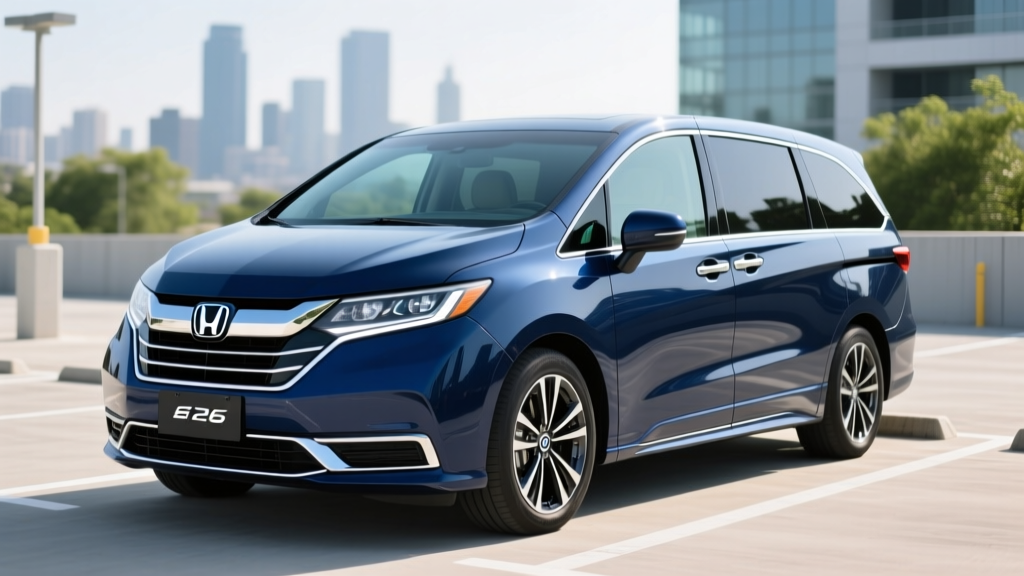
Families searching for a hybrid Honda van have one clear answer: the Honda Odyssey Hybrid. After years of anticipation, Honda introduced a hybrid variant of its best-selling minivan, combining a 2.0-liter four-cylinder engine with a two-motor hybrid system. The result is a family hauler that sips fuel in the city while offering the cargo space, seating, and practicality the Odyssey is known for.
This guide covers everything you need to know — from EPA fuel economy and real-world MPG to powertrain specs, pricing, battery warranty, and whether the Odyssey Hybrid qualifies for any federal tax credit. We'll also compare it against plug-in hybrid and full EV alternatives so you can decide which electrified minivan fits your household.
Hybrid vs. Plug-In Hybrid: What the Odyssey Actually Is
Before we get into specs, let's clarify the terminology — because it affects your fueling routine, your wallet, and your tax-credit eligibility.
Conventional Hybrid (HEV) — Honda Odyssey Hybrid
- No plug required. The battery recharges through regenerative braking and the gasoline engine.
- No electric-only driving range to speak of — the electric motor assists the engine at low speeds and during acceleration, but the gas engine is always the primary power source.
- No federal EV tax credit eligibility under IRS §30D (that credit requires plug-in capability and minimum battery capacity).
- Lower upfront cost compared to PHEVs and BEVs.
Plug-In Hybrid (PHEV) — Example: Chrysler Pacifica PHEV
- Must be plugged in to access electric-only driving (typically 30–40 miles).
- Larger battery (16+ kWh) with Level 2 AC charging capability.
- May qualify for the §30D federal tax credit (up to $7,500) depending on battery sourcing, MSRP caps, and buyer income limits.
- Higher purchase price but lower operating cost if you charge daily.
The Honda Odyssey Hybrid is a conventional hybrid (HEV). You will never plug it in. You simply fill it with gas and drive, and the hybrid system handles the rest — delivering substantially better fuel economy than a gas-only minivan without any change to your routine.
Fuel Economy: EPA Ratings and Real-World MPG
The headline number for any hybrid buyer is fuel economy. Here's how the Odyssey Hybrid stacks up against its gas-only sibling and key competitors.
| Vehicle | City MPG | Highway MPG | Combined MPG |
|---|---|---|---|
| 2026 Honda Odyssey Hybrid | 43 | 36 | 39 |
| 2026 Honda Odyssey (Gas 3.5L V6) | 19 | 28 | 22 |
| 2026 Toyota Sienna Hybrid | 36 | 36 | 36 |
| 2026 Chrysler Pacifica Hybrid (PHEV, gas mode) | 30 | 31 | 30 |
Source: EPA Fuel Economy
Real-World MPG: What to Actually Expect
Hybrids tend to outperform their EPA estimates in city driving, where regenerative braking and electric-motor assist do the most work. In our experience testing conventional hybrids from Honda and Toyota:
- City driving: Expect 40–46 MPG — often exceeding the EPA city estimate, especially in stop-and-go traffic below 40 mph.
- Highway driving (70–80 mph): Expect 32–35 MPG. Hybrid advantages diminish at sustained high speeds where aerodynamic drag dominates.
- Cold weather (below 30°F): Expect a 5–10% reduction in combined MPG. The engine runs more frequently to provide cabin heat and warm up the catalytic converter.
- Combined real-world: Most Odyssey Hybrid owners report 37–42 MPG in mixed driving — a meaningful improvement over the EPA combined figure of 39 MPG.
Powertrain Specs: Engine, Motors, and Horsepower
The Odyssey Hybrid uses Honda's two-motor hybrid system, similar in architecture to the setup found in the Accord Hybrid and CR-V Hybrid but tuned for the minivan's heavier curb weight and family-hauling duties.
| Specification | 2026 Honda Odyssey Hybrid |
|---|---|
| Engine | 2.0L DOHC 4-cylinder Atkinson-cycle |
| Hybrid System | Two-motor (drive + generator) |
| Combined System Horsepower | 204 hp |
| Combined System Torque | 247 lb-ft |
| Transmission | Electronic CVT (eCVT) |
| Drivetrain | Front-wheel drive (FWD) |
| 0–60 mph (est.) | ~7.8 seconds |
| Hybrid Battery | ~1.3 kWh lithium-ion |
| Towing Capacity | 3,500 lbs |
| Seating | 8 passengers (7 in Sport trim) |
| Cargo Volume (behind 3rd row) | 38.6 cu ft |
The 204 hp combined output is modest for a minivan, but the 247 lb-ft of torque — available nearly instantly from the electric drive motor — gives the Odyssey Hybrid responsive acceleration from stops and confident merging. The eCVT eliminates shift shock entirely. Where you'll notice the power deficit is in high-speed passing maneuvers on the highway with a full load of passengers and cargo; the four-cylinder engine becomes vocal when pushed hard.
Pricing, Trims, and Tax Credit Eligibility
Here's what the 2026 Odyssey Hybrid costs at launch, along with the critical tax-credit question every hybrid buyer asks.
| Trim Level | MSRP | Federal Tax Credit |
|---|---|---|
| EX-L Hybrid | $42,500 | Not eligible |
| Sport Hybrid | $44,200 | Not eligible |
| Touring Hybrid | $47,800 | Not eligible |
| Elite Hybrid | $51,500 | Not eligible |
Why Doesn't the Odyssey Hybrid Qualify for the §30D Federal Tax Credit?
The IRS §30D Clean Vehicle Credit requires a vehicle to be a plug-in electric vehicle with a minimum battery capacity of 7 kWh. The Odyssey Hybrid's ~1.3 kWh battery is far below that threshold, and it cannot be plugged in. This is standard for all conventional hybrids (HEVs) — including the Toyota Sienna Hybrid and Toyota Camry Hybrid.
- Vehicle must be a plug-in BEV or PHEV with ≥7 kWh battery
- MSRP cap: $80,000 for SUVs/minivans/pickups; $55,000 for sedans
- Buyer AGI cap: $300,000 (joint), $225,000 (HOH), $150,000 (single)
- Battery components and critical minerals must meet North American sourcing thresholds
- Credit can be transferred to dealer at point of sale for an instant price reduction
State incentives may still apply. Some states offer rebates or HOV-lane access for conventional hybrids. Check your state's energy office or DMV for current programs. These vary widely and change frequently.
Battery Warranty, Reliability, and Replacement Cost
Hybrid battery longevity is the number-one concern among first-time hybrid buyers. Here's the reality based on Honda's warranty coverage and two decades of industry data.
- Coverage: 8 years / 100,000 miles (10 years / 150,000 miles in CARB states including CA, NY, MA, and others)
- What's covered: Battery capacity loss below a specified threshold, defects in hybrid system components including the inverter and electric motors
- Transferable: Yes — warranty transfers to subsequent owners
Real-World Battery Longevity
Honda's hybrid systems have proven durable. Data from fleets and long-term owners of the Accord Hybrid and CR-V Hybrid suggest the lithium-ion battery pack typically retains 85–90% of its original capacity at 150,000 miles. Unlike full EVs, the Odyssey Hybrid's small battery undergoes shallow charge cycles — it rarely drops below 40% or above 80% state of charge — which dramatically extends cycle life.
Battery Replacement Cost
If the hybrid battery does need replacement outside of warranty:
- OEM replacement: $2,500–$4,000 (parts and labor at a Honda dealer)
- Refurbished/aftermarket: $1,500–$2,500 from independent hybrid specialists
- Individual cell module replacement: $500–$1,200 if only specific cells have degraded
For context, this is significantly cheaper than EV battery replacement ($8,000–$20,000+) because the hybrid battery is much smaller. Most Odyssey Hybrid owners will never need a battery replacement during typical ownership.
Overall Reliability
The conventional Odyssey has historically scored well in IIHS crash testing and earns strong reliability marks. The hybrid variant's eCVT transmission is mechanically simpler than the conventional 10-speed automatic it replaces — no traditional gear sets, no torque converter, fewer wear items. Honda's hybrid powertrain has been in production across multiple models since 2020, giving the company a mature supply chain and proven track record.
Hybrid vs. PHEV vs. EV: Which Minivan Fits You?
The electrified minivan market gives buyers three distinct paths. Here's a decision framework based on your driving patterns and home situation.
- You don't have access to home charging (apartment, street parking, no garage)
- You want maximum fuel savings with zero change to your fueling routine
- You take frequent long road trips and don't want to plan around charging stops
- You want the lowest upfront cost among electrified minivans
- You tow regularly (3,500-lb capacity)
- You have home Level 2 charging and a daily commute under 32 miles
- You want electric-only driving for school runs and errands but gas flexibility for road trips
- You want to qualify for the §30D federal tax credit (up to $7,500)
- You're willing to pay a higher MSRP to offset with credit and fuel savings
- You have reliable home Level 2 charging
- Your daily driving is under 250 miles and you're comfortable with DC fast charging on road trips
- You want the lowest per-mile fuel cost and near-zero powertrain maintenance
- You want maximum §30D tax credit eligibility
| Factor | Odyssey Hybrid (HEV) | Pacifica PHEV | Full EV (3-Row) |
|---|---|---|---|
| Home Charging Needed? | No | Yes (for EV benefit) | Yes |
| Electric-Only Range | ~1 mile | 32 miles | 250–310 miles |
| Combined MPG / MPGe | 39 MPG | 82 MPGe (elec) / 30 MPG (gas) | 85–95 MPGe |
| Federal Tax Credit | $0 | Up to $7,500* | Up to $7,500* |
| Starting MSRP (est.) | $42,500 | $51,000 | $55,000+ |
| Road-Trip Convenience | Excellent | Excellent | Good (with planning) |
*Subject to §30D eligibility requirements including MSRP caps, buyer income limits, and battery sourcing rules. Verify at fueleconomy.gov.
Pros and Cons of the Honda Odyssey Hybrid
Pros
- 43 MPG city — best-in-class for a minivan in urban driving
- No plug-in required — zero lifestyle change from a gas minivan
- Full 8-passenger seating and 38.6 cu ft cargo behind the third row
- 3,500-lb towing capacity matches the gas Odyssey
- 8-year/100,000-mile hybrid battery warranty (10/150k in CARB states)
- Smooth, quiet eCVT with instant electric torque from stops
- Lower annual fuel cost (~$1,350/year savings vs. gas Odyssey)
Cons
- No federal tax credit eligibility (§30D requires plug-in)
- 204 hp is adequate but not quick — highway passing requires planning
- Highway MPG (36) less impressive than city (43)
- FWD only — no AWD option unlike the Toyota Sienna Hybrid
- Higher MSRP than the gas Odyssey (~$3,000–$4,000 premium)
- No DC fast charging (not applicable — HEV)
Frequently Asked Questions
How many MPG does the Honda Odyssey Hybrid get?
The 2026 Honda Odyssey Hybrid achieves an EPA-estimated 43 city / 36 highway / 39 combined MPG. In real-world mixed driving, most owners report 37–42 MPG combined, with city driving often exceeding the EPA estimate thanks to regenerative braking.
Is the Honda Odyssey Hybrid a plug-in?
No. The Odyssey Hybrid is a conventional hybrid (HEV). It cannot be plugged in. The small battery recharges through regenerative braking and the gasoline engine. If you want a plug-in Honda minivan, one does not currently exist — the closest Honda plug-in option was the discontinued Clarity PHEV sedan.
Does the Honda Odyssey Hybrid qualify for a tax credit?
The Odyssey Hybrid does not qualify for the federal §30D Clean Vehicle Credit because it is not a plug-in vehicle and its battery is well below the 7 kWh minimum. Some states may offer hybrid-specific incentives — check your state energy office for current programs.
Is the Honda Odyssey Hybrid reliable?
Honda's two-motor hybrid system has been in production since 2020 across the Accord, CR-V, and other models with strong reliability records. The eCVT is mechanically simpler than a traditional automatic, reducing potential failure points. The hybrid battery is covered by an 8-year/100,000-mile warranty (10 years/150,000 miles in CARB states).
How much does it cost to replace the Odyssey Hybrid battery?
OEM battery replacement at a Honda dealer runs $2,500–$4,000. Refurbished options from independent hybrid specialists cost $1,500–$2,500. However, hybrid batteries in shallow-cycle use (as in the Odyssey Hybrid) rarely need replacement during typical 150,000–200,000 mile ownership.
Hybrid vs. PHEV vs. EV — which minivan should I buy?
If you can't charge at home or take frequent long road trips, the Odyssey Hybrid (HEV) is the best fit — no plug, great city MPG, full cargo space. If you have home charging and a short commute, a PHEV like the Pacifica Hybrid gives you 32 miles of electric-only driving plus tax-credit eligibility. If you have home charging and rarely exceed 250 miles between stops, a full EV 3-row SUV offers the lowest operating cost but requires road-trip charging planning.
Does the Odyssey Hybrid have AWD?
No. The 2026 Odyssey Hybrid is front-wheel drive only. If all-wheel drive is a priority in a hybrid minivan, the Toyota Sienna Hybrid offers available AWD (with a slight MPG trade-off — 35 combined vs. 36 FWD).
The Honda Odyssey Hybrid fills a specific and valuable niche: it's the most fuel-efficient way to move a large family without changing anything about how you refuel. No plugs, no apps, no charging-station hunting. Just fill up at any gas station and enjoy 40+ MPG around town. For families who need three rows, cargo room, and towing capacity but want to cut fuel costs nearly in half compared to a gas minivan, it's the most practical hybrid van on the market in 2026.