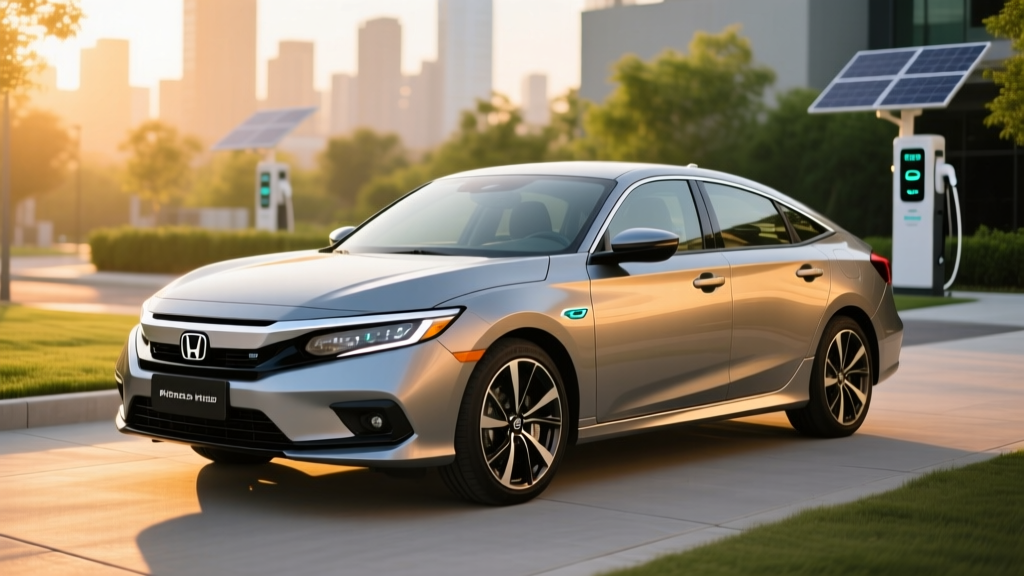
Honda discontinued the Insight after the 2022 model year, leaving loyal hybrid sedan buyers searching for a successor. If you've been asking what the Insight replaces hybrid sedan shoppers with, the answer is straightforward: the Honda Civic Hybrid. Returning to the lineup for the 2024 model year and refined through 2026, the Civic Hybrid absorbs the Insight's role as Honda's fuel-sipping compact sedan while delivering meaningfully better performance, technology, and interior space.
The original Insight was a dedicated hybrid model — its own nameplate, its own body. Honda's strategy shift folded hybrid duty back into its best-selling compact car. The result is a sedan that achieves up to 49 MPG combined without the compromises that defined the Insight's later years, including its tight rear seat and aging infotainment.
This guide covers everything you need to know about the Civic Hybrid as the Insight's spiritual and practical successor: real-world fuel economy, powertrain specs, pricing, tax credit eligibility, battery longevity, and how it stacks up against PHEVs and full EVs for different buyers.
2026 Civic Hybrid: The Direct Insight Replacement
The 2026 Honda Civic Hybrid comes in two trims — Sport Hybrid and Sport Touring Hybrid — both using Honda's fourth-generation two-motor hybrid system. Unlike the Insight's older i-MMD setup, this powertrain pairs a 2.0-liter Atkinson-cycle four-cylinder engine with two electric motors for a combined system output of 200 horsepower and 232 lb-ft of torque.
That's a substantial upgrade over the final Insight, which produced 151 hp from its 1.5-liter engine and single-motor hybrid system. The Civic Hybrid hits 0-60 mph in approximately 7.2 seconds, compared to the Insight's 8.3-second run. You get meaningful passing power the Insight never offered.
| Spec | Civic Sport Hybrid | Civic Sport Touring Hybrid |
|---|---|---|
| Combined HP | 200 hp | 200 hp |
| Combined Torque | 232 lb-ft | 232 lb-ft |
| Engine | 2.0L Atkinson I-4 | 2.0L Atkinson I-4 |
| EPA MPG (City / Hwy / Combined) | 51 / 44 / 49 | 50 / 43 / 49 |
| Fuel Tank | 12.4 gal | 12.4 gal |
| Total Range | ~607 miles | ~607 miles |
| 0-60 mph | ~7.2 sec | ~7.2 sec |
| Drivetrain | FWD | FWD |
| Starting MSRP | $29,845 | $32,845 |
| Battery Type | Lithium-ion | Lithium-ion |
For context, the final 2022 Insight achieved 52 city / 45 highway / 48 combined in its EX trim. The Civic Hybrid essentially matches or beats those numbers while offering a larger cabin, more cargo room (14.8 cu ft trunk vs. the Insight's 15.1 cu ft — nearly identical), and Honda's current-generation infotainment with wireless Apple CarPlay and Android Auto on the Touring trim.
Fuel Economy: EPA Ratings vs. Real-World MPG
The headline number is 49 MPG combined, but the city-biased split is what makes this powertrain shine. The EPA rates the Sport Hybrid at 51 city / 44 highway / 49 combined, according to fueleconomy.gov. The Sport Touring drops by 1 MPG across the board (50/43/49) due to its larger 18-inch alloy wheels and additional equipment weight.
This city-heavy advantage is a hallmark of Honda's hybrid system. At low speeds and in stop-and-go traffic, the electric motors do most of the propulsion work while the gasoline engine acts primarily as a generator. Only at sustained highway speeds does the engine directly drive the wheels via a lock-up clutch.
Real-World MPG: What Owners Actually See
Conventional hybrids like the Civic Hybrid frequently exceed their EPA city estimates in real-world driving because regenerative braking recaptures energy that gas-only cars waste as heat. Many owners report 52-55 MPG in mixed suburban driving with moderate stop-and-go conditions.
However, sustained highway driving at 75+ mph will pull fuel economy down to the low-to-mid 40s. Cold weather (below 35°F) typically reduces hybrid efficiency by 5-10% due to increased engine warm-up time and reduced battery output. Expect winter combined numbers closer to 43-46 MPG in northern climates.
- City / suburban mixed: 49-55 MPG (often exceeds EPA)
- Highway (65-70 mph): 42-46 MPG
- Highway (75+ mph): 38-42 MPG
- Cold weather combined: 43-46 MPG
HEV vs. PHEV vs. EV: Which Powertrain Fits You?
The Civic Hybrid is a conventional hybrid (HEV). It charges its own small lithium-ion battery through regenerative braking and the gasoline engine. You never plug it in. This is fundamentally different from a plug-in hybrid (PHEV) or a battery electric vehicle (BEV).
| Factor | HEV (Civic Hybrid) | PHEV (e.g., Prius Prime) | BEV (e.g., Tesla Model 3) |
|---|---|---|---|
| Plug in to charge? | No | Yes (Level 1 or 2) | Yes (Level 1, 2, or DC) |
| Electric-only range | ~1 mile (low-speed only) | 30-45 miles | 250-360+ miles |
| Total range | ~607 miles | ~450-500 miles | 250-360+ miles |
| Fuel / energy cost per mile | ~$0.10-0.12 | ~$0.04 electric / $0.10 gas | ~$0.03-0.05 |
| Home charging needed? | No | Recommended | Essential |
| Federal tax credit (§30D) | Not eligible | Up to $7,500 (if eligible) | Up to $7,500 (if eligible) |
| Typical starting price | ~$29,800 | ~$33,000-42,000 | ~$38,000-48,000 |
| Maintenance complexity | Low (engine + hybrid) | Moderate (engine + larger battery) | Lowest (no engine) |
The Civic Hybrid makes the most sense for buyers who want maximum simplicity: no charging infrastructure, no range planning, no plugging in. You drive it exactly like a gas car and simply visit the fuel pump less often. If you have home charging access and a short commute, a PHEV like the Toyota Prius Prime (44 miles electric-only, ~52 MPG combined after battery depletion) may save more on fuel. If you have reliable home Level 2 charging and want to eliminate gasoline entirely, a BEV like the Tesla Model 3 or Hyundai Ioniq 6 offers the lowest per-mile energy cost.
Pricing, Trims, and Tax Credit Eligibility
The 2026 Civic Hybrid starts at $29,845 for the Sport Hybrid trim (including destination) and $32,845 for the Sport Touring Hybrid. That positions it roughly $2,000-$3,000 above equivalent gas-only Civic trims — a premium you'll typically recoup in fuel savings within 2-3 years for a driver covering 12,000-15,000 miles annually.
Federal Tax Credit: Does the Civic Hybrid Qualify?
No. The IRS §30D federal tax credit applies only to plug-in electric vehicles — battery electric vehicles (BEVs) and plug-in hybrids (PHEVs) with a minimum battery capacity of 7 kWh. The Civic Hybrid's battery is far smaller (approximately 1.1 kWh) and it cannot be plugged in, so it does not qualify for any federal purchase credit.
- ☐ Plug-in capable? No — does not qualify
- ☐ Battery ≥ 7 kWh? No (~1.1 kWh)
- ☐ Eligible for §30D credit? No
- ☐ State/local hybrid incentives? Varies by jurisdiction — check your state's energy office or DMV for possible rebates, HOV lane access, or reduced registration fees
Some states offer modest incentives for conventional hybrids, such as HOV lane stickers or reduced emissions testing requirements, but these vary widely and change frequently. Consult your state's official transportation or energy website for current programs.
Battery Warranty, Longevity, and Replacement Cost
Battery durability is consistently the top concern for hybrid buyers, and Honda addresses it with strong warranty coverage. The Civic Hybrid's lithium-ion hybrid battery is covered under Honda's powertrain warranty for 10 years or 150,000 miles in California Air Resources Board (CARB) states, and 8 years or 100,000 miles in all other states. This is in line with industry standards for hybrid battery coverage.
- CARB states (CA, CO, CT, MA, MD, ME, MN, NJ, NY, OR, RI, VA, VT, WA): 10 years / 150,000 miles
- All other states: 8 years / 100,000 miles
- Hybrid system components (inverter, motor): Same coverage as battery
- Capacity threshold: Honda replaces or repairs if the battery cannot hold sufficient charge to operate the hybrid system
Real-World Hybrid Battery Lifespan
Honda's two-motor hybrid system uses a relatively small battery that cycles within a narrow state-of-charge window — typically between 40% and 70%. This shallow cycling dramatically reduces degradation compared to a BEV or PHEV battery that regularly cycles from 10% to 90%. Based on long-term data from Honda's hybrid fleet (including Insight, Accord Hybrid, and CR-V Hybrid owners), most hybrid batteries last well beyond 150,000 miles without significant capacity loss.
If a replacement is needed outside warranty, a new OEM hybrid battery for the Civic Hybrid costs approximately $2,500-$3,500 including labor. Third-party refurbished units are available for $1,500-$2,200. This is far less than a BEV traction battery replacement ($8,000-$20,000+), reflecting the Civic Hybrid's much smaller battery.
How the Civic Hybrid Compares to Rival Hybrid Sedans
The Insight's departure left a competitive gap that Honda itself now fills, but the hybrid sedan segment remains crowded. Here's how the Civic Hybrid stacks up against its primary rivals for the 2026 model year:
| Model | EPA Combined MPG | Combined HP | Starting MSRP | 0-60 mph |
|---|---|---|---|---|
| Honda Civic Sport Hybrid | 49 MPG | 200 hp | $29,845 | ~7.2 sec |
| Toyota Prius LE | 57 MPG | 196 hp | $28,545 | ~7.0 sec |
| Hyundai Elantra Hybrid Blue | 54 MPG | 139 hp | $26,250 | ~8.5 sec |
| Toyota Corolla Hybrid LE | 50 MPG | 138 hp | $24,050 | ~9.2 sec |
The Prius leads on pure fuel economy at 57 MPG combined, but the Civic Hybrid counters with more horsepower (200 vs. 196) and a more conventional driving feel — the Prius's CVT-like behavior under hard acceleration still draws criticism from some drivers. The Elantra Hybrid is the value pick but significantly trails on power. The Corolla Hybrid is the most affordable but feels the most dated inside.
Who Should Choose the Civic Hybrid (and Who Shouldn't)
✓ Choose the Civic Hybrid If:
- You want 45-55 MPG without ever plugging in
- You lack access to home or workplace charging
- You want a sedan with strong acceleration (200 hp) for highway merging
- You plan to keep the car 8+ years (warranty coverage)
- You value Honda's resale value and dealer network
- You previously owned an Insight and want a direct upgrade path
✗ Look Elsewhere If:
- You have home Level 2 charging and a sub-40-mile commute (consider a PHEV like the Prius Prime for near-zero gas use)
- You want to eliminate gasoline entirely (consider a BEV like the Tesla Model 3 or Chevy Equinox EV)
- You need AWD — the Civic Hybrid is FWD only (consider the Toyota Prius AWD or a hybrid SUV)
- Maximum fuel economy is your only priority (the Prius LE achieves 57 MPG combined for ~$1,300 less)
- You want the federal §30D tax credit — HEVs do not qualify
Frequently Asked Questions
How many MPG does the 2026 Honda Civic Hybrid get?
The EPA rates the Civic Sport Hybrid at 51 city / 44 highway / 49 combined MPG. The Sport Touring Hybrid is rated 50/43/49. Real-world city driving often yields 52-55 MPG, while sustained highway driving at 75+ mph drops to 38-42 MPG.
Is the Civic Hybrid a plug-in hybrid?
No. The Civic Hybrid is a conventional hybrid (HEV). It charges its battery through regenerative braking and the gasoline engine. You never plug it in. If you want a Honda with plug-in capability, you'd need to look at the Clarity Plug-In Hybrid (discontinued after 2022) or wait for Honda's upcoming PHEV models.
How far can the Civic Hybrid drive on electric only?
Approximately 1 mile at very low speeds (under 25 mph) in EV mode. This is not a meaningful electric-only range — the system is designed for electric assist and efficiency optimization, not electric-only commuting. For 30-45 miles of electric-only range, you need a PHEV like the Toyota Prius Prime.
Is the Civic Hybrid reliable, and what does battery replacement cost?
Honda's hybrid system has a strong reliability record spanning two decades. The hybrid battery is warrantied for 8 years/100,000 miles (10 years/150,000 miles in CARB states). Out-of-warranty replacement costs approximately $2,500-$3,500 for an OEM unit. Most hybrid batteries last 150,000+ miles based on long-term fleet data.
Does the Civic Hybrid qualify for any federal tax credit?
No. The IRS §30D credit applies only to plug-in vehicles (BEVs and PHEVs). The Civic Hybrid is a conventional hybrid and is not eligible. Some states may offer minor incentives for hybrids — check your state's energy or DMV website for current programs.
What did Honda replace the Insight with?
Honda replaced the Insight with the Civic Hybrid, beginning with the 2024 model year. The Civic Hybrid matches or exceeds the Insight's fuel economy (49 vs. 48 MPG combined) while offering more power (200 vs. 151 hp), updated technology, and a more spacious interior. If you were considering a used Insight, the Civic Hybrid is the direct modern equivalent.
How does the Civic Hybrid compare to the old Insight on the highway?
The Civic Hybrid is noticeably more confident at highway speeds. Its 200 hp and 232 lb-ft of torque provide substantially better passing power than the Insight's 151 hp. Highway fuel economy is similar (~44 MPG EPA), but the driving experience is considerably more refined with less engine drone under acceleration.