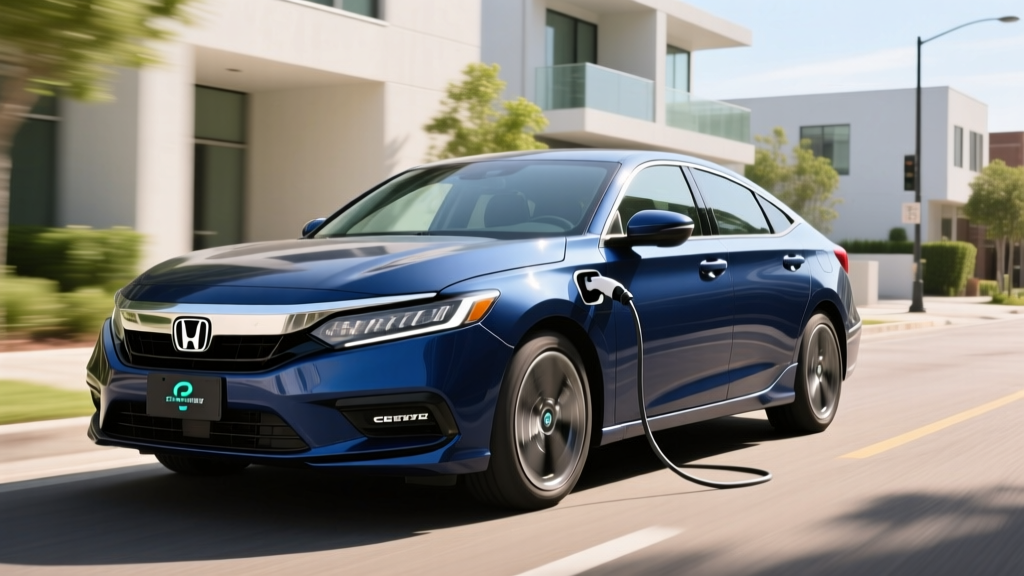
The Honda Insight was discontinued after the 2022 model year, but it remains one of the most fuel-efficient sedans Honda ever built — and a strong presence on the used hybrid market in 2026. If you're researching Honda Insight hybrid MPG, you're likely weighing a used Insight against newer hybrids like the Toyota Prius or Honda's own Civic Hybrid. This guide covers the exact fuel economy figures, powertrain specs, battery longevity, and total ownership costs you need to make that decision.
Honda Insight Hybrid MPG: EPA Numbers and Real-World Results
The third-generation Honda Insight (2019–2022) was rated by the EPA at some of the highest fuel economy figures in its class. Here's the official breakdown from fueleconomy.gov:
| Trim Level | City MPG | Highway MPG | Combined MPG | Annual Fuel Cost* |
|---|---|---|---|---|
| LX / EX (base wheels) | 55 | 49 | 52 | ~$1,050 |
| Touring (larger wheels) | 51 | 45 | 48 | ~$1,150 |
*Based on 15,000 miles/year at $3.40/gallon regular unleaded. Actual costs vary by region and driving habits.
Powertrain Specs: Engine, Motor, and Combined Output
The Insight uses Honda's two-motor hybrid system, which operates differently from a traditional parallel hybrid. Here's what's under the hood:
| Specification | Detail |
|---|---|
| Engine | 1.5L Atkinson-cycle inline-4 |
| Engine Power | 107 hp / 97 lb-ft torque |
| Drive Motor | 129 hp / 195 lb-ft torque |
| Combined System Output | 151 hp / 197 lb-ft torque |
| Transmission | e-CVT (no fixed gears) |
| Hybrid Battery | 1.2 kWh lithium-ion (not plug-in) |
| 0–60 mph | ~7.7 seconds |
| Fuel Tank | 10.6 gallons |
| Total Range | ~550 miles (combined EPA) |
The Insight's two-motor system primarily drives the wheels electrically. The gas engine acts as a generator at most speeds, only engaging directly with the wheels via a lock-up clutch at steady highway cruising. This is why the Insight feels more like an EV in city driving — the electric motor handles acceleration while the engine stays in its most efficient RPM band.
HEV vs. PHEV vs. EV: Which Powertrain Fits You?
The Honda Insight is a conventional hybrid (HEV) — it cannot be plugged in and has no electric-only driving range beyond brief low-speed coasting. Here's how the three electrified options compare for buyers cross-shopping in 2026:
HEV (Insight)
- No plug required
- 48–52 MPG combined
- No EV-only range
- No federal tax credit
- Lowest upfront cost
PHEV (e.g., Prius Prime)
- Plug in for 35–44 mi EV range
- ~50 MPG after battery depletes
- May qualify for up to $3,750–$7,500 credit
- Higher purchase price
- Requires home charging to maximize value
BEV (e.g., Tesla Model 3)
- 100% electric, 270–360 mi range
- ~$500–$800/yr electricity vs $1,500+ gas
- Up to $7,500 federal credit (§30D)
- Requires home or reliable public charging
- Highest upfront cost, lowest running cost
Choose a PHEV if: You have home charging and a short commute (under 40 miles round-trip) but also take regular long trips where pure EV range would cause anxiety.
Choose a full EV if: You have reliable home Level 2 charging, drive under 300 miles daily, and want the lowest per-mile cost and zero tailpipe emissions.
Battery Longevity, Warranty, and Replacement Cost
Hybrid battery degradation is the single biggest concern for used Insight buyers. Here's what the data shows:
- Duration: 8 years / 100,000 miles (10 years / 150,000 miles in CARB states: CA, CT, ME, MD, MA, NJ, NY, OR, RI, VT, WA)
- Coverage: Battery capacity below 60% of original, or any cell/module failure
- Transferable: Yes — warranty follows the vehicle, not the original owner
For a 2019–2022 Insight in 2026, original warranty coverage ranges from fully active (2022 models with under 100K miles) to expired (early 2019 models over 100K miles). The Insight's 1.2 kWh battery is small and rarely stressed to full charge/discharge cycles, which is favorable for longevity. Third-party data from hybrid fleets suggests Honda's lithium-ion hybrid packs typically retain 85–92% capacity at 100,000 miles.
Replacement cost if out of warranty: A new OEM Honda Insight hybrid battery runs approximately $2,000–$3,500 including labor at a dealership. Independent hybrid specialists offer refurbished packs for $1,200–$2,000. Given the small battery size, this is significantly cheaper than a full EV battery replacement.
Reliability Record and Common Issues
The third-generation Insight shares its hybrid powertrain architecture with the Honda Accord Hybrid and CR-V Hybrid, giving it a well-established reliability track record. Based on NHTSA complaint data and owner surveys:
- Powertrain: No widespread hybrid system failures reported. The e-CVT has no traditional transmission fluid or clutch packs to wear out.
- 12V battery: Some owners report premature 12V auxiliary battery drain if the car sits unused for 2+ weeks — a common issue in all hybrids and EVs.
- Infotainment: The Honda Display Audio system in 2019–2020 models drew complaints for sluggish response; 2021–2022 models improved with wireless Apple CarPlay/Android Auto on upper trims.
- Brakes: Regenerative braking extends pad life significantly; many owners report original brake pads beyond 80,000 miles.
2026 Used Market Pricing and Tax Credit Eligibility
Because the Insight was discontinued after 2022, all available units are pre-owned. Current market pricing in early 2026:
| Model Year | Trim | Mileage Range | Typical Price (2026) |
|---|---|---|---|
| 2019 | LX | 60K–90K | $14,000–$17,000 |
| 2020 | EX | 45K–75K | $16,500–$19,500 |
| 2021 | EX | 30K–55K | $18,000–$21,500 |
| 2022 | Touring | 15K–40K | $21,000–$25,000 |
How the Insight Compares to 2026 Hybrid Alternatives
If you're cross-shopping the used Insight against new hybrids available in 2026, here's how the numbers stack up:
| Vehicle | Combined MPG | Starting Price | Federal Credit |
|---|---|---|---|
| Honda Insight (2022, used) | 52 (LX/EX) / 48 (Touring) | ~$21,000–$25,000 | None |
| Honda Civic Hybrid (2026) | 49 combined | ~$29,000 | None (HEV) |
| Toyota Prius LE (2026) | 57 combined | ~$28,500 | None (HEV) |
| Toyota Prius Prime (2026, PHEV) | 52 MPG + 44 mi EV | ~$33,500 | Up to $3,750* |
| Hyundai Elantra Hybrid (2026) | 54 combined | ~$27,000 | None (HEV) |
*Credit eligibility depends on MSRP caps, buyer income limits, and battery sourcing requirements per current IRS rules. Verify at irs.gov before purchasing.
The Insight's fuel economy remains competitive even against 2026 models. The Prius LE edges it out by 5 MPG combined, but a used Insight saves $4,000–$10,000 in purchase price — enough to cover roughly 6–8 years of fuel cost difference.
Honda Insight Hybrid: Frequently Asked Questions
How many MPG does the Honda Insight hybrid get in real driving?
The EPA rates the Insight at 55 city / 49 highway / 52 combined (LX/EX trims). Real-world owners typically see 48–54 MPG combined. City-heavy driving with stop-and-go traffic often exceeds the EPA city rating thanks to regenerative braking. Highway driving above 70 mph typically yields 42–46 MPG. Cold weather reduces efficiency by 5–10%.
Does the Honda Insight need to be plugged in?
No. The Insight is a conventional hybrid (HEV). Its 1.2 kWh battery recharges through regenerative braking and the gas engine. There is no plug, no charging cable, and no electric-only driving range to manage. You fuel it like any gas car — it simply uses far less fuel.
How far can the Honda Insight go on a full tank?
With a 10.6-gallon fuel tank and 52 MPG combined (EPA), the Insight can travel approximately 550 miles between fill-ups. In real-world mixed driving at 50 MPG, expect around 530 miles. Highway-heavy trips at 44 MPG bring that to roughly 465 miles.
Is the Honda Insight hybrid reliable, and what does battery replacement cost?
Yes. The Insight's two-motor hybrid system shares architecture with the Accord Hybrid and CR-V Hybrid, both of which have strong reliability records. The hybrid battery is covered by an 8-year/100,000-mile warranty (10 years/150,000 in CARB states), and the warranty transfers to subsequent owners. Out-of-warranty replacement costs $2,000–$3,500 for a new OEM pack or $1,200–$2,000 for a refurbished unit. Most Honda hybrid batteries last well beyond 150,000 miles with normal use.
Does the Honda Insight qualify for any tax credit?
No. The Insight is a conventional hybrid and does not qualify for the federal §30D new vehicle credit or the used clean vehicle credit. Those incentives are reserved for plug-in vehicles (PHEVs and BEVs) with battery packs of at least 4 kWh (used credit) or 7 kWh (new credit). The Insight's 1.2 kWh battery doesn't meet either threshold. Check your state for any local hybrid incentives, though most state programs have also shifted to plug-in vehicles.
Should I buy a used Honda Insight or a new 2026 hybrid?
If your budget is under $25,000 and you want proven 50+ MPG without plugging in, a used 2021–2022 Insight is a strong value — you'll save $5,000–$8,000 versus a new Civic Hybrid or Prius while getting comparable (or better) fuel economy. Choose a new hybrid if you want a full factory warranty, the latest safety tech (Honda Sensing 2.0), and available features like wireless charging and updated infotainment that the Insight lacks.
Final Verdict: Is the Insight Still Worth It in 2026?
Pros
- 52 MPG combined — still top-tier among sedans
- No charging infrastructure needed
- Smooth, EV-like city driving feel
- Spacious rear seat and 15.1 cu-ft trunk
- Strong reliability record, affordable battery replacement
- Sub-$25K used pricing in 2026
Cons
- Discontinued — no new units, limited remaining warranty
- No federal or state tax credits
- Dated infotainment (no wireless CarPlay on lower trims)
- CVT drone under hard acceleration
- Touring trim loses 4 MPG to larger wheels
- No all-wheel-drive option
The Honda Insight's hybrid MPG figures remain genuinely impressive four years after production ended. For buyers who want a no-compromise, no-plug fuel-sipper under $25,000, a well-maintained 2021–2022 Insight is one of the smartest used hybrid purchases available in 2026. Just verify remaining battery warranty, budget for the lack of tax incentives, and compare against the newer Civic Hybrid if you prefer a full factory warranty.