Honda Insight at a Glance: What Buyers Need to Know
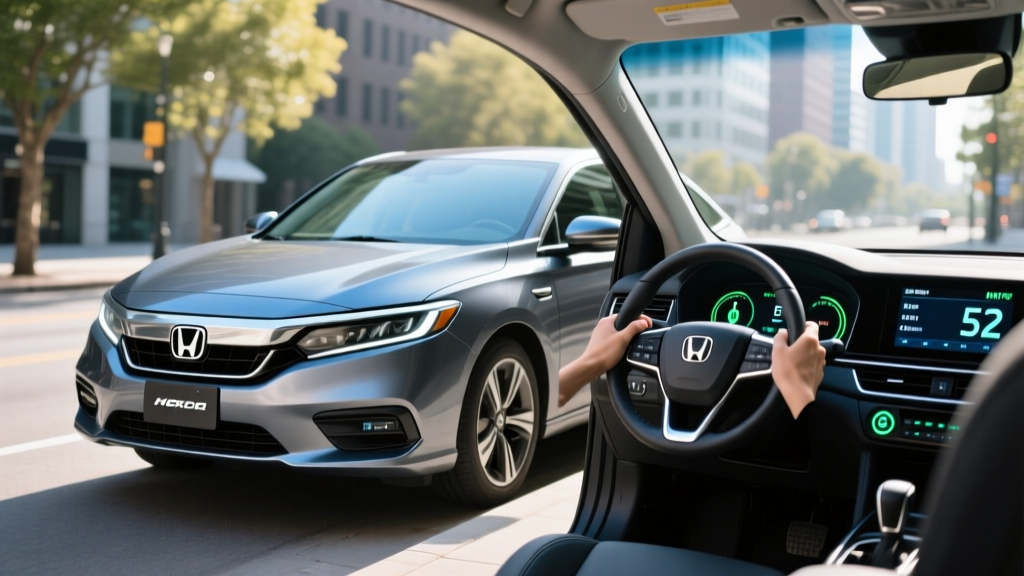
The Honda Insight was Honda's dedicated hybrid sedan for over two decades, spanning three generations before being discontinued after the 2022 model year. If you're researching the Honda hybrid Insight today, you're almost certainly looking at the used market — and that's actually where this car shines brightest. With EPA ratings up to 52 MPG combined, a proven two-motor hybrid system, and Honda's reputation for longevity, the Insight remains one of the most compelling used hybrid sedans available.
But before you pull the trigger on a pre-owned Insight, you need to understand exactly what you're getting: which generation, what powertrain, realistic fuel economy expectations, battery health considerations, and how it stacks up against the Honda Civic Hybrid that replaced it. This guide covers every spec, warranty detail, and ownership cost you need to make an informed decision.
2022 Honda Insight (Third Generation) Key Specs
| Attribute | Specification |
|---|---|
| Powertrain Type | Conventional Hybrid (HEV) — no plug-in |
| Engine | 1.5L Atkinson-cycle 4-cylinder + 2 electric motors |
| Combined Horsepower | 151 hp |
| EPA MPG (Combined) | 52 MPG (EX/LX) / 48 MPG (Touring) |
| EPA MPG (City / Highway) | 55 city / 49 hwy (EX/LX) |
| Fuel Tank Capacity | 10.6 gallons |
| Total Range | ~551 miles (EX/LX) |
| 0-60 mph | ~7.7 seconds |
| Drivetrain | Front-wheel drive |
| Hybrid Battery Warranty (Original) | 8 years / 100,000 miles (10 yr/150k in CARB states) |
| Original MSRP (2022) | $26,205 (LX) — $29,685 (Touring) |
Understanding the Insight: HEV vs. PHEV — What's the Difference?
One of the most common points of confusion for hybrid shoppers is the distinction between a conventional hybrid (HEV) and a plug-in hybrid (PHEV). The Honda Insight is a conventional hybrid (HEV). It does not plug in. It has no electric-only driving range to speak of. You fuel it with gasoline, and the hybrid system recovers energy through regenerative braking and engine optimization to maximize efficiency.
HEV vs. PHEV: Quick Comparison
| Feature | Honda Insight (HEV) | Typical PHEV (e.g., Toyota Prius Prime) |
|---|---|---|
| Plugs in to charge? | No | Yes (Level 1 or Level 2) |
| Electric-only range | ~1 mile at very low speed | 25-44 miles (model-dependent) |
| Battery size | ~1.2 kWh (small buffer) | 13-18 kWh usable |
| DC fast charging | No | Rarely (most PHEVs lack DCFC) |
| Federal tax credit | Not eligible (§30D requires plug-in) | Up to $7,500 if eligible |
| Best for | Drivers who can't charge at home | Drivers with home charging + short commutes |
If you want plug-in electric range, the Insight is not the car for you. Look at the Toyota Prius Prime or the Honda Clarity Plug-In Hybrid (also discontinued). But if you want maximum fuel efficiency without ever thinking about charging infrastructure, the Insight's HEV system is exactly the right tool.
Fuel Economy: EPA Ratings vs. Real-World MPG
The third-generation Honda Insight (2019–2022) carries strong EPA fuel economy ratings that place it among the most efficient non-plug-in vehicles ever sold in the United States.
EPA Fuel Economy by Trim Level
| Trim | City MPG | Highway MPG | Combined MPG |
|---|---|---|---|
| LX | 55 | 49 | 52 |
| EX | 55 | 49 | 52 |
| Touring | 51 | 45 | 48 |
Source: fueleconomy.gov
The Touring trim loses a few MPG due to larger 17-inch wheels, additional sound insulation, and the weight of premium features like the Honda Sensing suite's full implementation, heated leather seats, and a larger infotainment system. If maximum efficiency is your priority, the EX trim offers the best balance of features and fuel economy.
Real-World MPG: What Owners Actually Report
Here's where Honda hybrids consistently impress: real-world city driving often exceeds the EPA sticker. The Insight's two-motor hybrid system (which Honda calls "e-CVT" but is technically a series-parallel hybrid system) excels in stop-and-go traffic where regenerative braking recovers energy that a gas car would waste as heat.
Based on aggregated owner data from Fuelly and real-world testing:
- City driving: 52-58 MPG is common; some owners report low 60s in warm weather with gentle driving
- Highway driving (70+ mph): Expect 42-47 MPG — aerodynamic drag reduces hybrid advantage at sustained speed
- Cold weather (below 32°F): Expect a 10-15% reduction, bringing combined to roughly 44-47 MPG as the engine runs more frequently for cabin heat
- Mixed commuting: Most owners settle at 48-53 MPG combined year-round
The Insight's real-world efficiency is remarkably close to — and sometimes better than — its EPA rating, which is unusual in the automotive world. This consistency is a hallmark of Honda's hybrid system calibration.
Powertrain Deep Dive: How the Insight's Hybrid System Works
The third-generation Insight uses Honda's two-motor hybrid system, which shares architecture with the Accord Hybrid and CR-V Hybrid. Here's the mechanical breakdown:
- Gasoline engine: 1.5-liter Atkinson-cycle inline-4 producing 107 hp and 97 lb-ft of torque. The Atkinson cycle sacrifices peak power for thermal efficiency — it's optimized for fuel economy, not acceleration.
- Drive motor: An electric motor producing 129 hp and 195 lb-ft of torque that drives the front wheels most of the time.
- Generator motor: A second electric motor that acts as a generator, converting engine output to electricity or starting the engine.
- Combined system output: 151 hp. Note that you don't simply add the engine and motor figures — the system manages power delivery to maximize efficiency.
- Lithium-ion battery pack: Approximately 1.2 kWh total capacity (with a much smaller usable buffer). This is not a large battery — it's a buffer that stores recaptured braking energy and smooths power delivery.
In normal driving, the Insight operates primarily as a series hybrid: the engine generates electricity, and the drive motor turns the wheels. At steady highway speeds, a lock-up clutch connects the engine directly to the wheels for maximum efficiency. This is seamless — you won't feel the transitions.
The 0-60 mph time of approximately 7.7 seconds is adequate for merging and passing but won't win any drag races. The instant torque from the electric drive motor (195 lb-ft available from zero RPM) makes the Insight feel quicker than its horsepower figure suggests in city driving.
Battery Longevity, Warranty, and Replacement Costs
Honda Insight Hybrid Battery Warranty
Standard coverage: 8 years / 100,000 miles (whichever comes first)
CARB states (CA, NY, MA, and others adopting California emissions standards): 10 years / 150,000 miles
Coverage threshold: Honda warrants the hybrid battery against failure and excessive capacity loss. If the battery cannot maintain sufficient charge to operate the hybrid system, Honda will replace it at no cost during the warranty period.
How Long Do Insight Hybrid Batteries Actually Last?
The third-generation Insight's lithium-ion hybrid battery is far more durable than the nickel-metal hydride (NiMH) packs in the first- and second-generation models. Based on data from high-mileage Honda hybrid owners and fleet usage:
- Expected lifespan: 150,000-200,000+ miles with normal use is typical for Honda's modern lithium-ion hybrid batteries
- Degradation pattern: Hybrid batteries experience minimal range-relevant degradation because the usable buffer is tiny (~0.5-0.8 kWh). You're not cycling the battery deeply like in a PHEV or BEV
- Failure mode: When hybrid batteries do fail, it's usually a single weak cell module rather than the entire pack. Independent hybrid repair shops can often replace individual modules for $500-$1,500
Battery Replacement Cost (Out of Warranty)
If your Insight's hybrid battery fails outside the warranty window, here are your options:
| Option | Estimated Cost | Notes |
|---|---|---|
| New OEM battery from Honda dealer | $2,000 - $4,000 | Full replacement, includes labor; price varies by market |
| Refurbished/remanufactured battery | $1,000 - $2,000 | From third-party hybrid specialists; quality varies |
| Individual cell module replacement | $500 - $1,500 | Requires a shop with hybrid battery diagnostic capability |
| Used/salvage battery | $400 - $1,000 | From a wrecked Insight; remaining life uncertain |
For context, the hybrid battery in the Insight is far smaller and less expensive to replace than a full EV traction battery (which can cost $5,000-$20,000+). The 1.2 kWh pack is a manageable repair cost, not a catastrophic one.
Is the Honda Insight Reliable?
The Insight carries Honda's strong reliability reputation. The two-motor hybrid system has fewer wear items than a conventional automatic transmission (no torque converter, no traditional gear shifting), and regenerative braking reduces wear on the friction brake pads and rotors. Many Insight owners report original brake pads lasting 80,000-100,000 miles thanks to regen handling the majority of deceleration.
Common maintenance items are typical Honda: oil changes every 7,500-10,000 miles (the engine runs less than in a gas car, so oil stays cleaner longer), cabin air filters, and tire rotations. The Insight's NHTSA safety ratings are strong, with a 5-star overall rating for the 2022 model.
Does the Honda Insight Qualify for a Tax Credit?
No. The Honda Insight is a conventional hybrid (HEV) and does not qualify for the federal §30D Clean Vehicle Credit. That credit, which offers up to $7,500, is exclusively available for plug-in vehicles — battery electric vehicles (BEVs) and plug-in hybrids (PHEVs) that meet battery sourcing, critical mineral, MSRP cap, and buyer income requirements.
Since the Insight was discontinued after 2022 and never qualified even when it was new, there is no federal tax incentive for purchasing one today. Some states and local utilities offer rebates or incentives for used hybrid purchases — check your state's energy office or utility provider for current programs.
If tax credit eligibility is a priority in your purchase decision, you'll need to look at plug-in alternatives like the Toyota Prius Prime (PHEV, up to $3,750 credit if eligible) or a fully electric vehicle.
Pricing: What a Used Honda Insight Costs in 2026
As a discontinued model, the Insight is only available on the used market. Pricing varies significantly by model year, mileage, condition, and region:
| Model Year / Generation | Typical Used Price Range (2026) | Notes |
|---|---|---|
| 2019-2022 (3rd gen) | $17,000 - $26,000 | Most desirable; modern styling, Honda Sensing standard, best MPG |
| 2010-2014 (2nd gen) | $5,000 - $10,000 | Older NiMH battery; higher mileage; less refined |
| 2000-2006 (1st gen) | $3,000 - $7,000 | Collector interest; very lightweight; manual transmission available |
The third-generation Insight (2019-2022) is the clear recommendation for daily driving. It offers modern safety technology (Honda Sensing with adaptive cruise control, lane-keeping assist, and automatic emergency braking), Apple CarPlay/Android Auto, and the most efficient powertrain. A well-maintained 2021-2022 EX with 30,000-50,000 miles typically lists between $19,000 and $23,000.
Insight vs. Civic Hybrid: What Replaced It?
Honda discontinued the Insight after 2022 and consolidated its hybrid sedan offering into the Civic Hybrid, which launched for the 2025 model year. The Civic Hybrid uses a similar two-motor system but with a 2.0-liter engine and slightly more power (approximately 200 hp combined). EPA ratings for the Civic Hybrid are competitive at approximately 50 MPG combined.
If you're cross-shopping, here's the decision framework:
- Choose the used Insight if: Budget is under $25,000, you want proven efficiency, and you don't need the latest infotainment or the extra horsepower of the Civic Hybrid
- Choose the Civic Hybrid if: You want a new-vehicle warranty, the latest Honda technology, more power, and don't mind paying $28,000-$34,000+
Pros
- Exceptional real-world fuel economy (48-55 MPG combined)
- Proven Honda hybrid reliability with low maintenance costs
- Comfortable ride quality and quiet cabin for the class
- Honda Sensing safety suite standard on all 3rd-gen trims
- Lower used prices than comparable Toyota Prius models
- Regenerative braking extends brake pad life significantly
Cons
- Discontinued — no new models available, limited warranty remaining
- No plug-in option — cannot access HOV lanes or tax credits
- Modest acceleration (7.7 sec 0-60) compared to Civic Hybrid
- Infotainment system feels dated vs. 2025-2026 competitors
- Touring trim's 17-inch wheels reduce fuel economy
- Small trunk opening limits cargo versatility
Who Should Buy the Honda Hybrid Insight?
The Insight occupies a specific niche in 2026: it's the right car for drivers who want maximum fuel efficiency without any lifestyle changes. No charging to plan, no range to monitor, no plug to manage. You drive it exactly like a gas car — you just visit the gas station far less often.
Best fit for:
- Commuters driving 20-60 miles daily in mixed city/highway conditions
- Apartment dwellers or renters who cannot install home charging
- Buyers with a $17,000-$25,000 used car budget who want hybrid efficiency
- Drivers who want a conventional sedan form factor (not a hatchback like the Prius)
- Those who prioritize low operating costs and proven reliability over the latest technology
Look elsewhere if:
- You want electric-only driving for short commutes (consider a PHEV)
- You need a new-vehicle warranty (consider the Civic Hybrid or Prius)
- You want to eliminate gasoline entirely (consider a BEV like the Chevrolet Equinox EV or Tesla Model 3)
- You need all-wheel drive (the Insight is FWD only; consider the Toyota Prius AWD or a hybrid SUV)
Frequently Asked Questions
How many MPG does the Honda Insight get?
The 2019-2022 Honda Insight achieves an EPA-rated 52 MPG combined (55 city / 49 highway) in LX and EX trims, and 48 MPG combined (51 city / 45 highway) in the Touring trim. Real-world owners typically report 48-55 MPG combined, with city driving sometimes exceeding the EPA rating.
Does the Honda Insight need to be plugged in?
No. The Insight is a conventional hybrid (HEV). It charges its small battery pack through regenerative braking and the gasoline engine. You never plug it in — just fill it with regular unleaded gasoline.
How far can the Honda Insight drive on electric power alone?
Effectively zero miles in any practical sense. The Insight can creep at very low speeds (under 20 mph) on electric power for roughly one mile or less in ideal conditions, but the system is designed for efficiency optimization, not electric-only driving. If you want meaningful electric range, you need a PHEV or BEV.
Is the Honda Insight hybrid battery expensive to replace?
Compared to a full EV battery, no. A new OEM hybrid battery from a Honda dealer typically costs $2,000-$4,000 installed. Refurbished options or individual cell repairs can reduce that to $500-$2,000. The original warranty covers 8 years/100,000 miles (10 years/150,000 miles in CARB states), and many Honda hybrid batteries last 150,000-200,000+ miles before needing attention.
Does the Honda Insight qualify for a federal tax credit?
No. The federal §30D Clean Vehicle Credit requires a plug-in vehicle (BEV or PHEV) with a battery capacity of at least 7 kWh. The Insight's ~1.2 kWh battery and non-plug-in design make it ineligible. No current federal tax incentive exists for conventional hybrid purchases.
What's the difference between the Honda Insight and the Honda Civic Hybrid?
The Insight was discontinued after 2022. The Civic Hybrid (2025+) replaced it as Honda's hybrid sedan offering. The Civic Hybrid has more power (~200 hp vs. 151 hp), updated technology, a new-vehicle warranty, and slightly different styling. Both deliver approximately 50 MPG combined. The Insight is available only used at lower prices; the Civic Hybrid is available new.
Is the Honda Insight reliable for high-mileage driving?
Yes. The Insight's hybrid system has fewer mechanical wear points than a conventional automatic transmission, and regenerative braking significantly extends brake life. With regular maintenance (oil changes, fluid checks, tire rotations), the Insight is well-suited for 200,000+ miles of service. The hybrid battery is the primary long-term cost consideration.