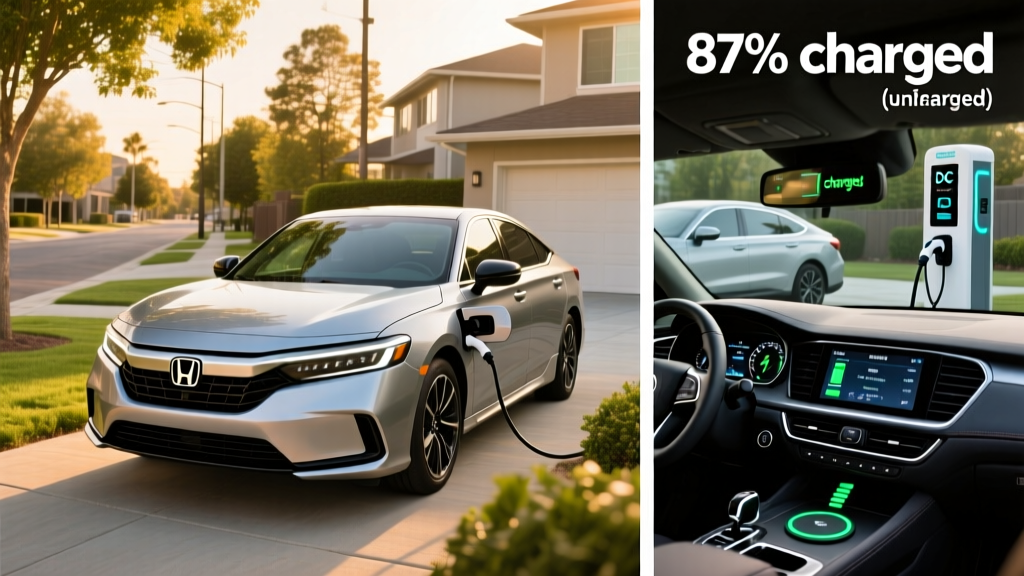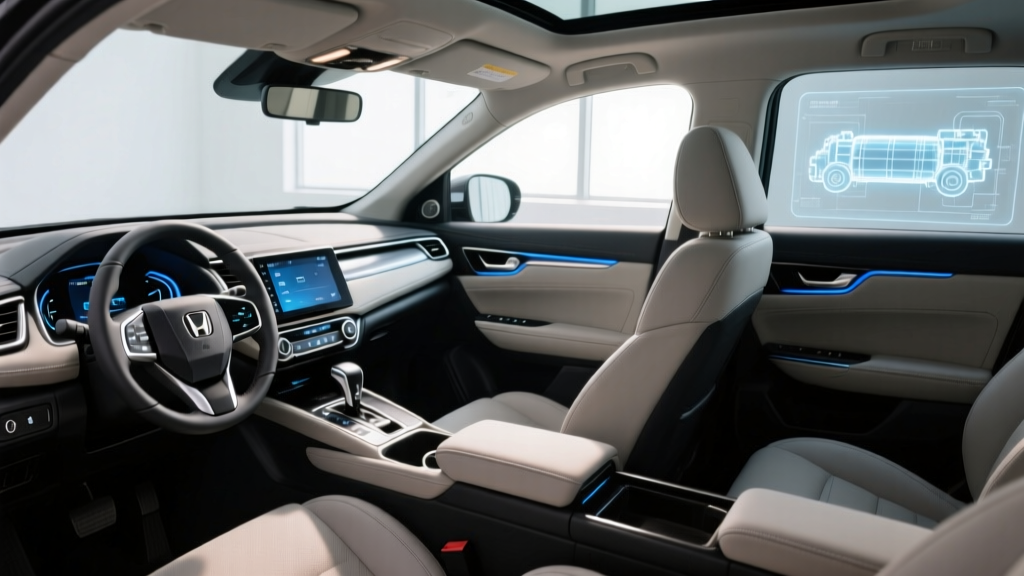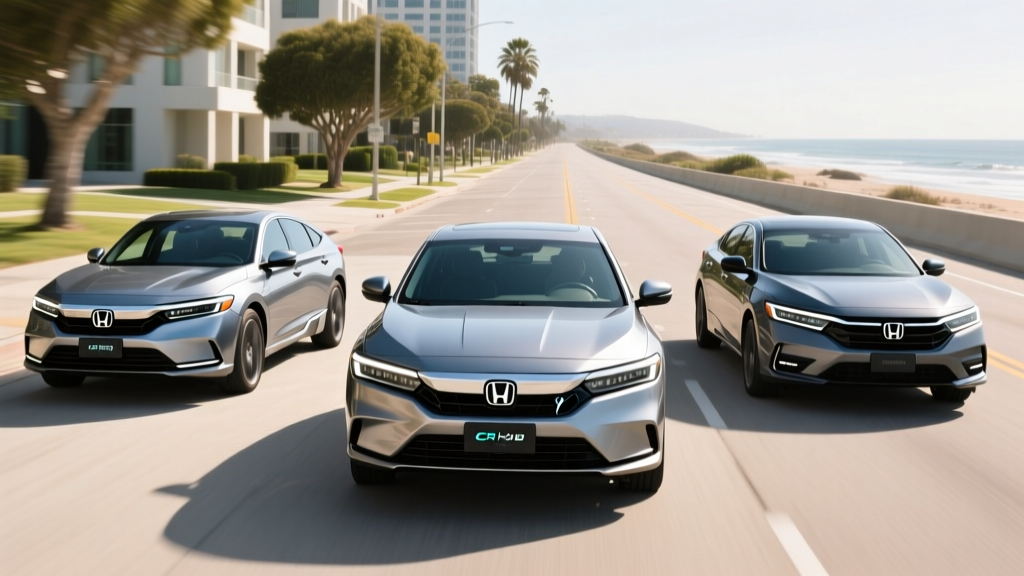
Honda has gone all-in on conventional hybrid powertrains across its most popular nameplates. For 2026, every Accord rolls off the line as a hybrid, and both the CR-V and Civic offer hybrid variants that dominate their segments in fuel economy. But Honda notably does not sell a plug-in hybrid (PHEV) in the U.S. market — a deliberate strategy that sets it apart from Toyota, Hyundai, and Chrysler. If you're researching hybrid cars from Honda, this guide breaks down every current model with exact EPA figures, real-world expectations, powertrain details, battery longevity data, and pricing.
HEV vs PHEV: Where Honda Stands in 2026
Before comparing models, it's critical to understand what Honda does — and doesn't — offer.
Conventional Hybrid (HEV) — What Honda Sells
- No plug required. The battery recharges through regenerative braking and the gasoline engine.
- Small battery (typically 1.0–1.5 kWh usable) — not designed for electric-only driving beyond brief low-speed assists.
- No federal tax credit under current IRS §30D rules, which require plug-in capability and minimum battery capacity.
- Lower upfront cost than PHEVs or full BEVs; no home charging infrastructure needed.
Plug-In Hybrid (PHEV) — What Honda Does NOT Offer in the U.S.
- Plugs in to charge a larger battery (typically 13–20 kWh) for 25–45 miles of electric-only driving.
- Eligible for up to $7,500 federal tax credit (subject to MSRP caps, income limits, and battery-sourcing rules).
- Honda previously sold the Clarity Plug-In Hybrid (discontinued after 2021). As of 2026, no Honda PHEV is available in the U.S.
The bottom line: every current Honda hybrid is a self-charging HEV. You fuel it with gasoline and drive. If you want plug-in electric miles, you'll need to look at competitors like the Toyota RAV4 Prime or Hyundai Tucson PHEV — or jump to a full battery-electric vehicle like the Honda Prologue.
2026 Honda Accord Hybrid: The Efficiency Benchmark
The Accord Hybrid is Honda's volume hybrid sedan and one of the most efficient midsize cars on the market. For 2026, every Accord trim uses Honda's fourth-generation two-motor hybrid system.
| Spec | Value |
|---|---|
| Powertrain | 2.0L Atkinson-cycle 4-cylinder + two electric motors |
| Combined Horsepower | 204 hp |
| Combined Torque | 247 lb-ft (electric motor) |
| Transmission | e-CVT (direct-drive with lock-up clutch) |
| Hybrid Battery | ~1.3 kWh lithium-ion |
| EPA MPG (Sport/LX trims) | 51 city / 44 highway / 48 combined |
| EPA MPG (EX-L/Sport-L/Touring) | 46 city / 41 highway / 44 combined |
| 0–60 mph | ~7.2 seconds |
| Starting MSRP | ~$29,890 (Sport Hybrid) |
| Top Trim MSRP | ~$40,490 (Touring Hybrid) |
Real-World MPG vs. EPA Sticker
The Accord Hybrid's two-motor system excels in stop-and-go city driving, where the electric motors handle most low-speed propulsion. In real-world testing, owners frequently report exceeding the EPA city estimate — 52–55 mpg is common in urban commuting below 45 mph. Highway driving is a different story: at sustained 75–80 mph speeds, expect 38–42 mpg on the lighter Sport trim and 36–39 mpg on the heavier Touring. Cold weather (below 30°F) typically drops combined economy by 5–8 mpg due to reduced battery efficiency and increased engine idling for cabin heat.
2026 Honda CR-V Hybrid: The Family SUV Pick
The CR-V Hybrid pairs the same fourth-generation two-motor system with Honda's best-selling compact SUV. For 2026, the hybrid powertrain is available on Sport, Sport-L, and Sport Touring trims.
| Spec | Value |
|---|---|
| Powertrain | 2.0L Atkinson-cycle 4-cylinder + two electric motors |
| Combined Horsepower | 204 hp |
| Combined Torque | 247 lb-ft (electric motor) |
| Drivetrain | FWD (Sport/Sport-L) or AWD (Sport Touring; optional on others) |
| Hybrid Battery | ~1.3 kWh lithium-ion |
| EPA MPG (FWD) | 43 city / 36 highway / 40 combined |
| EPA MPG (AWD) | 40 city / 34 highway / 37 combined |
| 0–60 mph | ~7.6 seconds |
| Cargo Volume | 36.3 cu ft (rear seats up) / 76.5 cu ft (folded) |
| Towing Capacity | 1,000 lbs (hybrid trims) |
| Starting MSRP (Sport Hybrid FWD) | ~$36,495 |
| Sport Touring Hybrid AWD MSRP | ~$42,895 |
Real-World MPG vs. EPA Sticker
Like the Accord, the CR-V Hybrid's electric motors shine in city traffic. Expect 42–46 mpg in urban driving on FWD trims — often beating the EPA city number. Highway efficiency drops noticeably due to the SUV's taller profile and weight: 31–35 mpg at 70–75 mph is typical. AWD models lose 2–3 mpg across the board. Owners in hot climates report minimal summer efficiency loss, but winter driving in sub-freezing temperatures can drop combined figures to the low-to-mid 30s. According to fueleconomy.gov, the CR-V Hybrid AWD's 37 mpg combined makes it one of the most efficient AWD compact SUVs available.
2026 Honda Civic Hybrid: The Compact Value Leader
Reintroduced for the 2025 model year, the Civic Hybrid continues into 2026 as the most affordable entry point into Honda's hybrid lineup. It uses a slightly tuned version of the same two-motor system, paired with a 2.0L engine.
| Spec | Value |
|---|---|
| Powertrain | 2.0L Atkinson-cycle 4-cylinder + two electric motors |
| Combined Horsepower | 200 hp |
| Combined Torque | 232 lb-ft (electric motor) |
| Body Styles | Sedan and Hatchback |
| Hybrid Battery | ~1.3 kWh lithium-ion |
| EPA MPG (Sedan) | 50 city / 47 highway / 49 combined |
| EPA MPG (Hatchback) | 50 city / 45 highway / 47 combined |
| 0–60 mph | ~7.0 seconds |
| Starting MSRP (Sport Hybrid Sedan) | ~$29,845 |
| Sport Touring Hybrid Sedan MSRP | ~$33,445 |
Real-World MPG vs. EPA Sticker
The Civic Hybrid sedan's 49 mpg combined EPA rating is exceptional, and real-world results often exceed it in mixed suburban driving. City commuters regularly report 52–56 mpg in warm weather. Highway cruising at 70 mph yields approximately 43–46 mpg — close to or slightly below the EPA highway figure. The hatchback sacrifices 2 mpg combined due to its less aerodynamic shape and slightly higher weight.
Side-by-Side MPG Comparison
| Model | City MPG | Highway MPG | Combined MPG | Drivetrain |
|---|---|---|---|---|
| Civic Hybrid Sedan | 50 | 47 | 49 | FWD |
| Civic Hybrid Hatchback | 50 | 45 | 47 | FWD |
| Accord Hybrid (Sport/LX) | 51 | 44 | 48 | FWD |
| Accord Hybrid (EX-L/Touring) | 46 | 41 | 44 | FWD |
| CR-V Hybrid FWD | 43 | 36 | 40 | FWD |
| CR-V Hybrid AWD | 40 | 34 | 37 | AWD |
All figures sourced from EPA fueleconomy.gov. Actual mileage varies with driving conditions, temperature, and driving style.
Honda Hybrid Battery Warranty and Replacement Costs
Battery longevity is consistently the top concern among hybrid buyers. Honda addresses this with robust warranty coverage.
Honda Hybrid Battery Warranty
- Coverage: 8 years / 100,000 miles (10 years / 150,000 miles in CARB states including CA, NY, MA, NJ, CT, RI, VT, ME, OR, WA, CO, MD, and others that follow California emissions standards)
- What's covered: Defects in materials and workmanship; capacity loss below a functional threshold that triggers a malfunction indicator
- What's not covered: Gradual capacity loss that doesn't trigger a warning light; damage from accidents, misuse, or flooding
Real-World Battery Lifespan
Honda's hybrid batteries are relatively small (~1.3 kWh) and are managed conservatively — the system never fully charges or fully depletes them, which dramatically extends cycle life. Data from long-term Accord and CR-V Hybrid owners shows minimal measurable degradation at 100,000–150,000 miles. The fourth-generation system introduced in the Accord uses improved thermal management that further reduces stress on cells.
Replacement Cost
If a hybrid battery does fail outside warranty, replacement costs typically range from $2,000 to $4,000 at a Honda dealership, including parts and labor. Independent hybrid specialists can sometimes source refurbished packs for $1,200–$2,500. Given the conservative state-of-charge window Honda uses, most hybrid batteries will outlast the vehicle's practical lifespan.
Pricing, Tax Credits, and Ownership Economics
Federal Tax Credit Status
Because Honda's current hybrids are conventional HEVs (not plug-in), they do not qualify for the federal §30D Clean Vehicle Credit. That credit requires a vehicle to have a battery capacity of at least 7 kWh and plug-in charging capability. Per current IRS guidelines, only PHEVs and BEVs are eligible.
Some states offer their own incentives for hybrids, though these are increasingly rare as incentive programs shift toward plug-in vehicles. Check your state's energy office or department of environmental quality for current programs.
Total Cost of Ownership Advantage
Even without a tax credit, Honda hybrids deliver compelling economics through fuel savings alone. Consider the Accord Hybrid Sport at ~$29,890 versus a comparably equipped non-hybrid midsize sedan averaging 30 mpg combined:
- Annual fuel cost (Accord Hybrid, 48 mpg, 12,000 miles/yr, $3.50/gal): ~$875
- Annual fuel cost (30 mpg gas sedan, same assumptions): ~$1,400
- Annual savings: ~$525
- 5-year savings: ~$2,625
The hybrid premium over a non-hybrid equivalent (where available) is typically $1,000–$1,500, meaning the fuel savings pay back the price difference within 2–3 years for most drivers.
Hybrid vs. PHEV vs. Full EV: Which Honda Fits You?
Choose a Honda Hybrid (HEV) If:
- You don't have reliable access to home or workplace charging
- You want maximum simplicity — no plugs, no apps, no charging networks
- You drive 10,000–15,000 miles per year and want 40–49 mpg without behavioral changes
- You want a lower purchase price and don't need a tax credit to make the math work
- You frequently take long road trips and don't want to plan around charging stops
Look at a Competitor's PHEV If:
- You have home Level 2 charging and a short commute (under 30 miles)
- You want to drive mostly on electricity but need a gas engine for road trips
- The $3,750–$7,500 federal tax credit would meaningfully lower your effective cost
- Consider: Toyota RAV4 Prime (42 mi electric), Hyundai Tucson PHEV (33 mi), Chrysler Pacifica PHEV (32 mi)
Consider a Full EV (Including the Honda Prologue) If:
- You have reliable home charging (Level 2, 240V)
- Your daily driving is under 200 miles and you want zero tailpipe emissions
- You want to eliminate gasoline costs entirely and minimize maintenance
- The Honda Prologue offers up to 296 miles EPA range starting at ~$48,795 (before credits)
Pros and Cons of Honda's Hybrid Lineup
Pros
- Class-leading EPA MPG across sedan and SUV segments
- No plug-in required — works with existing fueling habits
- Strong low-end torque from electric motors (247 lb-ft on Accord/CR-V)
- Proven fourth-generation hybrid system with conservative battery management
- 8-year/100,000-mile hybrid battery warranty (10/150k in CARB states)
- Competitive pricing — Accord Hybrid starts under $30,000
- Excellent IIHS safety ratings across the lineup
Cons
- No PHEV option — can't access federal tax credits or drive on electric alone
- AWD CR-V Hybrid drops to 37 mpg combined
- Hybrid trims carry a $1,000–$2,000 premium over non-hybrid equivalents
- e-CVT drone under hard acceleration (less refined than geared transmissions)
- Towing limited to 1,000 lbs on CR-V Hybrid (gas AWD model tows 1,500 lbs)
- Highway MPG falls below EPA estimates at sustained 75+ mph speeds
Frequently Asked Questions
How many MPG do Honda hybrid cars get?
The 2026 Honda Civic Hybrid sedan leads the lineup at 49 mpg combined (50 city / 47 highway). The Accord Hybrid achieves up to 48 mpg combined on Sport/LX trims, while the CR-V Hybrid FWD delivers 40 mpg combined. Real-world city driving often exceeds these EPA estimates by 3–5 mpg, while sustained highway driving above 70 mph typically falls 3–6 mpg below the EPA highway number.
Do Honda hybrids need to be plugged in?
No. All current Honda hybrids are conventional HEVs. The battery recharges automatically through regenerative braking and the gasoline engine. There is no plug, no charging cable, and no need for home charging infrastructure.
Are Honda hybrid cars reliable?
Honda's fourth-generation two-motor hybrid system has an excellent reliability record. The small hybrid battery (~1.3 kWh) is managed conservatively — never fully charged or fully depleted — which dramatically extends its lifespan. Honda backs the hybrid battery with an 8-year/100,000-mile warranty (10 years/150,000 miles in CARB states). Long-term owner data shows minimal degradation at 100,000+ miles.
What does it cost to replace a Honda hybrid battery?
Dealership replacement typically costs $2,000–$4,000 including parts and labor. Independent hybrid specialists may offer refurbished packs for $1,200–$2,500. However, battery failures are rare within the vehicle's practical lifespan due to Honda's conservative charge management strategy.
Do Honda hybrids qualify for any tax credit?
No. The federal §30D Clean Vehicle Credit requires plug-in capability and a minimum 7 kWh battery. Honda's current hybrids are conventional HEVs with ~1.3 kWh batteries and no plug, making them ineligible. Some states may offer separate hybrid incentives — check your state energy office for current programs.
How does Honda's hybrid system work?
Honda uses a two-motor series-parallel hybrid system. At low speeds and in city driving, the electric traction motor propels the car while the engine acts as a generator. At highway cruising speeds, a lock-up clutch connects the engine directly to the wheels for efficiency. A second motor serves as a generator/starter. The system seamlessly switches between EV drive, hybrid drive, and engine-direct drive modes without driver input.
Which Honda hybrid is best for a family?
The CR-V Hybrid Sport Touring AWD offers the best combination of passenger space (106 cu ft passenger volume), cargo capacity (36.3 cu ft behind rear seats), all-weather capability, and efficiency (37 mpg combined). Starting at ~$42,895, it includes Honda Sensing safety suite, leather, heated seats, and a power tailgate. For families prioritizing maximum fuel savings over cargo space, the Accord Hybrid EX-L at ~$34,590 delivers 44 mpg combined with a spacious rear seat and 16.7 cu ft trunk.