From Insight to CR-V: Honda's Hybrid Evolution at a Glance
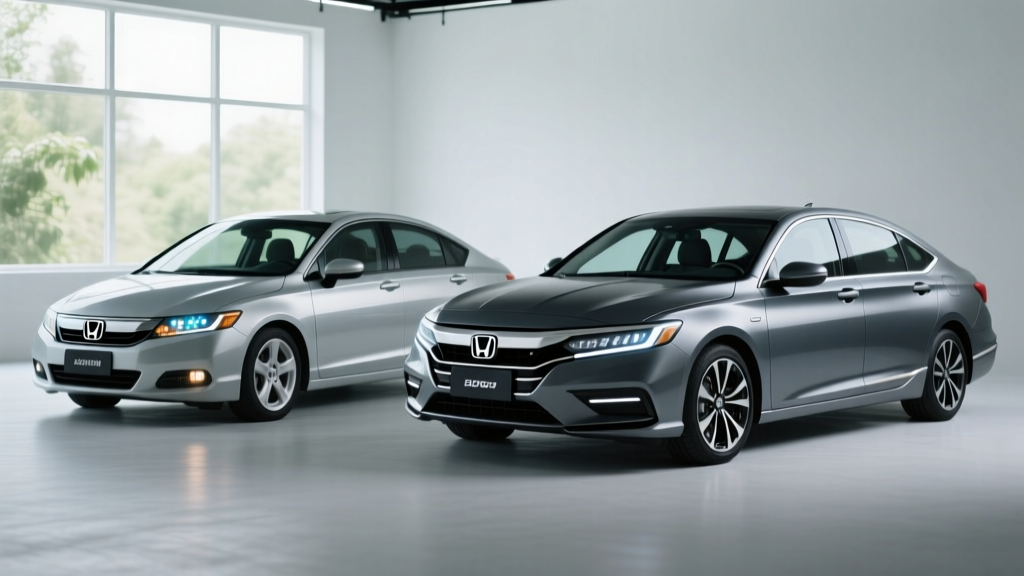
If you searched for "honda hybrid cars 2010" you likely remember the second-generation Honda Insight, the Civic Hybrid, or the early CR-Z. Those cars used Honda's Integrated Motor Assist (IMA) — a mild-hybrid system with a tiny 0.5 kWh nickel-metal hydride (NiMH) battery bolted between the engine and transmission. They delivered modest fuel savings and, frankly, underwhelming electric assist.
Sixteen years later, Honda's hybrid lineup looks completely different. The 2026 Accord Hybrid returns up to 48 MPG combined, the CR-V Hybrid hits 40 MPG combined, and the Civic Hybrid achieves an EPA-estimated 49 MPG combined. The IMA system is long dead, replaced by Honda's two-motor e:HEV (and newer e:PHEV) architecture that functions more like a series-parallel hybrid — closer in philosophy to Toyota's Hybrid Synergy Drive than to Honda's own 2010-era engineering.
This guide breaks down what actually changed, what the current Honda hybrid lineup delivers in 2026, and whether a modern Honda hybrid, a PHEV, or a full battery-electric vehicle (BEV) is the right call for your driving pattern.
2010 Honda Hybrids vs. 2026 Models: The Spec Sheet Reality
The table below contrasts representative 2010-era Honda hybrids with their 2026 equivalents (or spiritual successors). All EPA figures are sourced from fueleconomy.gov.
| Metric | 2010 Insight | 2010 Civic Hybrid | 2026 Civic Hybrid | 2026 Accord Hybrid | 2026 CR-V Hybrid |
|---|---|---|---|---|---|
| System Type | IMA (mild parallel) | IMA (mild parallel) | e:HEV (series-parallel) | e:HEV (series-parallel) | e:HEV (series-parallel) |
| Battery Chemistry | NiMH | NiMH | Lithium-ion | Lithium-ion | Lithium-ion |
| Battery Capacity | ~0.5 kWh | ~0.5 kWh | ~1.1 kWh | ~1.3 kWh | ~1.3 kWh |
| Combined HP | 98 hp | 110 hp | 200 hp | 204 hp | 204 hp |
| EPA City MPG | 40 | 40 | 50 | 51 | 43 |
| EPA Highway MPG | 43 | 45 | 47 | 44 | 36 |
| EPA Combined MPG | 41 | 42 | 49 | 48 | 40 |
| 0-60 mph (est.) | ~10.5 sec | ~10.0 sec | ~6.5 sec | ~7.0 sec | ~7.5 sec |
| Starting MSRP (2026 $) | ~$19,800 (2010) | ~$23,800 (2010) | $30,450 | $34,995 | $36,395 |
The jump is dramatic. The 2026 Civic Hybrid makes more than double the horsepower of the 2010 Insight while returning 8 MPG more on the combined cycle. The lithium-ion battery packs are roughly 2-3x larger in capacity, enabling extended electric-only driving at low speeds and much more aggressive regenerative braking.
HEV vs. PHEV: Which Honda Hybrid Architecture Fits You?
Honda's 2026 U.S. lineup includes conventional hybrids (HEVs) and one plug-in hybrid (PHEV). Understanding the difference is essential before shopping.
Conventional Hybrid (HEV) — Accord, Civic, CR-V
- No plug required. The gasoline engine and regenerative braking recharge the small battery.
- Small battery: ~1.1-1.3 kWh lithium-ion — enough for low-speed electric assist and stop-start, not sustained electric-only driving.
- Best for: Drivers without home charging access, apartment dwellers, or those who want fuel savings with zero behavior change.
Plug-in Hybrid (PHEV) — Clarity PHEV (discontinued), future CR-V e:PHEV
- Plugs in to charge. Larger battery (typically 17+ kWh) enables 30-50 miles of electric-only driving.
- DC fast charging: Some PHEVs support it; Honda's past Clarity PHEV charged at ~6.6 kW Level 2 only (no DC fast charge).
- Best for: Commuters with home Level 2 charging who want EV daily driving plus gas-engine range for road trips.
As of 2026, Honda does not sell a new PHEV in the U.S. market. The Clarity Plug-in Hybrid was discontinued after the 2021 model year. Honda has announced a next-generation CR-V e:PHEV for other markets, but U.S. availability remains unconfirmed. If you need a PHEV today, competitors like the Toyota RAV4 Prime (42 miles electric-only, 94 MPGe) or the Hyundai Tucson PHEV (33 miles electric-only) fill that gap.
2026 Honda Hybrid MPG: EPA Stickers vs. Real-World Results
| Model | EPA City | EPA Highway | EPA Combined | Real-World Expectation |
|---|---|---|---|---|
| 2026 Civic Hybrid (Sport Touring) | 50 | 47 | 49 | 46-52 city; 40-44 highway |
| 2026 Accord Hybrid (Sport-L) | 51 | 44 | 48 | 48-55 city; 38-42 highway |
| 2026 CR-V Hybrid (Sport Touring) | 43 | 36 | 40 | 40-46 city; 32-35 highway |
Honda's two-motor hybrid system excels in city driving. At low speeds, the engine acts primarily as a generator, powering the electric drive motor — this series-hybrid mode avoids the efficiency losses of a traditional mechanical drivetrain. The result: real-world city MPG often exceeds the EPA sticker, especially in stop-and-go traffic where regenerative braking recaptures energy constantly.
Highway driving tells a different story. Above ~45 mph, the Accord and CR-V hybrids engage a lock-up clutch that mechanically couples the 2.0L Atkinson-cycle engine to the front wheels. This direct-drive mode is efficient, but aerodynamic drag and the SUV weight penalty (CR-V Hybrid: ~3,900 lbs) pull highway numbers down. Expect the CR-V Hybrid to deliver 32-35 MPG on a sustained 75 mph interstate run — solidly below its 36 MPG EPA highway estimate, particularly in cold weather or with a full cargo load.
Hybrid Battery Warranty: What Honda Covers
Every 2026 Honda hybrid carries an 8-year / 100,000-mile hybrid battery warranty (10 years / 150,000 miles in California Air Resources Board states including CA, NY, MA, and others adopting CARB rules). This covers battery capacity loss below a functional threshold and complete failure.
Replacement cost out of warranty: approximately $2,000-$4,000 for the lithium-ion hybrid battery pack, depending on model. This is far less than a full EV battery replacement ($8,000-$20,000+) because the packs are small (~1.1-1.3 kWh). Based on historical Honda hybrid battery longevity data, most packs last 150,000-200,000+ miles before significant degradation. The 2010-era NiMH packs had a rougher track record — some Civic Hybrid owners reported failures at 80,000-100,000 miles — but modern lithium-ion chemistry and improved thermal management have largely solved this.
Powertrain Deep Dive: How Honda's e:HEV System Works in 2026
Honda's current two-motor hybrid system uses a 2.0L Atkinson-cycle inline-4 engine paired with two electric motors — one serving as a generator/starter, the other as the primary drive motor. Here are the key specifications:
| Spec | Civic Hybrid | Accord Hybrid | CR-V Hybrid |
|---|---|---|---|
| Engine | 2.0L DI Atkinson I-4 | 2.0L DI Atkinson I-4 | 2.0L DI Atkinson I-4 |
| Engine HP / Torque | 146 hp / 134 lb-ft | 146 hp / 134 lb-ft | 146 hp / 134 lb-ft |
| Drive Motor Output | 184 hp / 232 lb-ft | 184 hp / 247 lb-ft | 184 hp / 247 lb-ft |
| Combined System HP | 200 hp | 204 hp | 204 hp |
| Transmission | e-CVT (no gears) | e-CVT (no gears) | e-CVT (no gears) |
| Drivetrain | FWD | FWD | FWD or AWD |
| Battery (usable) | ~1.1 kWh Li-ion | ~1.3 kWh Li-ion | ~1.3 kWh Li-ion |
The "e-CVT" label is somewhat misleading — there are no belts, pulleys, or planetary gearsets like a traditional CVT or Toyota's transaxle. Instead, Honda's system has a single fixed gear ratio for the drive motor and a lock-up clutch for direct engine drive at highway speeds. This simplicity reduces mechanical losses and gives smooth, linear acceleration. The drive motor delivers peak torque from 0 RPM, which is why the 2026 Civic Hybrid hits 60 mph in roughly 6.5 seconds — a massive improvement over the 2010 Insight's lethargic 10.5-second run.
CR-V Hybrid buyers should note the AWD option. Honda's AWD hybrid system adds a rear-mounted electric motor (no mechanical driveshaft) that engages under acceleration or low-traction conditions. The AWD variant carries a slight fuel economy penalty: EPA combined drops from 40 to 37 MPG per fueleconomy.gov.
Pricing, Tax Credits, and Total Ownership Cost
Here's what the 2026 Honda hybrid lineup costs before incentives:
| Model / Trim | MSRP | Federal Tax Credit |
|---|---|---|
| Civic Hybrid Sport | $30,450 | $0 (HEV — not eligible) |
| Civic Hybrid Sport Touring | $33,050 | $0 (HEV — not eligible) |
| Accord Hybrid Sport-L | $34,995 | $0 (HEV — not eligible) |
| Accord Hybrid Touring | $39,995 | $0 (HEV — not eligible) |
| CR-V Hybrid Sport (FWD) | $36,395 | $0 (HEV — not eligible) |
| CR-V Hybrid Sport Touring (AWD) | $41,895 | $0 (HEV — not eligible) |
Conventional hybrids (HEVs) do not qualify for the federal §30D clean vehicle tax credit. The IRS credit applies only to plug-in electric vehicles — battery-electric (BEV) and plug-in hybrid (PHEV) models that meet battery sourcing, critical minerals, MSRP caps, and buyer income requirements. Honda's HEV lineup relies solely on its gasoline engine and regenerative braking to charge the battery; without a plug, there is no credit eligibility.
Some states offer their own hybrid incentives, but these vary widely and change frequently. Check your state's energy office or department of environmental quality for current programs. A qualified tax professional can confirm eligibility for any incentive.
5-Year Ownership Cost Context
Even without tax credits, Honda hybrids deliver meaningful fuel savings. At 15,000 miles/year and $3.40/gallon regular unleaded:
- 2026 Accord Hybrid (48 MPG): ~$1,063/year in fuel
- 2026 Accord 1.5T gas (32 MPG combined): ~$1,594/year in fuel
- Annual savings: ~$531 — or ~$2,655 over 5 years
The hybrid premium over the gas Accord Sport 1.5T ($32,695 MSRP) is approximately $2,300. At the fuel savings rate above, the hybrid pays for itself in roughly 4.3 years — and retains higher resale value according to industry depreciation data.
Who Should Choose a Honda Hybrid vs. a Full EV or Gas Car?
Choose a Honda HEV (Accord/Civic/CR-V Hybrid) if:
- You cannot install a Level 2 home charger (apartment, street parking, condo restrictions)
- You drive 12,000-20,000 miles/year and want to cut fuel costs 30-40% without changing habits
- You regularly take long road trips (400+ miles) and don't want to plan around DC fast chargers
- You want proven reliability with minimal maintenance (no oil change interval change, no plug-in routine)
- You live in an area with sparse public charging infrastructure
Choose a PHEV (from another brand, since Honda lacks a 2026 U.S. PHEV) if:
- You have home Level 2 charging and a commute under 40 miles round-trip
- You want EV-quiet daily driving but need gas-engine flexibility for weekend trips
- You want to qualify for the §30D federal tax credit (up to $7,500, subject to income/MSRP/sourcing rules per irs.gov)
Choose a Full BEV (Honda Prologue or competitor) if:
- You have reliable home or workplace charging
- Your daily driving is under 250 miles and you're comfortable with public DC fast charging for road trips
- You want zero tailpipe emissions and the lowest per-mile fuel cost (electricity at $0.14/kWh ≈ $4.20/gallon equivalent)
- You want the §30D credit and qualify under current rules
Reliability Track Record: From 2010 IMA Headaches to Modern Confidence
Honda's early hybrid systems had real issues. The 2006-2011 Civic Hybrid's IMA battery was the subject of a class-action lawsuit and extended warranty coverage due to premature failures. The 2010-2014 Insight's NiMH pack fared somewhat better but still showed measurable capacity loss past 100,000 miles, degrading both fuel economy and electric assist performance.
The current e:HEV generation is a fundamentally different system. Lithium-ion chemistry, active thermal management, and a much larger battery buffer mean the cells operate in a narrower, healthier state-of-charge window. Honda's 8-year/100,000-mile warranty (10/150,000 in CARB states) reflects confidence in longevity. Third-party reliability surveys from Consumer Reports and J.D. Power have rated the Accord Hybrid and CR-V Hybrid favorably in recent model years.
If you're replacing a 2010-era Honda hybrid, the upgrade is substantial: roughly 100 more horsepower, 5-8 MPG better combined fuel economy, a quieter cabin, modern safety tech (Honda Sensing suite standard on all 2026 hybrids), and a battery system far less likely to fail before 150,000 miles.
Pros — 2026 Honda Hybrids
- Best-in-class city MPG (Accord: 51 city EPA)
- Strong acceleration (200+ hp) — no longer the slow lane
- No plug required; zero behavior change from a gas car
- 8-year/100,000-mile hybrid battery warranty (10/150k in CARB states)
- Honda Sensing ADAS standard across all trims
- High resale value retention
Cons — 2026 Honda Hybrids
- No federal tax credit (HEV, not plug-in)
- No PHEV option in the U.S. lineup for EV-commute capability
- Highway MPG lags city significantly (especially CR-V Hybrid)
- AWD hybrid only available on CR-V (not Accord/Civic)
- Hybrid premium of $1,500-$3,000 over gas-only trims
- No DC fast charging (not applicable for HEVs, but limits future PHEV expectations)
Frequently Asked Questions
How many MPG does a 2026 Honda hybrid get?
The 2026 Civic Hybrid achieves 50 city / 47 highway / 49 combined MPG. The Accord Hybrid returns 51 city / 44 highway / 48 combined. The CR-V Hybrid delivers 43 city / 36 highway / 40 combined (FWD). Real-world results vary: expect city MPG to meet or exceed EPA estimates, but highway MPG to run 2-4 MPG below the sticker, especially at sustained 75+ mph speeds or in cold weather.
Does any 2026 Honda hybrid go on electric power only?
Honda's current U.S. HEVs can drive short distances (roughly 0.5-1 mile) at low speeds on electric power alone, but the ~1.1-1.3 kWh battery is too small for sustained electric-only driving. Honda does not currently sell a PHEV in the U.S. — the last was the Clarity Plug-in Hybrid (47 miles electric-only), discontinued after 2021. If you want 30+ miles of electric-only range, you'll need to look at competitors like the Toyota RAV4 Prime or Hyundai Tucson PHEV.
Do Honda hybrids need to be plugged in?
No. All 2026 Honda hybrids sold in the U.S. are conventional hybrids (HEVs). The gasoline engine and regenerative braking recharge the battery automatically. There is no plug, no charging cable, and no need for a home charger. You simply fill up at a gas station as you would with any conventional car.
Is the hybrid battery reliable and what does replacement cost?
Honda's lithium-ion hybrid batteries carry an 8-year/100,000-mile warranty (10 years/150,000 miles in CARB states). Based on industry data, modern hybrid battery packs typically last 150,000-200,000+ miles. Out-of-warranty replacement costs approximately $2,000-$4,000 depending on the model — far less than an EV battery replacement due to the small pack size.
Does a Honda hybrid qualify for any tax credit?
No. Honda's 2026 U.S. hybrids are conventional HEVs (not plug-in), and the federal §30D clean vehicle credit requires a plug-in vehicle (BEV or PHEV) meeting battery sourcing, critical minerals, MSRP, and buyer income criteria. Some states may offer separate hybrid incentives — check your state energy office for current programs. Consult a tax professional for personal eligibility guidance.
Should I buy a Honda hybrid or a full EV like the Honda Prologue?
If you have home Level 2 charging, drive under 250 miles daily, and want the lowest operating cost plus tax credit eligibility, the Honda Prologue (EPA range ~296 miles, eligible for up to $7,500 §30D credit) is worth considering. If you lack charging access, regularly drive long distances, or live in a charging-desert area, a Honda HEV delivers 30-40% fuel savings with zero infrastructure requirements and zero range anxiety.