The Honda Fit Hybrid Situation in 2026: What US Buyers Need to Know
If you've been searching for Honda Fit hybrid cars at your local dealership, here's the straightforward answer: Honda discontinued the Fit in the United States after the 2020 model year, and no hybrid variant was ever officially sold in the US market. As of 2026, there is no new Honda Fit—gas or hybrid—available from American Honda dealers.
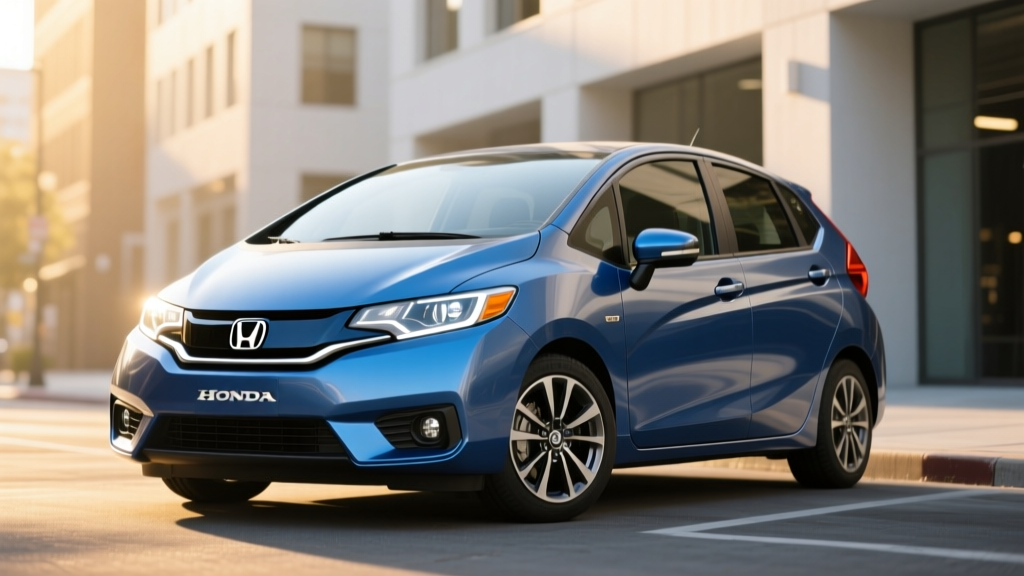
However, the Fit (sold as the Honda Jazz in Europe and Japan) continues overseas with Honda's e:HEV hybrid powertrain, and it remains one of the most fuel-efficient subcompacts on any market. For US shoppers drawn to the Fit's legendary packaging, low running costs, and urban agility, understanding what the hybrid version offers—and which current Honda models fill the gap—is essential before making a purchase decision.
This guide covers the Japan- and Europe-spec Fit e:HEV in detail, explains how Honda's hybrid system works, and maps out the closest 2026 alternatives for American buyers who want Fit-like efficiency in a hybrid or plug-in hybrid package.
HEV vs PHEV: How Honda's Hybrid Systems Differ
Conventional Hybrid (HEV) — A hybrid electric vehicle pairs a gasoline engine with one or more electric motors and a small battery (typically 0.5–1.5 kWh). The battery charges through regenerative braking and the engine—you never plug it in. The Fit e:HEV uses this approach.
Plug-in Hybrid (PHEV) — A PHEV has a larger battery (typically 8–25 kWh) that you can charge from a wall outlet or public charger, delivering 20–50 miles of electric-only driving before the gas engine kicks in. Honda currently offers no PHEV in the Fit/Jazz lineup globally.
Battery Electric (BEV) — A full EV like the Honda Prologue runs solely on a large battery pack (85+ kWh) with no gasoline engine. Zero tailpipe emissions, but requires regular plug-in charging.
The Fit e:HEV is strictly a conventional hybrid. You fuel it like any gas car and never need to think about charging. Honda's e:HEV system is technically a series-parallel hybrid: at low speeds the electric motor drives the wheels while the engine acts as a generator; at highway speeds a lock-up clutch connects the engine directly to the wheels for efficiency.
Honda Fit e:HEV Specs: Powertrain, Battery, and Efficiency
The current-generation Fit e:HEV (sold in Japan and Europe as the Jazz e:HEV) uses Honda's two-motor i-MMD system. Here are the key specifications based on Honda's global data and Honda Japan's official Fit page:
| Specification | Fit / Jazz e:HEV (Global Spec) |
|---|---|
| Powertrain Type | Series-parallel hybrid (e:HEV / i-MMD) |
| Engine | 1.5L Atkinson-cycle 4-cylinder |
| Engine Output | 98 hp / 91 lb-ft torque |
| Electric Motor Output | 109 hp / 187 lb-ft torque |
| Combined System Output | ~109 hp (motor-limited) |
| Hybrid Battery | ~0.86 kWh lithium-ion (not plug-in) |
| Transmission | e-CVT (no traditional gears) |
| EPA Fuel Economy | Not rated (not sold in US) |
| WLTP Combined (Europe) | ~52–54 MPG (4.5–4.7 L/100km) |
| WLTP City (Europe) | ~60+ MPG (urban cycles favor EV mode) |
| 0–62 mph (0–100 km/h) | ~9.4 seconds |
| Drivetrain | Front-wheel drive (FWD) |
Real-World MPG Note: WLTP figures tend to run slightly optimistic compared to US EPA testing. European owners report real-world combined fuel economy of approximately 48–52 MPG in mixed driving. In city-heavy commuting—where the e:HEV system operates in electric-drive mode most of the time—some drivers see figures approaching 55–60 MPG. Highway cruising at 70+ mph reduces efficiency to roughly 42–46 MPG, since the Atkinson-cycle engine is less powerful at sustained high speeds.
Why No EPA Rating?
Because Honda never certified the Fit e:HEV for US sale, there is no entry on fueleconomy.gov. The last US-market Fit (2020 model year, gas-only 1.5L) was EPA-rated at 33 MPG combined (31 city / 36 highway) with the CVT. The hybrid version would likely earn an EPA combined rating in the mid-to-high 40s based on WLTP-to-EPA conversion factors, placing it competitive with the Toyota Prius.
How the Fit e:HEV Hybrid System Works in Practice
Honda's e:HEV system operates in three modes, switching automatically based on speed and load:
- EV Drive — At low speeds and light loads (parking lots, stop-and-go traffic), the electric motor drives the wheels using energy from the small battery. The engine may be off entirely or running quietly as a generator to maintain battery charge.
- Hybrid Drive — During acceleration and moderate speeds, the engine generates electricity that feeds the drive motor. The engine is not mechanically connected to the wheels. This is where the Fit feels surprisingly punchy thanks to the motor's 187 lb-ft of instant torque.
- Engine Drive — At steady highway speeds (roughly 55+ mph), a lock-up clutch engages, connecting the 1.5L engine directly to the wheels. This avoids the energy conversion losses of running the engine as a generator and improves highway efficiency.
The result is a car that feels like an EV around town—quiet, responsive, smooth—but seamlessly transitions to efficient engine operation on the highway. Regenerative braking recovers energy during deceleration, and paddles behind the steering wheel let you adjust regen strength without using the brake pedal.
US Alternatives: Honda Hybrids You Can Actually Buy in 2026
Since the Fit hybrid isn't available stateside, here are the closest Honda alternatives for American buyers who want hybrid efficiency in a practical, affordable package:
| Model (2026) | Type | EPA Combined MPG | Starting MSRP | Key Advantage |
|---|---|---|---|---|
| Honda Civic Hybrid | HEV | 49 MPG (50 city / 47 hwy) | ~$29,995 | Best overall efficiency; sedan or hatchback |
| Honda CR-V Hybrid | HEV | 40 MPG (43 city / 36 hwy) | ~$35,395 | Compact SUV cargo space; AWD available |
| Honda Accord Hybrid | HEV | 48 MPG (51 city / 44 hwy) | ~$33,995 | Midsize comfort; strong city MPG |
| Honda Clarity PHEV* | PHEV | 44 MPG + 47 mi EV range | Discontinued after 2021 | Only recent Honda PHEV in US (used market) |
*The Clarity Plug-in Hybrid was discontinued after the 2021 model year. Honda has not announced a successor PHEV for the US market as of early 2026. Honda's US electrification strategy has pivoted toward full BEVs (Prologue, upcoming models) rather than PHEVs.
If you wanted a Fit Hybrid, here's what to consider:
- Choose the Civic Hybrid Hatchback if you want the closest spiritual successor to the Fit: compact dimensions, hatchback versatility, and outstanding 49 MPG combined. The cargo area is larger than most subcompacts, and the e:HEV powertrain is a more refined version of the same system.
- Choose the CR-V Hybrid if you need more interior space, higher seating position, and available AWD—but accept a ~9 MPG penalty versus the Civic Hybrid.
- Consider a used 2017–2020 Fit (gas) if budget is the priority. The non-hybrid Fit still achieves 33 MPG combined and can be found on the used market for $14,000–$20,000 depending on mileage and condition.
- Look at the Toyota Prius (HEV) if you want the highest EPA-rated hybrid efficiency available in the US: the 2026 Prius achieves up to 57 MPG combined and starts around $29,445.
Honda Hybrid Battery Warranty, Reliability, and Replacement Costs
Honda Hybrid Battery Warranty (US Models): Honda covers the hybrid battery (referred to as the IMA or IPM battery) on US-market hybrids for 8 years / 100,000 miles in most states, and 10 years / 150,000 miles in California Air Resources Board (CARB) states including California, New York, Massachusetts, and others that follow CARB emissions rules.
The warranty guarantees the battery against defects and excessive capacity loss. If the battery degrades below a functional threshold during the warranty period, Honda will repair or replace it at no cost.
Real-World Reliability Data
Honda's e:HEV / i-MMD hybrid system has proven durable in global markets. The Fit e:HEV's small 0.86 kWh battery undergoes shallow charge-discharge cycles (the system rarely uses the full capacity, maintaining a buffer to protect longevity). This shallow-cycling approach significantly extends battery life compared to the deeper cycles in PHEVs and BEVs.
For US-market Honda hybrids like the Accord Hybrid and CR-V Hybrid, owner reports and reliability surveys from Consumer Reports consistently rate Honda's hybrid powertrains as above average. The hybrid batteries in the Insight and Accord Hybrid have demonstrated service lives of 150,000–200,000+ miles before significant degradation in most cases.
Battery Replacement Cost
If a Honda hybrid battery requires replacement out of warranty:
- Civic Hybrid / Accord Hybrid: $2,000–$4,000 for a new OEM battery pack, plus $300–$600 in labor
- CR-V Hybrid: $3,000–$5,000 for the larger pack
- Fit e:HEV (if imported / gray market): Parts availability would be limited; estimated $1,500–$3,000 given the small battery size
Refurbished and aftermarket hybrid batteries are available for many Honda models at 30–50% lower cost than OEM new units. Independent hybrid-specialty shops can often perform replacements at lower labor rates than dealerships.
Tax Credits and Incentives: What Applies to Honda Hybrids?
Here's where the distinction between HEV, PHEV, and BEV matters significantly for your wallet:
- Conventional Hybrids (HEV) like the Civic Hybrid, CR-V Hybrid, Accord Hybrid: These do NOT qualify for the federal §30D Clean Vehicle Credit. The IRS restricts this credit to plug-in vehicles (PHEVs and BEVs) with a battery capacity of at least 7 kWh. Honda's HEV batteries are well under 1 kWh.
- Plug-in Hybrids (PHEV): Would qualify for up to $7,500 under §30D if they meet all requirements—but Honda currently sells no PHEV in the US market.
- State Incentives: Some states offer rebates or reduced registration fees for hybrids. Check your state's energy office or Alternative Fuels Data Center for local programs.
- Used Hybrid Purchase: The §25E used clean vehicle credit (up to $4,000 or 30% of sale price, whichever is less) applies only to plug-in vehicles, not conventional hybrids.
For current federal tax credit rules, always verify eligibility on the IRS Clean Vehicle Tax Credits page, as income caps, MSRP limits, and battery-sourcing requirements apply to qualifying plug-in vehicles. Tax professionals can advise on your specific situation.
Who Should Choose a Honda Hybrid vs a Full EV or Gas Car?
Choose a Honda Hybrid (HEV) if:
- You want 40–50 MPG without changing your fueling habits
- You lack reliable home charging access (apartment, street parking)
- You regularly take long road trips and don't want to plan around chargers
- You want lower upfront cost vs a BEV (no $40K+ starting price)
- You live in a region with extreme cold, where EV range loss is significant
- You want a proven, low-maintenance powertrain with strong resale value
Consider a Full EV (BEV) instead if:
- You can install a Level 2 home charger and wake up "full" every morning
- Your daily commute is under 100 miles round-trip
- You want to eliminate gasoline costs and reduce maintenance (no oil changes)
- You qualify for the $7,500 federal tax credit, narrowing the price gap
- Local electricity rates make per-mile fuel cost significantly cheaper than gas
- You want access to HOV lane privileges (varies by state)
For the buyer who specifically wanted a Honda Fit Hybrid: the 2026 Honda Civic Hybrid Hatchback is the most direct substitute. It delivers the same hatchback versatility, a more refined e:HEV powertrain, 49 MPG EPA combined, and starts under $30,000. The Fit's magic-seat folding system is missed, but the Civic Hatchback's 25.8 cu ft of cargo space (seats up) covers most practical needs.
Frequently Asked Questions
How many MPG does the Honda Fit Hybrid get?
The Fit e:HEV achieves approximately 52–54 MPG combined under the WLTP cycle (used in Europe and Japan). Real-world driving typically yields 48–52 MPG combined, with city driving sometimes exceeding 55 MPG thanks to extensive electric-motor operation. There is no EPA rating because the Fit Hybrid is not sold in the United States.
Is the Honda Fit Hybrid a plug-in?
No. The Fit e:HEV is a conventional hybrid (HEV). It charges its small battery through regenerative braking and the gasoline engine. You never plug it in. Honda does not currently make a plug-in hybrid version of the Fit/Jazz anywhere in the world.
Can I buy a Honda Fit Hybrid in the United States?
No. Honda discontinued all Fit variants in the US after the 2020 model year, and the hybrid was never offered here. Importing a Japan- or Europe-spec Fit e:HEV is generally not practical due to the 25-year import rule for non-conforming vehicles, lack of US emissions certification, and absence of dealer support for hybrid system service.
Is Honda's hybrid system reliable?
Yes. Honda's e:HEV / i-MMD hybrid system has demonstrated strong reliability in global markets. The small battery undergoes shallow charge cycles, which preserves longevity. US-market Honda hybrids (Accord, CR-V, Civic) carry an 8-year/100,000-mile hybrid battery warranty (10 years/150,000 miles in CARB states). Out-of-warranty battery replacement typically costs $2,000–$5,000 depending on the model.
Does any Honda hybrid qualify for a federal tax credit?
As of 2026, no Honda hybrid currently sold in the US qualifies for the §30D federal Clean Vehicle Credit. This credit requires a plug-in vehicle (PHEV or BEV) with at least 7 kWh of battery capacity. Honda's US hybrids are conventional (non-plug-in) with batteries under 1 kWh. Honda's only current US EV, the Prologue, may qualify depending on battery-sourcing and buyer-income requirements—verify on IRS.gov.
What Honda should I buy if I wanted a Fit Hybrid?
The 2026 Honda Civic Hybrid Hatchback is the closest substitute. It offers 49 MPG EPA combined, a refined two-motor e:HEV powertrain, hatchback cargo versatility (25.8 cu ft), and a starting MSRP around $29,995. For more space, the CR-V Hybrid provides 40 MPG combined with available AWD starting at ~$35,395.
Will Honda bring the Fit Hybrid back to the US?
Honda has not announced any plans to reintroduce the Fit to the US market. The company's US strategy has shifted toward compact and midsize hybrids (Civic, Accord, CR-V) and full electric vehicles (Prologue, with additional BEVs planned). The subcompact hatchback segment has shrunk significantly in the US, making a Fit return unlikely in the near term.