Quick Verdict: The Honda CR-V Hybrid Touring in 2026
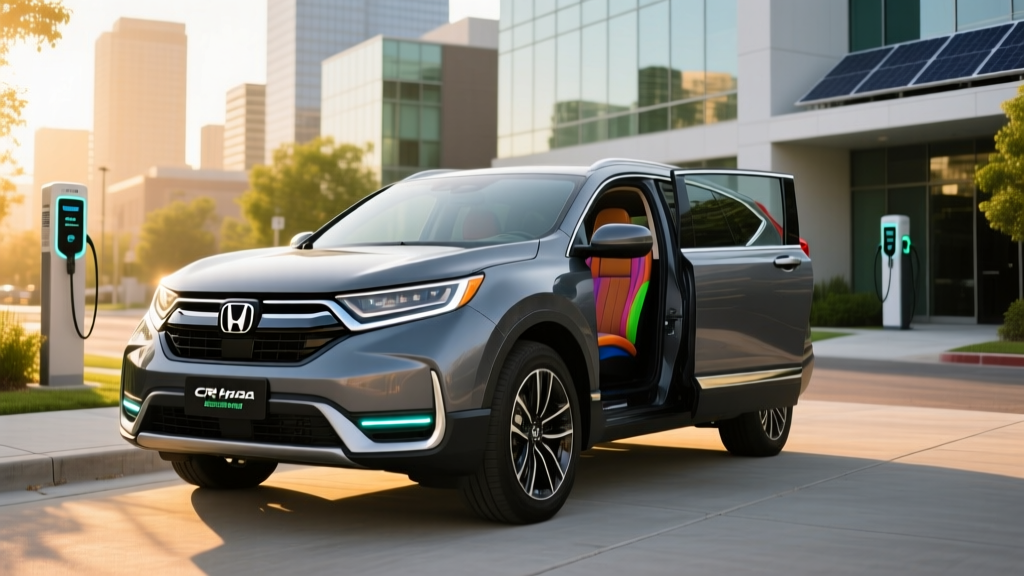
The 2026 Honda CR-V Hybrid Touring sits at the top of Honda's hybrid SUV lineup, packaging a proven two-motor hybrid system into a feature-loaded compact crossover. If you want the cargo space and all-weather confidence of the CR-V without plugging in, the Touring trim delivers heated and ventilated front seats, a Bose 12-speaker audio system, wireless Apple CarPlay and Android Auto, a 9-inch touchscreen, and Honda Sensing 360 driver-assistance — all while returning an EPA-estimated 40 MPG combined.
This is a conventional hybrid (HEV), not a plug-in. You never plug it in. The gasoline engine and regenerative braking handle all battery charging internally. That distinction matters because it shapes both your daily routine and your expectations at the pump.
| Specification | Value |
|---|---|
| Powertrain | 2.0L 4-cyl Atkinson + 2-motor hybrid (AWD) |
| Combined Horsepower | 204 hp |
| Combined Torque | 247 lb-ft (electric motor) |
| EPA MPG (City / Hwy / Combined) | 40 / 34 / 37 (AWD Touring) |
| Fuel Tank | 14.0 gal |
| Total Range | ~518 miles (EPA est.) |
| 0–60 mph | ~7.6 sec (est.) |
| Cargo Volume (rear seats up / down) | 36.3 / 76.5 cu ft |
| Towing Capacity | 1,000 lbs |
| Drivetrain | Real Time AWD |
| MSRP (Touring AWD) | $41,845 |
| Hybrid Battery Warranty | 8 years / 100,000 miles |
Fuel Economy: EPA Numbers vs. Real-World MPG
According to fueleconomy.gov, the 2026 Honda CR-V Hybrid AWD earns EPA ratings of 40 city / 34 highway / 37 combined. Note that the Touring trim's additional weight and larger wheels can shift real-world results slightly compared to lighter Sport Hybrid trims, which share the same powertrain but may return marginally better numbers on paper.
| Driving Condition | EPA Estimate | Real-World Expectation |
|---|---|---|
| City | 40 MPG | 38–43 MPG (hybrids often beat EPA in stop-and-go) |
| Highway | 34 MPG | 30–34 MPG (aerodynamic drag limits electric assist) |
| Combined | 37 MPG | 34–39 MPG (varies by driving mix) |
| Cold Weather (below 32°F) | — | 30–34 MPG combined (engine runs more for cabin heat) |
Why hybrids often exceed EPA in the city: The CR-V Hybrid's two-motor system shuts off the gasoline engine at low speeds and during stops, relying on the electric motor for propulsion. Every braking event recaptures energy through regeneration. In heavy traffic, the engine may stay off for 40–60% of your drive time, which is exactly where conventional gas vehicles waste the most fuel.
Where the highway number drops: At sustained 70–80 mph speeds, the electric motor provides minimal assist and the 2.0L Atkinson-cycle engine does most of the work. The CR-V Hybrid's boxy SUV profile creates more aerodynamic drag than a sedan, limiting highway efficiency. If your commute is 90% highway miles, expect results closer to 32–34 MPG.
Powertrain: How the Two-Motor Hybrid System Works
Honda's hybrid system pairs a 2.0-liter Atkinson-cycle four-cylinder engine with two electric motors — one functioning primarily as a generator, the other as the drive motor. Combined system output is 204 horsepower, with the electric drive motor producing 247 lb-ft of torque available from near-zero RPM.
The system operates in three modes seamlessly:
- EV Drive: Battery powers the drive motor only — engine off. Used at low speeds, light acceleration, and coasting.
- Hybrid Drive: Engine spins the generator motor, which sends electricity to the drive motor. The engine is not mechanically connected to the wheels.
- Engine Drive: At highway cruising speeds, a lock-up clutch mechanically connects the engine directly to the front wheels for maximum efficiency.
The AWD system uses a rear-mounted electric motor to send torque to the rear axle when needed — during acceleration, slippery conditions, or cornering. There is no mechanical driveshaft connecting front and rear axles.
Hybrid Battery: What You Need to Know
The CR-V Hybrid uses a lithium-ion hybrid battery pack (approximately 1.1 kWh usable capacity — far smaller than a full EV or PHEV battery). This pack is designed for frequent shallow charge/discharge cycles, not deep cycling like an EV battery.
Honda's warranty: 8 years or 100,000 miles (whichever comes first) for hybrid battery components. In California-emissions states (CARB states), coverage extends to 10 years / 150,000 miles.
Replacement cost: If the hybrid battery fails out of warranty, dealer replacement typically runs $2,000–$3,500 including labor. Third-party reconditioned packs are available for $1,200–$2,000. In practice, Honda's hybrid batteries have proven highly durable — widespread failures before 150,000 miles are uncommon based on owner data from the CR-V Hybrid's predecessor generations.
Hybrid vs. PHEV vs. Full EV: Which Is Right for You?
The CR-V Hybrid is a conventional HEV — no plug, no electric-only range to manage. But Honda does not currently offer a CR-V Plug-in Hybrid in the US market. If you're cross-shopping electrified compact SUVs, here's how the categories break down:
| Factor | HEV (CR-V Hybrid) | PHEV (e.g., Toyota RAV4 Prime) | BEV (e.g., Hyundai Ioniq 5) |
|---|---|---|---|
| Plug-in Required? | No | Yes (for EV range benefit) | Yes (always) |
| Electric-Only Range | None (EV mode at low speed only) | ~42 miles | 250–320+ miles |
| Combined Efficiency | 37 MPG | 38 MPG + 94 MPGe | 110–132 MPGe |
| Home Charging Needed? | No | Recommended (Level 2) | Essential (Level 2) |
| Federal Tax Credit (§30D) | Not eligible | Up to $7,500 (if eligible) | Up to $7,500 (if eligible) |
| Starting Price Range | ~$36,000–$42,000 | ~$44,000–$48,000 | ~$42,000–$55,000 |
| Best For | No home charging, long road trips | Home charging + short commutes | Home charging + mostly electric driving |
Pricing, Tax Credits, and Total Cost of Ownership
The 2026 Honda CR-V Hybrid Touring AWD carries an MSRP of approximately $41,845 (including destination charge). Lower hybrid trims — the Sport Hybrid ($36,395) and Sport-L Hybrid ($38,795) — offer the identical powertrain at a lower entry price if you can forgo the Touring's premium features.
Federal Tax Credit Eligibility
The CR-V Hybrid is a conventional hybrid (HEV), not a plug-in vehicle. Under current IRS §30D rules, the federal clean vehicle credit applies only to battery electric vehicles (BEVs) and plug-in hybrids (PHEVs) meeting battery sourcing, critical mineral, MSRP cap, and buyer income requirements. The CR-V Hybrid does not qualify for the federal §30D credit.
Some states offer their own incentives for conventional hybrids, but these are increasingly rare as state programs shift toward plug-in vehicles. Check your state's energy or environmental agency website for current programs.
Five-Year Fuel Cost Comparison
Where the CR-V Hybrid earns its premium back is at the pump. Based on 15,000 miles/year, $3.50/gallon regular unleaded, and the EPA combined rating:
- CR-V Hybrid (37 MPG combined): ~$1,419/year in fuel
- CR-V Gas AWD (28 MPG combined): ~$1,875/year in fuel
- Annual savings vs. gas model: ~$456/year
- Five-year savings: ~$2,280
The Hybrid Sport trim's ~$3,000 premium over a comparably equipped gas CR-V EX-L AWD pays for itself in roughly 6–7 years through fuel savings alone — faster if gas prices rise or your driving is city-heavy where the hybrid's advantage is largest.
Driving Experience, Tech, and Daily Usability
The Touring trim loads the CR-V Hybrid with Honda's most complete feature set. The 9-inch touchscreen runs wireless Apple CarPlay and Android Auto, and the Bose 12-speaker system is a meaningful upgrade over the base audio. Honda Sensing 360 includes adaptive cruise control with low-speed follow, lane-keeping assist, blind-spot monitoring, rear cross-traffic alert, and traffic sign recognition.
On the road: The 204 hp combined output makes the CR-V Hybrid responsive in city driving and adequate for highway merging. The electric motor's instant torque fills in the gaps that a conventional CVT-equipped gas CR-V can't. Acceleration from 0–60 mph takes approximately 7.6 seconds — not sporty, but competitive for the segment.
Ride quality: The Touring's 19-inch wheels look sharp but transmit more road imperfections than the Sport Hybrid's 18-inch alloys. If ride comfort is a priority, test-drive both wheel sizes back to back.
Cargo and practicality: 36.3 cubic feet behind the rear seats and 76.5 cu ft with them folded matches the gas CR-V exactly — the hybrid battery sits under the cargo floor without eating into usable space. A hands-free power tailgate is standard on Touring.
Pros
- Proven hybrid system with strong reliability history
- 37 MPG combined without ever plugging in
- AWD standard — electric rear motor, no mechanical penalty
- Excellent cargo volume unchanged from gas model
- 8-year/100,000-mile hybrid battery warranty (10/150k in CARB states)
- Touring trim loaded with premium features at a competitive price
Cons
- No federal tax credit (HEV, not PHEV/BEV)
- Highway MPG drops noticeably vs. city (34 vs. 40)
- 1,000-lb towing limit — not for trailers or boats
- 19-inch Touring wheels firm up the ride
- No plug-in CR-V option in the US for those wanting electric-only commuting
- Premium over gas model takes 6+ years to recoup via fuel savings
Reliability and Long-Term Ownership
Honda's two-motor hybrid system has been in production since the 2014 Accord Hybrid and has accumulated extensive real-world mileage data. The system has no conventional automatic transmission — the e-CVT is a power-split device with no belts, clutches, or torque converter to wear out. This simplicity is a reliability advantage.
The IIHS typically rates the CR-V highly for crashworthiness, and the Honda Sensing 360 suite provides comprehensive active-safety coverage. NHTSA ratings should be confirmed at nhtsa.gov for the specific model year.
Maintenance costs are lower than a gas-only CR-V in some areas: regenerative braking extends brake pad life significantly (many owners report original pads past 80,000 miles), and the engine runs less overall, potentially extending oil-change intervals under the maintenance minder system. However, you still have a gasoline engine requiring standard service — oil, filters, spark plugs, coolant.
Who Should Buy the CR-V Hybrid Touring?
Choose the CR-V Hybrid Touring if:
- You lack access to home or workplace charging (apartment, street parking)
- Your driving is city-heavy or a balanced city/highway mix
- You want AWD for snow/rain without an efficiency penalty
- You road-trip frequently and don't want to plan around charging stops
- You want a loaded compact SUV under $43,000 with strong resale value
Consider a PHEV or full EV instead if:
- You have Level 2 home charging and a commute under 40 miles (a PHEV eliminates most gas use)
- You want to qualify for the federal §30D tax credit (up to $7,500 for eligible BEVs/PHEVs)
- You want zero tailpipe emissions for daily driving (BEV)
- Your annual mileage is very high and fuel cost savings would be maximized by a BEV's lower per-mile energy cost
Frequently Asked Questions
How many MPG does the Honda CR-V Hybrid Touring get?
The EPA rates the 2026 CR-V Hybrid AWD at 40 city / 34 highway / 37 combined. In real-world city driving with frequent stops, many owners report 38–43 MPG. Highway-heavy driving at 75+ mph typically yields 30–34 MPG. Cold weather reduces efficiency by roughly 10–15% due to increased engine runtime for cabin heating.
Does the Honda CR-V Hybrid need to be plugged in?
No. The CR-V Hybrid is a conventional hybrid (HEV). It charges its own small battery through regenerative braking and the gasoline engine. You simply fill up with regular unleaded gasoline as you would any other car.
Does the CR-V Hybrid qualify for any tax credit?
The federal §30D clean vehicle credit applies only to plug-in vehicles (BEVs and PHEVs). The CR-V Hybrid, as a conventional HEV, does not qualify. Check your state's environmental or energy agency for any local hybrid incentives, though these are increasingly uncommon.
Is the Honda CR-V Hybrid reliable, and what does battery replacement cost?
Honda's two-motor hybrid system has been in production since 2014 with a strong reliability record. The hybrid battery is covered by an 8-year/100,000-mile warranty (10 years/150,000 miles in CARB states). Out-of-warranty replacement typically costs $2,000–$3,500 at a dealer, or $1,200–$2,000 for a third-party reconditioned unit. Widespread early battery failures are uncommon.
How does the CR-V Hybrid compare to the Toyota RAV4 Hybrid?
The RAV4 Hybrid (219 hp, 41/38/39 MPG EPA) slightly edges the CR-V Hybrid in combined fuel economy and horsepower. The CR-V Hybrid counters with more cargo volume (36.3 vs. 37.6 cu ft is close), a more refined interior on upper trims, and Honda Sensing 360. Both are excellent choices — the decision often comes down to styling preference, dealer relationship, and which brand's driving dynamics you prefer.
Can the CR-V Hybrid tow a trailer?
The CR-V Hybrid has a 1,000-pound towing capacity — enough for a small utility trailer or a couple of dirt bikes, but not suitable for a boat, camper, or horse trailer. If you need serious towing, you'll need to look at larger SUVs or trucks.
Is Honda Sensing 360 self-driving?
No. Honda Sensing 360 is a SAE Level 2 driver-assistance system. It provides adaptive cruise control, lane centering, and collision mitigation, but the driver must remain fully engaged — hands on or near the wheel, eyes on the road — at all times. It is not an autonomous driving system.