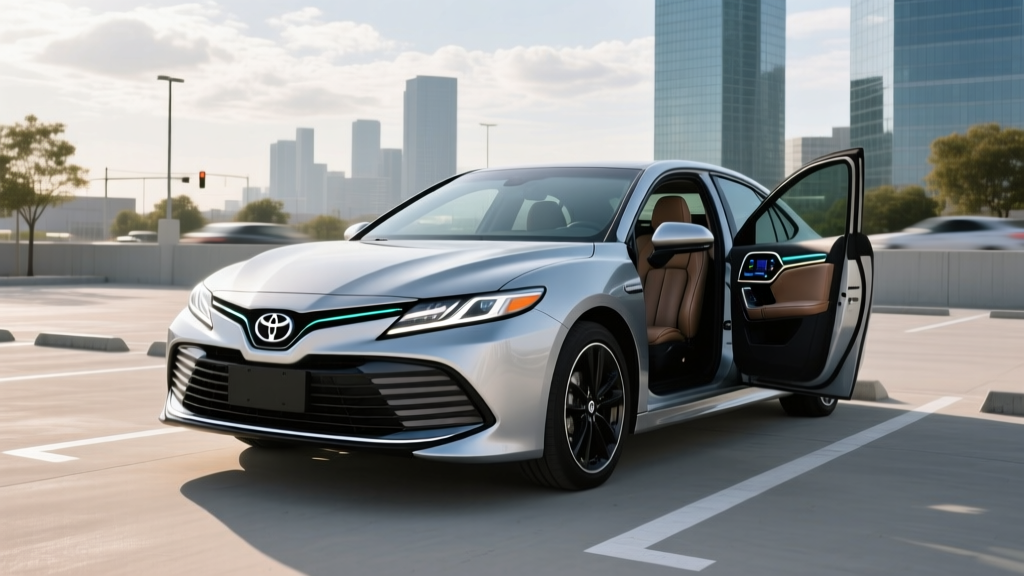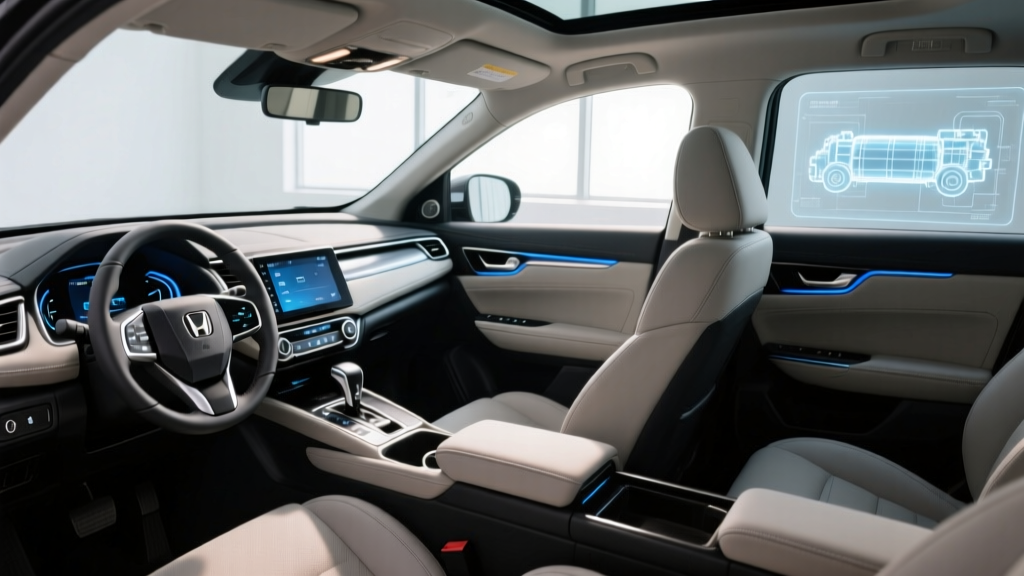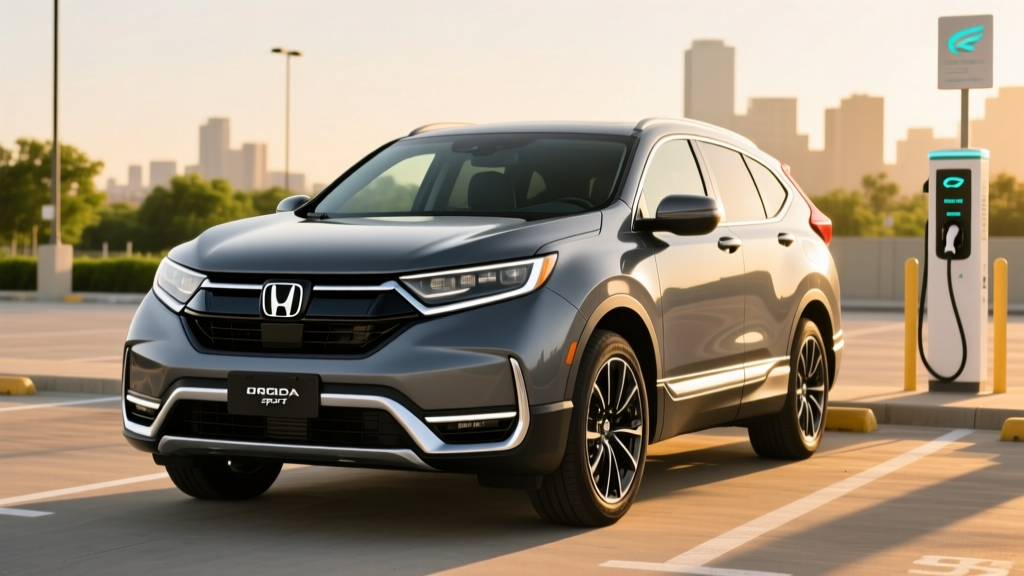
Quick Verdict: The Top-Trim Hybrid CR-V at a Glance
The 2026 Honda CR-V Hybrid Sport Touring sits at the apex of Honda's compact SUV hybrid lineup. It pairs a 2.0-liter Atkinson-cycle four-cylinder with a two-motor hybrid system for 204 combined horsepower, standard all-wheel drive, and an EPA-estimated 40 MPG combined. With no plug required, no range anxiety, and a premium equipment list, it targets buyers who want electrified efficiency without changing their fueling habits.
This is a conventional hybrid (HEV), not a plug-in hybrid (PHEV). Honda discontinued the CR-V PHEV (Clarity-based plug-in variant) in the U.S. market, so if you're looking for electric-only driving from your CR-V, you'll need to look elsewhere or consider a full BEV. What the Sport Touring delivers is seamless, proven hybrid efficiency with Honda's strongest feature set.
HEV vs PHEV vs EV: Where Does the CR-V Hybrid Fit?
Before examining the specs, it's worth clarifying what this vehicle is—and isn't. The CR-V Hybrid Sport Touring is a self-charging hybrid. It recovers energy through regenerative braking and uses its gasoline engine to charge the small lithium-ion battery pack. You never plug it in.
Drivetrain Types Compared
| Attribute | HEV (CR-V Hybrid) | PHEV (e.g., RAV4 Prime) | BEV (e.g., Ioniq 5) |
|---|---|---|---|
| Plug-in charging | No | Yes (Level 1/2) | Yes (Level 1/2/DC) |
| Electric-only range | ~1 mi at low speed | 25–42 mi typical | 250–350+ mi |
| Total range | ~500+ mi | ~400–500 mi combined | 250–350+ mi |
| Fueling | Gas only | Gas + electricity | Electricity only |
| Federal tax credit (§30D) | Not eligible | Up to $7,500 (varies) | Up to $7,500 (varies) |
| Home charging install | None needed | $500–$2,000 (L2) | $500–$2,500+ (L2) |
| Best for | No home charging access | Short commutes + road trips | Full electric lifestyle |
Who should choose the CR-V Hybrid over a PHEV or EV? If you live in an apartment, lack access to home or workplace charging, frequently take long road trips through charging-desert regions, or simply don't want to think about plugging in, the HEV is the right call. You get roughly 40% better fuel economy than a gas-only CR-V with zero behavioral change.
Fuel Economy: EPA Ratings and Real-World MPG
The 2026 CR-V Hybrid Sport Touring carries EPA estimates of 40 MPG combined, 43 MPG city, and 36 MPG highway with standard AWD, according to fueleconomy.gov. These figures apply across the Hybrid Sport, Sport Touring, and Sport-L trims since they share the same powertrain.
| Driving Cycle | EPA Estimate | Real-World Expectation |
|---|---|---|
| City | 43 MPG | 41–46 MPG (hybrids often beat EPA in stop-and-go) |
| Highway | 36 MPG | 32–36 MPG (aerodynamic drag at 70+ mph hurts hybrids) |
| Combined | 40 MPG | 37–42 MPG depending on driving mix |
Real-world note: Honda's two-motor hybrid system excels in city driving, where the electric motor handles most low-speed propulsion and the engine acts primarily as a generator. In our experience with this generation's powertrain, city MPG frequently exceeds the EPA estimate by 2–3 MPG in warm weather. Highway driving is the opposite: sustained 75 MPH cruising reduces efficiency because the engine must directly drive the wheels and the hybrid system offers less assist. Expect a combined real-world figure around 38–41 MPG for mixed driving.
Cold-weather impact: In temperatures below freezing, expect a 5–10% reduction in fuel economy. The engine runs more often to provide cabin heat and maintain battery temperature. This is far less severe than the 20–30% range loss a BEV experiences, but it's worth budgeting for if you live in northern climates.
Powertrain: 204 HP Two-Motor Hybrid System
| Specification | Detail |
|---|---|
| Engine | 2.0L Atkinson-cycle DOHC 4-cylinder |
| Engine output | 145 hp @ 6,100 rpm / 134 lb-ft torque |
| Electric motors | Dual-motor hybrid system (propulsion + generator) |
| Combined system output | 204 hp / 247 lb-ft torque |
| Drivetrain | Standard AWD (rear-motor-driven) |
| Transmission | Electronically controlled CVT (e-CVT) |
| 0–60 mph | ~7.6 seconds (est.) |
| Towing capacity | 1,000 lbs |
| Fuel tank | 14.0 gallons |
| Total range | ~560 miles (EPA combined) |
Honda's fourth-generation two-motor hybrid system is one of the most refined in the segment. Unlike Toyota's planetary-gear power-split device, Honda's system primarily drives the wheels electrically—the gas engine generates electricity for the propulsion motor in most conditions, only mechanically coupling to the wheels at steady highway speeds via a lock-up clutch. The result is smooth, EV-like acceleration from a stop with none of the rubber-band feel of older CVTs.
The AWD system uses a dedicated rear electric motor rather than a mechanical driveshaft. This provides instant torque vectoring to the rear axle when slip is detected, improving traction in rain and light snow. It's not a serious off-road system, but it's effective for the conditions most CR-V buyers encounter.
Sport Touring Trim: Pricing and Feature Content
The 2026 CR-V Hybrid Sport Touring is the range-topping trim. Based on Honda's latest pricing, the MSRP starts at approximately $40,850 (including destination charge). Key standard equipment at this level includes:
- 9-inch touchscreen with wireless Apple CarPlay and Android Auto
- 12-speaker Bose premium audio system
- Wireless phone charging pad
- Heated front seats and heated steering wheel
- Leather-trimmed interior
- Power liftgate with hands-free access
- Honda Sensing suite (adaptive cruise, lane-keeping, collision mitigation)
- 19-inch alloy wheels
- Panoramic moonroof (new for recent model years)
- Low Speed Braking Control and traffic sign recognition
For context, the Hybrid Sport starts around $36,350 and the Hybrid Sport-L around $38,000. The Sport Touring premium buys you the Bose audio, navigation, and the most complete feature set Honda offers in the CR-V.
Tax Credit Eligibility: What Hybrid Buyers Need to Know
The 2026 Honda CR-V Hybrid Sport Touring does not qualify for the federal §30D clean vehicle tax credit. That credit, worth up to $7,500, applies only to plug-in electric vehicles (BEVs and PHEVs) that meet battery sourcing, critical mineral, MSRP cap, and buyer income requirements under current IRS rules.
Because the CR-V Hybrid is a conventional HEV—it cannot be plugged in and has a battery far too small for meaningful electric-only driving—it falls outside the credit's scope entirely. There is no federal tax incentive for purchasing this vehicle.
State-level incentives: Some states offer rebates or HOV lane access for hybrid vehicles, but these vary widely and change frequently. Check your state's energy office or DMV for current programs. A few utility companies also offer rebates for hybrid purchases, though these are less common than EV incentives.
Battery Warranty, Reliability, and Replacement Cost
Honda Hybrid Battery Coverage
- Hybrid battery warranty: 8 years / 100,000 miles (10 years / 150,000 miles in CARB states including CA, NY, MA, and others)
- Powertrain warranty: 5 years / 60,000 miles
- Limited vehicle warranty: 3 years / 36,000 miles
- Battery chemistry: Lithium-ion (small capacity, ~1.1 kWh usable)
Honda's hybrid battery warranty is competitive and provides strong peace of mind. In states that follow California Air Resources Board (CARB) emissions standards—currently 17 states plus D.C.—the hybrid battery coverage extends to 10 years and 150,000 miles. Check your state's status, as it significantly affects long-term ownership risk.
Reliability outlook: Honda's two-motor hybrid system has been in production since 2014 (Accord Hybrid) and has proven durable. The CR-V hybrid powertrain, introduced for the 2020 model year, has accumulated substantial real-world mileage data. The lithium-ion battery pack is small (~1.1 kWh) and operates within a narrow state-of-charge window, which minimizes degradation stress. Unlike a BEV battery that cycles from 10% to 90%, the hybrid battery is managed by the vehicle's computer to stay in a longevity-optimized range.
Replacement cost: If the hybrid battery does fail outside of warranty, replacement costs typically range from $2,000 to $4,000 including parts and labor at a Honda dealer. Third-party and refurbished options can reduce this to $1,500–$2,500. Given the battery's small size and conservative management, failures before 150,000 miles are uncommon based on current data.
For long-term reliability ratings, check IIHS safety ratings and Consumer Reports' predicted reliability scores, which update annually.
Who Should Buy the 2026 CR-V Hybrid Sport Touring?
Choose This Hybrid If:
- You want 40 MPG without plugging in or changing habits
- You lack reliable home or workplace charging access
- You take frequent road trips where charging infrastructure is sparse
- You want AWD efficiency in a compact SUV
- You prefer Honda's driving dynamics and Honda Sensing ADAS suite
- You plan to keep the vehicle 8+ years (warranty coverage)
Look Elsewhere If:
- You want electric-only driving for daily commuting (consider a PHEV or BEV)
- You want to claim the $7,500 federal tax credit (HEVs don't qualify)
- You need serious towing capacity (1,000 lbs is modest)
- You want a third row (CR-V is strictly five-passenger)
- You prioritize 0–60 performance over efficiency (7.6 sec is adequate, not quick)
Decision Framework
CR-V Hybrid Sport Touring over a BEV (e.g., Hyundai Ioniq 5): Choose the hybrid if you can't charge at home, regularly drive 300+ miles in a single day, or live in a region with unreliable public charging. You sacrifice the tax credit and zero-tailpipe-emissions driving but gain total flexibility.
CR-V Hybrid Sport Touring over a PHEV (e.g., Toyota RAV4 Prime): Choose the hybrid if you don't want to install a Level 2 charger at home or if the PHEV's price premium (often $5,000–$8,000 more) doesn't justify the 42 miles of electric range for your commute. The RAV4 Prime also faces supply constraints and dealer markups that the CR-V Hybrid typically avoids.
CR-V Hybrid Sport Touring over the gas CR-V: Choose the hybrid if you drive more than 12,000 miles per year. The ~12 MPG improvement over the gas AWD CR-V (28 combined) saves roughly $500–$700 annually in fuel at current prices, paying back the hybrid's modest price premium within 2–3 years.
Frequently Asked Questions
How many MPG does the 2026 Honda CR-V Hybrid Sport Touring get?
The EPA rates it at 43 city / 36 highway / 40 combined MPG. Real-world driving typically yields 37–42 MPG combined, with city driving often exceeding the EPA estimate and highway driving falling slightly below it.
Does the CR-V Hybrid need to be plugged in?
No. The CR-V Hybrid is a conventional HEV that charges its battery through regenerative braking and the gasoline engine. You fuel it exactly like a gas car—there is no plug and no electric-only driving range to manage.
How far can the CR-V Hybrid drive on electric power alone?
Less than one mile at very low speeds (under 25 MPH). The electric motor assists during acceleration and handles low-speed maneuvering, but the gasoline engine engages quickly. This is not a plug-in hybrid and is not designed for electric-only commuting.
Does the 2026 CR-V Hybrid qualify for any federal tax credit?
No. The federal §30D clean vehicle credit applies only to plug-in electric vehicles (BEVs and PHEVs). As a conventional hybrid, the CR-V Hybrid is not eligible. Check your state for any local hybrid incentives, which vary by jurisdiction.
Is the CR-V Hybrid battery reliable and what does replacement cost?
Honda covers the hybrid battery for 8 years/100,000 miles (10 years/150,000 miles in CARB states). Replacement outside of warranty costs $2,000–$4,000 at a dealer. The battery is small and conservatively managed, making premature failure uncommon based on data from Honda's hybrid fleet.
How does the CR-V Hybrid compare to the Toyota RAV4 Hybrid?
The RAV4 Hybrid is rated at 41 MPG combined (39 city / 38 highway for AWD) per fueleconomy.gov, slightly better highway efficiency than the CR-V. The Toyota also offers a PHEV variant (RAV4 Prime) with 42 miles of electric range. The CR-V Hybrid counters with a more refined driving feel, a more upscale Sport Touring interior, and Honda's strong safety reputation. Both are segment leaders—your choice may come down to brand preference and dealer experience.
What is the total driving range on a full tank?
With a 14.0-gallon fuel tank and 40 MPG combined, the theoretical maximum range is approximately 560 miles. Real-world range with a mix of driving conditions typically falls between 500 and 540 miles before the low-fuel warning.