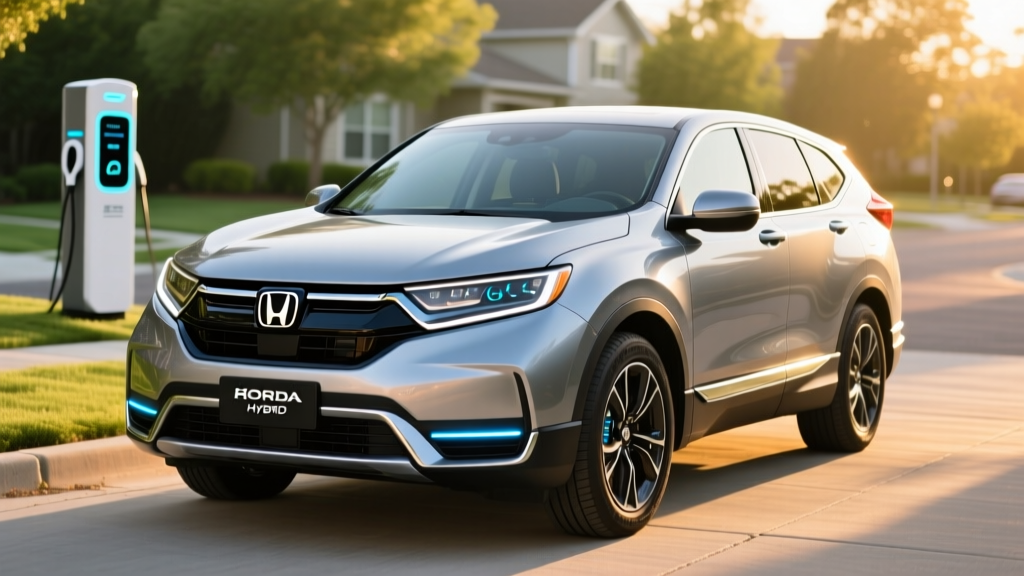
If you've been searching for a Honda CR-V Hybrid lease, you're likely weighing fuel savings against monthly cost in one of the most competitive compact SUV segments on the market. The 2026 CR-V Hybrid carries forward Honda's two-motor e-CVT system with a 2.0-liter Atkinson-cycle four-cylinder, delivering 204 combined horsepower and an EPA-rated 40 MPG combined — numbers that make it a formidable commuter and road-trip rig alike. But with Honda offering both a conventional hybrid (HEV) and a plug-in hybrid (PHEV) variant in select markets, structuring the right lease requires understanding exactly what you're getting, what it costs, and where the real value sits.
This guide walks through every number that matters — from EPA fuel economy and real-world MPG observations to battery warranty coverage, trim pricing, and whether any federal tax credits apply. We'll also answer the core question: should you lease the HEV, stretch for the PHEV, or reconsider a full EV instead?
HEV vs PHEV: Which CR-V Hybrid Are You Leasing?
Honda sells two distinct electrified CR-V models, and confusing them is the most common mistake shoppers make at the dealership. Here's the critical difference:
| Attribute | CR-V Hybrid (HEV) | CR-V e:PHEV (Plug-In) |
|---|---|---|
| Powertrain | 2.0L I4 + two-motor hybrid | 2.0L I4 + larger motor + bigger battery |
| Combined HP | 204 hp | 204 hp (est.) |
| Battery | ~1.06 kWh (self-charging) | 17.7 kWh usable |
| Electric-Only Range | None (gasoline always required) | EPA 37 miles |
| Plug-In Charging | No — never plug in | Yes — Level 2 (240V), ~2.5 hours |
| DC Fast Charging | N/A | No |
| EPA Combined MPG/MPGe | 40 MPG | 38 MPG (gas) / 96 MPGe (electric) |
| Starting MSRP (2026) | $36,395 (Sport) | $42,995 (Sport Touring PHEV est.) |
| Federal Tax Credit (§30D) | Not eligible | Not eligible (MSRP cap + sourcing) |
The bottom line: The standard CR-V Hybrid (HEV) is the volume seller available across all U.S. trims (Sport, Sport-L, Sport Touring). It never plugs in — the gasoline engine and regenerative braking handle all battery charging. The e:PHEV variant, when available, lets you drive roughly 37 miles on electricity alone before the gas engine kicks in, making it ideal for short-commute households with Level 2 home charging access.
Fuel Economy: EPA Ratings vs Real-World MPG
The headline number for the 2026 CR-V Hybrid HEV is 40 MPG combined (43 city / 36 highway) per fueleconomy.gov. The PHEV variant delivers 96 MPGe when running on battery and 38 MPG combined once the engine takes over.
| Model | City | Highway | Combined |
|---|---|---|---|
| CR-V Hybrid HEV (FWD) | 43 MPG | 36 MPG | 40 MPG |
| CR-V Hybrid HEV (AWD) | 40 MPG | 34 MPG | 37 MPG |
| CR-V e:PHEV (gas mode) | 40 MPG | 35 MPG | 38 MPG |
| CR-V e:PHEV (electric) | 96 MPGe combined | ||
Real-world MPG reality check: Honda's two-motor hybrid system excels in stop-and-go city driving, where the electric motor handles low-speed propulsion and the engine acts primarily as a generator. Owners frequently report 42–45 MPG in urban commuting — exceeding the EPA city estimate. Highway driving at 75+ MPH, however, tends to yield 33–35 MPG as the engine directly drives the wheels under higher load. AWD trims drop roughly 2–3 MPG across the board. In cold weather (below 30°F), expect a 5–10% reduction due to engine warm-up cycles and cabin heating demand.
Powertrain Specs: What Moves the CR-V Hybrid
The 2026 CR-V Hybrid uses Honda's fourth-generation two-motor hybrid system. Here's the hardware:
- Engine: 2.0-liter Atkinson-cycle DOHC inline-4, 146 hp / 134 lb-ft torque
- Drive motor: 181 hp / 247 lb-ft torque (front)
- Combined system output: 204 hp
- Transmission: Direct-drive (no traditional gears); engine clutch engages for highway cruising
- AWD system (optional): Rear-mounted electric motor, 40 hp — no mechanical driveshaft
- 0–60 mph: ~7.6 seconds (FWD), ~7.8 seconds (AWD)
The PHEV variant adds a 17.7 kWh lithium-ion battery pack (NMC chemistry) positioned under the floor, enabling 37 miles of electric-only driving at speeds up to 62 MPH. Level 2 charging at 7.2 kW replenishes the pack in approximately 2.5 hours. Notably, the PHEV does not support DC fast charging — this is a deliberate engineering choice to save weight and cost, and it means public fast-charger stops won't help you.
Lease Pricing: What a CR-V Hybrid Lease Actually Costs
Honda typically offers competitive lease programs on the CR-V Hybrid, especially on mid-tier Sport and Sport-L trims. Here's what the pricing landscape looks like for the 2026 model year:
| Trim | MSRP | Typical Lease (36 mo / 12K mi) | Due at Signing |
|---|---|---|---|
| Sport Hybrid (FWD) | $36,395 | $389–$429/mo | $2,500–$3,500 |
| Sport Hybrid (AWD) | $37,895 | $409–$449/mo | $2,500–$3,500 |
| Sport-L Hybrid (AWD) | $39,995 | $429–$469/mo | $3,000–$3,500 |
| Sport Touring Hybrid (AWD) | $42,895 | $459–$509/mo | $3,000–$4,000 |
Lease deal tips specific to the CR-V Hybrid:
- Honda's money factor on hybrid leases is often subsidized — ask your dealer for the current Honda Financial Services rate sheet rather than accepting the first quoted payment.
- The residual value on CR-V Hybrids typically runs 58–62% at 36 months / 36,000 miles, which is strong for the segment and keeps monthly payments manageable.
- AWD commands roughly a $1,500 MSRP premium and adds ~$20–$30/mo to the lease — worth it in snow-belt states, less critical elsewhere.
- Negotiate the capitalized cost (sale price) independently of the lease terms. A $1,000 reduction in cap cost saves roughly $28/mo over 36 months.
- Lease-end: Honda's hybrid battery warranty transfers to the next owner, which supports resale value if you choose to buy out the lease.
Tax Credits and Incentives: What Applies?
Here's where expectations need calibration. Under current IRS §30D rules for 2026:
- CR-V Hybrid (HEV): Not eligible for the federal §30D clean vehicle credit. Conventional hybrids that cannot plug in have never qualified.
- CR-V e:PHEV: While it is technically a plug-in vehicle, the CR-V PHEV currently fails the §30D battery sourcing and critical minerals requirements, and its MSRP may exceed the $80,000 SUV cap depending on trim. As of 2026, it does not qualify for the $7,500 federal credit. Always verify current eligibility at irs.gov before signing.
- State incentives: Some states (CA, CO, NY, MA, among others) offer rebates or HOV-lane access for PHEVs with 20+ miles of electric range. Check your state energy office or AFDC incentive database for specifics.
- Utility rebates: Several electric utilities offer $250–$500 rebates for PHEV purchases or Level 2 charger installations — these apply to the e:PHEV variant only.
The practical takeaway: lease the CR-V Hybrid HEV for its inherent fuel savings and strong residuals, not for tax-credit expectations. The economics work on their own at 40 MPG.
Battery Warranty, Reliability, and Replacement Cost
Hybrid battery longevity remains the single most cited concern among first-time hybrid buyers. Honda addresses this directly:
Honda Hybrid Battery Warranty: 8 years / 100,000 miles (10 years / 150,000 miles in CARB states including CA, NY, MA, CT, NJ, and others). Coverage includes capacity loss below a defined threshold and full component failure. The warranty transfers to subsequent owners.
The CR-V Hybrid's battery pack is relatively small (~1.06 kWh in the HEV) and operates within a narrow state-of-charge window — typically 40–80% — managed by Honda's battery management system. This conservative cycling strategy is the primary reason hybrid batteries routinely outlast their warranty periods. Real-world data from Honda's earlier hybrid systems (Insight, Accord Hybrid) shows minimal degradation at the 150,000-mile mark.
Replacement cost if out of warranty:
- HEV battery pack: $2,000–$3,500 (refurbished/aftermarket options available from $1,200)
- PHEV battery pack (17.7 kWh): $5,500–$8,000 at dealership pricing
For context, a well-maintained CR-V Hybrid should reach 200,000+ miles with routine service. The hybrid system actually reduces wear on the gasoline engine (it runs less often) and brake pads (regenerative braking handles most deceleration), potentially lowering long-term maintenance costs versus a gas-only CR-V.
CR-V Hybrid vs Full EV vs Gas: Which Fits You?
Choose the CR-V Hybrid HEV if:
- You drive 12,000–20,000 miles/year with a mix of city and highway
- You lack reliable access to home or workplace charging
- You want 40 MPG without changing any habits — just fill up and go
- You take regular road trips exceeding 300 miles
- Your budget targets $390–$470/mo on a lease
Choose the CR-V e:PHEV if:
- Your daily commute is under 35 miles round-trip
- You have a garage or driveway with Level 2 (240V) charging access
- You want EV-like city driving with gas-engine backup for longer trips
- You live in a state offering PHEV-specific rebates or HOV access
Consider a full EV (e.g., Hyundai Ioniq 5, Tesla Model Y) instead if:
- You have reliable home Level 2 charging
- Your daily driving is under 200 miles and you can plan road-trip charging
- You want the lowest per-mile energy cost (~$0.04–$0.06/mi on home electricity vs $0.12–$0.15/mi for the hybrid)
- You're eligible for the full $7,500 federal credit on a qualifying EV
Pros, Cons, and the Lease Verdict
Pros
- 40 MPG combined — real-world city driving often exceeds 42 MPG
- Strong lease residuals (58–62%) keep monthly payments competitive
- No charging infrastructure required — works exactly like a gas car
- 8-year/100,000-mile hybrid battery warranty (10/150K in CARB states)
- 204 hp provides confident highway merging and passing
- Honda Sensing ADAS suite standard on all trims
- Spacious cargo area (39.3 cu ft behind rear seats)
Cons
- No federal tax credit eligibility (HEV or PHEV)
- AWD trims drop to 37 MPG combined
- PHEV variant lacks DC fast charging
- Infotainment system on lower trims uses a smaller 7-inch screen
- Highway MPG (34–36) trails some competitors at sustained speeds
- Lease terms typically require 12K mi/yr — high-mileage drivers pay more
Frequently Asked Questions
How many MPG does the Honda CR-V Hybrid actually get?
The EPA rates the 2026 CR-V Hybrid FWD at 43 city / 36 highway / 40 combined. AWD drops to 40/34/37. In real-world city driving, many owners consistently achieve 42–45 MPG thanks to the hybrid system's electric-motor-dominant low-speed operation. Highway driving at 75+ MPH typically yields 33–35 MPG.
How far can the CR-V PHEV go on electric only?
The EPA rates the CR-V e:PHEV at 37 miles of electric-only range. Real-world results vary: gentle city driving in mild weather can stretch this to 40+ miles, while highway speeds and cold temperatures may reduce it to 28–32 miles. Once the battery depletes, the gas engine provides the full EPA-rated 38 MPG combined.
Does the Honda CR-V Hybrid qualify for a tax credit?
No. The conventional CR-V Hybrid (HEV) does not qualify for the federal §30D credit because it cannot plug in. The PHEV variant, while technically a plug-in vehicle, currently fails the federal battery sourcing requirements and does not qualify for the $7,500 credit as of 2026. Some state-level incentives may apply to the PHEV — check afdc.energy.gov for your state.
Is the CR-V Hybrid reliable long-term?
Honda's hybrid system has a strong track record dating to the early 2000s Insight and subsequent Accord Hybrid. The CR-V Hybrid carries an 8-year/100,000-mile hybrid battery warranty (10/150K in CARB states), and the conservative battery management strategy (narrow SoC window) supports longevity well beyond warranty limits. Honda's overall brand reliability ratings from IIHS and Consumer Reports remain above average for the compact SUV segment.
What does it cost to replace the hybrid battery?
If replacement is needed outside warranty coverage, expect $2,000–$3,500 for the HEV battery pack at a Honda dealer. Refurbished and aftermarket options are available from approximately $1,200. The PHEV's larger 17.7 kWh pack runs $5,500–$8,000. In practice, hybrid battery failures before 150,000 miles are uncommon based on historical Honda data.
Should I lease or buy the CR-V Hybrid?
Leasing makes sense if you want the lowest monthly payment, plan to stay under 12,000–15,000 miles per year, and prefer driving a new vehicle every 3 years. Honda's subsidized money factors and strong residuals make CR-V Hybrid leases competitively priced. Buying (or financing) is better if you drive high annual mileage, want to keep the vehicle past 5 years (where the fuel savings compound), or want the flexibility to sell whenever market conditions favor it.
Does the CR-V Hybrid need to be plugged in?
No. The standard CR-V Hybrid (HEV) never plugs in. Its small battery charges through regenerative braking and the gasoline engine. Only the e:PHEV variant requires plugging in to access its 37-mile electric-only range — if you never plug in the PHEV, it simply operates as a conventional hybrid at 38 MPG combined.