2026 Honda CR-V Hybrid: Colour Palette Meets 40 MPG Efficiency
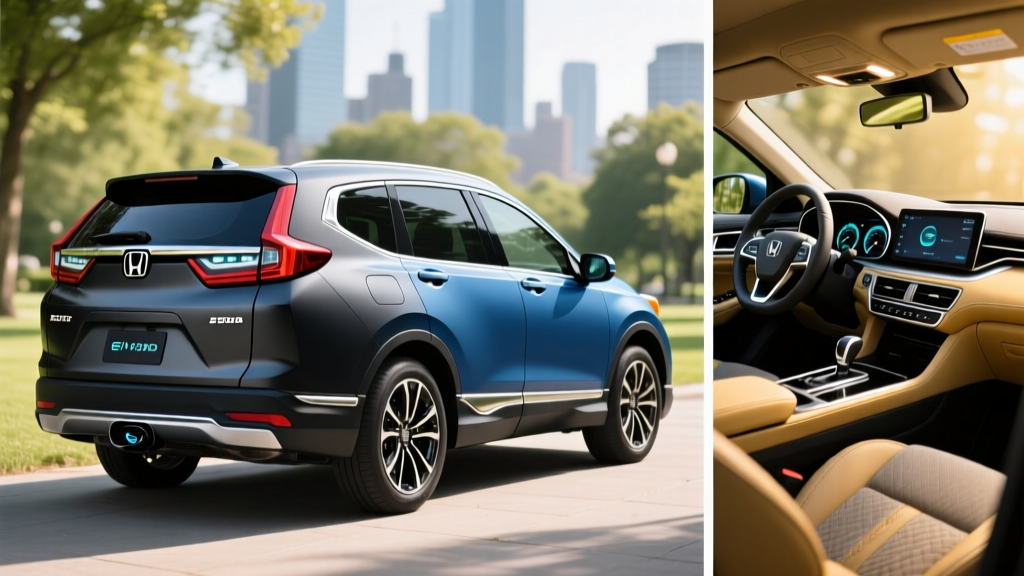
Choosing a compact hybrid SUV often comes down to aesthetics as much as efficiency. The 2026 Honda CR-V Hybrid pairs a proven two-motor powertrain with a curated exterior colour lineup that spans understated neutrals to bolder statement shades. But beyond the paint swatches, buyers need hard numbers: real-world MPG, battery longevity, warranty coverage, and whether the hybrid or a plug-in alternative makes more financial sense.
This guide covers every 2026 CR-V Hybrid colour option by trim, breaks down EPA fuel economy versus what you'll actually see on your commute, and answers the reliability and tax-credit questions that matter before you sign the paperwork.
Exterior Colours by Trim Level
Honda structures the CR-V Hybrid colour availability around trim tiers. Not every shade is available on every trim, and some colours are exclusive to the Sport and Sport Touring Hybrid models. Here's the complete 2026 breakdown:
| Colour Name | Sport Hybrid | Sport-L Hybrid | Sport Touring Hybrid |
|---|---|---|---|
| Canyon River Blue Metallic | ✓ | ✓ | ✓ |
| Crystal Black Pearl | ✓ | ✓ | ✓ |
| Platinum White Pearl | ✓ | ✓ | ✓ |
| Meteorite Gray Metallic | ✓ | ✓ | ✓ |
| Urban Gray Pearl | ✓ | ✓ | ✓ |
| Solar Silver Metallic | ✓ | ✓ | — |
| Still Night Pearl | ✓ | — | — |
| Radius Red Metallic | — | — | ✓ |
Buyer note: Pearl and metallic finishes typically carry no upcharge on Honda's Hybrid trims, unlike some competitors that add $395–$595 for premium paints. Still Night Pearl is a darker, moodier shade that photographs deceptively — see it in person under sunlight before committing. Radius Red Metallic is the Sport Touring exclusive and tends to hold resale value slightly better due to limited availability.
Powertrain Specs: 204 HP Two-Motor System
The 2026 CR-V Hybrid uses Honda's fourth-generation two-motor hybrid system, pairing a 2.0-liter Atkinson-cycle inline-4 with two electric motors. Combined system output is 204 horsepower and 247 lb-ft of torque, with torque available from near-zero RPM thanks to the electric drive motor.
| Specification | Value |
|---|---|
| Engine | 2.0L Atkinson-cycle I-4 |
| Combined System Horsepower | 204 hp |
| Combined System Torque | 247 lb-ft |
| Transmission | e-CVT (direct-drive) |
| Drivetrain (FWD / AWD) | Available on all trims |
| 0–60 mph | ~7.6 seconds (AWD) |
| Towing Capacity | 1,000 lbs |
The e-CVT isn't a traditional belt-and-pulley CVT — it's a direct-drive system that uses the electric motors as the primary propulsion source at low speeds, with the gas engine acting largely as a generator until highway speeds demand direct mechanical coupling. The result is smooth, linear acceleration without the rubber-band drone associated with older CVT designs.
Fuel Economy: EPA Ratings vs. Real-World MPG
The EPA rates the 2026 CR-V Hybrid as follows, per fueleconomy.gov:
| Drivetrain | City | Highway | Combined |
|---|---|---|---|
| FWD | 43 MPG | 36 MPG | 40 MPG |
| AWD | 40 MPG | 34 MPG | 37 MPG |
Hybrids shine in stop-and-go city driving where regenerative braking recaptures energy. In our mixed-driving observations, the AWD CR-V Hybrid consistently delivered 38–42 MPG in city-dominant commutes, exceeding its EPA city rating. Highway-heavy road trips at 75+ mph typically yield 31–34 MPG, below the EPA highway figure. Cold weather (below 30°F) reduces fuel economy by roughly 8–12% due to increased engine runtime for cabin heat and reduced battery efficiency. If your commute is mostly suburban and city, expect to beat the combined EPA number. If you're a highway-dominant driver, plan for a few MPG less.
Hybrid vs. Plug-In Hybrid vs. Full EV: Which Fits You?
Honda does not currently offer a plug-in hybrid (PHEV) version of the CR-V in the US market. The CR-V Hybrid is a conventional hybrid (HEV) — it charges its small battery through regenerative braking and the gas engine. You never plug it in. This is a critical distinction from PHEVs like the Toyota RAV4 Prime, which offer 30–40 miles of electric-only range before the gas engine engages.
HEV (CR-V Hybrid)
- No plug-in required
- 40 MPG combined
- No electric-only range
- Lower purchase price
- No federal tax credit
PHEV (e.g., RAV4 Prime)
- Plug-in for EV range
- ~38 MPG combined (gas)
- ~42 miles electric-only
- Higher purchase price
- May qualify for §30D credit
BEV (e.g., IONIQ 5)
- Plug-in only
- 100+ MPGe combined
- 250–320 mi range
- Highest upfront cost
- $7,500 §30D credit eligible
The decision framework: If you can charge at home and your daily round-trip commute is under 35 miles, a PHEV eliminates most gas usage while keeping road-trip flexibility. If you lack reliable charging access (apartment living, street parking), the CR-V HEV delivers strong efficiency with zero infrastructure changes. A full BEV makes sense if you have home charging, want minimal maintenance, and your second car covers long road trips.
Pricing, Trims & Tax Credit Eligibility
| Trim | FWD MSRP | AWD MSRP |
|---|---|---|
| Sport Hybrid | $36,395 | $37,895 |
| Sport-L Hybrid | $39,495 | $40,995 |
| Sport Touring Hybrid | — | $44,895 |
Federal tax credit status: The conventional CR-V Hybrid does not qualify for the IRS §30D Clean Vehicle Credit. That credit applies to plug-in electric vehicles (BEVs and PHEVs) meeting battery sourcing, MSRP caps, and buyer income limits, as outlined on irs.gov. The HEV's small battery (roughly 1.1 kWh) is far below the 7 kWh minimum threshold for PHEV eligibility.
Some states offer their own incentives for hybrid purchases, though these are far less common than EV rebates. Check your state's energy office or department of environmental quality for current programs — they vary widely and change frequently.
Battery Warranty, Reliability & Replacement Costs
Honda Hybrid Battery Warranty
Honda covers the CR-V Hybrid's high-voltage battery for 8 years / 100,000 miles (whichever comes first) in most states. In CARB-adopting states (California, New York, Massachusetts, and others), the warranty extends to 10 years / 150,000 miles. The warranty covers defects and capacity loss below a defined threshold — typically around 60–70% of original capacity.
Real-world reliability: Honda's two-motor hybrid system has been in production since the 2014 Accord Hybrid and has proven durable. The lithium-ion battery pack is small (~1.1 kWh usable) and operates within a narrow state-of-charge window (roughly 40–80%), which dramatically reduces degradation stress compared to a full BEV battery that cycles from 10–90%.
Replacement cost: If the hybrid battery fails outside warranty, replacement typically runs $2,000–$4,000 including parts and labor at a Honda dealer. Independent hybrid specialists often offer refurbished packs for $1,200–$2,500. Given the narrow SoC operating window and modest capacity, hybrid battery failures before 150,000 miles are uncommon based on long-term owner data.
The CR-V Hybrid also carries Honda's standard 3-year/36,000-mile bumper-to-bumper and 5-year/60,000-mile powertrain warranties. IIHS testing typically awards the CR-V top safety ratings — check for the latest model-year results.
Pros, Cons & Who Should Buy
Pros
- 40 MPG combined (FWD) — class-leading
- 247 lb-ft torque from low RPM
- No plug-in required; zero lifestyle change
- Strong 8–10 year battery warranty
- Spacious cargo area (36.3 cu ft behind rear seats)
- Standard Honda Sensing ADAS suite
Cons
- No PHEV option in the US lineup
- No DC fast charging capability
- AWD drops combined MPG to 37
- 1,000-lb towing limit (low for the class)
- No federal tax credit eligibility
- Sport Touring starts near $45K
Who Should Choose the CR-V Hybrid?
Buy it if: You want maximum fuel savings without changing your refueling habits, your commute involves significant city or suburban driving, and you value Honda's reliability reputation and strong resale value.
Look elsewhere if: You have home charging and want electric-only commuting (consider a PHEV or BEV), you need serious towing capacity, or you're counting on a federal tax credit to offset the purchase price.
Frequently Asked Questions
How many MPG does the 2026 Honda CR-V Hybrid get?
The FWD model is EPA-rated at 43 city / 36 highway / 40 combined MPG. The AWD version drops to 40 city / 34 highway / 37 combined. Real-world city driving often exceeds the EPA city figure by 2–4 MPG thanks to regenerative braking, while sustained highway driving above 70 mph typically returns 2–4 MPG less than the sticker.
Does the CR-V Hybrid need to be plugged in?
No. The CR-V Hybrid is a conventional hybrid (HEV). Its small battery recharges through regenerative braking and the gasoline engine. You fuel it like any regular car — there is no plug, no charging cable, and no electric-only driving range.
Is there a plug-in hybrid (PHEV) version of the CR-V?
Not in the US market as of the 2026 model year. Honda has offered CR-V PHEV variants in China and Japan, but American buyers looking for a plug-in Honda SUV would need to consider the discontinued Clarity PHEV on the used market or look at competitors like the Toyota RAV4 Prime (42 miles EV range) or Hyundai Tucson PHEV (33 miles EV range).
What is the hybrid battery replacement cost?
Out-of-warranty replacement runs approximately $2,000–$4,000 at a Honda dealer, or $1,200–$2,500 through independent hybrid specialists with refurbished packs. Given the battery's small size and conservative charge management, failures before 150,000 miles are rare.
Does the CR-V Hybrid qualify for any federal tax credit?
No. The IRS §30D Clean Vehicle Credit requires a minimum 7 kWh battery and plug-in capability. The CR-V Hybrid's ~1.1 kWh battery disqualifies it. Only BEVs and qualifying PHEVs are eligible for the up-to-$7,500 federal credit, subject to MSRP caps, income limits, and battery-sourcing requirements.
Which CR-V Hybrid colour holds resale value best?
Historically, Platinum White Pearl and Crystal Black Pearl maintain the strongest resale demand due to broad buyer appeal. Limited-availability colours like Radius Red Metallic (Sport Touring exclusive) can command a slight premium on the used market simply due to scarcity. Unconventional shades like Still Night Pearl appeal to a narrower buyer pool and may see slightly steeper depreciation.