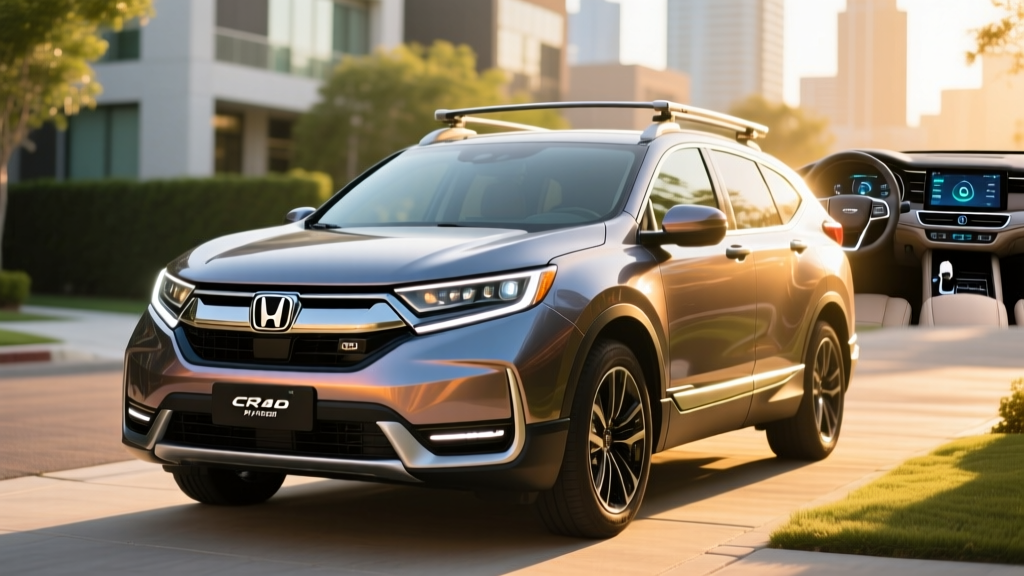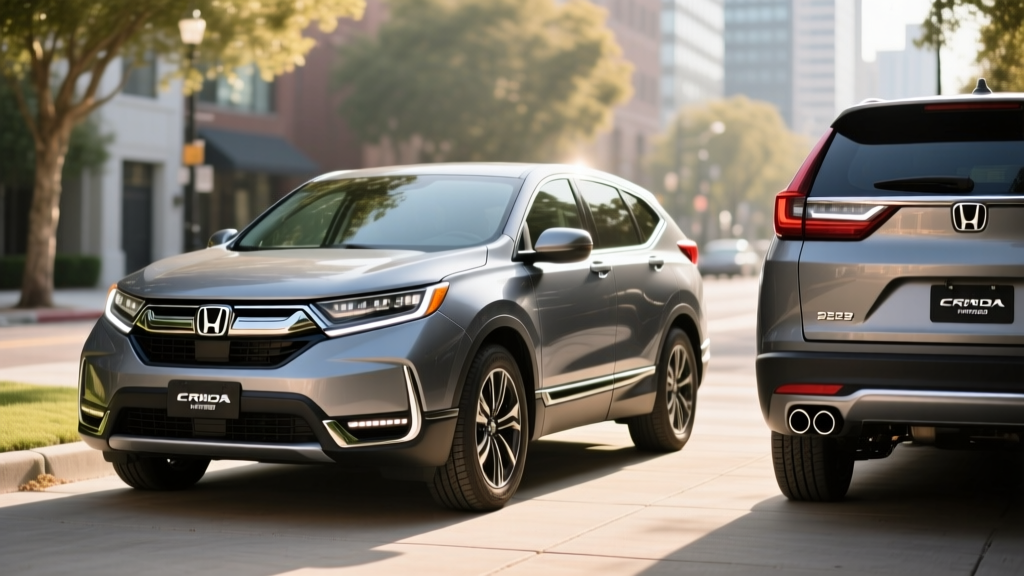
The 2023 Honda CR-V Hybrid arrived as part of the model's sixth-generation redesign, bringing a larger footprint, more cargo space, and a refined two-motor hybrid powertrain that positions it as one of the most efficient compact SUVs on the market. If you're researching the honda crv hybrid 2023 model year — whether on the used market or comparing it to newer alternatives — this guide covers everything from real-world MPG to battery longevity and tax-credit eligibility.
HEV vs PHEV: What the 2023 CR-V Hybrid Actually Is
Important distinction: The 2023 Honda CR-V Hybrid is a conventional hybrid electric vehicle (HEV). It does not plug in. It cannot drive on electric power alone for meaningful distances. Honda does not offer a plug-in hybrid (PHEV) variant of the CR-V in the United States.
| Feature | HEV (2023 CR-V Hybrid) | PHEV (e.g., Toyota RAV4 Prime) | BEV (e.g., Hyundai Ioniq 5) |
|---|---|---|---|
| Plugs in? | No | Yes (Level 1/2) | Yes (Level 1/2/DC) |
| Electric-only range | ~1 mile at low speed | 25–42 miles typical | 250–320+ miles |
| Gas engine? | Yes (primary) | Yes (backup) | No |
| Fuel/energy | Gasoline only | Gasoline + electricity | Electricity only |
| Tax credit (federal) | None | Up to $7,500* | Up to $7,500* |
*Federal §30D credit subject to MSRP caps, income limits, and battery-sourcing requirements. See IRS.gov for current eligibility rules.
The CR-V Hybrid uses Honda's two-motor hybrid system to seamlessly blend electric motor assist with the gasoline engine. You never plug it in — regenerative braking and the engine itself keep a small lithium-ion battery charged. This makes it ideal for buyers who want better fuel economy without changing their refueling habits.
EPA Fuel Economy: City, Highway, and Combined MPG
| Drivetrain | City MPG | Highway MPG | Combined MPG |
|---|---|---|---|
| FWD (Sport / Sport Touring) | 43 | 36 | 40 |
| AWD (Sport / Sport Touring) | 40 | 34 | 37 |
Data sourced from fueleconomy.gov. The front-wheel-drive configuration delivers the best efficiency, while all-wheel drive costs you roughly 3 MPG combined — a worthwhile trade for buyers in snow-belt states.
Real-World MPG vs. EPA Sticker
Conventional hybrids like the CR-V often exceed their EPA city rating in stop-and-go traffic because the electric motor handles low-speed propulsion where gasoline engines are least efficient. In real-world driving:
- City/suburban commuting: Many owners report 42–46 MPG in warm weather with moderate traffic, exceeding the 43 MPG FWD EPA city estimate.
- Highway cruising (70–80 mph): Expect 32–35 MPG. Hybrids lose their advantage at sustained high speeds where the gasoline engine runs continuously.
- Cold weather (below 32°F): MPG drops 10–15% as the engine runs more frequently for cabin heat and battery warming. Expect 34–37 combined in FWD models during winter.
- Combined real-world average: Most owners tracking on Fuelly report 36–41 MPG combined across mixed driving, aligning closely with EPA estimates.
The key takeaway: if your commute is primarily urban or suburban with frequent stops, the CR-V Hybrid rewards you with MPG numbers that beat its sticker. Highway-heavy drivers will see less benefit over the non-hybrid CR-V (which rates 28 city / 34 highway FWD).
Powertrain Specs: Horsepower, Engine, and Motor Details
| Specification | Detail |
|---|---|
| Engine | 2.0L Atkinson-cycle 4-cylinder |
| Engine output | 145 hp @ 6,100 rpm / 134 lb-ft torque |
| Electric motors | Two-motor hybrid system (one drive, one generator) |
| Drive motor output | 181 hp / 247 lb-ft torque |
| Combined system output | 204 hp / 247 lb-ft torque |
| Transmission | e-CVT (no traditional gears) |
| Drivetrain | FWD standard; AWD available (rear motor-driven) |
| 0–60 mph | ~7.6 seconds (FWD, estimated) |
| Battery type | Lithium-ion (small capacity, ~1.06 kWh) |
| Towing capacity | 1,000 lbs |
The two-motor system is the real story here. The primary drive motor delivers 247 lb-ft of torque from near zero RPM, giving the CR-V Hybrid responsive acceleration from stops that feels quicker than its 7.6-second 0–60 time suggests. The gasoline engine primarily acts as a generator at low speeds, only directly driving the wheels at highway speeds through a lock-up clutch. This series-parallel architecture is proven and smooth — there's no rubber-band CVV drone common in older hybrid systems.
The AWD system adds an electric motor on the rear axle rather than a mechanical driveshaft, which preserves interior space and allows precise torque distribution. It's not an off-road system, but it handles rain, snow, and light gravel with confidence.
Pricing by Trim and Tax Credit Eligibility
As a 2023 model year vehicle, the CR-V Hybrid is now available on the used and certified pre-owned (CPO) market. Original MSRP figures are below for reference:
| Trim | Drivetrain | Original MSRP |
|---|---|---|
| Sport | FWD | $33,710 |
| Sport | AWD | $35,210 |
| Sport Touring | AWD (standard) | $39,845 |
On the 2026 used market, expect to pay roughly $27,000–$34,000 for a 2023 CR-V Hybrid depending on mileage, condition, and trim. CPO examples from Honda dealers carry extended powertrain warranties and typically command a $1,000–$2,000 premium.
Does the 2023 CR-V Hybrid Qualify for Any Tax Credit?
No federal tax credit applies. The IRS §30D New Clean Vehicle Credit is available only for plug-in electric vehicles (PHEVs and BEVs) with a minimum battery capacity of 7 kWh. The CR-V Hybrid's ~1 kWh battery does not qualify. It is also ineligible for the Used Clean Vehicle Credit (§25E) for the same reason — that credit requires a plug-in vehicle with at least 7 kWh of battery capacity.
Some states and municipalities offer rebates for conventional hybrids, but these are uncommon and vary widely. Check your state's energy office or Alternative Fuels Data Center for local incentive programs. Honda does occasionally offer manufacturer incentives (low-APR financing, loyalty cash) on certified pre-owned models — check with local dealers.
Battery Warranty, Reliability, and Replacement Cost
Honda Hybrid Battery Warranty
- Coverage: 8 years / 100,000 miles (10 years / 150,000 miles in CARB states including CA, CT, ME, MA, NJ, NY, OR, RI, VT, WA)
- What's covered: Defects in materials/workmanship; capacity below a defined threshold (typically ~70% of original capacity)
- Transferable: Yes, warranty transfers to subsequent owners automatically
Real-World Hybrid Battery Longevity
Honda's two-motor hybrid system has been in production since the 2014 Accord Hybrid, and real-world data is encouraging. The lithium-ion battery pack in the CR-V Hybrid is small (~1.06 kWh) and operates within a narrow state-of-charge window — the system never fully charges or fully depletes it, which dramatically reduces degradation. Based on data from high-mileage Honda hybrid owners:
- Most Honda hybrid batteries retain 90%+ capacity at 100,000 miles
- Failure before 150,000 miles is uncommon
- The battery is designed to last the life of the vehicle under normal use
Battery Replacement Cost
If the hybrid battery does fail outside of warranty, replacement costs range from $2,000 to $4,000 for the battery pack itself, plus $500–$1,000 in labor, bringing the total to approximately $2,500–$5,000 at a Honda dealership. Independent hybrid specialists may offer refurbished packs for $1,500–$2,500. This is significantly less than a full EV battery replacement ($8,000–$20,000+) because the CR-V Hybrid's pack is small and simpler.
For context, Honda's hybrid system also includes an Intelligent Power Unit (IPU) and power control electronics that carry the same warranty coverage. These components rarely fail but are covered if they do.
Reliability Ratings and Ownership Costs
The 2023 CR-V Hybrid benefits from Honda's reputation for powertrain durability. Key reliability indicators:
- IIHS: 2023 CR-V earned Top Safety Pick+ rating with acceptable or good scores across all crash tests (IIHS.org)
- NHTSA: 5-star overall safety rating
- Consumer Reports: The CR-V Hybrid has scored above average in predicted reliability for the 2023 model year
- Cost of ownership: At 37–40 MPG combined, the hybrid saves approximately $400–$600 per year in fuel costs versus the non-hybrid CR-V (assuming 12,000 miles/year and $3.50/gallon regular unleaded)
The hybrid powertrain actually reduces wear on certain components: regenerative braking extends brake pad life (many hybrid owners report 80,000+ miles on original pads), and the engine runs fewer total hours because the electric motor handles low-speed driving. Oil change intervals remain at Honda's standard recommendation.
Pros
- 40 MPG combined (FWD) — class-leading for non-PHEV compact SUVs
- 247 lb-ft of electric torque delivers responsive city acceleration
- No plug-in required — zero behavior change from gas vehicles
- Spacious cargo area (36.3 cu ft behind rear seats, 76.5 cu ft folded)
- AWD available with rear electric motor (no mechanical drivetrain loss)
- Proven hybrid system with strong reliability track record
- 8-year/100,000-mile hybrid battery warranty (10/150k in CARB states)
Cons
- No PHEV option — cannot drive on electric power alone for commutes
- Highway MPG advantage over non-hybrid is modest (34 vs 34 highway AWD)
- Hybrid trims (Sport/Sport Touring) start at higher price than gas LX
- No federal tax credit eligibility
- 1,000-lb towing capacity is low for the segment
- Road noise is noticeable at highway speeds (common CR-V critique)
Hybrid vs PHEV vs EV: Which Powertrain Fits Your Life?
Choose the 2023 CR-V Hybrid (HEV) if:
- You lack access to home or workplace charging (apartment, street parking, no garage outlet)
- Your driving is a mix of city and highway with no single pattern
- You want maximum simplicity — no plugs, no range calculations, no charging apps
- You drive 10,000–15,000 miles/year and want to reduce fuel costs without a premium purchase price
- You frequently take road trips to areas with sparse charging infrastructure
Choose a PHEV (e.g., Toyota RAV4 Prime, Hyundai Tucson PHEV) if:
- You can charge at home (Level 1/2) and want 25–42 miles of electric-only commuting
- Your daily commute is under 35 miles round-trip (most PHEVs cover this on electricity alone)
- You want to qualify for the federal §30D tax credit (up to $7,500, subject to eligibility)
- You still want gas-engine range for weekend road trips without charging-planning anxiety
Choose a BEV (e.g., Tesla Model Y, Hyundai Ioniq 5) if:
- You have reliable home Level 2 charging and want zero gasoline expenses
- Your daily driving is under 250 miles and you're comfortable planning DC fast-charging stops for road trips
- You want the lowest per-mile energy cost (typically $0.04–$0.06/mile on home electricity vs $0.12–$0.16/mile for the hybrid)
- You want maximum federal/state incentives and the lowest long-term maintenance costs
The CR-V Hybrid occupies a specific niche: it's the efficiency upgrade for buyers who aren't ready (or able) to plug in. It eliminates range anxiety entirely while delivering meaningful fuel savings. If you can charge at home, a PHEV or BEV will save you more money over five years — but the CR-V Hybrid asks nothing of you except filling up at the same gas stations you already use.
Frequently Asked Questions
How many MPG does the 2023 Honda CR-V Hybrid get?
The EPA rates the FWD model at 43 city / 36 highway / 40 combined MPG. The AWD model rates 40 city / 34 highway / 37 combined. In real-world city driving, many owners exceed the EPA city estimate, while highway-heavy drivers typically see 32–35 MPG.
Can the 2023 CR-V Hybrid drive on electric power only?
Not meaningfully. As a conventional hybrid (HEV), it can creep at very low speeds on electric power for roughly a mile or less, but the gasoline engine engages almost immediately under any real acceleration. It does not plug in and has no usable electric-only range for commuting.
Is the Honda CR-V Hybrid reliable?
Yes. Honda's two-motor hybrid system has been in production since 2014 and has a strong reliability track record. The 2023 CR-V earned IIHS Top Safety Pick+ and NHTSA 5-star ratings. The hybrid battery is warrantied for 8 years/100,000 miles (10 years/150,000 miles in CARB states) and is designed to last the life of the vehicle.
How much does it cost to replace the hybrid battery?
Out-of-warranty replacement runs approximately $2,500–$5,000 at a dealership (parts and labor). Refurbished packs from independent hybrid shops may cost $1,500–$2,500. However, premature hybrid battery failure is rare in Honda's system — most packs last well beyond 150,000 miles.
Does the 2023 CR-V Hybrid qualify for a federal tax credit?
No. The federal §30D New Clean Vehicle Credit and §25E Used Clean Vehicle Credit both require a minimum battery capacity of 7 kWh and plug-in capability. The CR-V Hybrid's ~1 kWh battery does not qualify. Check your state's energy office for any local hybrid incentives.
What's the difference between the Sport and Sport Touring trims?
The Sport is the base hybrid trim with FWD or AWD, a 7-inch touchscreen (9-inch on 2024+), Apple CarPlay/Android Auto, Honda Sensing safety suite, and cloth seats. The Sport Touring adds standard AWD, a 9-inch touchscreen with wireless CarPlay, wireless phone charging, leather-trimmed seats, a hands-free power tailgate, heated rear seats, and a premium audio system.
How does the CR-V Hybrid compare to the Toyota RAV4 Hybrid?
The RAV4 Hybrid (AWD standard) rates 41 city / 38 highway / 40 combined — nearly identical to the CR-V Hybrid FWD. The RAV4 offers a PHEV variant (RAV4 Prime, 42 miles electric-only) that the CR-V lacks. The CR-V Hybrid has slightly more cargo space (36.3 vs 37.5 cu ft is comparable) and a more modern interior. Both are excellent choices; the decision often comes down to styling preference, dealer availability, and whether you want a PHEV option.
The Bottom Line
The 2023 Honda CR-V Hybrid is a practical, efficient compact SUV that delivers on its fuel-economy promises without demanding any lifestyle changes from its owner. With 37–40 MPG combined, a proven hybrid powertrain, and strong safety ratings, it's a smart choice for buyers transitioning from a gas vehicle who aren't ready for plug-in ownership. On the 2026 used market, it offers strong value — especially for urban and suburban commuters who'll regularly exceed the EPA city estimates.
If you can charge at home and want to eliminate gasoline for daily commuting, a PHEV like the RAV4 Prime or a BEV like the Hyundai Ioniq 5 will save you more over five years. But if simplicity and reliability are your priorities, the CR-V Hybrid is one of the best conventional hybrid SUVs available.