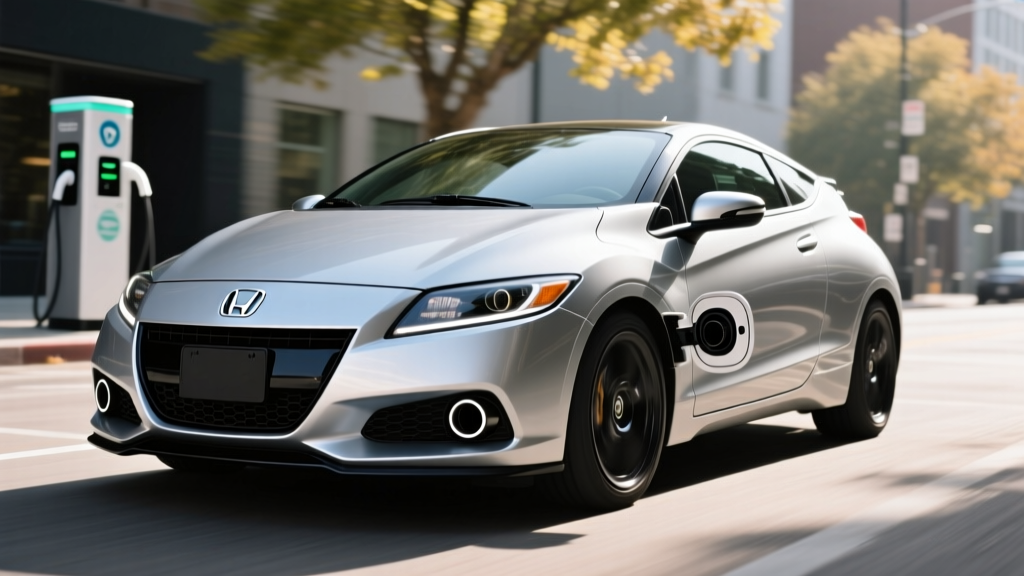
The Honda CR-Z hybrid occupies a curious space in automotive history. Marketed from 2011 through 2016 as a "sport hybrid," it paired a 1.5-liter four-cylinder engine with Honda's Integrated Motor Assist (IMA) system to deliver coupe styling and modest fuel savings. In 2026, it exists exclusively on the used market — and that changes the buying calculus entirely. This guide breaks down the CR-Z's real-world efficiency, battery longevity, ownership costs, and how it stacks up against modern hybrids and EVs for today's buyers.
What the Honda CR-Z Hybrid Actually Is
The CR-Z is a conventional hybrid (HEV), not a plug-in hybrid (PHEV). It uses Honda's IMA system, where a small electric motor sandwiched between the engine and transmission assists during acceleration and enables regenerative braking. The battery recharges solely through engine power and regen — there is no plug, no electric-only driving mode, and no external charging capability.
HEV vs. PHEV — Where the CR-Z Fits
| Feature | Honda CR-Z (HEV) | Modern PHEV (e.g., Toyota Prius Prime) |
|---|---|---|
| Plug-in charging | No — never plugs in | Yes — Level 1/2 AC charging |
| Electric-only range | 0 miles (motor assists only) | ~40 miles (2026 Prius Prime) |
| Battery size | 0.67 kWh (NiMH, usable ~0.5 kWh) | 13.6 kWh (lithium-ion) |
| Federal tax credit (§30D) | Not eligible | Up to $7,500 (income/MSRP/sourcing rules apply) |
| Gasoline required | Yes, always | Yes, after EV range depletes |
This distinction matters because buyers searching for a "Honda CR-Z hybrid" sometimes assume it can plug in or drive on electricity alone. It cannot. The IMA system's electric motor contributes a maximum of 14 horsepower and 58 lb-ft of torque to assist the gasoline engine — it never propels the car independently at meaningful speeds.
Fuel Economy: EPA Ratings and Real-World MPG
The CR-Z came in two transmission variants, and the EPA numbers differ between them. Here's the official data from fueleconomy.gov:
| Model Year / Transmission | City MPG | Highway MPG | Combined MPG |
|---|---|---|---|
| 2011–2016 CVT (automatic) | 35 | 39 | 37 |
| 2011–2016 6-speed manual | 31 | 39 | 34 |
Real-World MPG: What Owners Actually Report
The CR-Z's real-world fuel economy tends to track close to EPA estimates — and in some cases slightly exceeds them in city driving, which is typical for hybrids that benefit from regenerative braking in stop-and-go traffic. Owner-reported averages on Fuelly cluster around 36–40 MPG combined for CVT models driven with moderate restraint.
However, the CR-Z's "sport" positioning worked against efficiency. The car's three driving modes — ECON, NORMAL, and SPORT — alter throttle response, A/C operation, and IMA assist behavior. In SPORT mode, the engine stays in higher RPM ranges and the electric assist draws more aggressively from the small NiMH pack, dropping observed economy to 30–33 MPG during spirited driving. Highway fuel economy at sustained 75+ mph also falls to roughly 34–36 MPG due to the CR-Z's less-than-aerodynamic hatchback profile and relatively tall gearing.
For context, the 2026 Toyota Prius achieves an EPA-estimated 57 MPG combined. The CR-Z's efficiency was respectable for 2012 but is thoroughly outclassed by current hybrid technology.
Powertrain and Performance Specifications
| Specification | Honda CR-Z (2011–2016) |
|---|---|
| Engine | 1.5L i-VTEC inline-4 |
| Engine output | 111 hp @ 6,000 rpm / 107 lb-ft torque |
| Electric motor (IMA) | 14 hp / 58 lb-ft |
| Combined system output | 122 hp @ 6,000 rpm / 128 lb-ft (CVT: 127 lb-ft) |
| Battery type | Nickel-metal hydride (NiMH) |
| Battery capacity | 0.67 kWh (total), ~0.5 kWh usable |
| Transmission options | CVT or 6-speed manual |
| 0–60 mph | ~9.7 seconds (CVT) / ~9.1 seconds (manual) |
| Curb weight | 2,698–2,815 lbs |
| Drivetrain | Front-wheel drive |
The combined 122 horsepower was modest even at launch, and the CR-Z's acceleration feels leisurely by 2026 standards. The IMA system's contribution is subtle — you'll notice a slight torque fill at low RPM rather than any dramatic electric punch. The 6-speed manual is the enthusiast's choice, offering a more engaging drive at the cost of 3 MPG combined.
One unique feature: the CR-Z offers a Sport+ button that temporarily boosts IMA assist for short bursts of additional acceleration (roughly 10 seconds). It's a party trick more than a practical feature, given the small battery's limited energy reserve.
Hybrid Battery Health, Warranty, and Replacement Cost
Honda CR-Z IMA Battery Warranty (Original)
Honda covered the IMA battery for 8 years / 100,000 miles in most states, and 10 years / 150,000 miles in CARB states (California, New York, Massachusetts, and others adopting California emissions standards). Since the CR-Z was discontinued after 2016, all original factory warranties have expired as of 2026.
Battery Degradation and Lifespan
The CR-Z's NiMH IMA battery is small and relatively robust, but it is not immune to age-related degradation. NiMH chemistry tends to lose capacity gradually rather than failing catastrophically. Common symptoms of a weakening IMA battery include:
- Reduced electric assist during acceleration (the car feels slower)
- More frequent engine idle-stop disablement
- IMA warning light on the dashboard
- Recalibration cycles (the battery gauge drops and recharges unexpectedly)
Based on owner reports and independent hybrid shop data, CR-Z IMA batteries typically last 120,000–160,000 miles before noticeable degradation, with some units lasting longer in moderate climates. Heat is the primary enemy — vehicles in Arizona, Texas, and Southern California tend to see earlier battery issues than those in cooler regions.
Battery Replacement Cost
If you're buying a used CR-Z, budget for the possibility of an IMA battery replacement:
- Dealer replacement (new OEM): $2,500–$3,500 installed
- Independent hybrid shop (remanufactured): $1,200–$2,000 installed
- DIY aftermarket pack: $600–$1,000 for the battery module (advanced DIY only)
Some owners opt for a "grid charger" ($150–$250) to periodically balance and condition the NiMH pack, which can extend its life and resolve minor recalibration issues. This is a well-established practice in the Honda IMA community.
Is the CR-Z Reliable Overall?
Beyond the IMA battery, the CR-Z is fundamentally a Honda built on proven Civic underpinnings. The 1.5L L15 engine is durable, the manual transmission is robust, and the CVT (while not enthusiast-preferred) has proven reliable with regular fluid changes. The most commonly reported non-battery issues include:
- 12V auxiliary battery failures (standard for any car of this age)
- A/C compressor wear at higher mileage
- Suspension bushing deterioration (normal wear item)
Overall, a well-maintained CR-Z with a healthy IMA battery is a reliable daily driver. The key is verifying battery health before purchase — ask for a scan-tool readout of IMA battery state-of-health (SoH) or budget for a potential replacement.
Pricing and Tax Credit Eligibility in 2026
The Honda CR-Z is available only on the used market. As of early 2026, typical asking prices are:
- 2011–2013 models (80k–130k miles): $6,000–$9,000
- 2014–2016 models (50k–90k miles): $9,000–$14,000
- Low-mileage examples (<40k miles): $13,000–$17,000
Does the CR-Z Qualify for Any Tax Credit?
No. The CR-Z does not qualify for the federal §30D Clean Vehicle Credit. That credit applies only to new plug-in electric vehicles (BEVs and PHEVs) meeting specific battery sourcing, MSRP, and buyer income requirements per IRS guidelines. The CR-Z was never a plug-in vehicle, and the used EV credit (up to $4,000 under §25E) also requires a plug-in electric drivetrain — which the CR-Z lacks.
Some states offer incentives for used hybrid purchases, but these are uncommon and vary by jurisdiction. Check your state's energy or DMV website for current programs.
CR-Z vs. Modern Hybrids and EVs: What Should You Buy?
The CR-Z makes sense for a narrow buyer profile. Here's how it compares to the alternatives in 2026:
Reasons to Choose the Honda CR-Z
- Low purchase price ($6k–$14k) for an efficient commuter
- Fun-to-drive factor (especially with the 6-speed manual)
- Distinctive styling — stands out from Prius ubiquity
- No plug-in infrastructure needed — works anywhere
- Simple hybrid system with strong Honda reliability
Reasons to Look Elsewhere
- 37 MPG combined is outclassed by 2026 hybrids (Prius: 57 MPG)
- No electric-only driving capability
- Small back seat and limited cargo space (22.8 cu ft max)
- IMA battery replacement risk ($1,200–$3,500) on an aging car
- No tax credits, no warranty remaining
- Outdated infotainment and no modern ADAS features
The Decision Framework
Choose the CR-Z if: You want an affordable, stylish, manual-transmission hybrid commuter under $12,000, you don't need rear-seat space, and you're willing to budget for a potential IMA battery replacement.
Choose a modern HEV (e.g., 2026 Prius, Civic Hybrid) if: You prioritize maximum MPG (50+), modern safety tech (automatic emergency braking, lane-keeping), and a full factory warranty — and you can spend $28,000+.
Choose a PHEV (e.g., Prius Prime, RAV4 Prime) if: You have home charging access, want 35–45 miles of electric-only commuting, and qualify for the §30D federal tax credit (up to $7,500 with income/MSRP/sourcing eligibility per the IRS).
Choose a full EV (e.g., Chevrolet Equinox EV, Tesla Model 3) if: You want zero gasoline use, have reliable home or workplace charging, and want 250+ miles of range with minimal maintenance.
What to Inspect Before Buying a Used CR-Z
If you've decided the CR-Z fits your needs, here's a focused pre-purchase checklist:
- IMA battery health: Have a hybrid-competent mechanic scan the battery's state-of-health. Look for SoH above 70% and no recent recalibration codes.
- IMA warning light history: Check for stored codes even if the light isn't currently illuminated.
- CVT fluid service: Honda recommends CVT fluid replacement at specific intervals. Verify this was done on schedule.
- 12V battery age: The auxiliary 12V battery should be less than 4 years old. A weak 12V can cause IMA system errors.
- Timing chain: The L15 engine uses a timing chain (not a belt), which is generally lifetime-rated, but listen for unusual rattle at cold start.
- Rust inspection: Check undercarriage, wheel arches, and hatch seams if the car was driven in snow-belt states.
Frequently Asked Questions
How many MPG does the Honda CR-Z hybrid get?
The EPA rates the CVT-equipped CR-Z at 35 city / 39 highway / 37 combined MPG. The 6-speed manual drops to 31 city / 39 highway / 34 combined. Real-world driving typically yields 36–40 MPG combined in the CVT model with moderate driving habits.
Can the Honda CR-Z drive on electric power only?
No. The CR-Z is a conventional hybrid (HEV) with a 0.67 kWh NiMH battery and a 14-hp assist motor. It cannot propel itself on electricity alone. The electric motor only assists the gasoline engine during acceleration and captures energy during braking.
Is the Honda CR-Z a plug-in hybrid?
No. The CR-Z has no plug, no charging port, and no external charging capability. It is a self-charging conventional hybrid that recovers energy through regenerative braking and the gasoline engine.
How much does a Honda CR-Z IMA battery replacement cost?
Dealer-installed OEM batteries run $2,500–$3,500. Independent hybrid shops offer remanufactured replacements for $1,200–$2,000 installed. Aftermarket DIY packs are available for $600–$1,000 but require advanced mechanical skill.
Is the Honda CR-Z reliable?
Yes, with a caveat. The CR-Z's conventional powertrain (engine, transmission, chassis) is Honda-reliable. The IMA battery is the main longevity risk, typically lasting 120,000–160,000 miles. Budget for a potential battery replacement if buying a high-mileage example.
Does the CR-Z qualify for any federal tax credit?
No. The CR-Z is a conventional hybrid with no plug-in capability. The federal §30D credit applies only to new plug-in vehicles (BEVs and PHEVs). The used EV credit (§25E, up to $4,000) also requires plug-in capability. No federal incentive applies to the CR-Z.
Is the Honda CR-Z still being made?
No. Honda discontinued the CR-Z after the 2016 model year. All examples available in 2026 are pre-owned. Honda's current hybrid offerings include the Civic Hybrid, Accord Hybrid, and CR-V Hybrid — all using more advanced two-motor hybrid systems with significantly higher efficiency.