Honda CR-Z Hybrid MPG: What the EPA Says vs. Real-World Results
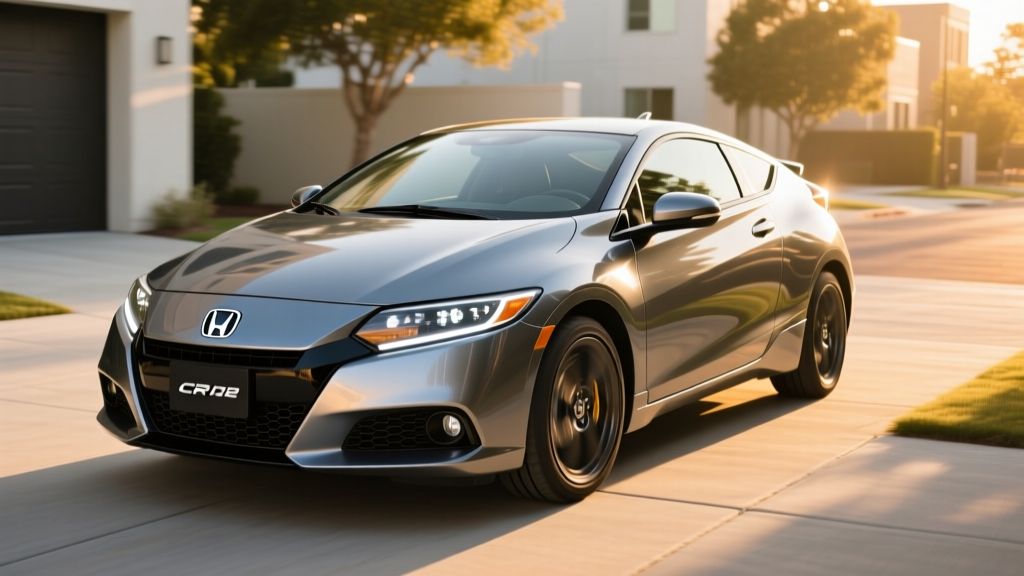
The Honda CR-Z occupies a unique space in hybrid history: a two-seat sport compact that paired a 1.5-liter i-VTEC engine with Honda's Integrated Motor Assist (IMA) system. Discontinued after the 2016 model year, the CR-Z remains a popular used-hybrid option for buyers who want something more engaging than a Prius. If you're researching Honda CR-Z hybrid MPG to decide whether this car fits your commute, here's the exact data you need.
| Transmission | City MPG | Highway MPG | Combined MPG |
|---|---|---|---|
| CVT (automatic) | 35 | 39 | 37 |
| 6-speed manual | 31 | 39 | 34 |
The CVT-equipped CR-Z delivers the stronger fuel economy numbers, and it's the more common configuration on the used market. According to fueleconomy.gov, the 2016 Honda CR-Z with CVT achieves 35 city / 39 highway / 37 combined MPG. The manual version sacrifices 3 MPG combined, primarily in city driving where the electric motor's stop-start assist matters most.
Real-World MPG: What Owners Actually Report
EPA estimates are a baseline, not a guarantee. Real-world CR-Z owners on Fuelly and similar tracking platforms report averages between 34–40 MPG combined depending on driving style. The IMA system's mild hybrid architecture shines in stop-and-go traffic, where regenerative braking and auto engine-stop recover energy that conventional cars waste. Highway-heavy commutes at 75+ MPH tend to land closer to 34–36 MPG. In cold weather (below 35°F), expect a 5–8% drop due to reduced battery efficiency and longer engine warm-up cycles.
Understanding the CR-Z Powertrain: Mild Hybrid, Not Plug-In
The Honda CR-Z is a conventional hybrid (HEV), not a plug-in hybrid (PHEV). This distinction is critical for buyers comparing electrified options.
| Feature | Honda CR-Z (HEV) | Typical PHEV (e.g., Toyota RAV4 Prime) |
|---|---|---|
| Plugs in to charge? | No — charges via regenerative braking and engine | Yes — Level 1/Level 2 charging |
| Electric-only driving | No (motor assists engine only) | Yes — 25–42 miles typical |
| Battery size | 0.6 kWh (nickel-metal hydride) | 13–18 kWh (lithium-ion) |
| Federal tax credit (§30D) | Not eligible | Up to $7,500 (subject to sourcing/income rules) |
| Fuel required | Regular unleaded (87 octane) | Regular unleaded (87 octane) |
The CR-Z's IMA system uses a 10-kW (13-hp) electric motor sandwiched between the 1.5L engine and transmission. Combined output is 130 horsepower (127 hp with the manual transmission) and 140 lb-ft of torque. The electric motor cannot drive the car independently — it assists the gasoline engine during acceleration and enables idle stop-start. This is fundamentally different from Toyota's Hybrid Synergy Drive or any modern PHEV system that can propel the vehicle on electric power alone.
| Engine | 1.5L i-VTEC inline-4 |
| Electric motor | 10 kW (13 hp) IMA |
| Combined horsepower | 130 hp (CVT) / 127 hp (MT) |
| Combined torque | 140 lb-ft |
| Battery type | Nickel-metal hydride (NiMH) |
| Battery capacity | ~0.6 kWh |
| 0–60 mph | ~9.7 seconds |
| Curb weight | ~2,850 lbs |
| Drivetrain | Front-wheel drive |
| Fuel type | Regular unleaded (87 octane) |
Sport Mode and the +S Button: How Driving Style Affects MPG
The CR-Z includes Honda's 3-mode drive system: ECON, Normal, and Sport. The Sport mode (activated by the +S button on the steering wheel) sharpens throttle response and adjusts the IMA system to provide maximum electric assist. In Sport mode, the CR-Z prioritizes acceleration over efficiency, and you'll see MPG drop to the low 30s during spirited driving.
ECON mode does the opposite — it softens throttle input, reduces A/C compressor load, and maximizes regenerative braking. Drivers who leave the car in ECON mode for daily commuting consistently report the highest real-world MPG figures. The Normal setting splits the difference and is where most owners leave the car for mixed driving.
One practical note: the CR-Z's fuel tank holds 10.6 gallons. At 37 MPG combined, that translates to roughly 390 miles of range per tank — adequate for most commutes but shorter than what you'd get from a Prius (50+ MPG combined) or a modern PHEV with combined electric and gasoline range exceeding 500 miles.
Battery Longevity, Warranty, and Replacement Costs
Battery reliability is the top concern for any used-hybrid buyer, and the CR-Z is no exception. Here's what you need to know about the IMA battery's lifespan and what happens when it degrades.
Original Honda CR-Z Hybrid Battery Warranty
- Original coverage: 8 years / 80,000 miles (10 years / 150,000 miles in CARB states including California, New York, Massachusetts, and others)
- Battery chemistry: Nickel-metal hydride (NiMH) — proven, stable chemistry with a long track record in Honda and Toyota hybrids
- Typical lifespan: 10–15 years or 150,000–200,000 miles before significant capacity loss, based on owner reports and NiMH degradation data
NiMH batteries degrade more slowly and predictably than early lithium-ion packs, but they are not immune to age-related capacity loss. A degraded CR-Z IMA battery won't leave you stranded — the car simply reverts to gasoline-only operation with slightly reduced fuel economy (typically a 2–4 MPG drop) and diminished electric assist during acceleration.
Replacement cost: A new OEM Honda IMA battery runs approximately $2,000–$3,500 including installation at a dealership. Third-party refurbished NiMH batteries are available for $1,000–$1,800, though quality varies. Independent hybrid-specialty shops often perform replacements at lower labor rates than Honda dealers.
For a 2011–2016 CR-Z purchased in 2026, the original 8-year warranty has expired on all model years. However, the NiMH chemistry's natural longevity means many original batteries are still functional. When shopping used, request a hybrid battery health check (many Honda dealers can pull IMA state-of-health data via the OBD-II port) and look for cars with documented battery replacements.
Is the Honda CR-Z Reliable Overall?
The CR-Z benefits from Honda's reputation for mechanical durability. The 1.5L i-VTEC engine (L-series family) is a proven, low-stress powerplant shared with the Honda Fit. Common maintenance items include standard timing-chain inspection, CVT fluid changes (every 30,000–60,000 miles), and brake pad replacement — though regenerative braking extends pad life significantly compared to non-hybrid vehicles.
Known issues specific to the CR-Z include:
- IMA battery failure: Most common on 2011–2012 models; later years received updated battery management software
- 12V auxiliary battery drain: If the car sits for extended periods, the 12V battery can discharge and prevent the IMA system from starting — keep it on a trickle charger if stored
- CVT shudder: Rare, but some owners report torque-converter shudder at low speeds; usually resolved with a CVT fluid flush
The NHTSA safety ratings and reliability records for the CR-Z are generally clean, with no major recalls affecting the hybrid system specifically.
Pricing and Tax Credit Eligibility in 2026
Since Honda discontinued the CR-Z after 2016, you'll only find these on the used market. As of early 2026, typical asking prices are:
- 2011–2013 models: $6,000–$10,000 (80,000–140,000 miles)
- 2014–2016 models: $10,000–$16,000 (40,000–100,000 miles)
- Low-mileage examples (under 40k): $14,000–$18,000
Federal tax credit: The CR-Z does not qualify for the IRS §30D new clean vehicle credit — that credit applies only to new plug-in vehicles (BEVs and PHEVs) meeting battery-sourcing and MSRP requirements. However, if you purchase a used CR-Z from a dealer for $25,000 or less, you may qualify for the Used Clean Vehicle Credit (§25E), which provides 30% of the sale price up to $4,000. There's a catch: §25E requires the vehicle to be a qualified plug-in electric vehicle or fuel cell vehicle. Since the CR-Z is a conventional HEV that does not plug in, it is not eligible for the used-vehicle credit either.
For buyers specifically seeking a tax-credit-eligible vehicle, you'll need to look at plug-in hybrids (like the Toyota Prius Prime or Chrysler Pacifica PHEV) or full battery-electric vehicles. Consult IRS guidelines on clean vehicle credits or a tax professional for your specific situation.
Who Should Buy the Honda CR-Z — And Who Shouldn't
Choose the CR-Z If:
- You want a fun, lightweight hybrid with a manual transmission option (rare in the hybrid world)
- Your budget is under $15,000 and you want hybrid efficiency without plug-in complexity
- You primarily drive in city/stop-and-go traffic where IMA regenerative braking maximizes MPG
- You value Honda reliability and don't mind a two-seat layout
Look Elsewhere If:
- You need back seats or significant cargo space (the CR-Z has a small rear hatch area only)
- You want electric-only driving capability — consider a PHEV instead
- You want the highest possible MPG — the Toyota Prius achieves 50+ MPG combined
- You want federal tax credit eligibility — only plug-in vehicles qualify
- You want the latest infotainment, ADAS, or safety tech — the CR-Z predates modern driver-assist systems
CR-Z vs. Alternatives: Hybrid, PHEV, or Full EV?
Deciding between a used HEV like the CR-Z, a newer PHEV, or a full battery-electric vehicle depends on your charging access, budget, and daily mileage.
Decision Framework
- Choose the CR-Z (used HEV) if: budget is under $15K, you have no home charging access, you want low running costs with zero plug-in hassle, and you're okay with a two-seat coupe.
- Choose a PHEV (e.g., Prius Prime, RAV4 Prime) if: you can install a Level 2 home charger, your daily commute is under 30–40 miles (within electric-only range), you want tax credit eligibility, and you want the flexibility of gasoline for road trips.
- Choose a full BEV (e.g., Chevy Bolt, Hyundai Ioniq 5) if: you have reliable home or workplace charging, your daily driving is under 200 miles, you want the lowest per-mile fuel cost, and you're ready to plan around DC fast charging for road trips.
Frequently Asked Questions
How many MPG does the Honda CR-Z hybrid get?
The EPA rates the CVT-equipped CR-Z at 35 city / 39 highway / 37 combined MPG. The 6-speed manual version is rated at 31 city / 39 highway / 34 combined. Real-world owner averages typically fall between 34–40 MPG combined depending on driving style and conditions.
Can the Honda CR-Z drive on electric power alone?
No. The CR-Z uses Honda's Integrated Motor Assist (IMA) system, which is a mild hybrid architecture. The electric motor assists the gasoline engine during acceleration and enables idle stop-start, but it cannot propel the car independently. If you want electric-only driving, you need a plug-in hybrid (PHEV) or a full battery-electric vehicle (BEV).
Does the Honda CR-Z qualify for any federal tax credit?
No. The CR-Z is a conventional hybrid (HEV), not a plug-in vehicle. Federal tax credits under §30D (new vehicles) and §25E (used vehicles) require plug-in electric capability. The CR-Z does not qualify for either credit.
How much does it cost to replace the CR-Z hybrid battery?
A new OEM IMA battery replacement costs approximately $2,000–$3,500 at a Honda dealership, including parts and labor. Refurbished third-party NiMH batteries are available for $1,000–$1,800. The NiMH chemistry is durable, and many original batteries last 150,000–200,000 miles before needing replacement.
Is the Honda CR-Z a good used hybrid buy in 2026?
For the right buyer, yes. The CR-Z offers a unique combination of sporty handling, manual transmission availability, and solid hybrid fuel economy at an affordable used price (typically $8,000–$16,000). Its limitations — two seats, modest cargo space, no plug-in capability, and older technology — mean it's best suited as a commuter car for one or two people who prioritize driving enjoyment over practicality. If you need more space or want plug-in electric range, consider a used Prius, Prius Prime, or a newer PHEV/BEV.
What is the Honda CR-Z's total driving range on a full tank?
With a 10.6-gallon fuel tank and 37 MPG combined (CVT), the CR-Z delivers approximately 390 miles of total range. Highway-only driving at the 39 MPG EPA estimate could push that to roughly 413 miles. This is less than a Prius (approximately 580 miles per tank) due to the CR-Z's smaller fuel tank.