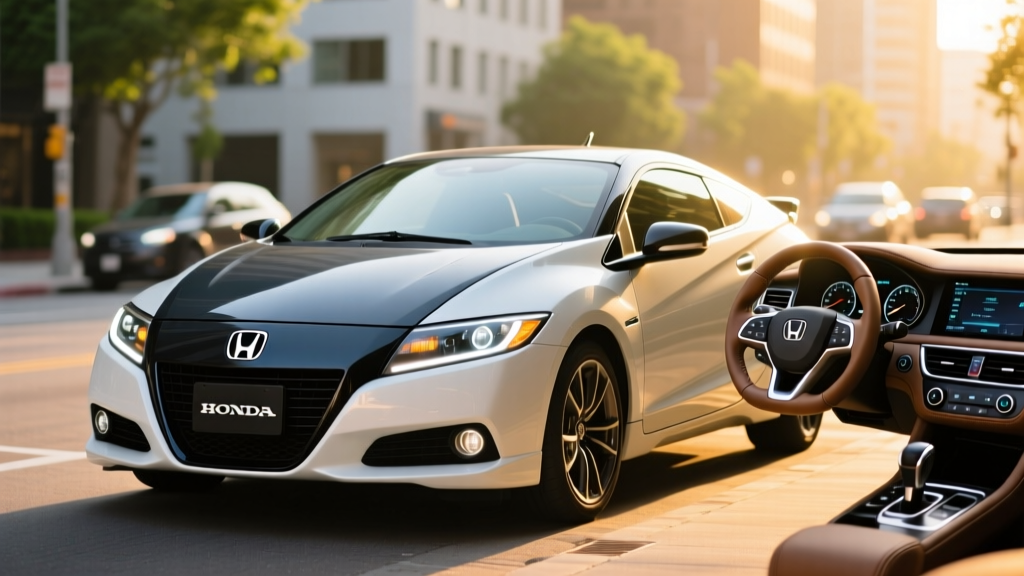
The Honda CR-Z occupies a unique corner of the hybrid market: a two-seat sport coupe that prioritized driving engagement over maximum efficiency. Produced from the 2011 through 2016 model years, the CR-Z paired a 1.5-liter four-cylinder engine with Honda's Integrated Motor Assist (IMA) system, delivering a combined 130 horsepower and a six-speed manual transmission option — something virtually unheard of in the hybrid segment. For used-car shoppers searching for Honda CR-Z hybrid cars, this guide covers every number that matters: real-world MPG, battery longevity, replacement costs, and how the CR-Z stacks up against modern alternatives.
Honda CR-Z Fuel Economy: EPA Ratings and Real-World MPG
Fuel economy is the primary reason most buyers consider a hybrid, and the CR-Z delivers respectable but not class-leading numbers. The EPA rated the CR-Z differently depending on transmission choice, and real-world results often skew higher in city driving — a hallmark of Honda's IMA system, which leans heavily on regenerative braking in stop-and-go traffic.
| Transmission | City MPG | Highway MPG | Combined MPG |
|---|---|---|---|
| CVT (Automatic) | 36 | 39 | 37 |
| 6-Speed Manual | 31 | 38 | 34 |
Source: EPA / fueleconomy.gov
Real-World MPG vs. EPA Sticker
Owner-reported data on Fuelly and CR-Z forums consistently shows CVT-equipped models averaging 38–42 MPG combined in mixed driving, with city-heavy commuters occasionally seeing 44+ MPG. The six-speed manual variant typically returns 33–36 MPG combined — the penalty of a fixed-ratio drivetrain and a driver more likely to explore the tachometer. Highway cruising at 75+ mph drops efficiency to roughly 34–36 MPG for the CVT, as the small 1.5L engine works harder at sustained speed and the electric motor provides minimal assist at high velocity.
Cold weather reduces fuel economy by roughly 5–8% due to longer engine warm-up cycles and increased accessory load from the heater. This is less severe than a battery-electric vehicle's winter range loss but still noticeable over a full tank.
Powertrain: How Honda's IMA Hybrid System Works
The CR-Z uses Honda's Integrated Motor Assist (IMA) — a mild-hybrid architecture fundamentally different from the power-split systems in a Toyota Prius or the series-parallel setup in modern PHEVs. Here is the exact hardware:
| Component | Specification |
|---|---|
| Gasoline Engine | 1.5L i-VTEC inline-4, 111 hp @ 6,000 rpm / 106 lb-ft torque |
| Electric Motor (IMA) | 10 kW (13 hp) / 58 lb-ft torque |
| Combined System Output | 130 hp @ 6,000 rpm / 140 lb-ft (CVT) or 127 lb-ft (MT) |
| Hybrid Battery | Nickel-Metal Hydride (NiMH), ~0.6 kWh usable |
| Transmission | CVT or 6-speed manual |
| Drivetrain | Front-wheel drive |
| 0–60 mph | ~9.7 seconds (CVT) / ~9.1 seconds (MT) |
The IMA motor is sandwiched between the engine and transmission — it cannot propel the car on electric power alone at any meaningful speed. Its role is to assist the gasoline engine during acceleration, smooth out stop-start transitions, and capture energy during deceleration. The CR-Z can achieve brief electric-only creeping at very low speeds (under ~3 mph in ideal conditions), but this is not a usable electric driving mode. Think of IMA as a torque-fill system that makes a small engine feel larger and more responsive while shaving fuel consumption.
Conventional Hybrid (HEV): The CR-Z is an HEV. It has a small battery (~0.6 kWh) charged solely by the engine and regenerative braking. No plug. No electric-only range. You fuel it like a normal gas car.
Plug-In Hybrid (PHEV): A PHEV like the Toyota RAV4 Prime has a much larger battery (18.1 kWh), charges from a wall outlet, and delivers 42 miles of electric-only range before the gas engine engages.
The CR-Z offers zero plug-in capability. If your commute is under 30 miles and you have home charging, a modern PHEV will save more fuel. If you lack charging access, the CR-Z's HEV simplicity is an advantage.
Hybrid Battery Lifespan, Warranty, and Replacement Cost
The single biggest concern for any used-hybrid buyer is battery health. The CR-Z's NiMH IMA battery is far smaller and less stressed than the lithium-ion packs in modern EVs, but it is not immune to degradation — especially in vehicles now 10–15 years old.
Honda warranted the CR-Z's IMA battery for 8 years / 100,000 miles in most states, and 10 years / 150,000 miles in California Air Resources Board (CARB) states (CA, CT, ME, MA, NJ, NY, OR, RI, VT, WA). For a 2011 model, factory coverage has expired everywhere. For a 2016 model, coverage may still apply in CARB states if under 150,000 miles.
How Long Does the CR-Z IMA Battery Last?
Based on owner reports across CR-Z forums, Reddit's r/HondaCRZ, and repair databases, the NiMH IMA battery typically begins showing capacity loss between 100,000 and 150,000 miles or 8–12 years of age, whichever comes first. Symptoms include reduced fuel economy (2–5 MPG drop), more frequent engine engagement, and eventually an IMA warning light on the dashboard. Unlike full EV batteries that degrade gradually, NiMH cells tend to fail individually — one weak cell drags down the entire pack's performance.
IMA Battery Replacement Cost
| Option | Estimated Cost | Notes |
|---|---|---|
| OEM Honda dealer replacement | $2,500–$3,500 | New NiMH pack, 1-year warranty |
| Aftermarket remanufactured pack | $1,200–$2,000 | Reconditioned cells, 1–3 year warranty |
| Individual cell replacement (DIY/specialist) | $300–$800 | Replace only failed cells; requires technical skill |
| Grid charger reconditioning | $150–$400 (equipment) | Balances cells; may extend life 1–3 years |
The grid charger option deserves attention: many CR-Z owners proactively use a Honda IMA grid charger (available from third-party suppliers like Hybrid Automotive) to deep-cycle and rebalance the NiMH pack every few months. This inexpensive maintenance step can delay a full battery replacement by several years and is widely recommended in the CR-Z owner community.
Does the Honda CR-Z Qualify for Any Tax Credit?
No. The Honda CR-Z does not qualify for the federal §30D Clean Vehicle Credit or any current state EV rebate. The federal credit applies exclusively to new plug-in electric vehicles (BEVs and PHEVs) with a minimum battery capacity of 7 kWh and compliant battery sourcing — the CR-Z's 0.6 kWh NiMH pack and HEV architecture make it ineligible on every count.
When new (2011–2016), the CR-Z also did not qualify for the federal Alternative Motor Vehicle Credit that existed at the time, as that credit had already phased out for Honda due to the brand reaching its sales cap. Some state and local incentives for hybrids existed during the CR-Z's production run, but these have all expired or been restructured to target plug-in vehicles.
For current hybrid and PHEV tax credit rules, consult the IRS §30D guidance and verify eligibility with a tax professional.
Used Honda CR-Z Pricing in 2026
Because the CR-Z has been out of production since 2016, all available examples are used. Pricing varies significantly by mileage, condition, transmission, and IMA battery health:
| Model Year | Mileage Range | Price Range | Notes |
|---|---|---|---|
| 2011–2012 | 90k–140k | $5,500–$8,500 | Verify IMA battery health |
| 2013–2014 | 60k–110k | $8,000–$12,000 | Updated styling, more power |
| 2015–2016 | 40k–80k | $11,000–$16,000 | Final years, best equipped |
Manual-transmission examples command a $500–$1,500 premium over CVT models. EX-L Navi trims (with leather and navigation) sit at the top of each range. Always request an IMA battery health readout from a Honda dealer or qualified hybrid technician before purchase — this single data point is more important than cosmetic condition.
Reliability and Common Issues Beyond the Battery
The CR-Z benefits from Honda's generally strong reliability record. The 1.5L i-VTEC engine is a proven, low-stress design shared with the Fit, and the manual transmission is robust. Beyond the IMA battery, owners should watch for:
- 12V auxiliary battery: Like all hybrids, the CR-Z has a standard 12V battery that powers accessories and computers. It typically lasts 3–5 years and costs $120–$180 to replace. A dead 12V battery will prevent the car from starting even if the IMA pack is healthy.
- A/C compressor: The electrically driven A/C compressor can fail around 100,000+ miles. Replacement runs $800–$1,400 at a dealer.
- CVT fluid: Honda recommends CVT fluid changes at specific intervals. Neglected CVT fluid can lead to shuddering or premature failure. Verify service history.
- Brake actuator: Regenerative braking reduces wear on the friction brakes (pads often last 80,000+ miles), but the brake actuator module can develop issues at high mileage — a $600–$1,000 repair.
Overall, the CR-Z rates well for reliability when properly maintained. The IMA system is simpler and less expensive to repair than the high-voltage systems in modern PHEVs and BEVs.
Who Should Buy a Honda CR-Z — And Who Shouldn't
Choose the CR-Z If:
- You want a fun, lightweight hybrid coupe with a manual transmission
- You lack home charging access and need a hybrid that requires no plug
- Your budget is under $15,000 and you want Honda reliability
- You drive mostly in the city where the CR-Z exceeds its EPA rating
- You want a unique, head-turning design that stands out from Prius ubiquity
Skip the CR-Z If:
- You need more than two seats (the CR-Z is a strict 2-seater)
- You want electric-only driving or plug-in capability
- Cargo space matters (only 25.1 cu ft with seats folded, no rear seat)
- You prioritize maximum MPG — a Prius gets 52–57 combined
- You want modern ADAS features (no automatic emergency braking, no lane-keeping)
CR-Z vs. Modern Alternatives
Compared to a new 2026 Toyota Prius (57 MPG combined, $28,350 MSRP), the CR-Z sacrifices roughly 20 MPG but costs $15,000–$20,000 less and delivers a sportier driving experience. Against a used Toyota Prius c (46–50 MPG combined, $7,000–$11,000 used), the CR-Z offers more power and a manual option but lower fuel economy. For buyers who want plug-in electric range without full EV commitment, a used Chevrolet Volt (38–53 miles electric-only, $8,000–$14,000) is a fundamentally different — and more efficient — proposition.
Frequently Asked Questions
How many MPG does the Honda CR-Z hybrid get?
The EPA rates the CVT-equipped CR-Z at 36 city / 39 highway / 37 combined MPG. The six-speed manual is rated 31/38/34. In real-world driving, CVT owners frequently report 38–42 MPG combined, with city-heavy driving yielding the best results thanks to aggressive regenerative braking.
Can the Honda CR-Z drive on electric power only?
Not in any practical sense. The CR-Z's IMA system provides electric motor assist to the gasoline engine but cannot propel the vehicle on electricity alone at normal speeds. There is no EV mode button and no plug-in capability. If electric-only commuting is your goal, you need a PHEV (like the RAV4 Prime or Prius Prime) or a full BEV.
Is the Honda CR-Z a plug-in hybrid (PHEV)?
No. The CR-Z is a conventional hybrid (HEV). It charges its small NiMH battery exclusively through regenerative braking and the gasoline engine. You never plug it in. This makes it ideal for drivers without access to home or workplace charging.
How much does it cost to replace the CR-Z hybrid battery?
An OEM Honda replacement runs $2,500–$3,500 installed at a dealer. Aftermarket remanufactured packs cost $1,200–$2,000. Individual cell replacement by a specialist or skilled DIYer can cost as little as $300–$800. Many owners extend battery life proactively with a $150–$400 grid charger that rebalances the NiMH cells.
Is the Honda CR-Z reliable?
Yes, with the caveat that the IMA battery will likely need attention if the vehicle has over 100,000 miles or is more than 10 years old. The 1.5L engine, transmission, and general Honda build quality are strong. The main financial risk is the hybrid battery — budget $1,500–$3,000 as a contingency if buying a high-mileage example without documented battery service.
Does the Honda CR-Z qualify for any federal or state tax credit?
No. The CR-Z does not qualify for the federal §30D Clean Vehicle Credit, which requires plug-in capability and a minimum 7 kWh battery. The CR-Z's 0.6 kWh NiMH pack and HEV architecture are ineligible. No current state EV rebate programs cover conventional hybrids either.
For authoritative fuel economy data, see fueleconomy.gov. For current federal tax credit rules, consult the IRS Clean Vehicle Credits page.