Quick Verdict: The CR-V Sport Hybrid at a Glance
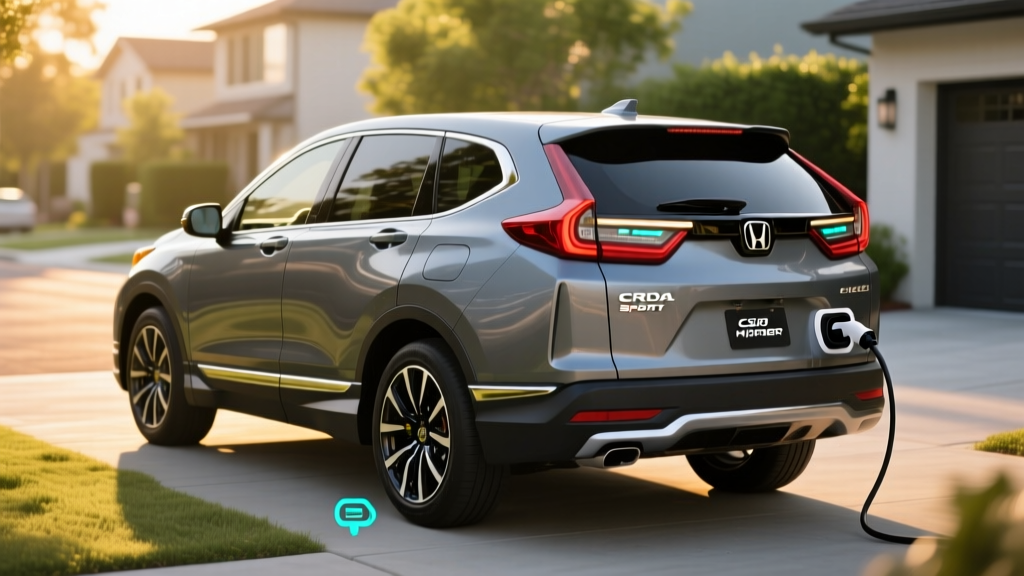
The Honda CR-V Sport Hybrid occupies a pragmatic middle ground in the compact SUV segment. It pairs a 2.0-liter Atkinson-cycle four-cylinder engine with a two-motor hybrid system to deliver 204 combined horsepower and an EPA-estimated 40 MPG combined — without ever needing to be plugged in. For buyers who want meaningful fuel savings over a gas-only CR-V but aren't ready to manage charging infrastructure, the Sport Hybrid is the most accessible electrified option in Honda's lineup.
This is a conventional hybrid (HEV), not a plug-in hybrid (PHEV). That distinction matters: you'll never search for a charger, but you also won't get any electric-only driving range. Let's break down exactly what the 2026 CR-V Sport Hybrid delivers — and where its limits lie.
A conventional hybrid (HEV) like the CR-V Sport Hybrid uses a small battery (typically 1–2 kWh) recharged through regenerative braking and the engine. You never plug it in. A plug-in hybrid (PHEV) has a larger battery (15–25 kWh) that charges from a wall outlet or public charger, providing 25–50 miles of electric-only range before the gas engine engages. Honda does not currently offer a PHEV version of the CR-V in the U.S. market. If plug-in capability matters to you, competitors like the Toyota RAV4 Prime (42 miles EV range) or the Hyundai Tucson PHEV (33 miles EV range) are worth cross-shopping.
Fuel Economy: EPA Numbers and Real-World MPG
Fuel efficiency is the primary reason buyers choose the Sport Hybrid over the gas-only CR-V. Here's how the EPA rates the 2026 model, based on data from fueleconomy.gov:
| Metric | FWD | AWD |
|---|---|---|
| City MPG | 43 | 40 |
| Highway MPG | 36 | 34 |
| Combined MPG | 40 | 37 |
Real-World MPG: What to Actually Expect
Honda's hybrid system excels in stop-and-go city driving, where the electric motors handle low-speed propulsion and regenerative braking recaptures energy. Owners consistently report that city MPG can meet or even exceed the EPA estimate — 42–45 MPG in warm-weather urban driving is common based on aggregated owner data from Fuelly and similar tracking platforms.
Highway driving tells a different story. At sustained speeds above 70 mph, the gasoline engine carries most of the load, and real-world highway economy typically settles around 33–35 MPG for AWD models. Cold weather (below 32°F) further reduces efficiency by roughly 10–15% as the engine runs more frequently to provide cabin heat and maintain battery temperature.
With a 14.0-gallon fuel tank and the AWD Sport Hybrid's 37 MPG combined rating, expect a real-world driving range of approximately 450–500 miles per tank in mixed driving. City-heavy routes can push this toward 550+ miles. Highway-only road trips at 75+ mph may drop range to around 420 miles.
Powertrain and Performance Specs
The CR-V Sport Hybrid uses Honda's fourth-generation two-motor hybrid system. Unlike traditional transmissions, this setup uses a clutchless design where the gas engine primarily acts as a generator, with the electric drive motor providing most of the motivation to the wheels.
| Specification | Value |
|---|---|
| Engine | 2.0L Atkinson-cycle I-4 |
| Engine Output | 145 hp / 138 lb-ft torque |
| Drive Motor Output | 181 hp / 247 lb-ft torque |
| Combined System Output | 204 hp / 247 lb-ft torque |
| Transmission | e-CVT (direct-drive, no belt) |
| Drivetrain | FWD or Real Time AWD™ |
| 0–60 mph (est.) | ~7.8 seconds |
| Hybrid Battery Capacity | ~1.1 kWh (lithium-ion) |
| Towing Capacity | 1,000 lbs |
| Cargo Volume (behind rear seats) | 39.3 cu ft |
Acceleration is adequate rather than thrilling. The electric motor's instant 247 lb-ft of torque gives the CR-V Sport Hybrid a responsive feel from stoplights, but highway merging requires planning — this is a 204-hp family hauler, not a performance SUV. Honda's e-CVT avoids the rubber-band droning typical of older CVTs because the engine can lock into a direct-drive gear at highway speeds.
Pricing, Trims, and Tax Credit Eligibility
The 2026 CR-V Sport Hybrid is available across multiple trims. Pricing below reflects manufacturer MSRP (destination charges add approximately $1,395):
- Sport Hybrid FWD: ~$35,350
- Sport Hybrid AWD: ~$36,850
- Sport-L Hybrid AWD: ~$38,850
- Sport Touring Hybrid AWD: ~$42,350
Does the CR-V Sport Hybrid Qualify for a Federal Tax Credit?
No. The federal §30D Clean Vehicle Credit under current IRS rules applies only to plug-in electric vehicles (BEVs and PHEVs) with a minimum battery capacity of 7 kWh and external charging capability. Because the CR-V Sport Hybrid is a conventional HEV with a ~1.1 kWh battery that charges solely through regenerative braking and the engine, it does not qualify for the federal purchase credit.
Some states and municipalities offer rebates or HOV-lane access for conventional hybrids, but these programs vary widely and change frequently. Check your state's energy office or your utility provider's website for local incentive availability. A tax professional can confirm eligibility for any specific program.
While the Sport Hybrid lacks a federal tax credit, its fuel savings are meaningful. At 37 MPG combined vs. the gas CR-V AWD's 29 MPG combined, and assuming $3.50/gallon gas with 12,000 miles/year, the hybrid saves roughly $325–$400 per year in fuel costs. Over a 5-year ownership period, that's approximately $1,600–$2,000 in savings — enough to offset the hybrid's typical $1,300–$1,500 price premium over the gas-only equivalent.
Reliability, Battery Warranty, and Replacement Costs
Honda's hybrid powertrain has proven durable across multiple generations. The CR-V Hybrid's lithium-ion battery pack is substantially smaller and less stressed than a full EV battery, operating in a narrow state-of-charge window that minimizes degradation.
Honda covers the CR-V Sport Hybrid's high-voltage battery with an 8-year / 100,000-mile warranty (10 years / 150,000 miles in CARB states including California, New York, Massachusetts, and others). This warranty covers battery capacity loss below a defined threshold as well as complete failure. The standard powertrain warranty covers 5 years / 60,000 miles.
Battery Replacement Cost
Should the hybrid battery require replacement outside warranty coverage, expect a cost between $2,000 and $4,000 for parts and labor at a Honda dealership. Independent hybrid specialists may offer refurbished battery packs for $1,500–$2,500. In practice, hybrid battery failures before 150,000+ miles are uncommon — Honda's system is far less thermally stressed than a 75+ kWh EV pack.
The broader vehicle reliability picture is strong. Honda's fourth-generation hybrid system has been in production since the 2023 model year with no widespread failure patterns reported. The e-CVT design eliminates traditional transmission wear components (no clutch packs, no torque converter, no belt), reducing long-term drivetrain maintenance.
CR-V Sport Hybrid vs. Competitors: HEV, PHEV, or Full EV?
The right electrified vehicle depends on your driving patterns, charging access, and budget. Here's how the CR-V Sport Hybrid compares to the alternatives:
| Vehicle | Type | Combined MPG / MPGe | EV Range | Starting MSRP | Federal Credit |
|---|---|---|---|---|---|
| Honda CR-V Sport Hybrid AWD | HEV | 37 MPG | N/A | ~$36,850 | None |
| Toyota RAV4 Hybrid AWD | HEV | 39 MPG | N/A | ~$35,000 | None |
| Toyota RAV4 Prime AWD | PHEV | 94 MPGe / 38 MPG | 42 mi | ~$44,500 | Up to $7,500* |
| Hyundai Tucson PHEV AWD | PHEV | 80 MPGe / 35 MPG | 33 mi | ~$40,500 | Up to $7,500* |
| Hyundai Ioniq 5 (RWD Std Range) | BEV | 114 MPGe | 220 mi | ~$42,500 | Up to $7,500* |
* Federal §30D credit eligibility depends on buyer income, vehicle MSRP caps, battery component sourcing, and critical mineral requirements. Verify current eligibility on irs.gov before purchasing.
- Choose the CR-V Sport Hybrid (HEV) if: You lack reliable home charging access, want zero behavior change from a gas car, and prioritize lower purchase price with solid fuel savings.
- Choose a PHEV (RAV4 Prime, Tucson PHEV) if: You can install a Level 2 charger at home, your daily commute is under 40 miles round-trip (meaning you'll rarely use gas), and you want the federal tax credit to offset the higher MSRP.
- Choose a full EV (Ioniq 5, etc.) if: You have home charging, your typical trips fall within 200+ miles, you want maximum fuel savings and lowest maintenance costs, and you qualify for the federal credit.
Pros, Cons, and the Bottom Line
- 40 MPG combined (FWD) — strong for the class
- No plug-in charging required
- Instant electric torque for responsive city driving
- Generous cargo space: 39.3 cu ft rear / 76.5 cu ft folded
- 8-year/100,000-mile hybrid battery warranty
- Honda Sensing ADAS suite standard on all trims
- Proven reliability with low-stress e-CVT
- No federal tax credit eligibility
- Highway MPG drops noticeably (33–35 real-world AWD)
- No electric-only driving mode
- 1,000-lb towing limit (below some competitors)
- AWD system adds weight and reduces efficiency vs FWD
- Modest 204 hp — not a performance-oriented SUV
- Cold-weather efficiency loss of 10–15%
Frequently Asked Questions
How many MPG does the Honda CR-V Sport Hybrid get?
The EPA rates the 2026 CR-V Sport Hybrid at 43 city / 36 highway / 40 combined MPG with front-wheel drive, and 40 city / 34 highway / 37 combined with AWD. In real-world driving, expect city MPG to meet or exceed the EPA estimate, while highway-only driving at 70+ mph typically yields 33–35 MPG (AWD).
Does the CR-V Hybrid need to be plugged in?
No. The CR-V Sport Hybrid is a conventional hybrid (HEV). Its small lithium-ion battery recharges automatically through regenerative braking and the gasoline engine. There is no plug, no charging cable, and no electric-only range. You fuel it exactly like a gas car.
Is there a plug-in hybrid (PHEV) version of the CR-V?
As of the 2026 model year, Honda does not offer a PHEV variant of the CR-V in the United States. If plug-in capability with electric-only commuting range is a priority, the Toyota RAV4 Prime (42 miles EV range) and Hyundai Tucson PHEV (33 miles EV range) are the closest competitors in this segment.
How long will the CR-V Hybrid battery last?
Honda's hybrid batteries are designed to last the life of the vehicle under normal use. The battery operates in a narrow charge window (never fully charged, never fully depleted), which minimizes degradation. Honda backs the battery with an 8-year/100,000-mile warranty (10 years/150,000 miles in CARB states). Real-world data from Honda hybrids suggests most batteries function well past 150,000 miles. If replacement is needed, expect $2,000–$4,000.
Is the CR-V Sport Hybrid reliable?
Honda's two-motor hybrid system has a strong reliability track record since its introduction. The e-CVT design eliminates many traditional failure points (no transmission bands, no torque converter). The CR-V as a platform consistently earns top marks from IIHS and NHTSA. The hybrid variant adds no significant reliability risk over the gas model — and in some respects (fewer transmission components, regenerative braking reducing brake pad wear) may incur lower long-term maintenance costs.
Does the CR-V Sport Hybrid qualify for any tax credit?
The CR-V Sport Hybrid does not qualify for the federal §30D Clean Vehicle Credit, which requires plug-in capability and a minimum 7 kWh battery. Some state-level hybrid incentives or utility rebates may apply — check local programs. If the federal credit is important to your purchase decision, you'll need to look at PHEVs or BEVs.
How does the Sport Hybrid compare to the gas CR-V?
The gas-only 2026 CR-V AWD is rated at 27 city / 32 highway / 29 combined MPG. The Sport Hybrid AWD delivers 37 combined — a 27% improvement. The hybrid also adds 14 hp (204 vs. 190) and significantly more low-end torque from the electric motor. The trade-off is a roughly $1,300–$1,500 higher starting price, which fuel savings typically recoup within 3–5 years depending on mileage and gas prices.