Quick Verdict: The Honda CR-V Hybrid Touring at a Glance
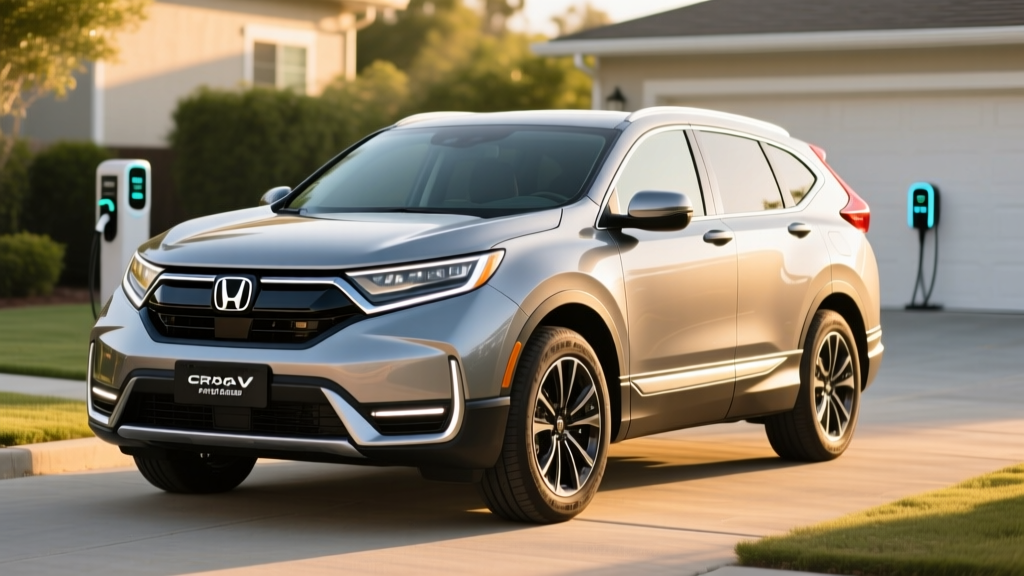
The Honda CR-V Hybrid Touring remains one of the most compelling choices in the compact hybrid SUV segment for buyers who want maximum fuel efficiency without plugging in. As the top-tier trim in Honda's hybrid-only CR-V lineup, the Touring pairs a proven two-motor hybrid system with premium features, all while delivering EPA-rated 40 MPG combined. For 2026, it continues to offer a practical bridge between conventional gas vehicles and full battery-electric SUVs — no charging infrastructure required, no range anxiety, and a familiar ownership experience backed by Honda's long-standing hybrid reliability record.
This guide covers every number that matters: real-world MPG versus the EPA sticker, the powertrain engineering underneath, battery warranty details, total pricing with the Touring's premium equipment, and whether any tax credits apply. If you're cross-shopping the Toyota RAV4 Hybrid, Kia Sportage Hybrid, or considering a plug-in alternative, this breakdown gives you the data to decide.
EPA Fuel Economy vs. Real-World MPG
The 2026 Honda CR-V Hybrid Touring carries the same EPA ratings as other AWD trims in the CR-V Hybrid lineup. Here's the official breakdown from fueleconomy.gov:
| Driving Cycle | EPA Rating | Real-World Expectation |
|---|---|---|
| City | 40 MPG | 41–45 MPG (hybrids often exceed EPA in stop-and-go) |
| Highway | 34 MPG | 30–33 MPG (aerodynamic drag and sustained speed reduce regen benefit) |
| Combined | 37 MPG | 35–40 MPG depending on driving mix and climate |
Powertrain: How the CR-V Hybrid System Works
The CR-V Hybrid uses Honda's two-motor hybrid system, which is a series-parallel design fundamentally different from a traditional transmission-based setup. Here's how the hardware breaks down:
| Specification | Detail |
|---|---|
| Engine | 2.0L Atkinson-cycle 4-cylinder |
| Engine Output | 145 hp @ 6,100 rpm / 134 lb-ft torque |
| Drive Motors | Dual-motor system (one propulsion, one generator) |
| Propulsion Motor Output | 181 hp / 247 lb-ft torque |
| Combined System Output | 204 hp / 247 lb-ft torque |
| Drivetrain | Real Time AWD (standard on all Hybrid trims) |
| Transmission | Direct-drive (no conventional gearbox — e-CVT behavior) |
| 0–60 mph | ~7.6 seconds |
Unlike Toyota's planetary-gear Hybrid Synergy Drive, Honda's system uses a clutch to mechanically connect the engine to the wheels only at higher cruising speeds (roughly above 50 mph under light load). Below that threshold, the gasoline engine acts primarily as a generator, producing electricity that feeds the propulsion motor. This means the CR-V Hybrid drives like an EV in most city and suburban conditions — the electric motor delivers instant torque from a stop, and the engine only revs to match electrical demand, not vehicle speed.
The result is smooth, linear acceleration that feels more refined than a typical CVT-equipped gas car, with the electric motor's 247 lb-ft of torque available immediately. The AWD system uses a mechanical driveshaft to the rear axle, engaging when the front wheels lose traction or during hard acceleration.
Hybrid (HEV) vs. Plug-In Hybrid (PHEV): What the CR-V Is — and Isn't
The Honda CR-V Hybrid is a conventional hybrid (HEV), not a plug-in hybrid (PHEV). This distinction matters enormously for buyers comparing options:
| Feature | CR-V Hybrid (HEV) | Typical PHEV SUV (e.g., Toyota RAV4 Prime) | Full EV SUV (e.g., Tesla Model Y) |
|---|---|---|---|
| Plug-in Charging Required | No — self-charging via engine + regen | Yes — for electric-only range benefit | Yes — sole energy source |
| Electric-Only Range | ~1 mile at low speed (not meaningful) | 30–42 miles typical | 260–330+ miles EPA |
| Battery Capacity | ~1.06 kWh (small buffer) | 13.6–18.1 kWh | 60–82 kWh |
| Total Range | 430–540 miles (gas tank only) | 500+ miles (electric + gas combined) | 260–330 miles (battery only) |
| Home Charging Needed | No | Recommended (Level 2 for daily EV driving) | Essential (Level 2 strongly recommended) |
| Federal Tax Credit (§30D) | Not eligible | Up to $7,500 (if criteria met) | Up to $7,500 (if criteria met) |
| Best For | No home charging access; want simplicity | Home charging + short daily commute | Home charging + mostly electric lifestyle |
Honda does not currently offer a CR-V plug-in hybrid in the US market. If electric-only commuting is a priority, you'd need to look at competitors like the Toyota RAV4 Prime (42 miles electric-only) or shift to a full BEV. The CR-V Hybrid's advantage is zero lifestyle change: you fuel it like any gas car, and the hybrid system handles efficiency optimization automatically.
2026 Honda CR-V Hybrid Touring: Pricing and Features
The Touring is the highest trim in the CR-V Hybrid lineup, and it carries a premium over the well-equipped Sport Touring and mid-level Sport-L trims. Here's the current pricing structure:
| CR-V Hybrid Trim | MSRP (2026) | Key Additions Over Base Hybrid |
|---|---|---|
| Sport | ~$36,395 | Hybrid powertrain, AWD, sport styling |
| Sport-L | ~$39,045 | Leather seats, power liftgate, wireless CarPlay/Android Auto |
| Sport Touring | ~$42,095 | Bose 12-speaker audio, navigation, heated rear seats, hands-free liftgate |
The Touring trim adds the full Honda Sensing suite (adaptive cruise control with low-speed follow, lane-keeping assist, collision mitigation braking, traffic sign recognition), a 9-inch touchscreen with wireless Apple CarPlay and Android Auto, wireless phone charging, heated and ventilated front seats, a heated steering wheel, rain-sensing wipers, and LED headlights with auto high-beam. It's a comprehensive package that competes directly with the Toyota RAV4 Hybrid Limited and the Kia Sportage Hybrid SX Prestige on features, though those rivals price slightly lower.
Battery Longevity, Warranty, and Replacement Costs
Hybrid battery anxiety is one of the most common concerns among first-time hybrid buyers. Here's the factual picture for the CR-V Hybrid:
| Battery Detail | Specification |
|---|---|
| Battery Chemistry | Lithium-ion |
| Battery Capacity | ~1.06 kWh (total) |
| Hybrid Battery Warranty | 8 years / 100,000 miles (10 years / 150,000 miles in CARB states) |
| Powertrain Warranty | 5 years / 60,000 miles |
| Bumper-to-Bumper | 3 years / 36,000 miles |
| Estimated Replacement Cost (out of warranty) | $2,000–$4,000 (hybrid battery pack) |
The CR-V Hybrid's battery pack is relatively small (~1.06 kWh) compared to a PHEV or BEV, which means two things: replacement cost is far lower if it ever fails outside warranty, and the battery experiences shallower charge-discharge cycles that are gentler on cell longevity. Honda's hybrid system manages the battery within a narrow state-of-charge window — it never fully charges or fully depletes the pack — which significantly reduces degradation.
In practice, Honda hybrid batteries from the Insight and Accord Hybrid have demonstrated strong longevity, with many original packs lasting well beyond 150,000 miles. The CR-V Hybrid benefits from this same engineering philosophy. For context, CARB states (California and states that follow California emissions standards, including New York, Massachusetts, Oregon, Washington, Colorado, and others) receive the extended 10-year/150,000-mile hybrid battery warranty.
Who Should Buy the CR-V Hybrid Touring — and Who Shouldn't
- You don't have access to home or workplace Level 2 charging and don't want to rely on public infrastructure
- Your priority is lowering fuel costs without changing your fueling habits
- You want a premium-trim compact SUV with Honda Sensing safety tech, Bose audio, and leather without crossing $45,000
- You drive a mix of city and highway miles and want consistent 35–40 MPG real-world efficiency
- You plan to keep the vehicle 8+ years and value Honda's hybrid reliability track record
- You have home charging and a commute under 35 miles — a PHEV like the RAV4 Prime lets you drive months without using gas
- You want to maximize federal tax credits — the §30D credit only applies to plug-in vehicles
- You want the lowest possible per-mile energy cost — electricity at $0.13/kWh costs roughly $0.04/mile versus $0.11/mile at 37 MPG with $3.50/gallon gas
- You want silent, instant-torque EV acceleration with no engine noise
Pros and Cons at a Glance
Pros
- 40 MPG EPA city; real-world city driving often exceeds 41 MPG
- No charging infrastructure needed — fuel and go
- 247 lb-ft of electric motor torque for responsive city acceleration
- Standard AWD across all Hybrid trims
- 8-year/100,000-mile hybrid battery warranty (10yr/150k in CARB states)
- Honda Sensing ADAS suite standard, including low-speed follow ACC
- Spacious 39.3 cu ft cargo area behind rear seats
Cons
- No plug-in hybrid (PHEV) variant available — cannot drive on electric only for meaningful distances
- Highway MPG drops to 34 EPA; heavy-footed or high-speed driving can yield low 30s
- Touring trim pushes MSRP near $42,000 — above some competitors
- Not eligible for the federal §30D tax credit (HEV, not PHEV/BEV)
- Engine drone under hard acceleration (common to Honda's direct-drive hybrid system)
- Regenerative braking feel takes adjustment if coming from a conventional gas car
Frequently Asked Questions
How many MPG does the Honda CR-V Hybrid Touring actually get?
The EPA rates the CR-V Hybrid AWD at 40 city / 34 highway / 37 combined MPG. In real-world driving, city-heavy commuters often see 41–45 MPG thanks to regenerative braking, while highway-dominant drivers should expect 30–33 MPG. Combined real-world fuel economy typically falls between 35 and 40 MPG depending on your driving mix, terrain, and climate.
Does the Honda CR-V Hybrid need to be plugged in?
No. The CR-V Hybrid is a conventional hybrid (HEV), not a plug-in hybrid. It charges its own small battery through regenerative braking and the gasoline engine. You never plug it in — just fill up at any gas station as you would with a non-hybrid vehicle.
Is the CR-V Hybrid reliable, and what does a battery replacement cost?
Honda's hybrid systems have a strong reliability record, with many hybrid battery packs lasting 150,000+ miles in real-world use. The hybrid battery is warranted for 8 years/100,000 miles (10 years/150,000 miles in CARB states). If replacement is needed out of warranty, expect to pay approximately $2,000–$4,000 — significantly less than a PHEV or BEV battery replacement, which can run $8,000–$20,000+.
Does the Honda CR-V Hybrid qualify for any tax credit?
The CR-V Hybrid does not qualify for the federal §30D Clean Vehicle Credit, which is reserved for plug-in electric vehicles (PHEVs and BEVs) meeting battery sourcing and MSRP requirements. Some states may offer hybrid-specific rebates or incentives — check dsireusa.org or your state energy office. The IRS §30D credit page has the full eligibility rules for plug-in vehicles if you're considering a PHEV or BEV instead.
Hybrid vs. PHEV vs. full EV — which is right for me?
Choose a conventional hybrid (HEV) like the CR-V Hybrid if you lack home charging access and want zero lifestyle change with 35–40 MPG real-world efficiency. Choose a PHEV if you have home Level 2 charging and a daily commute under 35–40 miles — you'll drive most days on electricity alone while keeping a gas engine for road trips. Choose a full BEV if you have reliable home charging, want the lowest per-mile energy cost, and are comfortable planning DC fast-charging stops on road trips. Each has a distinct use case; there's no universally "best" option.
How does the CR-V Hybrid compare to the Toyota RAV4 Hybrid?
The RAV4 Hybrid is rated at 41 city / 38 highway / 40 combined MPG (slightly higher highway and combined figures), and it's available as the RAV4 Prime PHEV with 42 miles of electric-only range. The CR-V Hybrid counters with a more refined two-motor drive feel, a slightly roomier cargo area, and Honda's standard AWD on all hybrid trims. Both are strong choices — the RAV4 edges ahead on EPA highway MPG and PHEV availability, while the CR-V offers a smoother electric-drive character in city conditions.