Quick Verdict: The Honda CR-V Hybrid SUV Delivers Where It Counts
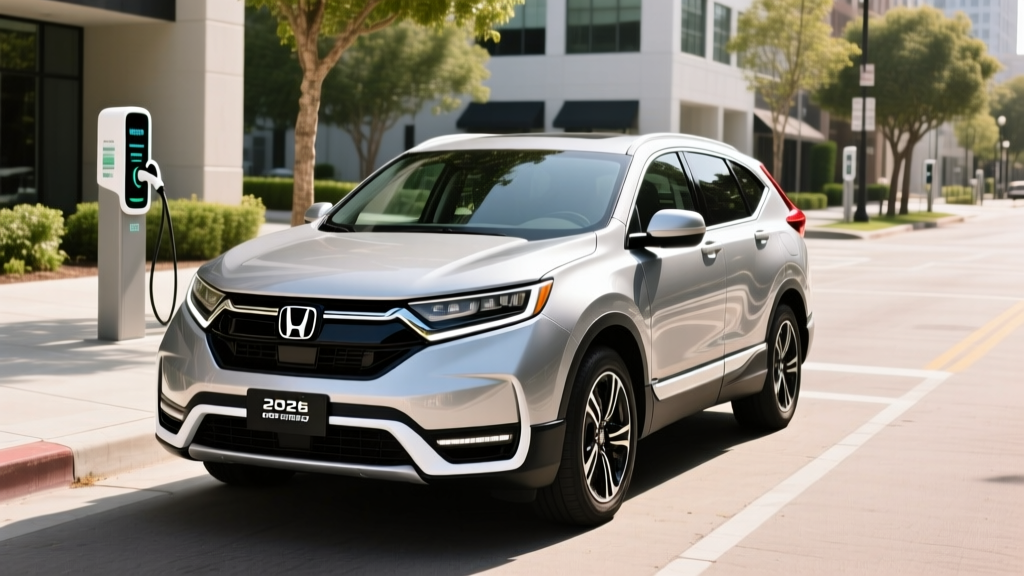
The 2026 Honda CR-V Hybrid SUV occupies a pragmatic sweet spot in the compact crossover segment. It pairs a 2.0-liter Atkinson-cycle four-cylinder with a two-motor hybrid system for 204 combined horsepower and an EPA-estimated 40 MPG combined (43 city / 36 highway) in front-wheel-drive trims. All-wheel-drive variants drop slightly to 37 MPG combined. For buyers who want meaningful fuel savings without plugging in, changing driving habits, or worrying about charging infrastructure, the CR-V Hybrid remains one of the most compelling choices in its class.
This guide breaks down the exact powertrain specs, real-world fuel economy observations, battery longevity data, warranty coverage, and pricing — including whether any federal tax credits apply. We'll also address the question every crossover shopper eventually faces: hybrid, plug-in hybrid, or full EV?
HEV vs. PHEV: Understanding What the CR-V Hybrid Actually Is
Conventional Hybrid (HEV): The Honda CR-V Hybrid is a self-charging hybrid. It has a small lithium-ion battery (approximately 1.06 kWh) that charges through regenerative braking and the gasoline engine. You never plug it in. The electric motor assists the engine during acceleration and can power the vehicle at low speeds for very short distances. The result is dramatically improved fuel economy — especially in stop-and-go city driving — with zero behavioral change required from the driver.
Plug-In Hybrid (PHEV): A PHEV carries a much larger battery (typically 12-20 kWh), can travel 25-45 miles on electricity alone, and must be plugged in to realize its full efficiency benefit. Honda does not currently offer a CR-V PHEV in the United States. If you want plug-in capability from Honda, you'd need to look at discontinued models like the Clarity Plug-In Hybrid or consider competitors like the Toyota RAV4 Prime.
The distinction matters because some buyers confuse "hybrid" with "plug-in hybrid." The CR-V Hybrid requires no outlet, no charging cable, and no home electrical work. You fuel it with gasoline like any conventional car — it simply uses that fuel far more efficiently.
Fuel Economy: EPA Ratings and Real-World MPG
| Trim / Drivetrain | City MPG | Highway MPG | Combined MPG |
|---|---|---|---|
| CR-V Hybrid FWD (Sport, Sport-L) | 43 | 36 | 40 |
| CR-V Hybrid AWD (Sport, Sport-L, Sport Touring) | 40 | 34 | 37 |
| Gas-only CR-V FWD (baseline comparison) | 29 | 36 | 32 |
| Gas-only CR-V AWD (baseline comparison) | 27 | 32 | 29 |
Source: EPA fueleconomy.gov
Real-World MPG: What Owners Actually See
Hybrid powertrains behave differently than conventional engines in practice. The CR-V Hybrid's two-motor system recovers energy during braking and deceleration, meaning city and suburban driving often yields results at or slightly above the EPA city estimate. On forums and owner-reported aggregators, FWD CR-V Hybrid drivers regularly report 41-44 MPG in mixed suburban commuting. Highway-heavy driving at sustained 75+ mph speeds tends to land closer to 33-35 MPG for AWD models — slightly below the EPA highway figure, which is typical for boxy crossover aerodynamics.
In cold weather (below 30°F), expect a 5-10% reduction in fuel economy as the engine runs more frequently to provide cabin heat and maintain battery temperature. This is less severe than the 20-30% range loss EVs experience in cold, but it's measurable.
Powertrain Specs: Engine, Motors, and Performance
| Specification | Detail |
|---|---|
| Engine | 2.0L Atkinson-cycle DOHC inline-4 |
| Engine Output | 145 hp @ 6,100 rpm / 138 lb-ft torque |
| Electric Motors | Dual-motor hybrid system |
| Motor Output | 181 hp / 247 lb-ft torque |
| Combined System Output | 204 hp / 247 lb-ft torque |
| Transmission | Electronically controlled CVT (e-CVT) |
| 0-60 mph | ~7.6 seconds (AWD) |
| Hybrid Battery | Lithium-ion, ~1.06 kWh |
| Drivetrain | FWD standard; Real Time AWD available |
| Towing Capacity | 1,000 lbs |
Honda's fourth-generation two-motor hybrid system operates primarily in EV mode at low speeds and during light acceleration, with the gasoline engine acting as a generator. At highway speeds, a lock-up clutch connects the engine directly to the drive wheels for efficiency. The transition between modes is nearly imperceptible — one of the system's strongest attributes compared to competitors where engine engagement can feel abrupt.
The 247 lb-ft of electric motor torque is available from near-zero RPM, giving the CR-V Hybrid responsive off-the-line acceleration that makes merging and city driving feel more effortless than the gas-only model's 190 hp turbo four-cylinder.
Pricing, Trims, and Tax Credit Eligibility
The 2026 Honda CR-V Hybrid is offered exclusively in sport-oriented trims, which positions it as the performance-and-efficiency upgrade within the CR-V lineup:
- CR-V Hybrid Sport (FWD): ~$35,950 MSRP
- CR-V Hybrid Sport (AWD): ~$37,450 MSRP
- CR-V Hybrid Sport-L (AWD): ~$39,450 MSRP
- CR-V Hybrid Sport Touring (AWD): ~$42,350 MSRP
Does the CR-V Hybrid Qualify for a Federal Tax Credit?
No. The federal §30D Clean Vehicle Credit under current IRS rules applies only to plug-in electric vehicles (BEVs and PHEVs) that meet battery sourcing, critical minerals, MSRP cap, and buyer income requirements. Because the CR-V Hybrid is a conventional HEV that cannot be plugged in, it does not qualify for the federal EV tax credit.
Some states and local utilities offer rebates for hybrid vehicles, though these are less common and typically smaller ($500-$1,500) than EV incentives. Check your state's energy office or utility provider for current programs. Honda occasionally offers manufacturer incentives or low-APR financing on hybrid trims — check with your local dealer.
Battery Warranty, Reliability, and Replacement Costs
Honda Hybrid Battery Warranty: Honda covers the CR-V Hybrid's lithium-ion battery pack for 8 years or 100,000 miles (whichever comes first) under the standard hybrid battery limited warranty. In California Air Resources Board (CARB) states — which include CA, CO, CT, ME, MA, NY, OR, RI, VT, and WA — the hybrid battery warranty extends to 10 years or 150,000 miles.
Hybrid System Warranty: The broader hybrid system components (inverter, electric motors, control units) are covered under the same 8-year/100,000-mile (or 10/150k in CARB states) warranty.
How Long Will the CR-V Hybrid Battery Last?
Honda's hybrid batteries are designed to last the life of the vehicle under normal use. Unlike full EVs that cycle their batteries from 0-100% regularly, the CR-V Hybrid's small battery operates within a narrow state-of-charge window (roughly 40-60%) managed by the powertrain control system. This shallow-cycling approach dramatically reduces degradation stress. Real-world data from earlier Honda hybrid models (Insight, Accord Hybrid) shows battery packs routinely lasting 150,000-200,000+ miles without significant capacity loss.
Battery Replacement Cost
If a hybrid battery replacement is needed out of warranty, expect to pay between $2,000 and $4,000 for the battery pack plus labor at a Honda dealership. Third-party hybrid battery specialists often offer refurbished or reconditioned packs for $1,500-$2,500 installed. This is substantially less than EV battery replacements ($5,000-$20,000+) because the CR-V Hybrid's battery is small (~1 kWh vs. 60-100 kWh in a BEV).
Honda's reliability reputation and the proven maturity of this hybrid system (now in its fourth generation) make battery failure a low-probability event. The CR-V consistently earns strong reliability ratings from IIHS and above-average marks from long-term dependability trackers.
Hybrid vs. PHEV vs. EV: Which Powertrain Fits Your Life?
Choose the CR-V Hybrid (HEV) if:
- You cannot install a home charger (apartment, condo, street parking)
- You want fuel savings with zero lifestyle change
- You take frequent long road trips and don't want to plan around charging stops
- You live in an area with limited public charging infrastructure
- Your budget is $35,000-$42,000 and you want AWD
Choose a PHEV (like the Toyota RAV4 Prime) if:
- You can charge at home and have a short commute (under 40 miles)
- You want to drive mostly on electricity daily but need gas flexibility for road trips
- You qualify for the federal tax credit (income and sourcing requirements met)
- You're willing to pay a $5,000-$8,000 premium over the hybrid equivalent
Choose a full EV (like the Tesla Model Y or Hyundai Ioniq 5) if:
- You can install Level 2 home charging
- Your daily driving is under 250 miles and you can plan road-trip charging
- You want the lowest per-mile fuel cost and minimal maintenance
- You qualify for the full $7,500 federal tax credit, which closes the price gap
- You want to eliminate gasoline entirely
The CR-V Hybrid makes the most sense for the buyer who values simplicity. There is no plug, no app to monitor, no charging network subscription, and no range planning. You drive it exactly like a gas car — you just visit the gas station less often.
Ownership Costs: 5-Year Fuel Savings vs. Gas-Only CR-V
Let's run the numbers comparing the CR-V Hybrid AWD (37 MPG combined) against the gas-only CR-V AWD (29 MPG combined) over 5 years at 15,000 miles per year (75,000 total miles) using a national average gas price of $3.40/gallon:
| Cost Factor | CR-V Hybrid AWD | CR-V Gas AWD |
|---|---|---|
| Total Gallons Used (75k mi) | 2,027 gal | 2,586 gal |
| Total Fuel Cost (5 years) | $6,892 | $8,793 |
| 5-Year Fuel Savings | $1,901 savings with Hybrid | |
| Hybrid Price Premium (Sport AWD vs. EX AWD gas) | ~$3,000-$4,000 | |
| Net 5-Year Cost Difference | Hybrid costs ~$1,100-$2,100 more (before incentives) | |
The hybrid's fuel savings partially offset its higher MSRP over five years, but don't fully close the gap at current gas prices. The break-even point typically arrives around year 7-8 of ownership, or sooner if gas prices rise or you drive more than 15,000 miles annually. The hybrid's stronger resale value and lower brake wear (regenerative braking extends pad life) provide additional, harder-to-quantify savings.
Pros and Cons of the Honda CR-V Hybrid SUV
Pros
- 40 MPG combined (FWD) is class-leading
- Smooth, imperceptible hybrid system transitions
- 247 lb-ft electric torque gives strong low-speed response
- No plug-in required — zero lifestyle change
- 8-year/100k-mile battery warranty (10/150k in CARB states)
- Spacious interior with 39.3 cu ft cargo (76.5 cu ft seats folded)
- Standard Honda Sensing safety suite
- Strong reliability track record for Honda hybrid systems
Cons
- Hybrid only available in Sport trims (~$36k+ starting)
- No PHEV option for electric-only commuting
- AWD drops fuel economy to 37 MPG combined
- 1,000-lb towing capacity limits utility
- No federal tax credit eligibility
- e-CVT drone under hard acceleration
- Base Sport trim lacks premium features (leather, Bose audio)
Frequently Asked Questions
How many MPG does the Honda CR-V Hybrid get?
The 2026 CR-V Hybrid FWD achieves an EPA-estimated 43 city / 36 highway / 40 combined MPG. AWD trims rate at 40 city / 34 highway / 37 combined. Real-world city driving often matches or slightly exceeds the EPA city figure thanks to regenerative braking; highway driving at 75+ mph typically falls 2-3 MPG below the EPA highway estimate.
Does the Honda CR-V Hybrid need to be plugged in?
No. The CR-V Hybrid is a conventional hybrid (HEV), not a plug-in hybrid. Its battery charges through regenerative braking and the gasoline engine. You fuel it with gasoline like any standard vehicle.
How far can the CR-V Hybrid drive on electric power alone?
The CR-V Hybrid can operate in EV mode for very short distances (roughly 1-2 miles) at low speeds (under 30 mph) when the battery is sufficiently charged. This is not a meaningful electric-only range — the system uses EV mode to optimize efficiency during stop-and-go traffic, not to replace gasoline driving. For substantial electric-only range, you'd need a PHEV or BEV.
Is the Honda CR-V Hybrid reliable?
Honda's hybrid system is now in its fourth generation and has a strong reliability track record across the Accord Hybrid, Insight, and CR-V Hybrid lineups. The hybrid battery is warrantied for 8 years/100,000 miles (10 years/150,000 miles in CARB states). Out-of-warranty battery replacement runs $2,000-$4,000. Most Honda hybrid batteries last 150,000+ miles without issue.
Does the Honda CR-V Hybrid qualify for any tax credit?
The CR-V Hybrid does not qualify for the federal §30D Clean Vehicle Credit, which applies only to plug-in vehicles (BEVs and PHEVs). Some states or utilities may offer smaller hybrid incentives — check your local programs. The IRS clean vehicle credit page details current federal eligibility rules.
How does the CR-V Hybrid compare to the Toyota RAV4 Hybrid?
The Toyota RAV4 Hybrid (AWD standard) rates at 41 MPG combined — slightly better than the CR-V Hybrid AWD's 37 MPG. The RAV4 also offers a PHEV variant (RAV4 Prime, 42 miles electric-only range). However, the CR-V Hybrid edges ahead in interior space, driving refinement, and infotainment usability. Both are segment leaders; the choice often comes down to brand preference and whether you want a PHEV option.
What is the total driving range of the CR-V Hybrid?
With a 15.3-gallon fuel tank and 40 MPG combined (FWD), the CR-V Hybrid can travel approximately 612 miles between fill-ups. AWD models achieve roughly 566 miles on a tank. This exceeds most EVs' range and eliminates the range-planning burden associated with long-distance electric driving.