Is the Honda CR-V Hybrid a Plug-In? The Short Answer
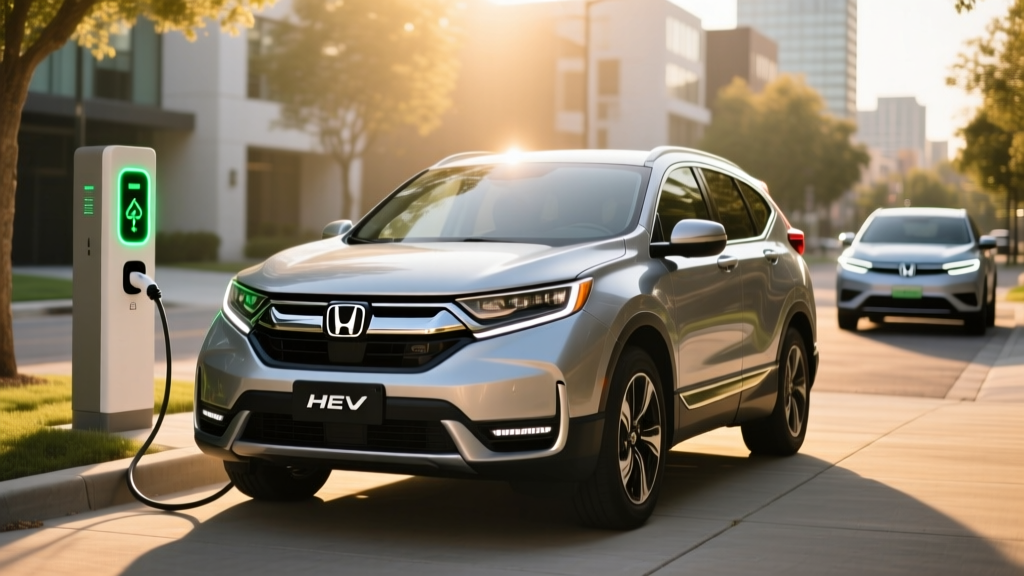
No. The Honda CR-V Hybrid is a conventional hybrid electric vehicle (HEV), not a plug-in hybrid (PHEV). It generates all of its electricity internally through regenerative braking and its gasoline engine — there is no charging port, no plug, and no electric-only driving mode. Honda does not currently offer a plug-in version of the CR-V in the United States for the 2026 model year.
This distinction matters because the two powertrain types serve different use cases and carry different ownership costs. If you've been searching for a CR-V you can plug in overnight for electric-only commuting, you won't find one. But if you want a compact SUV that delivers strong fuel economy without any change to your refueling routine, the CR-V Hybrid is one of the most efficient options in its segment.
HEV vs PHEV: What's the Actual Difference?
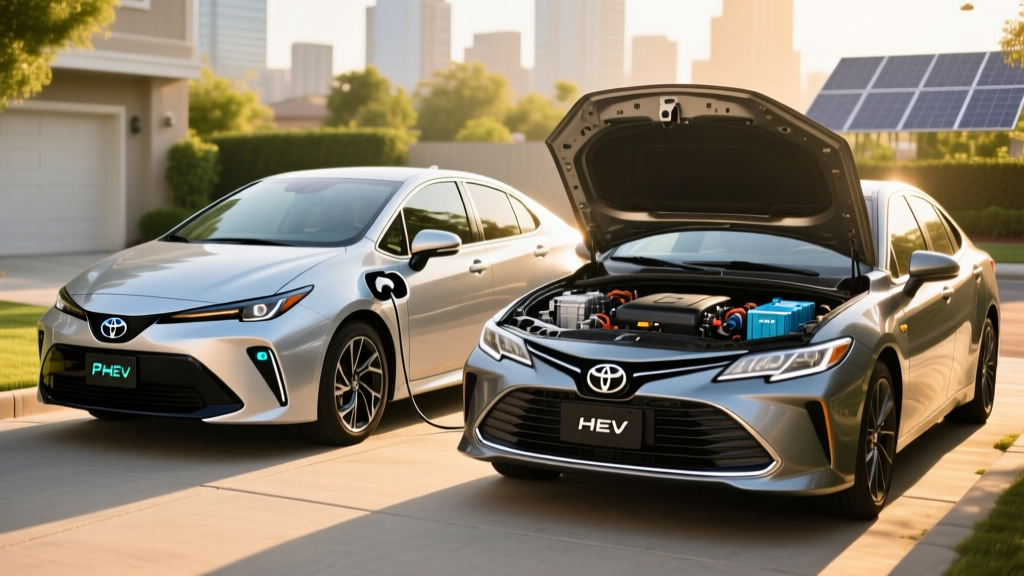
Before diving into the CR-V Hybrid's specs, it helps to understand exactly what separates a conventional hybrid from a plug-in hybrid. The confusion is common — both use a gasoline engine paired with an electric motor, but the architecture and daily experience diverge significantly.
| Feature | Conventional Hybrid (HEV) | Plug-In Hybrid (PHEV) |
|---|---|---|
| Plug-in charging | No — self-charging via engine + regen | Yes — charges via wall outlet or Level 2 station |
| Battery size | ~1.0–1.8 kWh | ~12–20+ kWh |
| Electric-only range | None (motor assists only at low speeds) | Typically 20–45 miles |
| Refueling | Gas station only | Gas station + electric charging |
| Federal tax credit | Not eligible | Up to $7,500 (subject to §30D rules) |
| Price premium over gas model | ~$1,500–$2,500 | ~$4,000–$8,000+ |
| Best for | Drivers who want better MPG without lifestyle change | Drivers with home charging and short commutes |
The CR-V Hybrid falls squarely in the left column. Its battery pack is small — roughly 1.3 kWh — and exists solely to buffer energy captured during braking and deceleration. That energy is then deployed to assist the gasoline engine during acceleration, reducing fuel consumption. You never need to think about charging it.
Honda CR-V Hybrid Fuel Economy: EPA Numbers and Real-World MPG
The 2026 Honda CR-V Hybrid pairs a 2.0-liter Atkinson-cycle four-cylinder engine with a two-motor hybrid system. The combined system output is 204 horsepower and 247 lb-ft of torque, routed through an electronically controlled continuously variable transmission (eCVT). Front-wheel drive is standard; all-wheel drive (AWD) is available across all hybrid trims.
| Configuration | City MPG | Highway MPG | Combined MPG |
|---|---|---|---|
| CR-V Hybrid FWD | 43 | 36 | 40 |
| CR-V Hybrid AWD | 40 | 34 | 37 |
| CR-V Gas (AWD, non-hybrid) | 27 | 32 | 29 |
Source: fueleconomy.gov — EPA estimates. Your actual mileage will vary.
Real-World MPG: What Owners Actually See
One of the most interesting characteristics of conventional hybrids is that they frequently exceed their EPA city rating in real-world urban driving. The reason is physics: city driving with frequent stops maximizes regenerative braking, which recharges the small battery and lets the electric motor handle low-speed propulsion. Owners on fuel-tracking platforms regularly report 42–45 MPG in stop-and-go commuting with the FWD hybrid.
Highway driving tells a different story. At sustained speeds above 65 mph, the aerodynamic drag of an SUV dominates, and the hybrid system's advantage shrinks. Expect 33–36 MPG on the highway with the AWD model — close to or slightly below the EPA sticker. Cold weather further reduces efficiency by 5–10% due to increased engine runtime for cabin heating and reduced battery performance.
Powertrain and Performance Specs
| Specification | 2026 CR-V Hybrid |
|---|---|
| Engine | 2.0L Atkinson-cycle 4-cylinder |
| Hybrid system | Two-motor (drive + generator) |
| Combined horsepower | 204 hp |
| Combined torque | 247 lb-ft |
| Transmission | eCVT (no traditional gears) |
| 0–60 mph | ~7.6 seconds |
| Drivetrain | FWD standard; AWD available |
| Towing capacity | 1,000 lbs |
| Fuel tank | 14.0 gallons |
| Total range (est.) | ~518–560 miles |
The two-motor hybrid system is the same architecture Honda uses in the Accord Hybrid. One motor primarily generates electricity; the other drives the front wheels. At highway speeds, a lock-up clutch connects the engine directly to the wheels for efficiency. The result is smooth, quiet acceleration around town with adequate — if not thrilling — highway passing power.
Pricing, Trims, and Tax Credit Eligibility
For the 2026 model year, the CR-V Hybrid is available in Sport, Sport-L, and Sport Touring trims. Pricing starts at approximately $36,395 (including destination) for the Sport FWD and climbs to roughly $42,595 for the fully loaded Sport Touring AWD.
Does the Honda CR-V Hybrid Qualify for a Federal Tax Credit?
No. The federal clean vehicle credit under IRS §30D applies only to plug-in electric vehicles — battery-electric vehicles (BEVs) and plug-in hybrids (PHEVs) with a minimum battery capacity of 7 kWh. Because the CR-V Hybrid is a conventional HEV with a ~1.3 kWh battery and no plug, it does not qualify for the federal tax credit or the point-of-sale transfer option.
Some states and municipalities offer rebates or incentives for conventional hybrids, but these vary widely and change frequently. Check your state energy office or the Alternative Fuels Data Center for current local programs.
Battery Longevity, Warranty, and Replacement Cost
Hybrid battery longevity is consistently the top concern among first-time hybrid buyers. Here's what the data shows:
Honda Hybrid Battery Warranty
- Coverage: 8 years / 100,000 miles (10 years / 150,000 miles in CARB states including CA, NY, MA, and others)
- What's covered: Defects and capacity loss below functional thresholds
- Hybrid system components: Inverter, electric motors, and related control units are covered under the same warranty
How Long Do Honda Hybrid Batteries Actually Last?
Honda's hybrid batteries use nickel-metal hydride (NiMH) chemistry in a relatively small pack that rarely sees deep discharge cycles. Unlike a full EV battery that cycles from 10% to 90% regularly, the CR-V Hybrid's battery operates in a narrow state-of-charge window — typically between 40% and 80%. This shallow cycling dramatically extends lifespan.
Based on long-term fleet data from Honda and Toyota hybrids, most conventional hybrid battery packs last well beyond 150,000 miles and often exceed 200,000 miles before any meaningful degradation occurs. Failures within the warranty period are uncommon.
Battery Replacement Cost
If a replacement is eventually needed out of warranty, a refurbished CR-V Hybrid battery pack typically costs between $2,000 and $3,500 installed at a dealership. Independent hybrid specialists may offer lower pricing. This is significantly less than EV battery replacement costs, which can exceed $10,000–$20,000, because the hybrid pack is physically small and uses mature, well-understood chemistry.
CR-V Hybrid vs PHEV vs Full EV: Which Should You Choose?
Choose the CR-V Hybrid (HEV) If:
- You don't have access to home or workplace charging
- You want better fuel economy without changing any habits
- Your budget is under $43,000 for a well-equipped compact SUV
- You drive a mix of city and highway miles
- You want proven long-term reliability with low maintenance costs
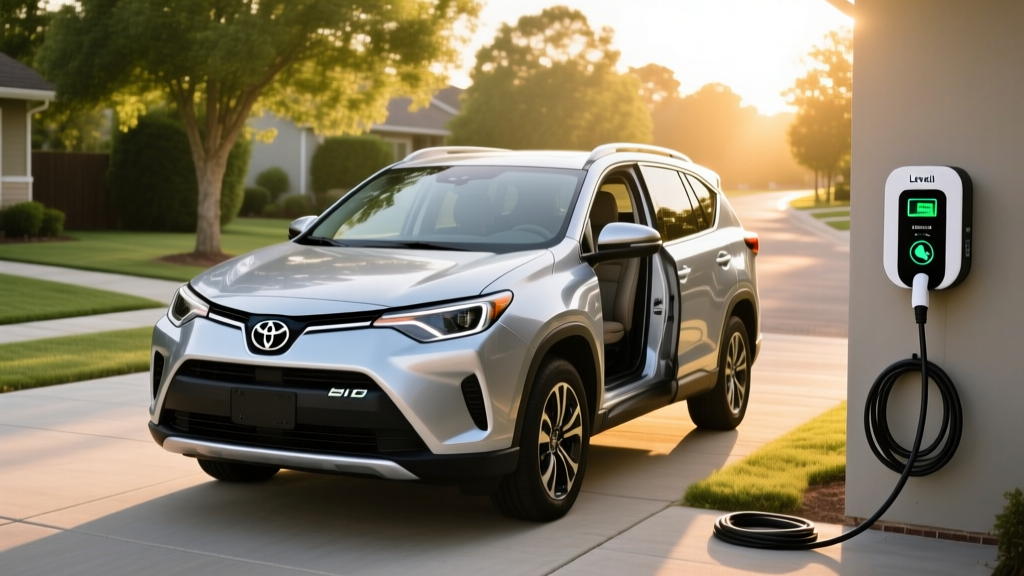
Choose a PHEV (e.g., Toyota RAV4 Prime) If:
- You can install a Level 2 charger at home
- Your daily commute is under 40 miles round-trip
- You want electric-only driving most days with gas backup for road trips
- You want to qualify for the federal tax credit (up to $7,500, subject to §30D eligibility)
- You're willing to pay a higher upfront price for lower operating costs
A full battery-electric vehicle (BEV) like the Hyundai Ioniq 5 or Tesla Model Y makes the most sense if you have reliable home charging, drive under 300 miles daily, and want to eliminate gasoline entirely. The CR-V Hybrid occupies a practical middle ground: meaningful fuel savings with zero infrastructure requirements.
The 30-second decision test: If you can plug in at home every night and your commute is under 40 miles, a PHEV or BEV will save you more money long-term. If you park on the street, live in an apartment without charging, or regularly drive 400+ miles between fill-ups, the CR-V Hybrid is the right call — you'll still save roughly $600–$900 per year in fuel compared to the gas-only CR-V AWD (based on 15,000 miles/year and $3.40/gallon).
Reliability and Ownership Costs
Honda's two-motor hybrid system has been in production since 2014 (debuted in the Accord Hybrid) and has accumulated a strong reliability record. The system eliminates the traditional transmission entirely — there are no gears, bands, or torque converters to fail. The eCVT is fundamentally a power-split device with few moving parts.
The CR-V Hybrid earned top marks from the IIHS and carries a 5-star overall safety rating from NHTSA. Maintenance costs are similar to the gas CR-V — the hybrid system adds no routine service items. There's no hybrid-specific fluid to change, and regenerative braking actually extends brake pad life significantly, often pushing replacement intervals past 70,000 miles.
Frequently Asked Questions
Can I plug in the Honda CR-V Hybrid to charge it?
No. The CR-V Hybrid has no charging port. Its battery recharges automatically through regenerative braking and the gasoline engine. You fuel it exclusively at a gas station, just like a conventional car.
How many MPG does the Honda CR-V Hybrid get?
The EPA rates the FWD CR-V Hybrid at 43 city / 36 highway / 40 combined MPG. The AWD version is rated at 40 city / 34 highway / 37 combined. Real-world city driving often exceeds these numbers, while sustained highway driving may fall slightly below.
Does Honda make a plug-in CR-V?
Not in the United States. Honda has not offered a PHEV version of the CR-V for the US market. If you want a plug-in compact SUV from Honda, there is currently no option. Competitors like the Toyota RAV4 Prime (PHEV) fill that niche.
Is the CR-V Hybrid reliable?
Yes. Honda's two-motor hybrid system has been in production for over a decade with strong reliability data. The hybrid battery is warranted for 8 years/100,000 miles (10 years/150,000 miles in CARB states), and real-world data shows most packs last well beyond 150,000 miles.
How much does it cost to replace the CR-V Hybrid battery?
Out-of-warranty replacement typically runs $2,000–$3,500 installed. This is rare — most hybrid batteries outlast the vehicle's useful life. The warranty covers defects and significant capacity loss for 8–10 years depending on your state.
Is the CR-V Hybrid worth the premium over the gas model?
The hybrid costs roughly $1,500–$2,500 more than the equivalent gas CR-V. At 15,000 miles per year and $3.40/gallon, the hybrid saves approximately $600–$900 annually in fuel. That means the premium pays for itself in roughly 2–4 years, after which the savings are pure upside. You also gain smoother, quieter acceleration and less brake wear.