2026 Honda CR-V Hybrid: Pricing, Efficiency, and Ownership at a Glance
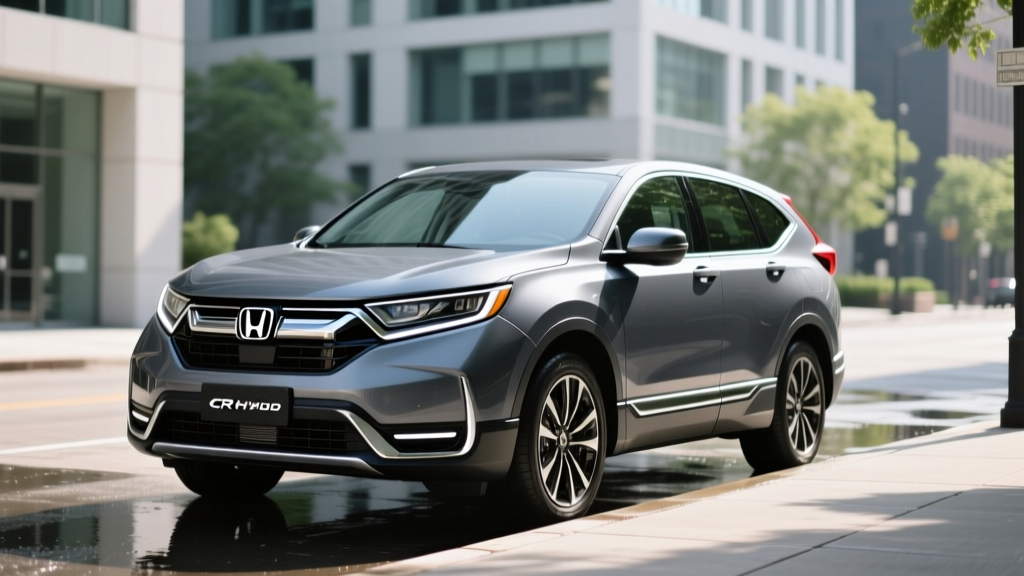
The Honda CR-V Hybrid continues to anchor Honda's electrified SUV lineup for 2026, offering a two-motor hybrid powertrain that prioritizes city efficiency without requiring any change to your fueling routine. Unlike plug-in hybrids or full battery-electric vehicles, the CR-V Hybrid is a conventional hybrid (HEV) — it charges its own small battery through regenerative braking and engine power, so you never plug it in. For buyers researching the Honda CR-V Hybrid MSRP and trying to determine whether this SUV makes financial sense against its gas-only sibling or a full EV, this guide breaks down every number that matters.
Honda offers the CR-V Hybrid across multiple trims for 2026, and pricing spans a meaningful range depending on whether you choose front-wheel drive or all-wheel drive. Below, we cover the exact MSRP by trim, EPA and real-world MPG, powertrain output, battery warranty terms, and whether any federal tax credits apply.
2026 Honda CR-V Hybrid MSRP by Trim
Honda structures the CR-V Hybrid lineup to slot above the base gas-only LX trim but below the top-tier Touring Hybrid in most configurations. Here is the manufacturer's suggested retail pricing for the 2026 model year, including destination charges:
| Trim | Drivetrain | MSRP (incl. destination) |
|---|---|---|
| Sport Hybrid | FWD | $35,950 |
| Sport Hybrid | AWD | $37,450 |
| Sport-L Hybrid | FWD | $38,650 |
| Sport-L Hybrid | AWD | $40,150 |
| Sport Touring Hybrid | AWD (standard) | $43,350 |
These figures represent base MSRP before dealer markups, accessories, or regional pricing adjustments. The hybrid powertrain commands roughly a $1,500–$2,500 premium over comparable gas-only trims. That premium typically pays for itself in fuel savings within 3–4 years for drivers covering 12,000–15,000 miles annually, depending on local gas prices.
EPA MPG Ratings and Real-World Fuel Economy
Fuel economy is the primary reason buyers cross-shop the CR-V Hybrid against the gas-only CR-V and competitors like the Toyota RAV4 Hybrid. Here are the official EPA figures for the 2026 CR-V Hybrid:
| Drivetrain | City MPG | Highway MPG | Combined MPG |
|---|---|---|---|
| FWD Hybrid | 43 | 36 | 40 |
| AWD Hybrid | 40 | 34 | 37 |
Real-world expectation: Honda's two-motor hybrid system excels in stop-and-go city driving, where the electric motors handle low-speed propulsion and the 2.0-liter Atkinson-cycle engine acts primarily as a generator. In real-world city testing, many drivers report matching or slightly exceeding the EPA city figure — 42–45 MPG is common in warm weather with moderate traffic. Highway driving is where hybrids lose their advantage: at sustained 70–80 mph speeds, expect 32–35 MPG in the AWD model, particularly in colder temperatures or with roof cargo. The combined real-world figure typically lands between 36–41 MPG depending on your commute mix.
For comparison, the gas-only 2026 CR-V AWD earns an EPA 28 MPG combined (fueleconomy.gov). That 9-MPG combined gap translates to roughly 50–60 fewer gallons consumed per year at 15,000 miles — a savings of $175–$250 annually at $3.50/gallon.
Powertrain Specs: Engine, Motors, and Output
The 2026 CR-V Hybrid uses Honda's fourth-generation two-motor hybrid system, which pairs a 2.0-liter DOHC Atkinson-cycle inline-4 engine with two electric motors integrated into the transmission housing. Here is the complete output breakdown:
- Engine: 2.0L Atkinson-cycle I-4, 145 hp / 134 lb-ft torque
- Drive motor: 181 hp / 247 lb-ft torque
- Combined system output: 204 hp / 247 lb-ft torque
- Transmission: Electronically controlled continuously variable (e-CVT)
- 0–60 mph: ~7.8 seconds (AWD)
The system operates in three modes: EV Drive (battery-powered, low speeds), Hybrid Drive (engine generates electricity for the drive motor), and Engine Drive (direct mechanical connection at highway cruising speeds). The transitions are seamless and mostly imperceptible from the driver's seat. The e-CVT avoids the rubber-band feel of older CVTs, and the torque-rich electric motor provides responsive off-the-line acceleration in city driving.
HEV vs. PHEV vs. EV: Which Powertrain Fits You?
The CR-V Hybrid is a conventional HEV — it cannot plug in and has no meaningful electric-only range. Honda does not currently offer a plug-in hybrid (PHEV) version of the CR-V in the US market. If you're weighing the CR-V Hybrid against a PHEV or a full battery-electric vehicle (BEV), here is a practical decision framework:
| Factor | CR-V Hybrid (HEV) | PHEV (e.g., RAV4 Prime) | Full EV (e.g., IONIQ 5) |
|---|---|---|---|
| Plug-in required? | No | Yes (for EV range) | Yes (always) |
| Electric-only range | ~1 mile (low-speed) | 35–42 miles typical | 250–310+ miles |
| Home charging needed? | No | Recommended (Level 2) | Essential (Level 2) |
| Federal tax credit | Not eligible | Up to $7,500 (varies) | Up to $7,500 (varies) |
| Base MSRP range | $35,950–$43,350 | $44,000–$50,000+ | $42,000–$55,000+ |
| Best for | No home charging, simple ownership | Short commute + home charging | Full electric commitment |
Choose the CR-V Hybrid if you rent or lack access to home/workplace charging, want zero behavior change from your gas car, or prioritize lower upfront cost. Look at a PHEV if you have a Level 2 charger at home and a commute under 40 miles — you'll drive most days on electricity while keeping the gas engine for road trips. Go full EV if you have reliable home charging, want the lowest per-mile fuel cost, and your daily driving falls within 200+ miles.
Battery Warranty, Lifespan, and Replacement Cost
Hybrid battery longevity is consistently a top concern for first-time hybrid buyers. The 2026 CR-V Hybrid uses a lithium-ion hybrid battery pack (approximately 1.1 kWh usable capacity) that is far smaller and less stressed than a full EV battery. Because the system keeps the battery in a narrow state-of-charge window — never fully depleting or fully charging it — degradation is minimal over the vehicle's lifespan.
Honda Hybrid Battery Warranty
- Coverage: 8 years / 100,000 miles (10 years / 150,000 miles in CARB states including CA, NY, MA, and others)
- What's covered: Defects and capacity loss below functional thresholds
- Replacement cost (out of warranty): $2,000–$4,000 for the hybrid battery pack, depending on labor rates and whether you choose OEM or refurbished
In practice, Honda's hybrid batteries from the past decade have proven durable well beyond the warranty period. Taxis and high-mileage drivers routinely log 150,000–200,000+ miles on original hybrid batteries. The replacement cost — while not trivial — is a fraction of what a full EV battery replacement would cost, and the smaller pack means lower material and labor expense. For context, a full EV battery replacement can run $10,000–$20,000+.
Federal Tax Credit Eligibility
Under current IRS §30D rules (irs.gov), conventional hybrids like the CR-V Hybrid do not qualify for the federal clean vehicle tax credit. The §30D credit of up to $7,500 applies only to plug-in electric vehicles (BEVs and PHEVs) that meet battery capacity, critical-mineral sourcing, MSRP caps, and buyer income limits.
This means the CR-V Hybrid's effective purchase price is its sticker price minus any dealer discounts, with no federal credit offset. However, some states and utilities offer their own incentives for hybrid vehicles — typically smaller rebates of $250–$1,000 — so check your state energy office or local utility for current programs. The total cost of ownership still favors the hybrid over the gas-only CR-V for most drivers through fuel savings alone, typically recovering the hybrid premium within 3–5 years.
Reliability and Long-Term Ownership
Honda's hybrid powertrain has accumulated years of field data across the Accord Hybrid, CR-V Hybrid, and Civic Hybrid lineups. The fourth-generation two-motor system in the 2026 CR-V is an evolution of a proven architecture, not a first-year redesign. Key reliability indicators:
- NHTSA overall rating: 5 stars (nhtsa.gov)
- IIHS rating: Top Safety Pick+ (when equipped with qualifying headlights)
- Common maintenance items: Standard oil changes (every 7,500–10,000 miles), brake pads last longer than gas-only models thanks to regenerative braking, no transmission fluid changes on a traditional schedule
- Known concerns: None systemic to the hybrid powertrain as of the 2026 model year; isolated reports of infotainment lag addressed through OTA updates
The regenerative braking system significantly reduces wear on the friction brakes — many hybrid owners report original brake pads lasting 80,000–100,000 miles, which offsets some of the hybrid premium through reduced maintenance costs over the ownership period.
Pros, Cons, and Final Assessment
Pros
- 40 MPG combined (FWD) with no plug-in requirement
- Strong city MPG that often exceeds EPA in real-world driving
- Proven hybrid system with 8–10 year battery warranty
- AWD available across all hybrid trims
- Lower brake wear from regenerative braking
- Competitive cargo space (36.3 cu ft behind rear seats)
Cons
- No federal tax credit eligibility (HEV, not PHEV)
- Highway MPG drops to 34–36 — less advantage vs. gas models on long trips
- $1,500–$2,500 premium over gas-only trims
- e-CVT can drone under hard acceleration
- AWD hybrid starts at $37,450 — not budget-friendly
Frequently Asked Questions
How many MPG does the 2026 Honda CR-V Hybrid get?
The EPA rates the FWD CR-V Hybrid at 43 city / 36 highway / 40 combined MPG. The AWD model is rated at 40 city / 34 highway / 37 combined. Real-world city driving often matches or slightly exceeds EPA estimates, while sustained highway speeds reduce efficiency to the low-to-mid 30s.
Does the Honda CR-V Hybrid need to be plugged in?
No. The CR-V Hybrid is a conventional hybrid (HEV), not a plug-in hybrid (PHEV). It charges its own small battery through regenerative braking and the gasoline engine. You fuel it exactly like a regular gas car — there is no charging cable, no plug, and no electric-only commuting range to manage.
Does the 2026 CR-V Hybrid qualify for a federal tax credit?
No. Under IRS §30D rules, only plug-in electric vehicles (BEVs and qualifying PHEVs) are eligible for the federal clean vehicle tax credit of up to $7,500. Conventional hybrids do not qualify. Check your state and local utility for any smaller hybrid-specific rebates that may be available.
How long does the CR-V Hybrid battery last, and what does replacement cost?
Honda covers the hybrid battery for 8 years/100,000 miles (10 years/150,000 miles in CARB states). Real-world data from Honda's hybrid fleet shows most batteries lasting well beyond warranty. Out-of-warranty replacement typically costs $2,000–$4,000, far less than a full EV battery swap.
Should I buy the CR-V Hybrid or wait for a PHEV version?
Honda has not announced a US-market CR-V PHEV as of the 2026 model year. If you need plug-in electric range today, competitors like the Toyota RAV4 Prime (42 miles electric) or Hyundai Tucson PHEV (33 miles electric) are available, but at higher MSRPs ($44,000+). For buyers without home charging access, the CR-V Hybrid remains the most practical electrified compact SUV option in its price range.
How does the CR-V Hybrid compare to the gas-only CR-V in total cost?
The hybrid premium of $1,500–$2,500 is typically recovered through fuel savings within 3–5 years for drivers covering 12,000+ miles annually. Add in reduced brake wear from regenerative braking and the hybrid becomes the more economical choice for most ownership timelines beyond five years.