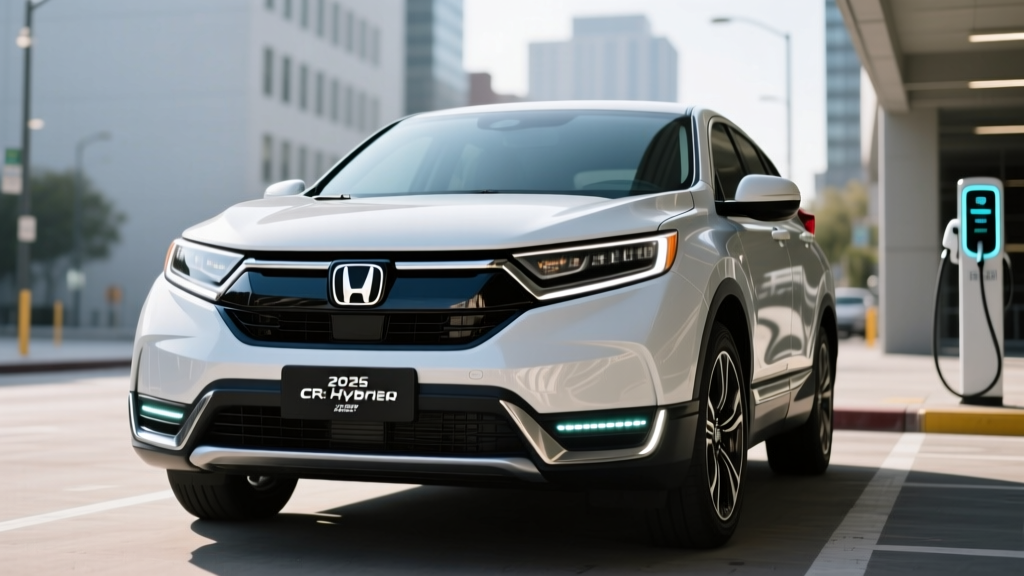
If you've been searching for a Honda CR-V Hybrid lease, you're looking at one of the most popular compact crossover hybrids on the market — and for good reason. The 2026 Honda CR-V Hybrid pairs a 2.0-liter Atkinson-cycle engine with a two-motor hybrid system to deliver an EPA-estimated 40 MPG combined, standard all-wheel drive, and a starting MSRP around $34,995. But before you sign a lease, you need the exact numbers on fuel economy, powertrain specs, battery warranty, and whether leasing or buying makes more financial sense.
This guide breaks down everything you need to evaluate a 2026 CR-V Hybrid lease with the precision of someone who's tracked Honda's hybrid powertrain evolution for years.
2026 Honda CR-V Hybrid: Quick Spec Overview
| Specification | 2026 Honda CR-V Hybrid |
|---|---|
| Powertrain Type | Conventional Hybrid (HEV) — no plug required |
| Engine | 2.0L DOHC Atkinson-cycle inline-4 |
| Electric Motors | Dual-motor hybrid system |
| Combined Horsepower | 204 hp |
| Combined Torque | 247 lb-ft (electric motor) |
| Drivetrain | Standard Real Time AWD™ |
| EPA MPG (City / Hwy / Combined) | 43 / 36 / 40 MPG |
| Fuel Tank Capacity | 14.0 gallons |
| Total Driving Range | ~560 miles |
| Hybrid Battery | Lithium-ion, ~1.1 kWh (self-charging) |
| 0–60 mph | ~7.6 seconds |
| Cargo Volume (behind rear seats) | 36.3 cu ft |
| Base MSRP (Sport Touring Hybrid) | $34,995 |
| Hybrid Battery Warranty | 8 years / 100,000 miles (10 yr / 150,000 mi in CARB states) |
Fuel Economy: EPA Numbers vs. Real-World MPG
The EPA rates the 2026 CR-V Hybrid AWD at 43 city / 36 highway / 40 combined MPG according to fueleconomy.gov. These figures apply to the Sport, Sport Touring, and Sport-L Hybrid trims, all of which come with standard AWD.
| Driving Scenario | EPA Estimate | Real-World Expectation |
|---|---|---|
| City (stop-and-go) | 43 MPG | 42–46 MPG (hybrids often exceed EPA in city) |
| Highway (70 mph cruise) | 36 MPG | 33–37 MPG (aerodynamic drag reduces hybrid advantage) |
| Combined | 40 MPG | 37–42 MPG depending on driving mix |
| Cold Weather (below 32°F) | — | 34–38 MPG (engine runs more for cabin heat) |
Why city MPG is higher: The CR-V Hybrid's two-motor system runs primarily on electric power at low speeds, with the gasoline engine acting as a generator rather than directly driving the wheels. Regenerative braking recaptures energy at every stop light. This is the opposite of a conventional gas car, which gets its worst mileage in the city.
Why highway MPG drops: At sustained highway speeds, the engine must work harder against aerodynamic drag, and there's less regenerative braking opportunity. The hybrid system's advantage narrows considerably above 65 mph. If your commute is 90% highway, expect combined figures closer to 36–37 MPG.
HEV vs. PHEV vs. EV: Is the CR-V Hybrid Right for You?
Honda does not currently offer a plug-in hybrid (PHEV) version of the CR-V in the US market. The CR-V Hybrid is a conventional HEV — it charges its own small battery through regenerative braking and the gasoline engine. You never plug it in.
| Factor | CR-V Hybrid (HEV) | Typical PHEV SUV | Full EV SUV |
|---|---|---|---|
| Plug-in Required? | No | Yes (Level 1/2) | Yes (Level 2/DC) |
| Electric-Only Range | ~1 mile at low speed | 25–40 miles | 250–350+ miles |
| Total Range | ~560 miles | 400–500 miles | 250–350 miles |
| Combined MPG / MPGe | 40 MPG | 30–35 MPG (gas) + 80–100 MPGe (electric) | 90–110 MPGe |
| Federal Tax Credit | Not eligible | Up to $7,500 (if eligible) | Up to $7,500 (if eligible) |
| Home Charging Needed? | No | Recommended | Essential |
| Maintenance Complexity | Low (engine + simple hybrid system) | Moderate (two full powertrains) | Low (no engine) |
Choose the CR-V Hybrid (HEV) if:
- You don't have access to home or workplace charging
- You want better fuel economy without changing your refueling habits
- You regularly take long road trips where charging infrastructure is uncertain
- You want a lower purchase price than a PHEV or EV equivalent
Consider a PHEV instead if:
- You can install a Level 2 charger at home
- Your daily commute is under 30 miles round-trip (you'd rarely use gas)
- You want to qualify for the federal tax credit
Go full EV if:
- You have reliable home charging
- You want the lowest per-mile energy cost and zero tailpipe emissions
- Your daily driving is under 250 miles and you're comfortable with DC fast charging on road trips
Powertrain Deep Dive: How the CR-V Hybrid System Works
The 2026 CR-V Hybrid uses Honda's fourth-generation two-motor hybrid system. Here's how the components break down:
- 2.0L Atkinson-cycle engine: Produces approximately 145 hp on its own. The Atkinson cycle sacrifices peak power for thermal efficiency — it extracts more energy from each drop of fuel.
- Propulsion motor: The primary drive motor delivers 204 combined system hp and 247 lb-ft of torque directly to the wheels. This is the motor you feel when accelerating from a stop.
- Generator motor: Converts engine output into electricity to feed the propulsion motor or charge the hybrid battery. At highway speeds, a lock-up clutch can connect the engine directly to the wheels for efficiency.
- Lithium-ion hybrid battery: Approximately 1.1 kWh capacity. This is a small buffer — it's not designed for sustained electric-only driving. It stores energy from regenerative braking and the generator motor for short bursts of electric assist.
The system operates primarily in EV mode at low speeds (under ~25 mph in gentle acceleration), switches to hybrid mode for normal driving, and engages the engine directly at steady highway speeds. The transitions are seamless — most drivers never notice the mode changes.
2026 CR-V Hybrid Pricing and Lease Analysis
The 2026 Honda CR-V Hybrid is available in three trims, all with standard AWD:
| Trim | MSRP | Typical Lease (36 mo / 12K mi/yr)* |
|---|---|---|
| Sport Hybrid | $34,995 | $350–$420/mo |
| Sport-L Hybrid | $37,350 | $380–$450/mo |
| Sport Touring Hybrid | $40,850 | $410–$490/mo |
*Lease estimates are approximate and vary by region, dealer, credit tier, money factor, and any manufacturer-to-dealer incentives. Always negotiate the capitalized cost (sale price), money factor, and residual value separately.
Lease vs. Buy: Which Makes Sense for the CR-V Hybrid?
Leasing advantages for the CR-V Hybrid:
- Lower monthly payment than financing a purchase
- You're covered under Honda's 3-year/36,000-mile bumper-to-bumper warranty for the entire lease term
- The hybrid battery warranty (8 yr / 100K mi) far exceeds any lease period, so battery degradation is not your concern
- You can upgrade to whatever Honda offers in 3 years — useful as hybrid and EV tech evolves
Buying advantages:
- No mileage restrictions — hybrids shine on high-mileage commutes where fuel savings compound
- You build equity in a vehicle known for strong resale value (CR-Vs historically retain value well)
- The hybrid system's fuel savings grow more valuable the longer you own it — a 5-year ownership horizon saves roughly $2,500–$3,500 in fuel versus the non-hybrid CR-V AWD (at 28 MPG combined and $3.50/gallon, driving 15,000 miles/year)
Federal Tax Credit Eligibility
The conventional CR-V Hybrid does not qualify for the federal §30D clean vehicle tax credit. Under current IRS rules, the §30D credit applies only to plug-in electric vehicles (BEVs) and plug-in hybrids (PHEVs) that meet battery capacity, critical mineral sourcing, and battery component requirements. Conventional hybrids like the CR-V Hybrid are excluded.
Some states offer separate incentives for hybrid purchases, but these vary widely. Check your state's energy office or DMV for current programs.
Battery Longevity, Warranty, and Replacement Cost
- Federal requirement: 8 years / 100,000 miles (hybrid battery and related components)
- CARB states (CA, CO, CT, ME, MD, MA, NJ, NY, OR, RI, VT, WA, and others adopting California emissions standards): 10 years / 150,000 miles
- Coverage threshold: Honda covers the battery if it loses capacity to the point it can no longer function properly — typically defined as a significant drop that triggers a diagnostic fault code
How Long Will the CR-V Hybrid Battery Last?
Honda's hybrid battery packs are designed to last the lifetime of the vehicle under normal use. Real-world data from earlier-generation Honda hybrids (Insight, Accord Hybrid) shows battery packs routinely exceeding 150,000–200,000 miles before significant degradation. The CR-V Hybrid's lithium-ion pack is smaller and undergoes shallower charge/discharge cycles than an EV battery, which reduces stress and extends lifespan.
Key factors that affect hybrid battery longevity:
- Temperature extremes: Prolonged exposure to extreme heat (consistently above 100°F) accelerates lithium-ion degradation more than cold. Garage parking helps.
- Driving pattern: Regular use is better than extended sitting. The battery management system keeps the pack within a safe state-of-charge window (roughly 40–80%), which you cannot override.
- No user maintenance required: Unlike an EV battery, you don't manage charge levels or preconditioning — the system handles everything automatically.
Battery Replacement Cost
If the hybrid battery does fail outside of warranty, replacement costs typically range from $2,000 to $4,000 for parts and labor at a Honda dealer. Third-party hybrid battery rebuilders may offer refurbished packs for $1,000–$2,000. Given the strong warranty coverage and historical longevity of Honda hybrid batteries, this is a low-probability expense for most owners.
Reliability and Safety Ratings
Honda's hybrid powertrain has a strong reliability track record. The two-motor system is mechanically simpler than a conventional automatic transmission — there are no gear shifts, torque converters, or clutch packs to wear out. The engine runs under lighter loads than in a non-hybrid application because the electric motor handles peak acceleration demands.
For the 2026 model year, check the latest ratings from:
- NHTSA — 5-star safety testing (frontal, side, rollover)
- IIHS — Top Safety Pick evaluation (crashworthiness, crash avoidance, headlight ratings)
The CR-V Hybrid includes Honda Sensing® as standard equipment: adaptive cruise control, lane-keeping assist, collision mitigation braking, and road departure mitigation. This is an SAE Level 2 driver-assistance system — you must keep your hands on the wheel and eyes on the road at all times.
Pros and Cons: Leasing the 2026 CR-V Hybrid
Pros
- 40 MPG combined with standard AWD — exceptional for the class
- No plug-in charging required — zero lifestyle change from a gas car
- 204 hp provides confident acceleration for merging and passing
- 36.3 cu ft cargo space matches the non-hybrid CR-V
- 8–10 year hybrid battery warranty depending on state
- Strong Honda resale value and reliability history
- Honda Sensing safety suite standard on all trims
Cons
- No PHEV variant available — you can't drive on electric only for your commute
- No federal tax credit eligibility
- Highway MPG (36) is only marginally better than some turbo-gas competitors
- Hybrid trims start at $34,995 — roughly $3,000 more than the gas-only CR-V LX AWD
- CVT-like driving feel (no traditional gear shifts) may not suit all drivers
- Infotainment system on Sport trim lacks the larger screen of Touring
Frequently Asked Questions
How many MPG does the 2026 Honda CR-V Hybrid get?
The EPA rates the CR-V Hybrid AWD at 43 city / 36 highway / 40 combined MPG. In real-world driving, most owners see 37–42 MPG combined depending on their city-to-highway ratio. City-heavy commutes often exceed the EPA city estimate thanks to regenerative braking.
Does the Honda CR-V Hybrid need to be plugged in?
No. The CR-V Hybrid is a conventional hybrid (HEV). It charges its own battery through regenerative braking and the gasoline engine. You refuel it at a gas station like any other car. Honda does not currently sell a plug-in hybrid CR-V in the US market.
Is the CR-V Hybrid reliable, and what does battery replacement cost?
Honda's hybrid system has an excellent reliability record, with battery packs commonly lasting 150,000+ miles. The hybrid battery is warranted for 8 years/100,000 miles (10 years/150,000 miles in CARB states). Out-of-warranty replacement runs $2,000–$4,000 at a dealer.
Does the CR-V Hybrid qualify for a federal tax credit?
No. The §30D federal clean vehicle credit applies only to plug-in vehicles (BEVs and PHEVs). Conventional hybrids are not eligible. Some states may offer separate hybrid incentives — check your local programs.
Is it better to lease or buy the CR-V Hybrid?
Lease if you want lower monthly payments, plan to drive under 12,000–15,000 miles per year, and prefer being under full warranty. Buy if you drive high annual miles (the fuel savings compound), want to avoid mileage penalties, and plan to keep the vehicle 5+ years — the hybrid's fuel advantage grows with time and mileage.
How does the CR-V Hybrid compare to the Toyota RAV4 Hybrid?
The RAV4 Hybrid is rated at 41 city / 38 highway / 41 combined MPG — slightly better on the highway. The CR-V Hybrid offers more cargo space (36.3 vs. 37.6 cu ft — comparable), a more refined interior on upper trims, and a similar price point. Both are strong choices; the decision often comes down to styling preference and dealer experience.
What's the fuel savings vs. the gas-only CR-V?
The gas-only 2026 CR-V AWD is rated at roughly 28 MPG combined. At 15,000 miles per year and $3.50/gallon, the gas CR-V costs about $1,875/year in fuel. The Hybrid at 40 MPG costs about $1,313/year — a savings of approximately $562/year, or $2,810 over five years. That largely closes the ~$3,000 price premium of the Hybrid over a comparably equipped gas model.