Quick Verdict: The CR-V Hybrid's Powertrain at a Glance
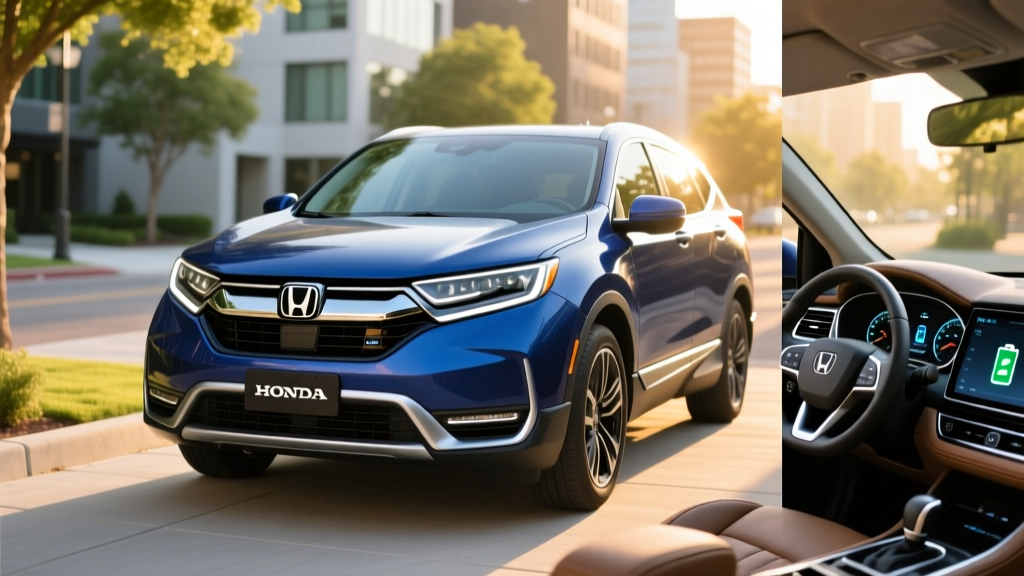
The Honda CR-V Hybrid pairs a 2.0-liter Atkinson-cycle four-cylinder engine with a two-motor hybrid system to deliver 204 combined horsepower and 247 lb-ft of torque. That horsepower figure represents the combined output of the gasoline engine and the electric drive motors working through Honda's e-CVT powertrain — not a simple addition of peak engine and peak motor ratings, which is a common source of confusion when researching Honda CR-V Hybrid horsepower figures online.
For 2026, the CR-V Hybrid slots into the upper half of the compact hybrid SUV segment on power, trailing the Toyota RAV4 Hybrid's 219 hp but offering more torque than most competitors. The real story, though, is efficiency: the EPA rates it at 43 city / 36 highway / 40 combined MPG for front-wheel-drive trims, numbers that routinely improve in real-world city driving thanks to regenerative braking.
| Specification | 2026 Honda CR-V Hybrid |
|---|---|
| Combined Horsepower | 204 hp |
| Combined Torque | 247 lb-ft |
| Gas Engine | 2.0L Atkinson-cycle I-4 (145 hp) |
| Electric Motors | Dual-motor system (184 hp drive motor) |
| Transmission | e-CVT (direct-drive) |
| Drivetrain | FWD standard, AWD available |
| EPA Fuel Economy (FWD) | 43 city / 36 highway / 40 combined MPG |
| EPA Fuel Economy (AWD) | 40 city / 34 highway / 37 combined MPG |
| Fuel Tank | 14.0 gallons |
| Total Range (FWD) | ~560 miles |
| 0-60 mph | ~7.8 seconds |
| Towing Capacity | 1,000 lbs |
| Cargo Volume | 36.3 cu ft (rear seats up) |
| Base MSRP (Sport Hybrid FWD) | $36,395 |
Understanding the Hybrid Powertrain: How 204 HP Gets to the Wheels
Honda's two-motor hybrid system operates differently from a conventional automatic transmission. The gasoline engine primarily acts as a generator, producing electricity that feeds the drive motor. In most driving scenarios — especially below 60 mph — the CR-V Hybrid operates as a series hybrid, meaning the electric motor alone propels the vehicle. The engine only engages a lock-up clutch to drive the wheels directly during steady-state highway cruising, where a mechanical connection is more efficient than converting to electricity and back.
This is why the combined horsepower rating of 204 hp doesn't equal the engine's 145 hp plus the drive motor's 184 hp. The system's power electronics and battery discharge rate limit how much combined output reaches the drivetrain at any given moment. The 247 lb-ft of torque, however, is available from the electric motor at very low RPM, which gives the CR-V Hybrid a responsive, punchy feel in city driving that the horsepower number alone doesn't convey.
HEV vs. PHEV: Why the CR-V Is a Conventional Hybrid
The Honda CR-V Hybrid is a conventional hybrid (HEV), not a plug-in hybrid (PHEV). This is a critical distinction:
- HEV (this vehicle): The battery charges exclusively through regenerative braking and the gasoline engine. You never plug it in. The battery is small (~1.3 kWh) and provides short electric-only assists, not sustained electric driving.
- PHEV (e.g., Toyota RAV4 Prime): Features a much larger battery (~18.1 kWh), can be plugged in to charge, and offers 30-42 miles of electric-only driving before the gas engine engages.
Honda discontinued the CR-V Plug-In Hybrid (sold in China and Europe as the e:PHEV) for the U.S. market. If you need electric-only commuting range, you'll need to look at a PHEV competitor or a full BEV.
Fuel Economy: EPA Ratings and Real-World MPG
The EPA posts separate ratings for FWD and AWD configurations, and the gap is meaningful — three MPG combined. Here's the full breakdown:
| Configuration | City MPG | Highway MPG | Combined MPG |
|---|---|---|---|
| FWD (Sport, Sport Touring) | 43 | 36 | 40 |
| AWD (Sport, Sport Touring) | 40 | 34 | 37 |
Real-World MPG: Where Hybrids Surprise
Conventional hybrids routinely exceed their EPA city ratings in real-world stop-and-go driving. The reason is physics: every braking event recovers kinetic energy through regeneration, and low-speed driving keeps the engine in its most efficient operating range or off entirely. Owners reporting to fueleconomy.gov's My MPG tracker frequently log 42-46 MPG in mixed suburban driving with the FWD model.
Highway MPG is the opposite story. Above 70 mph, aerodynamic drag dominates, the engine must work harder, and regenerative braking opportunities vanish. Expect 32-35 MPG on flat interstate at 75 mph with the AWD model, and slightly less in mountainous terrain or cold weather. Cold temperatures reduce battery efficiency and force the engine to run more often for cabin heating, knocking 3-5 MPG off combined figures in winter months.
Pricing, Trims, and Tax Credit Eligibility
For 2026, Honda offers the CR-V Hybrid in two trims, both available with FWD or AWD:
- Sport Hybrid FWD: $36,395 MSRP
- Sport Hybrid AWD: $37,895 MSRP
- Sport Touring Hybrid FWD: $39,895 MSRP
- Sport Touring Hybrid AWD: $41,395 MSRP (includes Honda Sensing suite, Bose audio, wireless CarPlay/Android Auto, heated steering wheel)
Federal Tax Credit: Not Eligible
The Honda CR-V Hybrid is a conventional HEV, not a plug-in vehicle. Under IRS §30D Clean Vehicle Credit rules, only plug-in electric vehicles (BEVs and PHEVs with at least 7 kWh of battery capacity) qualify for the federal tax credit of up to $7,500. The CR-V Hybrid's ~1.3 kWh battery falls far short of this threshold.
Some states offer separate rebates for conventional hybrids, though these have become rare. Check your state energy office or AFDC's state incentive database for current local programs.
Battery Longevity, Warranty, and Replacement Cost
Hybrid battery anxiety is the single most common concern among first-time hybrid buyers, and it's largely overblown based on two decades of real-world data. The CR-V Hybrid uses a lithium-ion battery pack mounted under the rear cargo floor, and Honda backs it with a robust warranty:
- Hybrid Battery Warranty: 8 years / 100,000 miles (10 years / 150,000 miles in CARB states including California, New York, Massachusetts, and others adopting California emissions standards)
- Powertrain Warranty: 5 years / 60,000 miles
- Battery Capacity Threshold: Honda covers the battery if it falls below approximately 70% of original capacity within the warranty period
Real-World Degradation and Replacement Cost
Honda's hybrid battery packs have demonstrated excellent longevity. The 1.3 kWh battery in the CR-V Hybrid operates within a conservative state-of-charge window — typically between 40% and 80% — which dramatically reduces degradation compared to full BEV batteries that regularly cycle from 10% to 90% or higher. This partial-cycling strategy is why 15-year-old Toyota Prius and Honda Insight packs often retain 85%+ of original capacity.
If a replacement is needed out of warranty, expect:
- OEM replacement battery: $2,500 - $4,000 (parts + labor at a Honda dealer)
- Refurbished/aftermarket pack: $1,500 - $2,500
- Individual module replacement: $200 - $500 per module (the pack contains multiple modules; often only one or two fail)
For context, the average CR-V Hybrid owner will spend $0 on battery replacement over a 10-year ownership period. The pack's conservative cycling and active thermal management make catastrophic failure extremely rare.
How It Compares: CR-V Hybrid vs. Key Rivals
The compact hybrid SUV segment is crowded, and the CR-V Hybrid's 204 hp puts it in the middle of the pack. Here's how it stacks up against the three most common cross-shops:
| Vehicle | Combined HP | EPA Combined MPG | AWD MPG | Starting MSRP |
|---|---|---|---|---|
| Honda CR-V Hybrid | 204 hp | 40 MPG | 37 MPG | $36,395 |
| Toyota RAV4 Hybrid | 219 hp | 39 MPG | 39 MPG (AWD std) | $33,575 |
| Hyundai Tucson Hybrid | 226 hp | 38 MPG | 37 MPG | $34,590 |
| Ford Escape Hybrid | 210 hp | 39 MPG | 37 MPG | $34,995 |
Key takeaways: The RAV4 Hybrid includes AWD standard at every trim (the CR-V charges $1,500 for it), and matches or slightly trails the CR-V on FWD MPG. The Tucson Hybrid leads on horsepower but trails on efficiency. The CR-V Hybrid's advantage is interior space — its 36.3 cu ft of cargo volume behind the rear seats beats the RAV4 Hybrid's 37.5 cu ft on paper, but Honda's lower load floor and wider opening make it more practical for bulky items in real use.
Who Should Buy the CR-V Hybrid — And Who Shouldn't
Pros
- 43 MPG city in real-world driving routinely exceeds EPA
- 204 hp with 247 lb-ft torque provides confident merging
- No plug-in charging required — works with your existing routine
- 8-year/100,000-mile hybrid battery warranty (10/150k in CARB states)
- Spacious cargo area with no battery-pack intrusion
- Honda Sensing ADAS suite standard on all trims
Cons
- AWD costs $1,500 extra and drops 3 MPG combined
- No federal tax credit (conventional hybrid)
- 1,000-lb towing limit — lowest in segment
- Engine drone under hard acceleration (e-CVT characteristic)
- No electric-only driving mode for zero-emission short trips
- AWD uses a mechanical rear axle, not a dedicated rear motor
Choose the CR-V Hybrid If:
- You drive 12,000-18,000 miles/year with significant city/suburban stop-and-go
- You want EV-like efficiency without changing your fueling habits
- You don't have access to home or workplace charging (apartment, street parking)
- You plan to keep the vehicle 8+ years and want proven hybrid reliability
Choose a PHEV Instead If:
- You have home Level 2 charging and a commute under 35 miles (RAV4 Prime offers 42 mi EV range)
- You want the $7,500 federal tax credit (subject to MSRP, income, and battery-sourcing rules)
- You want electric-only driving for daily errands with gas backup for road trips
Choose a Full BEV Instead If:
- You have reliable home charging and your daily driving is under 250 miles
- You want zero tailpipe emissions and minimal maintenance (no oil changes, no engine)
- You qualify for the full $7,500 federal credit plus state incentives
Frequently Asked Questions
How many MPG does the Honda CR-V Hybrid actually get?
The EPA rates the FWD CR-V Hybrid at 43 city / 36 highway / 40 combined MPG, and the AWD model at 40/34/37. In real-world suburban driving with moderate stop-and-go, FWD owners commonly report 42-46 MPG combined. Highway driving at 75 mph drops efficiency to 32-35 MPG, and cold weather reduces combined figures by 3-5 MPG.
Does the Honda CR-V Hybrid need to be plugged in?
No. The CR-V Hybrid is a conventional HEV, not a plug-in hybrid. Its small battery charges through regenerative braking and the gasoline engine. You fuel it like any other car — with gasoline at a gas station — and never need a charger, outlet, or charging app.
Is the Honda CR-V Hybrid reliable, and what does battery replacement cost?
Honda's hybrid powertrains have demonstrated strong long-term reliability, with the hybrid battery backed by an 8-year/100,000-mile warranty (10 years/150,000 miles in CARB states). The conservative charge window (40-80% SoC) minimizes degradation. Out-of-warranty replacement runs $2,500-$4,000 for an OEM pack, though many hybrids reach 200,000+ miles on the original battery.
Does the Honda CR-V Hybrid qualify for a tax credit?
No. The federal §30D Clean Vehicle Credit requires a plug-in vehicle with at least 7 kWh of battery capacity. The CR-V Hybrid's ~1.3 kWh battery does not qualify. Check your state's incentive database for any local hybrid rebates, though these are increasingly rare as programs shift toward plug-in vehicles.
How does the CR-V Hybrid's 204 horsepower feel in daily driving?
The 247 lb-ft of electric motor torque delivers immediate response from a stop, making city driving and highway merging feel quicker than the 204 hp figure suggests. The 0-60 mph time of approximately 7.8 seconds is competitive with non-hybrid compact SUVs. The main trade-off is the e-CVT's characteristic engine drone under sustained hard acceleration — it's effective but not refined compared to a geared automatic.
How does the CR-V Hybrid AWD system work?
The CR-V Hybrid AWD uses a mechanical driveshaft connecting the front transaxle to a rear differential — not a dedicated rear electric motor. This means both axles are powered by the same hybrid system, and the AWD model sacrifices 3 MPG combined versus FWD. It provides adequate traction in rain and light snow but is not designed for serious off-road use.