Quick Verdict: The 2022 Honda CR-V Hybrid at a Glance
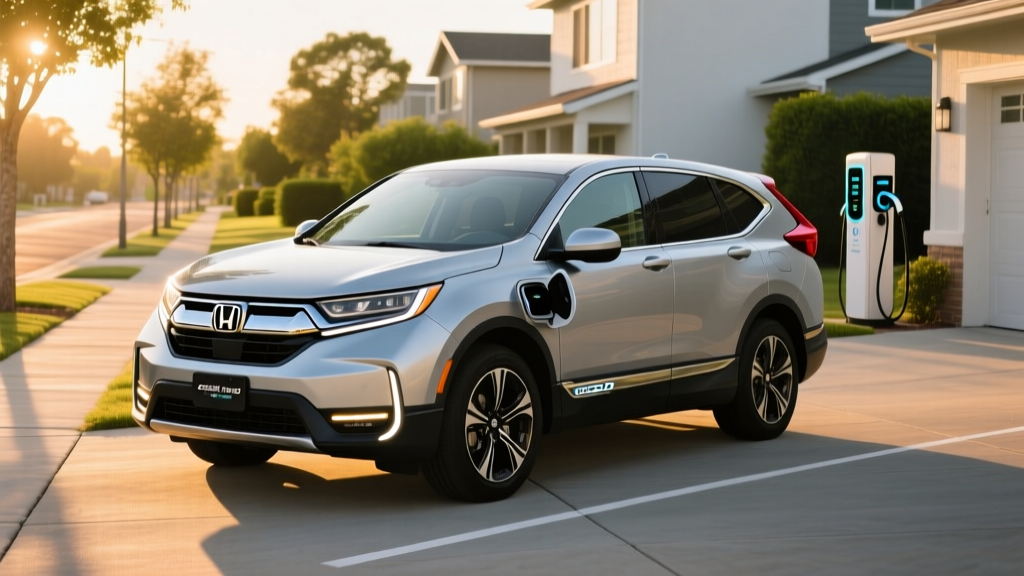
The 2022 Honda CR-V Hybrid is a conventional hybrid (HEV) — not a plug-in — that pairs a 2.0-liter Atkinson-cycle engine with a two-motor hybrid system to deliver an EPA-estimated 40 MPG combined. For compact-SUV shoppers who want meaningful fuel savings without changing their refueling habits, it remains one of the most efficient and practical choices on the used and certified-pre-owned market. No plugging in required, no range anxiety, and a proven Honda Hybrid powertrain backed by an 8-year/100,000-mile battery warranty.
This was the final model year of the fifth-generation CR-V before Honda's 2023 redesign. That means 2022 models are widely available as certified pre-owned vehicles, often priced between $24,000 and $32,000 depending on trim and mileage. We'll cover what the EPA numbers mean in real-world driving, how the hybrid system actually works, what you'll pay in fuel, and whether this HEV makes more sense for your situation than a plug-in hybrid or full battery-electric vehicle.
| Spec | Value |
|---|---|
| Powertrain | 2.0L 4-cyl Atkinson + 2-motor hybrid (HEV) |
| Combined Horsepower | 212 hp |
| Drivetrain | AWD standard (all trims) |
| EPA MPG (City / Hwy / Combined) | 40 / 35 / 38 |
| Fuel Tank Capacity | 14.0 gallons |
| Total Driving Range | ~532 miles (EPA est.) |
| 0–60 mph | ~7.8 seconds |
| Cargo Volume (behind rear seats) | 33.5 cu ft |
| Cargo Volume (rear seats folded) | 68.5 cu ft |
| Towing Capacity | Not rated for towing |
| Hybrid Battery Warranty | 8 years / 100,000 miles |
| Original MSRP Range | $31,710 – $37,400 |
HEV vs. PHEV: Why the 2022 CR-V Hybrid Is a Conventional Hybrid
Before we go further, let's eliminate the most common point of confusion: the 2022 Honda CR-V Hybrid is a conventional hybrid electric vehicle (HEV), not a plug-in hybrid (PHEV).
| Feature | HEV (CR-V Hybrid) | PHEV (e.g., Toyota RAV4 Prime) | BEV (e.g., Tesla Model Y) |
|---|---|---|---|
| Plug in to charge? | No — regenerates internally | Yes — Level 1 or Level 2 | Yes — Level 2 or DC fast charge |
| Electric-only driving | Brief, low-speed only (~1 mi) | 25–42 miles typical | 250–330+ miles |
| Gas engine? | Yes, primary power source | Yes, kicks in after battery depletes | No |
| Charging infrastructure needed? | None | Recommended (home Level 2) | Required (home or public) |
| Federal tax credit eligible? | No | Possibly (§30D, if battery sourcing qualifies) | Possibly (§30D, if sourcing/income/MSRP qualify) |
The CR-V Hybrid charges its small lithium-ion battery pack entirely through regenerative braking and the gasoline engine. You never plug it in. The electric motors assist the engine during acceleration and can propel the vehicle at low speeds for very short distances (typically under one mile), but the system's primary function is to reduce the engine's workload, not replace it.
This matters because Honda did not offer a CR-V plug-in hybrid in the U.S. market for 2022. If you need electric-only commuting range, you'd need to look at competitors like the Toyota RAV4 Prime (42 miles EV range) or the Ford Escape PHEV (37 miles EV range). For the 2023+ model years, Honda introduced the CR-V Hybrid as a carryover HEV alongside the new sixth-generation platform, but still no U.S.-market PHEV variant.
Fuel Economy: EPA Ratings and Real-World MPG
The EPA rates the 2022 Honda CR-V Hybrid AWD at 40 MPG city, 35 MPG highway, and 38 MPG combined. That's a significant improvement over the non-hybrid 2022 CR-V AWD with the 1.5L turbo, which is rated at 27/32/29 MPG — roughly a 30% fuel economy gain in combined driving.
| Model | City MPG | Highway MPG | Combined MPG | Est. Annual Fuel Cost* |
|---|---|---|---|---|
| CR-V Hybrid AWD | 40 | 35 | 38 | ~$1,450 |
| CR-V 1.5T AWD | 27 | 32 | 29 | ~$1,900 |
| CR-V 1.5T FWD | 28 | 34 | 30 | ~$1,850 |
*Based on 15,000 miles/year, 55% city driving, $3.50/gallon regular unleaded. Actual costs vary by region and driving style. Source: fueleconomy.gov
Real-World MPG: What Owners Actually See
Hybrid fuel economy behaves differently than gas-only vehicles in real-world conditions. Because the CR-V Hybrid relies heavily on its electric motors at low speeds and during stop-and-go traffic, city MPG often exceeds the EPA estimate. Many owners on Fuelly and Honda forums report 41–44 MPG in predominantly urban driving.
Highway driving is where hybrids lose their advantage. At sustained 70–80 mph speeds, the engine does most of the work, and the aerodynamic drag of an SUV works against efficiency. Expect 32–36 MPG on long highway trips, slightly below the EPA highway rating. This is normal hybrid behavior — the EPA highway test cycle includes lower-speed segments that don't reflect modern interstate speeds.
In cold weather (below 30°F), the engine runs more frequently to maintain cabin heat and keep the hybrid battery at optimal temperature. Winter fuel economy can dip to 33–36 MPG combined until ambient temperatures recover. The 2022 CR-V Hybrid does not have a heat pump (that's a BEV/PHEV feature), so cabin warmth comes from the engine's waste heat, which actually helps efficiency once the engine is warm.
Hybrid Powertrain: How the Two-Motor System Works
The 2022 CR-V Hybrid uses Honda's two-motor hybrid system, which is fundamentally different from the planetary-gear designs used by Toyota. Here's how it operates:
- 2.0L Atkinson-cycle 4-cylinder engine: Produces 143 hp and 129 lb-ft of torque on its own. The Atkinson cycle prioritizes efficiency over peak power by keeping the intake valve open slightly longer during the compression stroke.
- Propulsion motor: A 181-hp electric motor that drives the front wheels directly in most driving conditions. This is the primary motivator — the CR-V Hybrid drives like an EV much of the time.
- Generator motor: Converts engine output into electricity to feed the propulsion motor or charge the battery. The engine often acts as a generator rather than mechanically driving the wheels.
- System combined output: 212 hp (the engine and motors don't peak simultaneously).
At highway speeds above approximately 45 mph, a lock-up clutch engages to directly connect the engine to the front wheels — this is more efficient than running the engine as a generator at steady-state cruising. The rear wheels are driven by a separate electric motor, providing AWD without a mechanical driveshaft.
The result is a powertrain that feels surprisingly responsive off the line (instant electric torque) while delivering the fuel economy of a much smaller vehicle. The 0–60 mph time of approximately 7.8 seconds is competitive with the non-hybrid CR-V turbo, though the hybrid's advantage is in around-town responsiveness rather than highway passing power.
Pricing, Trims, and Tax Credit Eligibility
The 2022 Honda CR-V Hybrid was offered in four trims, all with standard AWD:
- EX: $31,710 MSRP — Honda Sensing suite, 7-inch touchscreen, Apple CarPlay/Android Auto, heated front seats, sunroof, remote start
- EX-L: $34,300 MSRP — Leather seats, power liftgate, 8-way power driver seat, auto-dimming rearview mirror
- Special Edition: $33,060 MSRP — Black exterior accents, unique 19-inch wheels, between EX and EX-L in features
- Touring: $37,400 MSRP — Navigation, 9-speaker audio, wireless phone charging, heated rear seats, hands-free liftgate, rain-sensing wipers
Federal Tax Credit: Does the CR-V Hybrid Qualify?
No. The 2022 Honda CR-V Hybrid does not qualify for the federal §30D clean vehicle tax credit. Under current IRS rules, the §30D credit (up to $7,500) applies only to plug-in electric vehicles — battery-electric vehicles (BEVs) and plug-in hybrids (PHEVs) with a battery capacity of at least 7 kWh. Conventional hybrids like the CR-V Hybrid have a much smaller battery (approximately 1.3 kWh) and cannot be plugged in, so they are categorically ineligible.
Some states and local utilities offer rebates or incentives for hybrid purchases, but these vary widely by jurisdiction. Check your state energy office or local utility for current programs. No federal incentive applies to this vehicle.
Used and CPO Market Pricing (2026)
As a 2022 model year vehicle, the CR-V Hybrid is now primarily available through the used and certified pre-owned market. Expect pricing in these ranges based on mileage and condition:
- EX trim (30k–50k miles): $24,000 – $27,000
- EX-L trim (30k–50k miles): $26,000 – $29,500
- Touring trim (30k–50k miles): $28,500 – $32,000
Honda certified pre-owned vehicles include a 7-year/100,000-mile powertrain warranty from the original in-service date, which provides meaningful coverage for the hybrid system.
Battery Warranty, Reliability, and Replacement Cost
Hybrid Battery Warranty: Honda covers the CR-V Hybrid's lithium-ion battery pack for 8 years or 100,000 miles (whichever comes first) under the federal emissions warranty. In states that follow California Air Resources Board (CARB) regulations — including California, New York, Massachusetts, and several others — hybrid battery coverage extends to 10 years or 150,000 miles.
The warranty covers battery capacity loss that causes the system to malfunction or fail to meet emissions standards. Honda defines failure as the battery's inability to hold sufficient charge to support hybrid system operation — not a specific percentage degradation threshold like BEV manufacturers use.
Real-World Battery Longevity
Honda's two-motor hybrid system uses a relatively small lithium-ion battery pack (approximately 1.3 kWh usable capacity). Because the battery is small and the system's power demands are moderate, the cells experience less stress than those in a PHEV or BEV. Real-world data from Honda hybrids in taxi and high-mileage fleet use suggests these packs routinely last 150,000–200,000+ miles before significant degradation.
The battery management system keeps the pack within a narrow state-of-charge window (roughly 40–60% SoC during normal driving), which is the optimal zone for lithium-ion longevity. Unlike a BEV, you never charge to 100% or deplete to near-zero — the system manages this automatically.
Battery Replacement Cost
If the hybrid battery does require replacement outside of warranty coverage, expect to pay $2,000–$4,000 for a refurbished or new OEM battery pack, plus installation labor. Third-party refurbished packs are available for $1,500–$2,500. This is substantially less than a BEV battery replacement ($8,000–$20,000+) because the pack is small and the labor is less complex.
For most buyers of a 2022 CPO model, the hybrid battery will remain under the original 8-year/100,000-mile warranty until at least 2030. That's meaningful protection for a vehicle you're buying in 2026.
Who Should Buy the CR-V Hybrid vs. a PHEV or Full EV?
Choose the 2022 CR-V Hybrid (HEV) if:
- You don't have access to home or workplace charging (apartment, street parking, no garage)
- You want lower fuel costs without changing your refueling routine
- You regularly take long road trips and don't want to plan around charging stops
- You want AWD for snow and rain without the complexity of a plug-in system
- You're buying used/CPO and want proven reliability with warranty coverage remaining
Consider a PHEV (Toyota RAV4 Prime, Ford Escape PHEV) instead if:
- You have home Level 2 charging and a commute under 35 miles round-trip
- You want to drive on electricity most days but need a gas engine for weekend trips
- You want to potentially qualify for the §30D federal tax credit (subject to sourcing and income rules)
Consider a full BEV (Tesla Model Y, Hyundai Ioniq 5, Ford Mustang Mach-E) instead if:
- You have reliable home charging and want zero tailpipe emissions
- Your daily driving is under 250 miles and you're comfortable with public DC fast charging for road trips
- You want the lowest per-mile fuel cost (electricity is typically $0.04–$0.06/mile vs. $0.12–$0.15/mile for this hybrid)
- You want the §30D tax credit (up to $7,500, subject to MSRP, income, and battery-sourcing requirements)
The CR-V Hybrid occupies a specific niche: it's for buyers who want electrified efficiency but aren't ready or able to plug in. It's a bridge technology that works well for that purpose. If you can charge at home, a PHEV or BEV will deliver greater fuel savings and lower operating costs — but they also require infrastructure investment and behavioral change that not every buyer wants.
Pros and Cons
Pros
- 40 MPG city — excellent for urban and suburban driving
- No plug-in charging required — works with existing habits
- Standard AWD on all trims — no FWD-only penalty
- 212 hp combined — responsive acceleration from electric torque
- Proven Honda hybrid reliability with strong battery warranty
- Competitive cargo space (33.5 cu ft) vs. non-hybrid CR-V
- Widely available as CPO with remaining warranty coverage
Cons
- Highway MPG drops to ~32–34 at sustained 75+ mph
- No federal tax credit eligibility (HEV, not PHEV/BEV)
- Not rated for towing (non-hybrid CR-V can tow 1,500 lbs)
- Smaller 7-inch touchscreen on most trims (2022 tech feels dated)
- Engine drone under hard acceleration (CVT-like behavior)
- Cold-weather MPG drops 5–8 MPG combined
Frequently Asked Questions
How many MPG does the 2022 Honda CR-V Hybrid actually get?
The EPA rates it at 40 city / 35 highway / 38 combined. In real-world driving, expect 41–44 MPG in city-heavy commuting and 32–36 MPG on long highway trips at 70+ mph. Cold weather reduces combined economy to roughly 33–36 MPG.
Does the CR-V Hybrid need to be plugged in?
No. The 2022 CR-V Hybrid is a conventional hybrid (HEV). It charges its battery through regenerative braking and the gasoline engine. You refuel it exactly like a regular gas car — at the pump.
Is the 2022 CR-V Hybrid reliable?
Honda's two-motor hybrid system has been in production since 2014 (Accord Hybrid) and has a strong reliability track record. The lithium-ion battery pack is designed to last 150,000–200,000+ miles and is covered by an 8-year/100,000-mile warranty (10 years/150,000 miles in CARB states). IIHS named the 2022 CR-V a Top Safety Pick, and it received strong scores in NHTSA crash testing.
What does it cost to replace the hybrid battery?
Out-of-warranty hybrid battery replacement runs $2,000–$4,000 for an OEM or refurbished pack plus labor. However, most 2022 models will still be under the 8-year battery warranty until 2030. The small battery size makes replacement far less expensive than a BEV battery swap.
Does the 2022 CR-V Hybrid qualify for any tax credit?
No federal tax credit applies. The IRS §30D clean vehicle credit is only available for plug-in vehicles (PHEVs and BEVs) with a battery capacity of at least 7 kWh. The CR-V Hybrid's ~1.3 kWh battery and lack of plug-in capability make it ineligible. Some state or utility rebates may apply — check local programs.
How does the CR-V Hybrid compare to the Toyota RAV4 Hybrid?
The 2022 Toyota RAV4 Hybrid is rated at 41/38/40 MPG (city/highway/combined) — slightly higher than the CR-V Hybrid's 40/35/38. The RAV4 Hybrid also offers more cargo space (37.6 cu ft) and is rated to tow 1,750 lbs. However, the CR-V Hybrid delivers a more refined ride, better interior materials on upper trims, and a more responsive electric-first driving feel in city traffic. Both are strong choices; the RAV4 wins on specs, the CR-V on refinement.
Can I tow with the CR-V Hybrid?
Honda does not rate the 2022 CR-V Hybrid for towing. The non-hybrid 1.5T CR-V is rated for 1,500 lbs. If towing is a priority, the hybrid is not the right choice — consider the gas CR-V, the Toyota RAV4 Hybrid (1,750 lbs), or a PHEV/BEV with a towing rating.