Quick Verdict: The 2026 Honda Civic Sport Hybrid
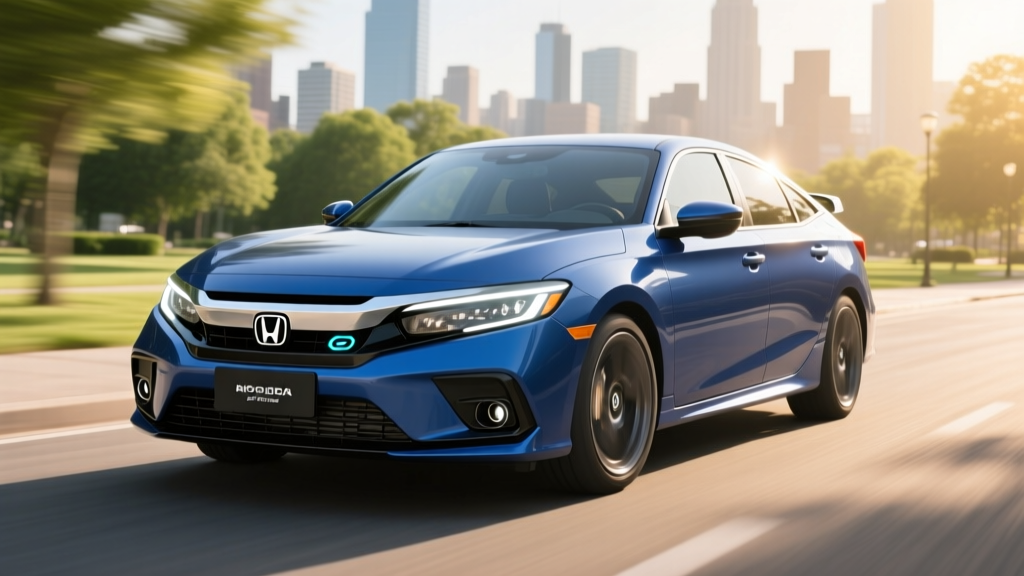
The 2026 Honda Civic Sport Hybrid remains one of the most compelling arguments for electrification without the plug. Built on Honda's fourth-generation two-motor hybrid system, the Civic Sport Hybrid delivers an EPA-estimated 49 MPG combined while producing 200 horsepower — figures that make it simultaneously one of the most efficient and most engaging vehicles in the compact hybrid segment. For buyers who want EV-like city efficiency without changing their fueling habits or worrying about charging infrastructure, this is a benchmark vehicle.
This guide covers everything a research-driven buyer needs: exact EPA fuel economy breakdowns, real-world MPG expectations, powertrain specifications, battery warranty details, pricing across trims, and how the Civic Sport Hybrid stacks up against both plug-in hybrids and full battery-electric vehicles.
Fuel Economy: EPA Ratings and Real-World MPG
The headline number for the 2026 Civic Sport Hybrid is its efficiency. Honda's two-motor hybrid system excels in stop-and-go driving, where the electric motor handles low-speed propulsion and the 2.0-liter Atkinson-cycle engine acts primarily as a generator.
| Metric | EPA Estimate |
|---|---|
| City MPG | 50 MPG |
| Highway MPG | 47 MPG |
| Combined MPG | 49 MPG |
| Fuel Tank Capacity | 12.4 gallons |
| Total Driving Range | ~607 miles |
Source: EPA / fueleconomy.gov
Honda's hybrid system typically exceeds its EPA city rating in real-world urban driving. In mixed suburban commuting with moderate traffic, owners commonly report 50–54 MPG. Highway driving at sustained 70–80 MPH tends to return 43–46 MPG, slightly below the EPA highway figure — a pattern consistent with most hybrids, which benefit more from regenerative braking at lower speeds. In cold weather (below 35°F), expect a 5–10% efficiency reduction during short trips as the engine runs more frequently for cabin heat.
Powertrain: 200 HP From Honda's Two-Motor System
The 2026 Civic Sport Hybrid uses Honda's latest iteration of its two-motor hybrid architecture. Unlike Toyota's planetary-gear power-split system, Honda's setup uses one motor primarily as a generator and a second, larger traction motor to drive the front wheels. At highway speeds, a lock-up clutch connects the gasoline engine directly to the wheels for improved efficiency.
| Component | Specification |
|---|---|
| Engine | 2.0L DOHC Atkinson-cycle 4-cylinder |
| Engine Output | 146 hp / 134 lb-ft torque |
| Traction Motor Output | 184 hp / 232 lb-ft torque |
| Combined System Output | 200 hp / 232 lb-ft torque |
| Transmission | e-CVT (single-speed direct drive with engine clutch) |
| Drivetrain | Front-wheel drive |
| 0–60 MPH (est.) | ~7.2 seconds |
| Hybrid Battery | Lithium-ion, ~1.1 kWh (nominal) |
Source: Honda Official Specifications
The key distinction here is that this is a conventional hybrid (HEV), not a plug-in hybrid. The small lithium-ion battery recharges through regenerative braking and the gasoline engine. You never plug it in — you simply refuel at any gas station. The electric motor's contribution is managed entirely by the vehicle's powertrain control module, optimizing the blend of electric and gasoline power in real time.
HEV vs. PHEV vs. BEV: Which Electrified Vehicle Fits You?
One of the most common questions from hybrid shoppers is whether they should consider a plug-in hybrid (PHEV) like the Toyota Prius Prime or a full battery-electric vehicle (BEV) like the Chevrolet Equinox EV instead. Here's a decision framework based on real ownership patterns:
| Factor | HEV (Civic Sport Hybrid) | PHEV (e.g., Prius Prime) | BEV (e.g., Equinox EV) |
|---|---|---|---|
| Plug-in Required? | No | Yes (for EV mode) | Yes (always) |
| Electric-Only Range | N/A (EV assist only) | ~40 miles | 250–320 miles |
| Home Charging Needed? | No | Recommended (120V or 240V) | Essential (240V Level 2) |
| City Efficiency | 50 MPG | ~127 MPGe (EV mode) | ~100+ MPGe |
| Road Trip Convenience | Gas station, 607-mi range | Gas station after EV range | DC fast charging network |
| Base Price Range | ~$30,000 | ~$33,000–$37,000 | ~$33,000–$43,000 |
| Federal Tax Credit (§30D) | Not eligible | Up to $7,500 (if eligible) | Up to $7,500 (if eligible) |
| Maintenance Complexity | Low (engine + hybrid system) | Moderate (dual systems) | Low (no engine) |
- You lack reliable access to home or workplace charging
- You want maximum range and road-trip simplicity with zero behavior change
- Your budget prioritizes lower upfront cost over maximum electrification
- You drive primarily in city/suburban conditions where hybrid efficiency peaks
- You have Level 2 home charging and a short commute (PHEV covers most daily miles on electricity)
- You want to minimize gasoline use and qualify for the §30D federal tax credit
- You're ready to adopt charging as part of your routine
Pricing, Trims, and Tax Credit Eligibility
The 2026 Honda Civic Sport Hybrid is positioned in the upper tier of the Civic lineup, reflecting its more powerful powertrain and additional features.
| Trim | MSRP (est.) |
|---|---|
| Sport Hybrid | ~$30,100 |
| Sport Touring Hybrid | ~$33,100 |
Pricing includes destination charge. Final MSRP confirmed at time of publication via Honda's official site.
Under current IRS §30D rules, the conventional hybrid Civic Sport Hybrid does not qualify for the federal Clean Vehicle Credit. The §30D credit applies only to plug-in electric vehicles (PHEVs and BEVs) with a minimum battery capacity of 7 kWh. Conventional hybrids like this Civic use a much smaller battery (~1.1 kWh) and cannot be plugged in. Some states may offer separate incentives for high-efficiency vehicles — check your state's energy office or DMV for local programs.
Battery Warranty, Reliability, and Replacement Costs
Hybrid battery longevity is consistently the top concern among first-time hybrid buyers. Honda addresses this with robust warranty coverage, and real-world data from earlier-generation Civic and Accord Hybrids provides strong evidence of long-term durability.
- Hybrid Battery: 10 years / 150,000 miles (whichever comes first) in CARB states; 8 years / 100,000 miles in non-CARB states
- Powertrain Warranty: 5 years / 60,000 miles
- New Vehicle Limited Warranty: 3 years / 36,000 miles
CARB states include California, Colorado, Connecticut, Delaware, Maine, Maryland, Massachusetts, New Jersey, New York, Oregon, Pennsylvania, Rhode Island, Vermont, Virginia, and Washington. Confirm your state's status at purchase.
Honda's lithium-ion hybrid battery packs have demonstrated strong longevity. Based on data from the 2014–2024 Accord Hybrid and previous Civic Hybrid generations, battery replacement before 150,000 miles is uncommon. When replacement is needed outside warranty, costs typically range from $2,000 to $3,500 including parts and labor at a Honda dealer. Independent hybrid specialists often offer refurbished packs for $1,200–$2,000.
Reliability ratings for the Civic platform are historically strong. The hybrid system adds complexity compared to a gasoline-only Civic, but Honda's two-motor design has fewer moving parts than traditional automatic transmissions (no torque converter, no multi-speed gearset). The e-CVT uses a direct-drive clutch mechanism that has proven durable over millions of miles across Honda's hybrid fleet.
Daily Ownership: What Living With the Civic Sport Hybrid Is Like
The Civic Sport Hybrid doesn't demand any behavioral changes from its driver. You fuel it like any gasoline car, and the hybrid system operates transparently. However, there are a few ownership nuances worth understanding:
- Regenerative braking feel: The Civic Hybrid offers selectable regen levels via paddle shifters. In its strongest setting, you can approximate one-pedal-like deceleration in city traffic, though it does not come to a complete stop without brake application like a full EV.
- Engine noise under load: During hard acceleration or sustained hill climbs, the 2.0L engine revs to generate electricity for the traction motor. This creates a drone that some drivers notice compared to the seamless torque delivery of a BEV. It's a tradeoff of the series-hybrid architecture.
- Cargo space: The hybrid battery is packaged beneath the rear seats, preserving the Civic sedan's 14.8 cubic feet of trunk space. No cargo compromise versus the gas model.
- Cold-weather efficiency: In sub-freezing temperatures, the gasoline engine runs more frequently to provide cabin heat and maintain battery temperature. Expect city MPG to drop to 42–45 during short winter trips. This is less severe than the 20–30% range loss a BEV experiences in cold weather.
- Insurance: Hybrid Civics typically carry insurance premiums 3–8% higher than their gasoline counterparts, reflecting the higher repair cost of hybrid components. Get a quote before purchasing to budget accurately.
Pros and Cons at a Glance
- 49 MPG combined — among the best in any compact sedan
- 200 hp provides confident merging and passing power
- No plug-in required — zero infrastructure dependency
- 607-mile total range eliminates range anxiety entirely
- 10-year/150k-mile hybrid battery warranty (CARB states)
- Spacious trunk with no battery intrusion
- Strong resale value typical of Honda Civic platform
- Not eligible for federal §30D tax credit
- Engine drone under heavy acceleration
- No all-wheel-drive option (FWD only)
- Higher upfront cost than base gasoline Civic (~$4,000 premium)
- EV-only driving limited to very low speeds (~1 mile at a time)
- Winter MPG drop noticeable on short trips
Frequently Asked Questions
How many MPG does the 2026 Honda Civic Sport Hybrid get?
The EPA rates the 2026 Civic Sport Hybrid at 50 MPG city, 47 MPG highway, and 49 MPG combined. In real-world suburban driving, many owners report 50–54 MPG. Highway cruising at 75+ MPH typically returns 43–46 MPG. The hybrid system is optimized for city and stop-and-go conditions, where the electric traction motor handles most low-speed propulsion.
Does the Civic Sport Hybrid need to be plugged in?
No. The 2026 Civic Sport Hybrid is a conventional hybrid (HEV), not a plug-in hybrid (PHEV). Its small lithium-ion battery recharges automatically through regenerative braking and the gasoline engine. You fuel it exclusively at gas stations, exactly like a conventional car.
Is the hybrid battery reliable and what does replacement cost?
Honda covers the hybrid battery for 10 years/150,000 miles in CARB states and 8 years/100,000 miles elsewhere. Historical data from Honda's hybrid fleet shows battery failures before 150,000 miles are rare. Out-of-warranty replacement costs approximately $2,000–$3,500 at a dealer, or $1,200–$2,000 through independent hybrid specialists using refurbished packs.
Does the 2026 Civic Sport Hybrid qualify for any tax credit?
No. Under current IRS §30D rules, the federal Clean Vehicle Credit applies only to plug-in electric vehicles (PHEVs and BEVs) with battery capacity of at least 7 kWh. The Civic Sport Hybrid's ~1.1 kWh battery and lack of plug-in capability make it ineligible. Some states offer separate efficiency incentives — check your state energy office for local programs.
How does the Civic Sport Hybrid compare to a full EV like the Chevy Equinox EV?
The Equinox EV offers 250–320 miles of EPA range and qualifies for up to $7,500 in federal tax credits (subject to income, MSRP, and sourcing requirements). However, it requires reliable home Level 2 charging and planning for road trips around DC fast-charger availability. The Civic Sport Hybrid asks for zero infrastructure investment, delivers 607 total miles of range, and costs less upfront — but still burns gasoline and isn't eligible for the federal credit. If you have home charging and a short commute, a BEV or PHEV will save more on fuel. If you lack charging access or frequently drive long distances, the Civic Hybrid is the more practical electrified choice.
What is the difference between the Sport Hybrid and Sport Touring Hybrid trims?
Both trims share the identical 200-hp two-motor hybrid powertrain and 49 MPG combined rating. The Sport Touring Hybrid adds premium features: leather-trimmed seats, Bose premium audio, wireless phone charging, a larger 9-inch touchscreen with wireless Apple CarPlay/Android Auto, heated rear seats, and Honda's low-speed braking control. The ~$3,000 price premium is for comfort and technology, not performance or efficiency differences.