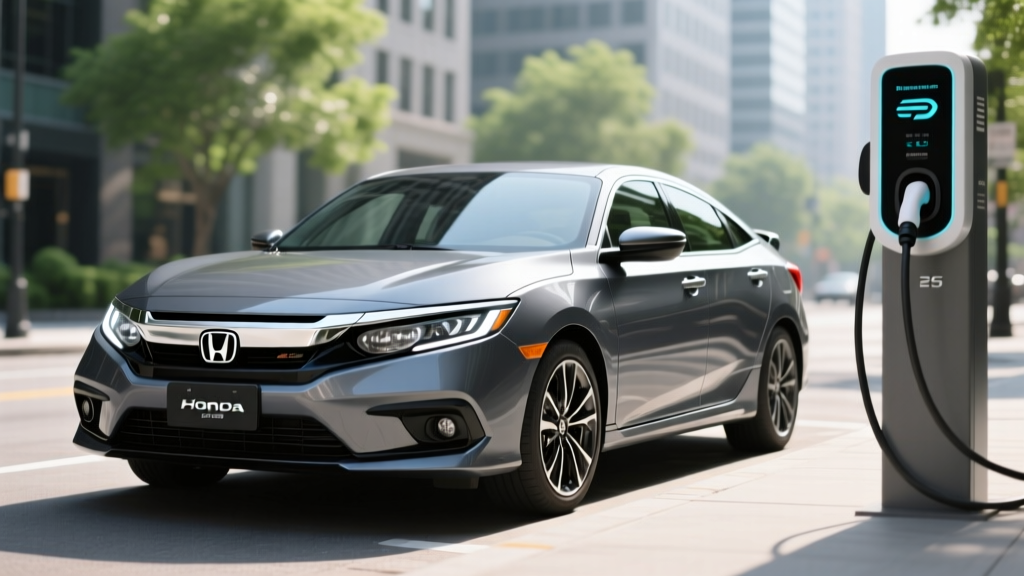
Honda's compact sedan has been a fuel-efficiency benchmark since the early 2000s, but the latest Honda Civic Hybrids represent a meaningful leap in powertrain sophistication. The current-generation Civic Hybrid pairs a 2.0-liter Atkinson-cycle four-cylinder with a two-motor e-CVT system, delivering 200 combined horsepower and EPA-estimated fuel economy that rivals some of the most efficient vehicles on the road — without requiring a plug.
If you've been searching for honda civic hybrids to understand what they actually deliver in daily driving, how the battery holds up over time, and whether a conventional hybrid (HEV) is the smarter buy versus a plug-in hybrid or full battery-electric vehicle, this guide gives you the exact numbers and ownership realities you need.
2026 Honda Civic Hybrid: The Quick Verdict
The 2026 Honda Civic Hybrid (officially the Civic Sport Hybrid and Sport Touring Hybrid) is a self-charging conventional hybrid — meaning you never plug it in. It recovers energy through regenerative braking and its gasoline engine to keep a small lithium-ion battery charged. The result is exceptional city fuel economy, strong low-end torque from the electric drive motor, and a starting MSRP that undercuts many competing hybrids.
For buyers who want maximum efficiency without changing their fueling habits, the Civic Hybrid is one of the strongest choices in the compact segment. But it's critical to understand what this vehicle is — and what it isn't — before signing a purchase agreement.
HEV vs. PHEV: What the Civic Hybrid Actually Is
One of the most common points of confusion for hybrid shoppers is the difference between a conventional hybrid and a plug-in hybrid. The Honda Civic Hybrid is a conventional hybrid electric vehicle (HEV), not a plug-in hybrid (PHEV). Honda does not currently offer a Civic PHEV in the United States.
HEV vs. PHEV vs. BEV — Key Differences
| Feature | HEV (Civic Hybrid) | PHEV (e.g., Toyota Prius Prime) | BEV (e.g., Chevy Bolt) |
|---|---|---|---|
| Plugs in? | No — self-charging | Yes — Level 1/2 | Yes — Level 1/2/DC |
| Electric-only range | None (EV assist only) | 25–45 miles typical | 200–350+ miles |
| Battery size | ~1.0 kWh (small buffer) | 13–18 kWh | 50–85+ kWh |
| Federal tax credit (§30D) | Not eligible | Up to $7,500 (if eligible) | Up to $7,500 (if eligible) |
| Fueling | Gasoline only | Gasoline + electricity | Electricity only |
The Civic Hybrid's small battery (approximately 1.0 kWh usable) exists to buffer energy captured from regenerative braking and the engine. The electric motor provides strong initial acceleration and assists the gas engine under load, but the car cannot drive on electricity alone for meaningful distances. You fuel it exactly like any other gasoline car.
Fuel Economy: EPA Ratings and Real-World MPG
Fuel economy is the primary reason most buyers consider Honda Civic hybrids, and the numbers deliver. According to EPA data on fueleconomy.gov, the 2026 Civic Hybrid posts strong combined figures:
| Trim | City MPG | Highway MPG | Combined MPG |
|---|---|---|---|
| Civic Sport Hybrid (FWD) | 50 | 47 | 49 |
| Civic Sport Touring Hybrid (FWD) | 50 | 47 | 49 |
Real-World MPG: What to Actually Expect
Here's where Honda Civic hybrids shine in a way that surprises many owners: real-world city driving often matches or exceeds the EPA city estimate. Because the hybrid system relies heavily on electric motor assist at low speeds and in stop-and-go traffic, city commuters frequently report 50–54 MPG in urban driving.
Highway driving tells a different story. At sustained speeds above 70 mph, the gasoline engine does most of the work, and aerodynamic drag reduces efficiency. Expect 42–46 MPG on the highway in real-world conditions, particularly on flat interstate routes. In cold weather (below 35°F), the engine runs more frequently to maintain cabin heat and battery temperature, which can drop combined fuel economy by 3–5 MPG.
Powertrain Specs: Engine, Motors, and Performance
The Civic Hybrid's two-motor hybrid system is one of the most refined in the compact class. Unlike some competitors that pair a small engine with a weak electric motor, Honda's system uses the electric motor as the primary drive source in most conditions, with the gasoline engine acting as a generator or direct-drive assist at highway speeds.
| Specification | 2026 Civic Hybrid |
|---|---|
| Engine | 2.0L Atkinson-cycle 4-cylinder |
| Combined system horsepower | 200 hp |
| Combined system torque | 232 lb-ft |
| Transmission | e-CVT (two-motor hybrid system) |
| Drivetrain | Front-wheel drive |
| 0–60 mph (est.) | ~7.2 seconds |
| Hybrid battery type | Lithium-ion (~1.0 kWh) |
| Fuel tank capacity | 12.4 gallons |
The 232 lb-ft of torque is available almost instantly from the electric drive motor, which gives the Civic Hybrid a surprisingly responsive feel off the line — noticeably quicker than the non-hybrid Civic with its 1.5L turbocharged engine. The e-CVT doesn't have fixed gear ratios; instead, it seamlessly manages the power split between the engine and motors, which eliminates shift shock but can produce a droning engine note under hard acceleration.
Pricing, Trims, and Tax Credit Eligibility
For 2026, the Honda Civic Hybrid is offered in two trims:
- Civic Sport Hybrid: Starting MSRP approximately $30,350 (including destination)
- Civic Sport Touring Hybrid: Starting MSRP approximately $33,350 (including destination)
Does the Civic Hybrid Qualify for a Federal Tax Credit?
No. Under current IRS §30D rules, the federal Clean Vehicle Credit applies only to plug-in electric vehicles (PHEVs and BEVs) with battery capacities of at least 7 kWh. The Civic Hybrid's ~1.0 kWh battery does not meet this threshold, making it ineligible for the federal $7,500 tax credit. You can verify current eligibility requirements on the IRS Clean Vehicle Credits page.
Some states offer their own incentives for conventional hybrids, but these are uncommon and vary by jurisdiction. Check your state's energy office or department of environmental quality for any local programs. Unlike PHEVs and BEVs, HEVs generally do not qualify for HOV lane access stickers in most states either.
Battery Warranty, Lifespan, and Replacement Cost
Battery longevity is the single most common concern among hybrid buyers — and it's the area where Honda Civic hybrids have the strongest track record. Honda's hybrid battery warranty provides substantial coverage:
Honda Hybrid Battery Warranty
- Coverage period: 8 years / 100,000 miles (10 years / 150,000 miles in CARB states including CA, CT, MA, MD, ME, NJ, NY, OR, RI, VT, WA)
- What's covered: Defects and capacity loss below functional threshold
- Expected battery lifespan: 150,000–200,000+ miles based on historical Honda hybrid data
How Long Do Civic Hybrid Batteries Actually Last?
Honda's two-motor hybrid system is less stressful on the battery than older single-motor designs. The small lithium-ion pack operates within a narrow state-of-charge window (roughly 40%–80%), which dramatically reduces degradation. Honda has been refining its hybrid systems since the 2000s Insight and Accord Hybrid, and failure rates on current-generation lithium-ion packs are very low.
Based on long-term data from Honda hybrid owners, most hybrid batteries last well beyond the warranty period. It is not uncommon for Honda hybrid batteries to reach 180,000–200,000 miles before showing meaningful capacity loss.
Battery Replacement Cost
If the hybrid battery does eventually need replacement outside of warranty, expect to pay between $2,000 and $4,000 for a new OEM battery pack, including labor. Third-party remanufactured batteries are available for $1,200–$2,500. This is significantly less expensive than a full EV battery replacement because the Civic Hybrid's battery is small (~1.0 kWh) compared to a BEV's 60–80+ kWh pack.
Who Should Buy the Civic Hybrid — And Who Shouldn't
The Civic Hybrid occupies a specific niche in the electrified vehicle landscape. It's not the right choice for everyone, but for the right buyer, it's exceptionally hard to beat.
✓ Choose the Civic Hybrid If:
- You want 45–50+ MPG without changing your fueling routine
- You don't have access to home or workplace charging
- You drive a mix of city and highway miles
- You want lower upfront cost than a PHEV or BEV
- You want Honda's proven reliability and dealer network
- You value strong low-speed torque for city driving
✗ Look at a PHEV or BEV Instead If:
- You want any electric-only driving range
- You want to qualify for the $7,500 federal tax credit
- You have reliable home Level 2 charging access
- Your commute is under 30 miles and you want zero gas use
- You want HOV lane access (available for PHEVs/BEVs in many states)
- You want to eliminate tailpipe emissions entirely
Civic Hybrid vs. Full EV: The Cost Comparison
At $30,350, the Civic Sport Hybrid costs roughly $7,000–$10,000 less than a comparable compact EV like the Chevrolet Equinox EV or Hyundai Kona Electric. Even if a full EV qualifies for the $7,500 federal credit, the Civic Hybrid's lower purchase price, zero charging infrastructure requirements, and lower insurance premiums (EVs typically cost 15–25% more to insure) can make it the more economical choice over five years for buyers who drive under 12,000 miles annually.
However, if you drive more than 15,000 miles per year and have home charging access, a BEV's lower per-mile energy cost (roughly $0.04–$0.06/mile on electricity vs. $0.10–$0.12/mile on gasoline for the Civic Hybrid at $3.50/gal) will close the gap within 4–5 years.
Honda Civic Hybrid FAQ
How many MPG does the Honda Civic Hybrid get?
The 2026 Civic Hybrid is EPA-rated at 50 city / 47 highway / 49 combined MPG. In real-world city driving, many owners report matching or slightly exceeding the 50 MPG city figure. Highway driving typically yields 42–46 MPG depending on speed and conditions.
Does the Honda Civic Hybrid need to be plugged in?
No. The Civic Hybrid is a conventional hybrid (HEV). It charges its own small battery through regenerative braking and the gasoline engine. You never plug it in — you simply fill it with gasoline like any other car.
How far can the Civic Hybrid drive on electric power alone?
The Civic Hybrid cannot drive on electric power alone for any meaningful distance. The electric motor assists the gasoline engine and can propel the car at very low speeds for brief moments (such as in a parking lot), but the gas engine is always the primary power source. If you want electric-only driving, you need a PHEV or BEV.
Is the Civic Hybrid battery reliable and what does replacement cost?
Honda's hybrid batteries have an excellent reliability record. The battery is covered by an 8-year/100,000-mile warranty (10 years/150,000 miles in CARB states). Most Honda hybrid batteries last 150,000–200,000+ miles. If replacement is needed outside of warranty, expect $2,000–$4,000 for an OEM pack — far less than an EV battery.
Does the Honda Civic Hybrid qualify for any tax credit?
No. The federal §30D Clean Vehicle Credit applies only to plug-in vehicles with batteries of 7 kWh or larger. The Civic Hybrid's ~1.0 kWh battery does not qualify. Check IRS.gov for current rules, and consult a tax professional for personal eligibility questions.
How does the Civic Hybrid compare to the Toyota Prius?
The Toyota Prius (up to 57 MPG combined) beats the Civic Hybrid on peak fuel economy, but the Civic Hybrid offers more horsepower (200 hp vs. 194 hp for the Prius AWD), a more conventional sedan driving experience, and Honda's interior quality. The Prius also offers a PHEV variant (Prius Prime) with 44 miles of electric-only range and federal tax credit eligibility — options Honda doesn't provide with the Civic.
Is Honda planning a Civic PHEV or full electric Civic?
As of early 2026, Honda has not announced a Civic PHEV or battery-electric Civic for the U.S. market. Honda's electrification strategy for compact vehicles currently centers on the conventional Civic Hybrid. Honda's BEV efforts are focused on the Prologue SUV and upcoming models on the new 0 Series platform. If a plug-in Civic is important to you, consider the Toyota Prius Prime or a compact BEV instead.
Final Take: A Proven Efficiency Play
The Honda Civic Hybrid doesn't try to be revolutionary — it tries to be the most practical, efficient, and reliable compact sedan you can buy without plugging in. With 49 MPG combined EPA, 200 horsepower, a starting price near $30,000, and Honda's strong hybrid battery track record, it delivers exactly what its target buyer wants: dramatically lower fuel costs with zero lifestyle changes.
If you have charging access and want to eliminate gasoline entirely, a BEV will serve you better long-term. If you want federal tax credits and electric-only commuting, a PHEV like the Prius Prime is worth considering. But if you simply want to spend less at the pump, drive a well-built sedan, and never think about charging — Honda Civic hybrids remain one of the smartest buys in the compact car segment.