Honda Civic Hybrid MPG: The Numbers That Matter
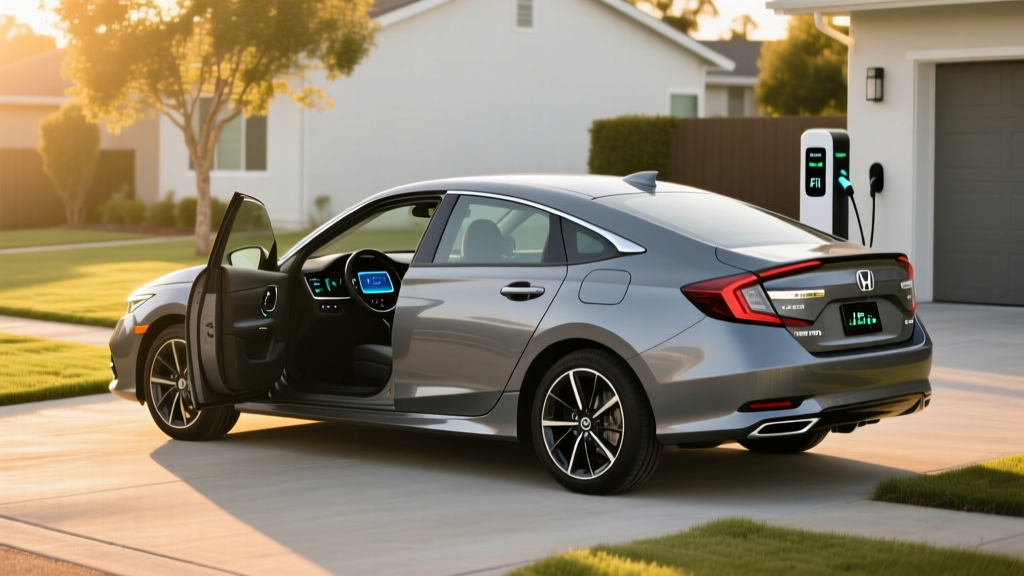
If you've been searching for the mpg honda civic hybrid delivers in everyday driving, the short answer is impressive: the EPA rates the current-generation Civic Hybrid at up to 50 MPG combined. But as any data-driven buyer knows, sticker numbers only tell half the story. This guide breaks down the Civic Hybrid's real-world fuel economy, powertrain engineering, battery longevity, and total ownership cost — so you can decide whether Honda's two-motor hybrid system fits your commute better than a plug-in hybrid or a battery-electric vehicle.
| Spec | Value |
|---|---|
| EPA MPG (City / Highway / Combined) | 50 / 47 / 49 MPG (Sport Touring Hybrid); 51 / 44 / 49 MPG (Sport Hybrid) * |
| Powertrain | 2.0L Atkinson-cycle 4-cyl + two-motor hybrid system |
| Combined Output | 200 hp / 232 lb-ft torque |
| 0–60 mph | ~6.8 seconds |
| Battery Type | Lithium-ion (self-charging HEV, no plug) |
| Drivetrain | Front-wheel drive (e-CVT) |
| Fuel Tank | 10.6 gallons |
| Total Range (est.) | ~500+ miles per tank |
| Starting MSRP | ~$30,050 (Sport Hybrid); ~$33,050 (Sport Touring Hybrid) |
| Hybrid Battery Warranty | 8 years / 100,000 miles (10 yr / 150,000 mi in CARB states) |
* EPA figures per fueleconomy.gov. Real-world results vary by driving style, climate, and terrain.
EPA vs. Real-World MPG: What You'll Actually See
Honda's e:HEV two-motor hybrid system is optimized for city driving, where the electric motor handles most low-speed propulsion and the gasoline engine acts primarily as a generator. This is why the Civic Hybrid's city rating (up to 51 MPG on the Sport trim) actually exceeds its highway number — the opposite of most gas-only cars.
| Driving Scenario | Expected MPG | Notes |
|---|---|---|
| EPA Combined (sticker) | 49 MPG | Official fueleconomy.gov rating |
| City / stop-and-go | 48–53 MPG | Hybrids often beat EPA city due to regen braking |
| Highway (70–80 mph) | 40–45 MPG | Aerodynamic drag + engine-direct drive reduces advantage |
| Mixed suburban commute | 45–50 MPG | Typical daily-driving sweet spot |
| Cold weather (below 32°F) | 38–44 MPG | Engine runs more for cabin heat; battery less efficient |
| Mountainous / hilly terrain | 36–42 MPG | Climbing load offsets regen on descents |
The key takeaway: If most of your driving is urban or suburban, expect to match or slightly exceed the EPA combined number. If you spend most miles at sustained highway speeds above 75 mph or in cold climates, plan on 40–45 MPG. That's still a massive improvement over the non-hybrid Civic, which tops out around 36 MPG combined.
How the Civic Hybrid Powertrain Works
The Civic Hybrid uses Honda's fourth-generation two-motor hybrid system. Here's the architecture in plain terms:
- 2.0L Atkinson-cycle inline-4 engine (146 hp, 134 lb-ft): Runs at optimal RPM as a generator for most driving. At highway speeds, a lock-up clutch connects it directly to the wheels for efficiency.
- Propulsion motor (184 hp, 232 lb-ft): The primary drive motor — this is what actually moves the car most of the time, giving the Civic Hybrid its responsive, EV-like acceleration feel.
- Generator motor: Converts engine output to electricity, recharges the battery, and enables regenerative braking.
- Lithium-ion battery pack: Compact, positioned under the rear seats. No published kWh capacity from Honda (typical for HEVs — the pack is small, usually around 1.0–1.5 kWh, designed for frequent shallow cycling rather than range).
The combined system output of 200 hp and 232 lb-ft makes the Civic Hybrid the most powerful non-Si, non-Type R Civic in the lineup. The 0–60 time of roughly 6.8 seconds is genuinely quick for a compact hybrid sedan, and the electric motor's instant torque makes it feel even punchier in city driving.
HEV vs. PHEV vs. EV: Which Powertrain Fits You?
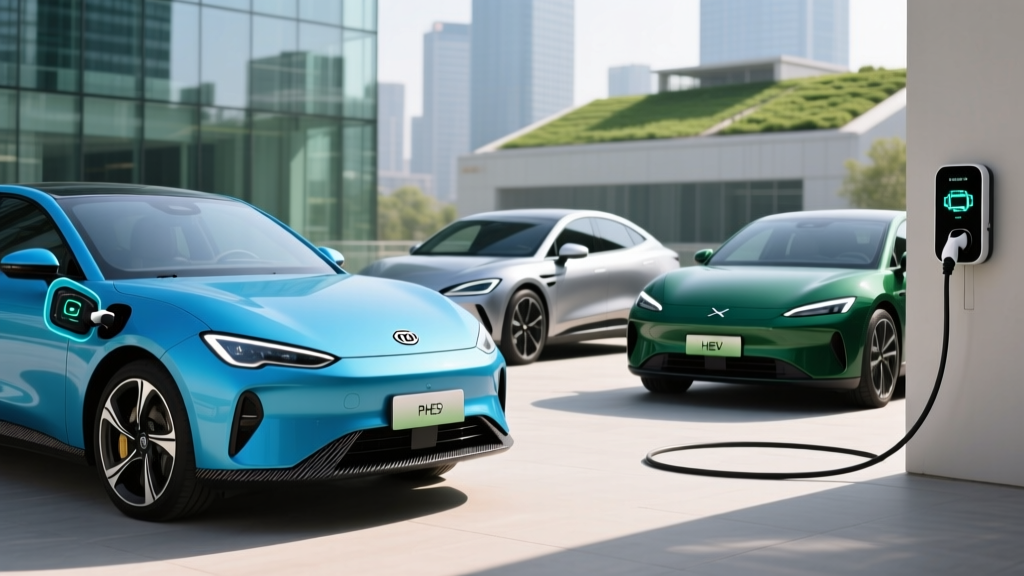
A common question from Civic Hybrid shoppers: should I consider a plug-in hybrid or go full EV instead? The Civic Hybrid is a conventional hybrid (HEV) — it has no plug, no electric-only driving range to speak of, and requires zero change to your fueling habits. Here's how the three powertrain types compare for a typical buyer:
| Factor | Civic Hybrid (HEV) | Typical PHEV (e.g., Toyota Prius Prime) | Typical BEV (e.g., Chevy Equinox EV) |
|---|---|---|---|
| Plug-in required? | No — gas only | Yes, for electric range | Yes — electricity only |
| Electric-only range | ~1 mile (low-speed creep) | 35–45 miles | 250–320 miles |
| Combined MPG / MPGe | 49 MPG | 48 MPG + 120+ MPGe (electric) | ~95 MPGe |
| Home charging needed? | No | Recommended (Level 2, ~4 hr) | Essential (Level 2, ~8–10 hr) |
| Federal tax credit (§30D) | Not eligible | Up to $7,500 (if sourcing + income rules met) | Up to $7,500 (if sourcing + income rules met) |
| Starting MSRP (typical) | ~$30,050 | ~$33,000–$38,000 | ~$33,000–$43,000 |
| Best for | No home charging; long highway trips; budget-first buyers | Short commute + home charging; want some EV driving | Home charging available; mostly daily driving under 250 mi |
Choose the Civic Hybrid if you lack access to home or workplace charging, regularly take road trips exceeding 300 miles, want the lowest purchase price, and don't want to think about plugging in. It's also the right call if you live in an apartment or street-park with no charging option.
Consider a PHEV if you can install a Level 2 charger at home, your daily commute is under 40 miles round-trip (so you'd drive mostly on electricity), and you still want a gas engine for weekend road trips.
Consider a full BEV if you have reliable home charging, your daily driving is under 250 miles, you want the lowest per-mile fuel cost, and you're ready to plan around DC fast charging for longer trips.
Pricing, Trims, and Tax Credit Eligibility
The 2026 Honda Civic Hybrid is available in two trims:
- Civic Sport Hybrid: Starting at approximately $30,050 (including destination). Includes 18-inch wheels, 7-inch touchscreen with wireless Apple CarPlay/Android Auto, Honda Sensing safety suite, and dual-zone climate.
- Civic Sport Touring Hybrid: Starting at approximately $33,050. Adds 9-inch touchscreen, Bose 12-speaker audio, wireless phone charging, leather-trimmed seats, heated front seats, and low-speed braking control.
Does the Civic Hybrid qualify for a federal tax credit?
No. Under current IRS §30D rules, the federal Clean Vehicle Credit applies only to plug-in electric vehicles (PHEVs and BEVs) with sufficient battery capacity and compliant critical-mineral/battery-component sourcing. Conventional hybrids like the Civic Hybrid — which cannot be plugged in — do not qualify for the federal credit. Check the IRS Clean Vehicle Credits page for current rules. Some states offer separate incentives for hybrids, but these vary widely — consult your state's energy or DMV website for specifics.
While the lack of a federal tax credit is a disadvantage versus PHEVs and EVs on paper, the Civic Hybrid's lower base price (roughly $5,000–$10,000 less than many competing electrified vehicles) often makes the out-of-pocket cost competitive even without incentives.
Battery Warranty, Lifespan, and Replacement Cost
Battery longevity is consistently the top concern among first-time hybrid buyers. Here's what the data shows for the Civic Hybrid and Honda's hybrid systems broadly:
Honda Hybrid Battery Warranty
- Standard warranty: 8 years / 100,000 miles (whichever comes first)
- CARB-state warranty: 10 years / 150,000 miles (applies in California and states that follow California Air Resources Board emissions rules — currently 16+ states including NY, MA, WA, OR, CO, VA, and others)
- Coverage: Defects and capacity loss below functional threshold (Honda does not publish a specific percentage, but hybrid batteries are designed to function with moderate degradation)
Real-world lifespan: Honda's lithium-ion hybrid batteries in the Civic and Accord have shown strong longevity in owner reports. Unlike full EV batteries that must store large energy reserves, HEV batteries cycle in a narrow state-of-charge window (typically 40–80% SoC), which dramatically reduces stress and degradation. Many Honda hybrid owners report 150,000–200,000+ miles without battery replacement.
Replacement cost if out of warranty: Based on parts pricing for Honda's hybrid battery modules, a dealer replacement typically runs $2,000–$4,000 including labor. Independent hybrid specialists can often perform the swap for $1,500–$2,500. Refurbished or reconditioned battery packs may be available for $1,000–$2,000. This is significantly cheaper than EV battery replacement ($8,000–$20,000+) because the HEV pack is much smaller.
Ownership Economics: Civic Hybrid vs. Gas vs. EV
Let's run a 5-year, 75,000-mile ownership comparison to see where the Civic Hybrid lands financially:
| Cost Factor | Civic Hybrid (49 MPG) | Civic Gas (33 MPG combined) | Comparable EV (~3.5 mi/kWh) |
|---|---|---|---|
| Purchase Price (base) | $30,050 | $25,050 | $36,000 (after ~$7,500 credit if eligible) |
| Fuel/Energy Cost | $3,827 (1,531 gal × $2.50/gal avg) | $5,682 (2,273 gal × $2.50/gal avg) | $2,571 (21,429 kWh × $0.12/kWh avg) |
| Fuel Savings vs. Gas | $1,855 saved | — | $3,111 saved |
| Maintenance (est. 5 yr) | ~$2,200 | ~$2,800 | ~$1,400 |
| Federal Tax Credit | $0 | $0 | Up to $7,500 (eligibility varies) |
| Est. 5-Year Total Cost | ~$36,077 | ~$35,532 | ~$32,470–$39,970 (depending on credit) |
Fuel estimates based on 15,000 miles/year, national average gasoline at $2.50/gal and electricity at $0.12/kWh. Actual costs vary by region. Gas and EV maintenance estimates from industry averages. Source: fueleconomy.gov calculators.
The verdict: The Civic Hybrid saves roughly $1,850 in fuel over five years compared to the gas Civic, partially offsetting its ~$5,000 higher purchase price. Against a credit-eligible EV, the EV wins on running costs — but only if you qualify for the full §30D credit and have access to affordable home charging. The Civic Hybrid's advantage is simplicity: no charging infrastructure investment, no range planning, no credit-eligibility headaches.
Pros and Cons at a Glance
Pros
- 49 MPG combined EPA — among the best in the compact sedan class
- 200 hp / 232 lb-ft — genuinely quick, with EV-like low-end torque
- No plug required — works with existing gas-station infrastructure
- 500+ mile total range per tank eliminates range anxiety entirely
- Lower purchase price than PHEV and EV alternatives
- Strong hybrid battery warranty (8–10 years depending on state)
- Honda Sensing ADAS suite standard on all trims
Cons
- No federal tax credit eligibility (HEV, not plug-in)
- Highway MPG drops to 40–45 in real-world driving at 75+ mph
- No meaningful electric-only driving capability
- Only available in Sport and Sport Touring trims (no base LX Hybrid)
- CVT-like driving feel under hard acceleration (no simulated gears in normal mode)
- Cold-weather MPG reduction of 10–15% (common to all hybrids)
Frequently Asked Questions
How many MPG does the Honda Civic Hybrid get?
The EPA rates the Honda Civic Hybrid at up to 51 city / 44 highway / 49 combined MPG (Sport trim). The Sport Touring Hybrid is rated at 50 city / 47 highway / 49 combined. In real-world driving, city commuters often see 48–53 MPG thanks to regenerative braking, while sustained highway driving at 75+ mph typically yields 40–45 MPG.
Does the Honda Civic Hybrid need to be plugged in?
No. The Civic Hybrid is a conventional self-charging hybrid (HEV). It recharges its small lithium-ion battery through regenerative braking and the gasoline engine. You fuel it exactly like a regular gas car — no plug, no charging cable, no home charger installation needed.
How far can the Civic Hybrid drive on electric power alone?
Effectively zero miles at meaningful speeds. The Civic Hybrid's battery is small (roughly 1.0–1.5 kWh) and is designed to assist the gas engine and capture braking energy, not to drive the car independently. You may notice brief electric-only movement at very low speeds (parking lots, stop-and-go creep), but the engine engages almost immediately under normal acceleration. If you want 30–40 miles of electric-only range, you need a plug-in hybrid (PHEV) like the Toyota Prius Prime.
Is the Honda Civic Hybrid reliable?
Honda's hybrid systems have a strong reliability track record. The two-motor e:HEV architecture has been refined over four generations and is shared with the Accord Hybrid and CR-V Hybrid. The hybrid battery is warranted for 8 years/100,000 miles (10 years/150,000 miles in CARB states), and real-world data from Honda hybrid owners suggests batteries routinely last 150,000+ miles. Honda as a brand consistently rates above average in long-term reliability surveys from Consumer Reports and J.D. Power.
What does it cost to replace the Civic Hybrid battery?
If the hybrid battery fails outside of warranty, expect to pay approximately $2,000–$4,000 at a Honda dealer for a new battery and installation. Independent hybrid specialists may offer the service for $1,500–$2,500, and refurbished packs can be found for $1,000–$2,000. This is substantially less than EV battery replacement because the HEV battery pack is much smaller.
Does the Honda Civic Hybrid qualify for any tax credit?
The Civic Hybrid does not qualify for the federal §30D Clean Vehicle Credit, which applies only to plug-in vehicles (PHEVs and BEVs) meeting battery-sourcing and income requirements. Some states may offer separate hybrid incentives — check your state energy office or DMV for current programs. Always verify current rules on irs.gov.
Civic Hybrid vs. Toyota Prius: which gets better MPG?
The Toyota Prius (FWD) is EPA-rated at 57 city / 56 highway / 57 combined MPG — roughly 8 MPG higher than the Civic Hybrid combined. However, the Civic Hybrid offers 200 hp versus the Prius's 194 hp, a more conventional sedan design, and a slightly lower starting price. If maximum MPG is your sole priority, the Prius wins. If you want a more engaging driving experience with nearly-as-good efficiency, the Civic Hybrid is the stronger pick.
Is the Civic Hybrid worth it over the regular gas Civic?
If you drive 15,000+ miles per year, the hybrid's ~$1,850 five-year fuel savings partially offset its roughly $5,000 higher purchase price. Beyond economics, you get significantly more torque (232 vs. 177 lb-ft), a smoother driving feel, and reduced emissions. For high-mileage drivers, the hybrid is the clear value pick. For low-mileage drivers (under 8,000 miles/year), the gas Civic's lower upfront cost may take over a decade to recoup through fuel savings.