Quick Verdict: The Civic Hybrid Still Sets the Compact Benchmark
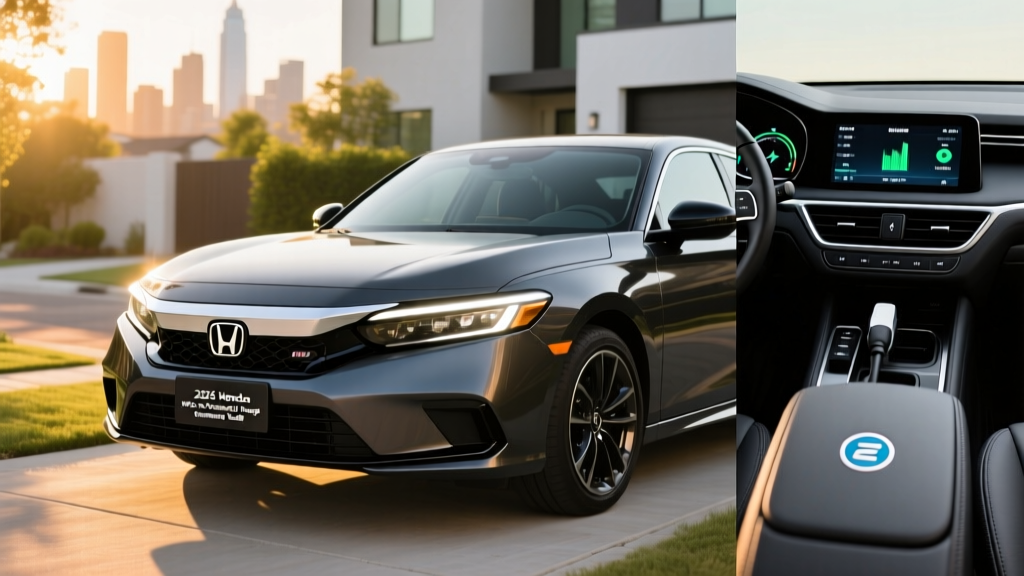
The 2026 Honda Civic Hybrid remains one of the most compelling arguments for electrified commuting without plugging in. With an EPA-estimated 50 MPG combined, a refined two-motor hybrid system producing 200 combined horsepower, and a starting price around $29,845, it occupies the sweet spot between a conventional gas Civic and a full battery-electric vehicle. For buyers who lack home charging access or regularly take long road trips where DC fast-charging infrastructure is sparse, the Civic Hybrid eliminates range anxiety entirely while still cutting fuel consumption roughly in half compared to its turbo-gas sibling.
This guide breaks down every number that matters — EPA and real-world MPG, powertrain specs, battery longevity, warranty coverage, tax-credit eligibility, and how the Civic Hybrid stacks up against both PHEVs and full EVs for different driving lifestyles.
HEV vs PHEV: What the Civic Hybrid Actually Is
Before diving into specs, it is critical to understand what the Civic Hybrid is not: it is not a plug-in hybrid. Honda offers the Civic Hybrid exclusively as a conventional hybrid electric vehicle (HEV). You never plug it in. The system recovers energy through regenerative braking and the gasoline engine to recharge its small lithium-ion battery pack.
HEV vs PHEV at a Glance
| Feature | Civic Hybrid (HEV) | Typical PHEV (e.g., Toyota Prius Prime) |
|---|---|---|
| Plug-in charging required? | No | Yes (for EV range) |
| Electric-only range | ~1 mile at low speed | 35–44 miles |
| Battery capacity | ~1.0 kWh (small buffer) | 13.6 kWh usable |
| Federal tax credit (§30D) | Not eligible | Up to $7,500 if eligible |
| Home charger needed? | No | Level 2 recommended |
| Total range (gas + electric) | ~500+ miles | ~440–480 miles combined |
If you have reliable home or workplace Level 2 charging and a commute under 40 miles, a PHEV lets you drive almost entirely on electricity most days while keeping a gas engine for road trips. If you live in an apartment without charging access, street-park, or simply want zero behavior change from a gas car, the Civic HEV is the right call.
EPA Fuel Economy and Real-World MPG
The 2026 Civic Hybrid carries over Honda's proven fourth-generation two-motor hybrid system. The EPA rates the Sport Hybrid sedan at 50 MPG city / 47 MPG highway / 49 MPG combined. The Sport Touring Hybrid, with its heavier equipment load and 18-inch wheels, drops slightly to 49 / 46 / 47 MPG combined.
| Trim | City | Highway | Combined | Fuel Tank | Est. Total Range |
|---|---|---|---|---|---|
| Sport Hybrid | 50 | 47 | 49 | 10.6 gal | ~519 mi |
| Sport Touring Hybrid | 49 | 46 | 47 | 10.6 gal | ~498 mi |
| Gas Civic (1.5T CVT, baseline) | 31 | 40 | 35 | 12.4 gal | ~434 mi |
Source: fueleconomy.gov
Real-World MPG: What to Actually Expect
Honda's hybrid system excels in stop-and-go city driving, where regenerative braking and electric-motor assist do the heavy lifting. In real-world city testing, many owners report 52–55 MPG on urban routes with frequent stops — exceeding the EPA city estimate. Highway driving at sustained 75–80 MPH tends to return 43–46 MPG, slightly below the EPA highway number, because the 2.0L Atkinson-cycle engine is doing more direct work at speed.
In cold weather (below 30°F), expect a 5–10% reduction in fuel economy due to increased engine idling for cabin heat and reduced battery efficiency. This is far less dramatic than the 20–30% range loss a full EV experiences in cold, but it is measurable.
Powertrain Specs: How Honda's Two-Motor System Works
The 2026 Civic Hybrid pairs a 2.0-liter Atkinson-cycle four-cylinder engine with Honda's e-CVT two-motor hybrid system. Unlike a traditional belt-and-pulley CVT, Honda's system uses two electric motors — one as a generator and one as a drive motor — with a lock-up clutch that mechanically connects the engine to the wheels at highway cruising speeds for efficiency.
| Specification | 2026 Civic Hybrid |
|---|---|
| Engine | 2.0L DOHC Atkinson-cycle I-4 |
| Engine HP / Torque | 146 HP / 134 lb-ft |
| Drive Motor Output | 184 HP / 232 lb-ft |
| Combined System Output | 200 HP / 232 lb-ft |
| Transmission | e-CVT (two-motor, no belts) |
| Drivetrain | FWD |
| 0–60 MPH | ~6.5 seconds |
| Battery Type | Lithium-ion (~1.0 kWh) |
| Curb Weight | ~3,060 lbs (Sport Touring) |
The result is a powertrain that feels punchy off the line — the electric drive motor's 232 lb-ft of torque is available instantly from a stop — while still delivering exceptional fuel economy at cruise. The 200 combined horsepower figure represents a meaningful upgrade over the 180 HP turbo-gas Civic, and the 0–60 time of roughly 6.5 seconds puts it ahead of most compact-hybrid competitors.
Pricing, Trims, and Tax-Credit Eligibility
The 2026 Civic Hybrid is offered in two trims:
- Sport Hybrid: Starting at approximately $29,845 MSRP (including destination)
- Sport Touring Hybrid: Starting at approximately $32,845 MSRP (including destination)
The Sport Hybrid comes well-equipped with Honda Sensing (adaptive cruise, lane-keeping, automatic emergency braking), a 7-inch touchscreen with wireless Apple CarPlay/Android Auto, heated front seats, and dual-zone climate control. The Sport Touring adds a 9-inch touchscreen, Bose 12-speaker audio, wireless phone charging, leather-trimmed seats, a power moonroof, and integrated navigation.
Federal Tax Credit: Does the Civic Hybrid Qualify?
No. Under IRS §30D rules, the federal clean vehicle credit applies only to plug-in electric vehicles (BEVs and PHEVs) with a battery capacity of at least 7 kWh. The Civic Hybrid's ~1.0 kWh battery does not meet this threshold. It does not qualify for the up-to-$7,500 federal credit, nor does it qualify for the up-to-$4,000 used-EV credit.
Some states and utilities offer rebates for conventional hybrids, but these vary widely by jurisdiction. Check your state energy office or utility provider for local programs. For the definitive federal rules, consult IRS.gov clean vehicle credits.
Battery Warranty, Reliability, and Replacement Cost
Hybrid battery longevity remains the single most common concern among first-time hybrid buyers. Here, Honda's track record is strong.
Honda Hybrid Battery Warranty
- Hybrid battery: 8 years / 100,000 miles (10 years / 150,000 miles in CARB states including CA, NY, MA, and others)
- Hybrid system components: 8 years / 100,000 miles
- Limited vehicle warranty: 3 years / 36,000 miles
- Powertrain warranty: 5 years / 60,000 miles
The warranty covers battery capacity loss below a defined threshold (typically 60–70% of original capacity) and all hybrid-system components including the inverter, DC-DC converter, and electric motors.
Honda's lithium-ion hybrid battery pack is significantly smaller and less stressed than a full EV battery. It operates within a narrow state-of-charge window — typically between 40% and 60% — which minimizes degradation. Real-world data from Honda's earlier hybrid systems (Insight, Accord Hybrid) shows that most hybrid batteries last well beyond 150,000 miles without requiring replacement.
If replacement is needed out of warranty, a new OEM Civic Hybrid battery currently costs between $2,000 and $3,500 including installation at a Honda dealer. Third-party refurbished packs are available for $1,200–$2,000. This is dramatically less than a full EV battery replacement, which can run $8,000–$20,000+.
For reliability data, the Civic line consistently earns top marks. The IIHS has awarded recent Civic models Top Safety Pick ratings, and Honda Sensing comes standard on every trim.
Annual Fuel Cost: Hybrid vs Gas Civic
The hybrid premium over the gas Civic is roughly $2,500–$3,000 depending on trim. Here is how the fuel savings stack up over five years, assuming 15,000 miles per year, $3.50/gallon regular unleaded, and EPA combined figures:
| Metric | Civic Hybrid (49 MPG) | Gas Civic 1.5T (35 MPG) |
|---|---|---|
| Gallons per year | 306 | 429 |
| Annual fuel cost | $1,071 | $1,502 |
| 5-year fuel cost | $5,355 | $7,510 |
| 5-year savings | ~$2,155 | |
At current fuel prices, the hybrid premium pays for itself in roughly 5–7 years through fuel savings alone. If gas prices rise above $4.00/gallon, payback accelerates to 3.5–5 years. Factor in potentially higher resale value for the hybrid trim, and the total cost of ownership advantage widens further.
Civic Hybrid vs PHEV vs Full EV: Which Fits You?
Decision Framework
Choose the Civic Hybrid (HEV) if:
- You live in an apartment or lack access to home/workplace charging
- You regularly drive 300+ miles in a single day (road trips, rural routes)
- You want lower fuel costs with zero behavioral change from a gas car
- Your budget is under $35,000 and you do not qualify for EV tax credits
Choose a PHEV (e.g., Prius Prime, RAV4 Prime) if:
- You have home Level 2 charging and a commute under 40 miles round-trip
- You want EV-like daily driving with gas backup for long trips
- You qualify for the $7,500 federal credit (check income and sourcing rules on IRS.gov)
Choose a full EV (e.g., Chevy Equinox EV, Tesla Model 3) if:
- You have reliable home charging (Level 2, 240V)
- Your daily driving is under 250 miles and you can plan road-trip charging
- You want the lowest per-mile energy cost (~$0.04–0.06/mi on home electricity vs ~$0.10–0.12/mi for the hybrid)
- You want to eliminate oil changes and engine maintenance entirely
Pros and Cons at a Glance
Pros
- 50 MPG combined EPA — among the best in the compact segment
- 200 HP provides confident acceleration (232 lb-ft from the drive motor)
- No plug-in charging required — zero infrastructure dependency
- ~519-mile total range on a single tank
- Standard Honda Sensing ADAS suite on every trim
- Strong resale value and Honda reliability track record
- Hybrid battery warranty up to 10 yr / 150,000 mi in CARB states
Cons
- No federal tax credit eligibility (HEV, not PHEV)
- FWD only — no AWD option (the Toyota Prius offers AWD)
- Highway MPG drops below EPA at sustained 80 MPH
- ~$2,500–$3,000 price premium over equivalent gas Civic trim
- No DC fast charging capability (not applicable for HEV)
- Modest ~1.0 kWh battery means almost no pure-electric driving
Frequently Asked Questions
How many MPG does the 2026 Honda Civic Hybrid get?
The EPA rates the Civic Sport Hybrid at 50 MPG city, 47 MPG highway, and 49 MPG combined. The Sport Touring Hybrid is rated at 49/46/47. In real-world city driving, many owners exceed the EPA city figure, seeing 52–55 MPG. Highway driving at 75–80 MPH typically returns 43–46 MPG.
Does the Civic Hybrid need to be plugged in?
No. The Civic Hybrid is a conventional HEV. Its small lithium-ion battery recharges through regenerative braking and the gasoline engine. You fuel it at a gas station exactly like a conventional car.
How far can the Civic Hybrid drive on electric power alone?
Less than one mile at very low speeds (under 25 MPH in EV mode). This is normal for a conventional hybrid — the battery is too small (~1.0 kWh) for meaningful electric-only range. If you want 35–44 miles of electric-only driving, you need a PHEV.
Is the Civic Hybrid battery reliable, and what does replacement cost?
Honda's hybrid batteries are engineered for a narrow state-of-charge operating window, which greatly extends lifespan. The battery is covered for 8 years/100,000 miles (10 years/150,000 miles in CARB states). Out-of-warranty replacement costs $2,000–$3,500 for an OEM pack. Most hybrid batteries last well beyond 150,000 miles.
Does the Civic Hybrid qualify for any tax credit?
The Civic Hybrid does not qualify for the federal §30D clean vehicle credit, which requires a minimum 7 kWh battery and plug-in capability. Some states and local utilities may offer hybrid-specific rebates — check with your state energy office. Consult a tax professional for your specific situation.
How does the Civic Hybrid compare to the Toyota Prius?
The Prius (57 MPG combined, FWD) edges out the Civic Hybrid on fuel economy by about 8 MPG combined and offers an AWD-e option. The Civic Hybrid counters with more horsepower (200 vs 196), a more engaging driving experience, and a lower starting price. The Prius Prime PHEV variant adds 44 miles of electric-only range if you can charge at home.
Is the hybrid worth the premium over the gas Civic?
If you plan to keep the car 5+ years and drive 12,000–15,000 miles annually, the fuel savings ($400–$500/year) plus stronger resale value typically offset the ~$2,500–$3,000 hybrid premium. You also gain noticeably stronger low-end torque from the electric drive motor, making the hybrid feel quicker in daily driving than the gas model's 180 HP suggests.