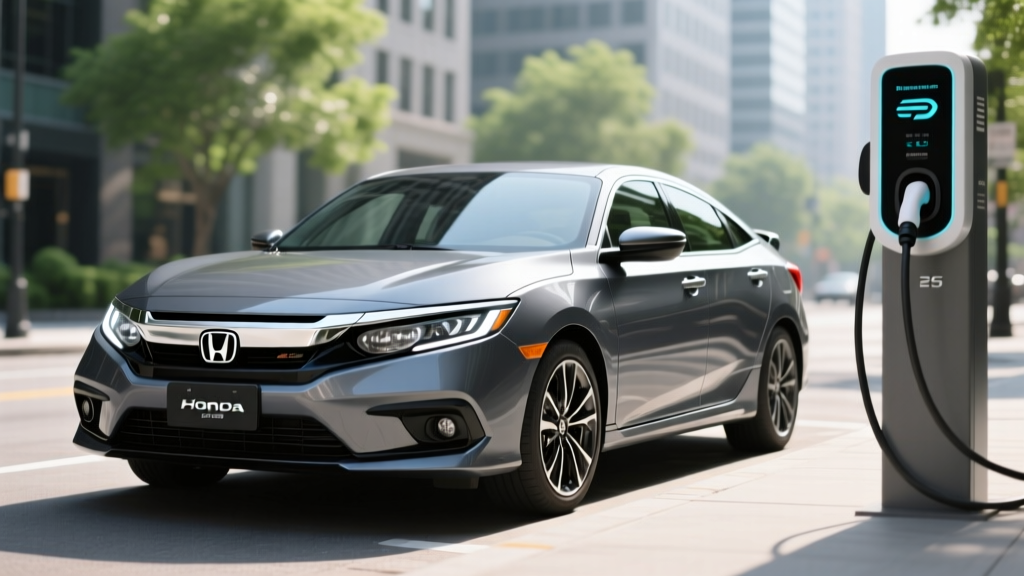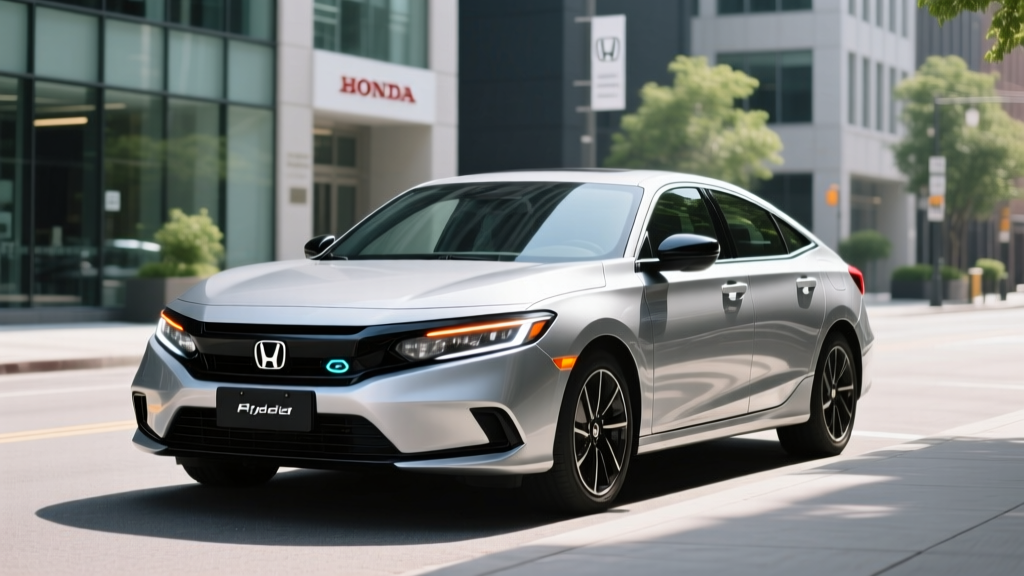
The 2026 Honda Civic Hybrid slots into a sweet spot that few cars occupy: it delivers the fuel economy of a subcompact with the refinement and interior space of a compact sedan, all without requiring a single change to your daily routine. There is no plug, no charging cable, no range anxiety — just a two-motor hybrid system that sips fuel in city traffic and still has enough passing power for highway merges.
But with Toyota's Corolla Hybrid nipping at its heels and Honda's own Accord Hybrid offering more room, where does the Civic Hybrid actually fit? This guide breaks down every number that matters — EPA MPG, real-world fuel economy, powertrain output, battery longevity, pricing, and whether any tax credits apply — so you can make a data-driven decision.
2026 Honda Civic Hybrid: Quick Verdict
The Civic Hybrid is a conventional hybrid (HEV), not a plug-in. It charges its own small battery through regenerative braking and the gasoline engine. You fuel it at any gas station and drive it like any other car. The payoff is an EPA-estimated 50 MPG combined, making it one of the most fuel-efficient non-plug-in vehicles you can buy in 2026.
EPA Fuel Economy & Real-World MPG
| Metric | Value |
|---|---|
| City MPG | 50 MPG |
| Highway MPG | 47 MPG |
| Combined MPG | 49 MPG |
| Fuel Tank Capacity | 12.4 gallons |
| Total Range (est.) | ~607 miles |
Source: fueleconomy.gov (EPA estimates). Actual mileage will vary based on driving conditions, climate, and habits.
Real-World MPG: What Owners Actually See
Honda's two-motor hybrid system excels in stop-and-go traffic, where the electric motor handles low-speed propulsion and the 2.0L engine acts primarily as a generator. In real-world city driving, many Civic Hybrid owners report matching or slightly exceeding the EPA city figure — 51–53 MPG is common in moderate climates with light traffic.
Highway driving tells a different story. At sustained 70–80 mph speeds, the engine directly drives the wheels through a lock-up clutch, and aerodynamic drag reduces efficiency. Expect 43–46 MPG on the highway in real-world conditions. In cold weather (below 30°F), the engine runs more frequently to maintain cabin heat, dropping combined real-world economy to roughly 42–45 MPG until the powertrain warms up.
For context, the Toyota Corolla Hybrid AWD posts an EPA 50 combined but tends to run slightly lower in real-world highway use. The Civic Hybrid's advantage is its stronger powertrain output, which we cover next.
Powertrain: Horsepower, Engine & Motor Specs
| Spec | Value |
|---|---|
| Combined System Output | 200 HP / 232 lb-ft torque |
| Gasoline Engine | 2.0L DOHC 4-cylinder (Atkinson cycle) |
| Drive Motors | Two-motor hybrid system (propulsion + generator) |
| Transmission | e-CVT (no traditional gears) |
| Drivetrain | Front-wheel drive |
| 0–60 mph (est.) | ~7.2 seconds |
Honda's fourth-generation two-motor hybrid system is the same architecture used in the Accord Hybrid and CR-V Hybrid, but tuned for the Civic's lighter chassis. The result is a 200-horsepower combined output that makes the Civic Hybrid meaningfully quicker than the Corolla Hybrid (138 HP) and the Hyundai Elantra Hybrid (139 HP).
The e-CVT doesn't have fixed gear ratios. Instead, the propulsion motor drives the wheels at low and medium speeds, while the gasoline engine generates electricity. Above ~45 mph in steady-state cruising, a lock-up clutch connects the engine directly to the wheels for better efficiency. This means you get smooth, linear acceleration in the city and efficient direct-drive on the highway — with no rubber-band effect typical of older CVTs.
HEV vs PHEV vs EV: Which Fits Your Driving Pattern?
The Civic Hybrid is a conventional hybrid (HEV). Understanding the distinction between HEV, PHEV, and BEV is critical before you buy:
| Feature | HEV (Civic Hybrid) | PHEV | BEV (Full EV) |
|---|---|---|---|
| Plugs in? | No | Yes | Yes |
| Electric-only range | ~1 mile (low speed) | 25–50 miles typical | 200–400+ miles |
| Fueling | Gas station only | Gas + plug-in charging | Plug-in charging only |
| Home charging needed? | No | Recommended (Level 2) | Required |
| Federal tax credit | Not eligible (§30D) | Up to $7,500 (if eligible) | Up to $7,500 (if eligible) |
| Best for | No home charging access; want simplicity | Short commute + home charging | Home charging + mostly under 300 mi/day |
- Choose the Civic Hybrid (HEV) if you live in an apartment without charging access, frequently drive over 400 miles between stops, or simply want the lowest-effort path to 50 MPG.
- Choose a PHEV (like the Toyota Prius Prime) if you have a garage with a 120V or 240V outlet and a commute under 40 miles — you'll drive mostly on electricity and only burn gas on road trips.
- Choose a BEV (like the Chevy Equinox EV or Tesla Model 3) if you have reliable home Level 2 charging, want to eliminate gas entirely, and your daily driving stays within the vehicle's range.
Pricing, Trims & Tax Credit Eligibility
| Trim | Body Style | MSRP (incl. destination) |
|---|---|---|
| Sport Hybrid | Sedan | ~$30,350 |
| Sport Touring Hybrid | Sedan | ~$33,350 |
| Sport Hybrid | Hatchback | ~$31,350 |
| Sport Touring Hybrid | Hatchback | ~$34,350 |
Prices are approximate based on Honda's published MSRP and may vary by dealer. Confirm exact pricing with your local Honda dealer.
Federal Tax Credit: Does the Civic Hybrid Qualify?
No. The 2026 Honda Civic Hybrid is a conventional hybrid (HEV) and does not qualify for the IRS §30D Clean Vehicle Credit. That credit — up to $7,500 — applies only to plug-in electric vehicles (PHEVs and BEVs) that meet battery sourcing, MSRP cap, and buyer income requirements. You can review current IRS §30D rules for plug-in eligibility details.
Some states offer their own incentives for hybrids, but these are uncommon and vary by jurisdiction. Check your state's energy or environmental agency website for any local rebate programs.
Battery Warranty, Lifespan & Replacement Cost
- Hybrid Battery Warranty: 8 years / 100,000 miles (10 years / 150,000 miles in CARB states including CA, NY, MA, and others)
- Powertrain Warranty: 5 years / 60,000 miles
- Limited Vehicle Warranty: 3 years / 36,000 miles
How Long Will the Hybrid Battery Last?
Honda's hybrid battery in the Civic is a relatively small lithium-ion pack (approximately 1.0 kWh usable capacity). Unlike a full EV battery that cycles deeply every day, the Civic's hybrid battery operates in a narrow state-of-charge window — typically between 40% and 70%. This shallow cycling dramatically reduces degradation stress.
Based on long-term data from Honda's hybrid lineup (Insight, Accord Hybrid, CR-V Hybrid), the hybrid battery pack commonly lasts 150,000–200,000+ miles before capacity loss becomes noticeable. The system is designed so that even with moderate degradation, fuel economy impact is minimal because the engine compensates seamlessly.
Battery Replacement Cost
If the hybrid battery does fail outside of warranty, replacement costs at a Honda dealer typically range from $2,000 to $4,000 including parts and labor. Independent hybrid specialists may offer refurbished pack replacements for $1,500–$2,500. For context, this is far less than EV battery replacement ($5,000–$20,000+) because the Civic's hybrid pack is small and relatively simple.
It's worth noting that hybrid battery failure in modern Honda systems is rare. Most owners will sell or trade the vehicle long before the battery needs replacement. The 8-year/100,000-mile warranty (extended in CARB states) provides substantial coverage during the ownership period where failure is most likely.
Pros, Cons & Who Should Buy
✓ Pros
- EPA 49 MPG combined — among the best in its class
- 200 HP makes it the most powerful compact hybrid
- No plug required — zero lifestyle change
- Over 600 miles of total range per tank
- Strong 8yr/100k mi hybrid battery warranty
- Available as sedan or hatchback
- Honda Sensing safety suite standard
✗ Cons
- No federal tax credit (HEV, not plug-in)
- FWD only — no AWD option (Corolla Hybrid offers AWD)
- Hybrid only available in Sport and Sport Touring trims (~$30K+)
- Highway MPG drops noticeably at 75+ mph
- Small (~1 kWh) battery means minimal electric-only driving
- Cargo space slightly reduced vs gas Civic (hatch less affected)
Frequently Asked Questions
How many MPG does the 2026 Honda Civic Hybrid get?
The EPA rates the 2026 Civic Hybrid at 50 MPG city, 47 MPG highway, and 49 MPG combined. In real-world driving, city MPG often meets or exceeds the EPA figure (51–53 MPG in moderate conditions), while highway driving at 70+ mph typically yields 43–46 MPG. Cold weather reduces combined economy by roughly 5–8 MPG until the engine warms up.
Does the Civic Hybrid need to be plugged in?
No. The Civic Hybrid is a conventional hybrid (HEV). Its small battery recharges through regenerative braking and the gasoline engine. You never plug it in — you simply fill up at a gas station like any other car.
Is the Civic Hybrid reliable?
Honda's two-motor hybrid system has a strong reliability track record across the Accord, CR-V, and previous Insight models. The e-CVT has no traditional gears or belts to wear out, and the hybrid battery operates in a narrow charge window that minimizes degradation. Honda backs the hybrid battery with an 8-year/100,000-mile warranty (10 years/150,000 miles in CARB states). The Civic line consistently earns high reliability ratings from sources like IIHS and Consumer Reports.
How much does it cost to replace the Civic Hybrid battery?
Dealer replacement typically costs $2,000–$4,000 including labor. Independent shops may offer refurbished packs for $1,500–$2,500. However, hybrid battery failure is uncommon — most packs last 150,000–200,000+ miles, and the warranty covers most early failures.
Does the 2026 Civic Hybrid qualify for any tax credit?
The Civic Hybrid does not qualify for the federal §30D Clean Vehicle Credit, which is reserved for plug-in vehicles (PHEVs and BEVs). Some states may offer minor hybrid incentives, but these are jurisdiction-specific. Consult your state's energy office or a tax professional for details.
Civic Hybrid vs Corolla Hybrid — which is better?
The Civic Hybrid offers significantly more power (200 HP vs 138 HP) and a more engaging driving experience. The Corolla Hybrid offers available AWD and a slightly lower starting price. If you prioritize acceleration and refinement, the Civic wins. If you need AWD for snow or want the lowest possible entry price, the Corolla Hybrid is the better pick. Both achieve nearly identical EPA combined MPG.
Can the Civic Hybrid drive on electric power alone?
Only briefly and at low speeds (typically under 25 mph for less than a mile). The hybrid battery is too small (~1 kWh) to sustain meaningful electric-only driving. The system uses electric assist to improve efficiency, not to replace the gasoline engine. If you want 25–40 miles of electric-only commuting, you need a PHEV like the Toyota Prius Prime.