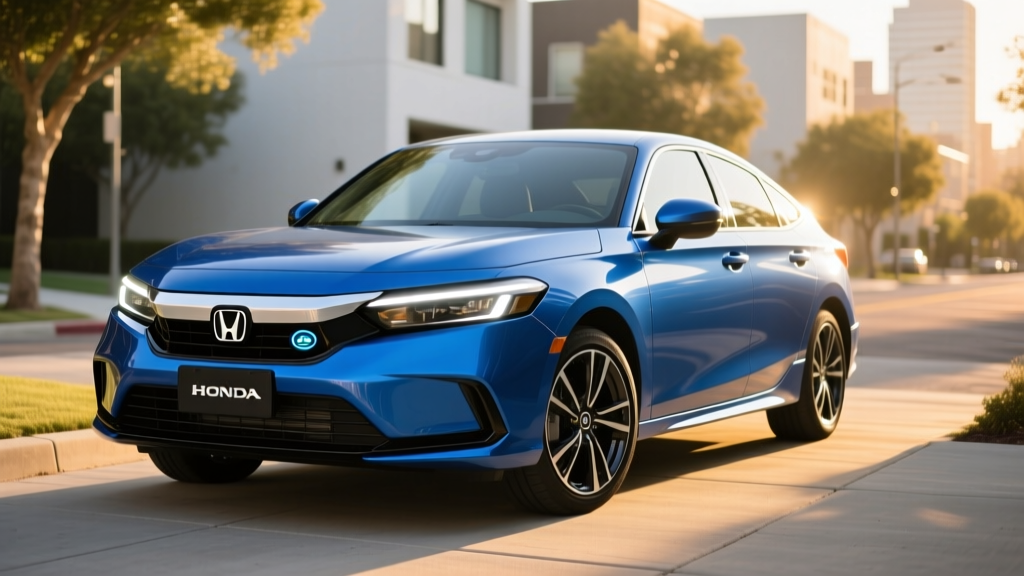
Honda's two-motor hybrid system has quietly become one of the most efficient setups on the road, and the Civic Hatchback Hybrid puts that technology into one of the most practical body styles in the compact segment. For 2026, the Civic Hatchback Hybrid carries forward with the proven fourth-generation two-motor e-CVT system, pairing a 2.0-liter Atkinson-cycle four-cylinder with dual electric motors for a combined 200 horsepower and 232 lb-ft of torque. The result is a car that achieves an EPA-rated 50 MPG combined — a figure that, in real-world driving, many owners actually exceed in city conditions.
This guide covers everything a prospective buyer needs: exact EPA and real-world fuel economy, how the Civic Hatchback Hybrid's powertrain works, battery longevity and warranty details, pricing across trims, and how it stacks up against plug-in hybrids and full EVs for different driving lifestyles.
EPA Fuel Economy and Real-World MPG
The 2026 Honda Civic Hatchback Hybrid uses Honda's latest two-motor hybrid architecture, which operates primarily in EV drive mode at low and moderate speeds, switching to hybrid mode (engine generating electricity for the motor) at higher loads, and engaging direct engine drive only at sustained highway cruising speeds. This strategy maximizes efficiency where electric motors excel — stop-and-go city driving.
| Trim | City MPG | Highway MPG | Combined MPG | Fuel Tank (gal) | Total Range (mi) |
|---|---|---|---|---|---|
| Sport Hybrid | 50 | 47 | 49 | 10.6 | ~519 |
| Sport Touring Hybrid | 50 | 45 | 48 | 10.6 | ~509 |
Source: EPA / fueleconomy.gov
The Civic Hatchback Hybrid's EPA city rating of 50 MPG is one of the cases where real-world results often match or exceed the sticker. In city driving with frequent regenerative braking opportunities, owners routinely report 52–55 MPG. Highway driving at 75+ MPH typically yields 42–45 MPG due to aerodynamic drag and the engine running more frequently. In cold weather (below 30°F), expect a 5–8% efficiency drop as the engine runs more often for cabin heat and battery conditioning. Overall mixed driving: expect 47–51 MPG in temperate climates, closely tracking the EPA combined figure.
How the Hybrid Powertrain Works
Understanding the Civic Hatchback Hybrid's powertrain helps explain why its real-world efficiency is so strong. Honda's system is fundamentally different from Toyota's planetary-gear power-split design. Instead, Honda uses a series-hybrid-dominant approach:
- EV Drive: The traction motor (184 hp, 232 lb-ft) powers the wheels alone using energy from the 1.06 kWh lithium-ion battery pack. This is the default mode up to moderate speeds and loads.
- Hybrid Drive: The 2.0L Atkinson-cycle engine (143 hp) activates but does not drive the wheels directly. Instead, it spins a generator motor to produce electricity that feeds the traction motor. Excess energy charges the battery.
- Engine Drive: At steady highway speeds (roughly 45–75 MPH), a lock-up clutch connects the engine directly to the wheels via a single fixed gear ratio, bypassing the electric motors for maximum mechanical efficiency.
| Specification | Value |
|---|---|
| Engine | 2.0L DOHC Atkinson-cycle 4-cylinder |
| Engine Output | 143 hp @ 6,000 rpm / 134 lb-ft @ 4,500 rpm |
| Traction Motor Output | 184 hp / 232 lb-ft |
| Combined System Output | 200 hp / 232 lb-ft |
| Hybrid Battery | 1.06 kWh lithium-ion |
| Transmission | e-CVT (single-speed direct drive w/ lock-up clutch) |
| Drivetrain | Front-wheel drive |
| 0–60 MPH | ~7.2 seconds (est.) |
| Curb Weight | ~3,155 lbs (Sport Touring Hybrid) |
The 1.06 kWh battery is small by EV standards, but that's intentional. As a conventional hybrid (HEV), the Civic Hatchback Hybrid never plugs in. The battery captures energy from regenerative braking and engine-generated electricity, then deploys it for electric-only driving bursts and torque fill during acceleration. The system constantly manages state of charge between roughly 20% and 80%, keeping the battery in its optimal longevity window.
HEV vs PHEV vs EV: Which Fits Your Driving Life?
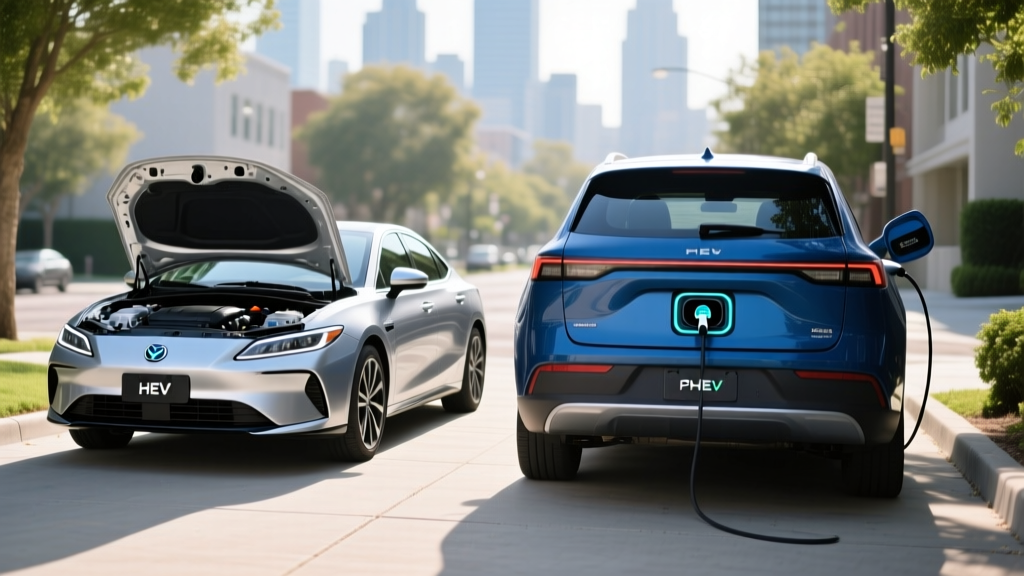
The Civic Hatchback Hybrid is a conventional hybrid (HEV) — it does not plug in, has no electric-only range to speak of (roughly 1–2 miles at very low speeds), and requires zero change to your fueling routine. Here's how it compares to the alternatives:
| Factor | HEV (Civic Hatchback Hybrid) | PHEV (e.g., Toyota Prius Prime) | BEV (e.g., Chevy Equinox EV) |
|---|---|---|---|
| Plugs In? | No | Yes (Level 1/2) | Yes (Level 1/2/DC) |
| Electric-Only Range | ~1 mi (low speed) | 39–44 mi | 250–319 mi |
| Combined Efficiency | 49 MPG | 52 MPG + 127 MPGe (elec) | 100+ MPGe |
| Home Charging Needed? | No | Recommended | Essential |
| Typical Price Range | $29,000–$33,000 | $33,000–$40,000 | $33,000–$45,000 |
| Federal Tax Credit | None (§30D excludes HEVs) | Up to $3,750 (if eligible) | Up to $7,500 (if eligible) |
| Best For | No home charging access; want simplicity | Short commute + home charging + road trips | Home charging + daily driving under 250 mi |
- You rent or live in an apartment without charging access
- You want maximum cargo versatility (49.3 cu ft with seats folded) at an affordable price
- You drive 10,000–15,000 miles/year and want fuel savings without behavioral changes
- You frequently take long road trips and don't want to plan around charging stops
- You have a garage or driveway with a 120V outlet and a commute under 40 miles
- You want to drive mostly on electricity weekdays but need gas flexibility for weekend trips
- You can install a Level 2 home charger and your daily driving stays under 200 miles
- You want the lowest per-mile fuel cost and minimal maintenance
Pricing, Trims, and Tax Credit Eligibility
The 2026 Honda Civic Hatchback Hybrid is offered in two trims, both well-equipped:
- Sport Hybrid: Starting at approximately $29,845 (including destination). Includes 18-inch alloy wheels, 7-inch touchscreen with wireless Apple CarPlay/Android Auto, Honda Sensing safety suite, dual-zone climate, and sport-tuned suspension.
- Sport Touring Hybrid: Starting at approximately $32,845. Adds 9-inch touchscreen with navigation, Bose 12-speaker audio, leather-trimmed seats, heated front seats, wireless phone charging, blind-spot monitoring, and low-speed braking control.
The Civic Hatchback Hybrid does not qualify for the IRS §30D Clean Vehicle Credit. Federal law restricts the $3,750–$7,500 credit to plug-in vehicles (PHEVs and BEVs) with a battery capacity of at least 7 kWh. The Civic Hybrid's 1.06 kWh battery falls far below this threshold. Some states may offer their own incentives for high-efficiency hybrids — check your state energy office for current programs. (Source: IRS §30D guidelines)
Even without a federal credit, the Civic Hatchback Hybrid's value proposition is strong. At ~$30K, it costs roughly the same as many non-hybrid compact hatchbacks once you factor in fuel savings. A driver covering 12,000 miles/year at 49 MPG versus a 30 MPG gas-only competitor saves approximately $530 per year in fuel costs (at $3.50/gallon), totaling over $2,600 across five years.
Battery Longevity, Warranty, and Reliability
Hybrid battery anxiety remains one of the most common concerns among first-time hybrid buyers. Here's what the data and warranty coverage actually show:
- Coverage: 8 years / 100,000 miles (10 years / 150,000 miles in CARB states including CA, NY, MA, and others adopting California emissions standards)
- What's covered: Hybrid battery pack, hybrid control unit, and related hybrid-system components
- Capacity threshold: Honda warrants against defects and abnormal degradation; the system's built-in state-of-charge management (keeping the battery between ~20–80%) significantly extends cycle life
Honda's lithium-ion hybrid batteries are engineered for the life of the vehicle. Unlike early nickel-metal-hydride packs from the 2000s, modern lithium-ion cells managed by sophisticated battery management systems (BMS) degrade very slowly. The Civic Hybrid's 1.06 kWh pack undergoes shallow charge-discharge cycles — it never fully charges or fully depletes — which is the gentlest possible usage pattern for lithium-ion chemistry.
Replacement cost if out of warranty: Based on current Honda hybrid battery pricing, a replacement pack runs approximately $2,000–$3,500 including labor. However, widespread failures within the first 15 years or 200,000 miles are uncommon based on data from Honda's earlier hybrid models (Insight, Accord Hybrid). Many Honda hybrid batteries from the 2010s are still in service with original packs.
Overall reliability: The Civic platform and Honda's hybrid system consistently earn above-average reliability ratings. IIHS has historically rated the Civic as a Top Safety Pick when equipped with LED headlights (Sport Touring trim). The hybrid system adds fewer moving parts than a conventional automatic transmission — there's no torque converter, no multi-speed gearbox, and the regenerative braking system significantly extends brake pad life (many hybrid owners report 80,000+ miles on original pads).
Cargo, Practicality, and Daily Ownership
The hatchback body style is the Civic Hybrid's ace for practicality-minded buyers. With 25.4 cubic feet behind the rear seats and 49.3 cubic feet with the 60/40 split rear seats folded, it offers cargo versatility that rivals small crossovers while maintaining a lower, more car-like driving position and better fuel economy.
| Measurement | Value |
|---|---|
| Cargo (rear seats up) | 25.4 cu ft |
| Cargo (rear seats folded) | 49.3 cu ft |
| Wheelbase | 107.7 in |
| Length | 179.0 in |
| Towing Capacity | Not rated for towing |
| Ground Clearance | 5.3 in |
For daily ownership, the Civic Hatchback Hybrid requires no behavioral adaptation. You fuel it at any gas station, change the oil roughly every 7,500–10,000 miles (the engine runs less than a gas-only car, so oil stays cleaner longer), and enjoy regenerative braking that reduces brake wear. The Honda Sensing suite includes adaptive cruise control, lane-keeping assist, forward collision warning with automatic emergency braking, and traffic sign recognition — all standard across trims.
Pros, Cons, and Verdict
- 50 MPG city EPA — real-world city driving often exceeds this
- 49.3 cu ft cargo capacity with seats folded — crossover-level utility
- No plug-in required; zero lifestyle adjustment from a gas car
- 200 hp combined provides confident acceleration and highway merging
- 8-year/100K-mile hybrid battery warranty (10 yr in CARB states)
- Under $30K starting price for the Sport Hybrid trim
- Excellent regenerative braking feel — smooth, non-grabby
- No federal tax credit (HEV excluded from §30D)
- Only two trims available — limited customization
- No all-wheel-drive option (FWD only)
- Engine drone under hard acceleration (typical of Atkinson-cycle + e-CVT)
- Small 10.6-gallon fuel tank means fill-ups every ~350–400 miles
- Infotainment screen is functional but not class-leading in responsiveness
Verdict: The 2026 Honda Civic Hatchback Hybrid occupies a sweet spot for buyers who want excellent fuel economy, genuine cargo versatility, and zero charging hassle. At ~$30K with 49–50 MPG, it's one of the most cost-efficient vehicles on the market when measured by total cost of ownership. It won't match the per-mile fuel cost of a PHEV running on electricity or a full BEV, but it asks nothing of you in return — no outlet, no charging app, no range planning. For apartment dwellers, high-mileage commuters, and anyone who regularly drives beyond the reach of reliable charging infrastructure, this is one of the smartest electrified-adjacent purchases available.
Frequently Asked Questions
How many MPG does the Honda Civic Hatchback Hybrid get?
The 2026 Civic Hatchback Hybrid is EPA-rated at 50 MPG city, 47 MPG highway (Sport trim), and 49 MPG combined. In real-world city driving with frequent stops, many owners achieve 52–55 MPG thanks to aggressive regenerative braking. Highway cruising at 75+ MPH typically yields 42–45 MPG.
Does the Honda Civic Hatchback Hybrid need to be plugged in?
No. The Civic Hatchback Hybrid is a conventional hybrid (HEV). Its 1.06 kWh battery charges through regenerative braking and the gasoline engine. You never plug it in — you simply refuel at a gas station as you would with any conventional car.
How far can the Civic Hybrid drive on electric power alone?
The Civic Hatchback Hybrid can travel roughly 1 mile at very low speeds (under 25 MPH) on electric power alone. However, this isn't its primary operating mode. The electric motor assists the engine continuously, and the car frequently operates in EV mode for short bursts during city driving. For meaningful electric-only range (30+ miles), you'd need a plug-in hybrid like the Toyota Prius Prime.
Is the Honda Civic Hybrid reliable, and what does battery replacement cost?
Honda's hybrid system has proven reliable across multiple model lines (Accord Hybrid, CR-V Hybrid, Civic Hybrid). The hybrid battery is covered by an 8-year/100,000-mile warranty (10 years/150,000 miles in CARB states). Out-of-warranty replacement costs approximately $2,000–$3,500, though widespread failures before 200,000 miles are uncommon based on historical Honda hybrid data.
Does the Honda Civic Hatchback Hybrid qualify for a tax credit?
No. The federal §30D Clean Vehicle Credit applies only to plug-in electric vehicles (PHEVs and BEVs) with battery capacities of at least 7 kWh. The Civic Hybrid's 1.06 kWh battery does not qualify. Some states may offer separate incentives for high-efficiency vehicles — check your state's energy or environmental agency for details.
How does the Civic Hatchback Hybrid compare to the Toyota Prius?
The Toyota Prius (57 MPG combined, liftback) is more fuel-efficient but offers less cargo space (23.8 cu ft behind rear seats vs the Civic's 25.4 cu ft). The Civic Hatchback Hybrid provides a more engaging driving experience with 200 hp versus the Prius's 196 hp, a more conventional driving feel, and a notably larger cargo area in hatchback form. The Prius wins on pure MPG; the Civic wins on driving dynamics and hatchback utility.
What is the maintenance schedule for the Civic Hybrid?
Honda recommends oil changes every 7,500–10,000 miles under normal driving conditions (the engine runs less than a gas-only car, so oil degrades more slowly). Brake pads last significantly longer due to regenerative braking handling most deceleration — 80,000+ miles on original pads is common. The hybrid system requires no separate maintenance. Tire rotations, cabin air filter changes, and transmission fluid checks follow Honda's standard maintenance minder schedule.